Skip to content

Visit Aswan : feluccas, Nubia and the road to Abu Simbel

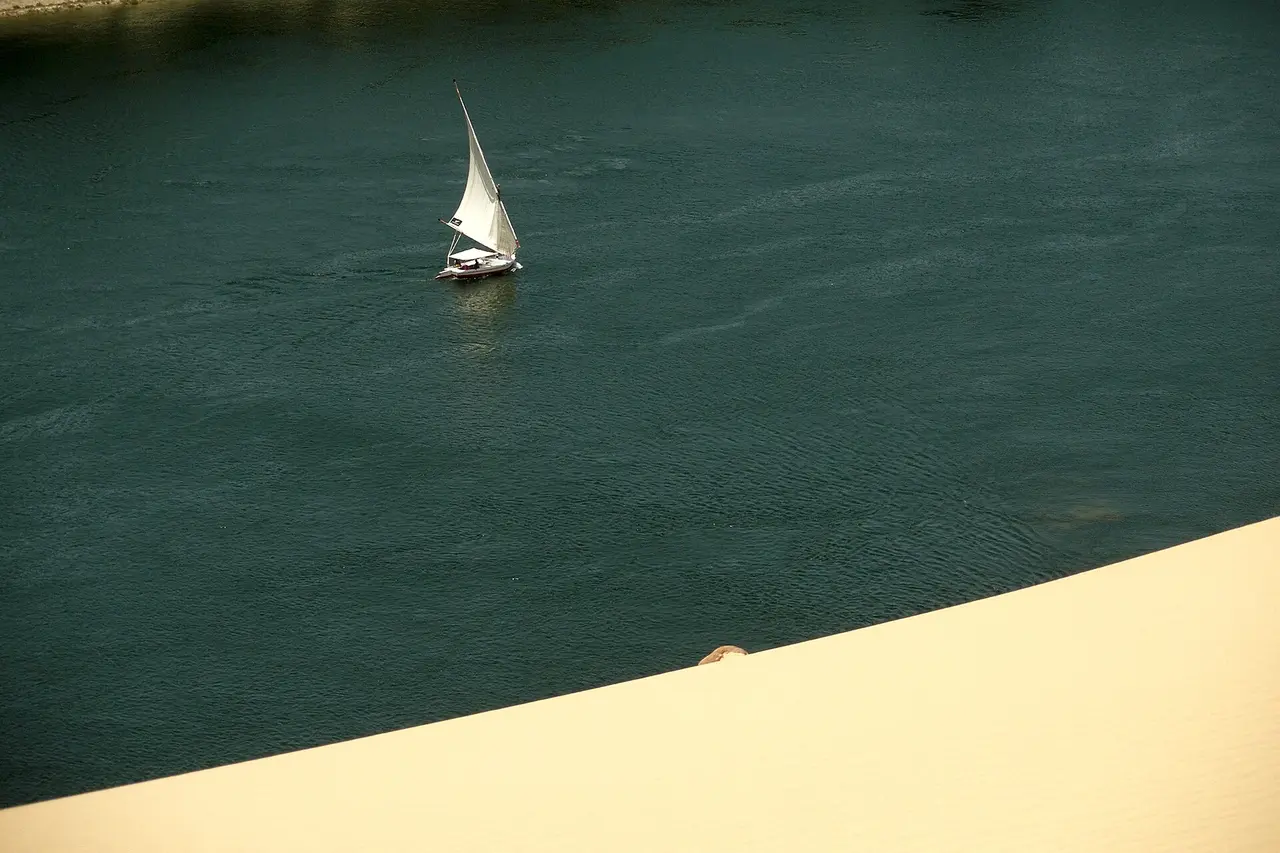
Here the Nile winds between black granite islets and golden dunes that slope right down to the water. Aswan moves more slowly than the rest of Egypt: a felucca sail at sunset, Nubian houses painted blue, and the temple of Isis that seems to float on its island.

At a glance

Visa
Required
Tourist stay of up to 30 days
7-day budget
€735
Per person, comfort profile, excluding international flights.
Recommended length
3 days
For a first trip, without rushing.

How many days should you spend in Aswan?

Two nights are enough for Philae, Elephantine, a felucca trip and a Nubian village; add a third if you are going to Abu Simbel, as the excursion takes a full day. The southern gateway to the land of the pharaohs, Aswan lies about 210 km south of Luxor, 3 to 4 hours by train.

When to visit Aswan

Temperatures, rainfall and crowds month by month, to pick your window.
When to visit Aswan
MonthTemperaturesRainCrowdsVerdict
January10 to 23 °C0 dPackedThe heart of the season: 23 °C in the sun, cool 10 °C nights, feluccas and cruise boats fully booked.
February12 to 26 °C0 dPackedPerfect light on the Nile at 26 °C; on 22 February the sun lights up the Abu Simbel sanctuary and the crowds pour in.
March16 to 30 °C0 dBusyAfternoons pass 30 °C, still pleasant for Philae in the morning and a felucca at sunset.
April20 to 36 °C0 dModerateThe last workable month: 35 °C on average with much hotter spikes, so sightsee at dawn and rest at midday.
May25 to 40 °C0 dQuietExtreme heat sets in, close to 40 °C in the afternoon: cruises thin out and hotels cut their rates.
June27 to 42 °C0 dVery quietA 42 °C furnace with a 51 °C record: visits only before 9am, for travellers who can truly handle heatwaves.
July28 to 42 °C0 dVery quietThe hottest month, even nights stay at 28 °C; sites almost empty and rates at their lowest.
August28 to 42 °C0 dQuietCrushing heat matching July with a few European holiday groups; best avoided if travelling with children.
September26 to 40 °C0 dQuietStill 40 °C by day, the heat only eases late in the month; low prices but very early visits.
October22 to 36 °C0 dBusyCruises resume, 36 °C early in the month then cooler; on 22 October comes the second solar alignment at Abu Simbel.
November16 to 30 °C0 dBusyAn excellent compromise: 30 °C days, mild evenings on the Corniche, crowds still reasonable before the holidays.
December11 to 25 °C0 dPackedMild 24 °C and guaranteed sunshine, but Christmas and New Year send boat and hotel prices soaring.
Source: Normales 1991-2020 de la station d'Assouan (NOAA / Autorité météorologique égyptienne), via Wikipédia, relevé octobre 2026. Climat hyper-aride : moins d'un jour de pluie par an, arrondi à 0. Ville fluviale sans façade maritime : température de la mer non renseignée. Affluence et prix estimés d'après le calendrier de la haute saison des croisières du Nil (octobre à avril).

What brings people to Aswan

Temples saved from the water, carved granite and a few places where time stands still.

Philae Temple

The Ptolemaic sanctuary of Isis, moved to Agilkia Island, is reached by motorboat from Shellal; the last known hieroglyphic inscription was carved here.

Abu Simbel temples

The four colossi of Ramesses II and the temple of Nefertari, saved in the 1960s; the sun lights up the sanctuary every 22 February and 22 October.

Nubian Museum

Statues, village models and everyday objects tell the story of Nubia before the dam, in a sandstone building surrounded by a terraced garden.

Unfinished Obelisk

Cracked while being carved, it still lies in its granite quarry and shows how Egyptians extracted these monumental blocks in a single piece.

Monastery of St Simeon

A mud-brick Coptic enclosure isolated in the west-bank desert, with views over the Nile and the dunes from its walls.

Old Cataract terrace

The palace hotel opened in 1899, where Agatha Christie stayed, looks out from its terrace over the feluccas and Elephantine Island at sunset.

What is there to discover in Aswan?

The Corniche and the east bank

The east bank holds the hotels, the landing stages and the souk, a long street running parallel to the river selling spices, dried hibiscus and Nubian baskets. The Nubian Museum, opened in 1997 on a hill south of the centre, tells the story of the villages drowned by the reservoir and deserves two hours. Further on, in the granite quarries, lies the Unfinished Obelisk, about 42 metres long. Walk here early in the morning or after 4pm: from May to September afternoons often top 40 °C, and the Corniche is far more pleasant at sunset.

Elephantine and the cataract islands

Opposite the Corniche, Elephantine Island holds the ruins of ancient Abu, a Nilometer that measured the flood and two Nubian villages, Siou and Koti, with shady lanes. Right next to it, Kitchener's Island is home to a botanical garden of tropical species. The best way to link them is still the felucca: allow one to two hours of sailing, and agree the hourly rate before boarding. Set off in the late afternoon, when the wind picks up and the light turns the granite rocks golden. To head back north to the Egyptian capital, the airport is only about twenty minutes away.

The west bank, between tombs and desert

On the far bank, the hill of Qubbet el-Hawa keeps the Tombs of the Nobles from the Old and Middle Kingdoms, cut into the cliff; the climb is steep, so bring water. Further south, the Monastery of St Simeon, founded around the 7th century and abandoned in the 13th, is reached on foot or by camel in about thirty minutes from the landing. The Nubian village of Gharb Soheil, reached by boat or by road, draws visitors with its colourful facades: it has become very touristy, so choose a guesthouse for a more genuine evening.

South of the dams, towards Lake Nasser

The High Dam, completed in 1970, created Lake Nasser, about 500 km long and shared with Sudan. Temples threatened by the rising water were dismantled and rebuilt on higher ground, including the temple of Isis moved to Agilkia Island. Abu Simbel lies 280 km south: a 45-minute flight, or about 3 hours 30 minutes by road to be driven in daylight with a night on site, as France Diplomatie advises against travelling at night outside towns. Cruises between Aswan and Luxor last three to four nights. France Diplomatie advises against the Sudanese border zone beyond Abu Simbel: do not go any further south.

Sample itineraries

Three routes built around the time you actually have.
3daysRecommended

Aswan in 3 days: Philae, Nubian villages and Abu Simbel

  1. Philae, the High Dam and the Nubian Museum
  2. Felucca, Kitchener Island and the Nubian village of Gharb Soheil
  3. Abu Simbel by plane

Best for: The classic first-trip stay: the city sights and the Nubian Museum, a day on the Nile between the islands and the village of Gharb Soheil, then Abu Simbel by plane. The west bank and its tombs are left out.

How much it costs

Per person per day, excluding international travel.
Budget
32 €/ day
1 248 € for 2 people, 7 days, return flights included
Accommodation
8 €
Food
9 €
Local transport
3 €
Sights and activities
12 €
Comfort
105 €/ day
2 370 € for 2 people, 7 days, return flights included
Accommodation
45 €
Food
20 €
Local transport
10 €
Sights and activities
30 €
Premium
330 €/ day
5 960 € for 2 people, 7 days, return flights included
Accommodation
160 €
Food
50 €
Local transport
30 €
Sights and activities
90 €
Prices checked: Relevé du 14 octobre 2026. Change : 1 EUR = 1,1195 USD (taux de référence BCE du 14/10/2026) ; la BCE ne publie pas de cours de la livre égyptienne, 1 EUR = environ 58,8 EGP d'après les cotations des banques égyptiennes relayées par Al-Dostor le 09/10/2026. Hébergement : dortoirs de 4 à 10 USD (hostelz.com, hostelworld.com, goinnbackpackers.com, 2026), hôtels 3 étoiles autour de 91 USD et 4 étoiles autour de 124 à 131 USD la nuit, 5 étoiles autour de 284 USD (momondo, Travelocity/Expedia, relevés 2026 non datés précisément, agrégateurs non officiels) ; chambre double partagée à deux pour comfort et premium, lit en dortoir pour backpacker. Repas : moyenne de 17 USD par jour (travelcostcalculator.org, 2026, estimation régionale). Felouque : 200 à 300 EGP l'heure pour le bateau entier, 300 à 500 EGP au coucher du soleil (semelegantvoyage.com, guide 2026, source non officielle). Postes activités estimés sans prix d'entrée officiel vérifiable (site egymonuments.gov.eg inaccessible lors du relevé). Vol A/R Paris-Assouan avec escale (momondo, page mise à jour le 13/10/2026) : 389 à 444 EUR en novembre, retenu 400 EUR backpacker, 450 comfort, 670 premium (EgyptAir avec une escale, 667 EUR). Hors semaine de Noël et hors 22 février / 22 octobre. Livre égyptienne volatile : budget à revalider tous les 3 à 4 mois.

Getting there

Airports serving Aswan, from main hubs to secondary ones.
  • AACEl Arish International AirportEl ArishMain
  • ASWAswan International AirportAswanMain
  • ATZAsyut International AirportAsyutMain
  • CAICairo International AirportCairoMain
  • DBBEl Alamein International AirportEl AlameinMain
  • EESBerenice International Airport / Banas Cape Air BaseBerenice TroglodyticaMain

Entry, health and safety

For FR travellers

Entry requirements

Visa required

Visa obligatoire. Il s'obtient à l'arrivée dans un aéroport international égyptien, solution jugée préférable (30 USD ou l'équivalent en euros pour une entrée simple, 60 USD pour des entrées multiples, paiement en espèces uniquement), ou auprès d'un consulat d'Égypte en France. Valable un mois, prolongeable au bureau de l'immigration pour les titulaires d'un passeport. Une carte d'identité valide six mois après le retour est acceptée avec deux photos d'identité, mais ne permet pas de prolonger le visa.

Stay allowed for up to 30 days.

Passport valid for 6 months beyond your return date.

Health

Advised: Mise à jour des vaccins du calendrier français (diphtérie, tétanos, poliomyélite, coqueluche, rougeole). Selon les conditions de séjour : hépatite A et fièvre typhoïde, méningite ACWY en saison sèche (hiver et printemps), rage pour les jeunes enfants et les séjours ruraux, hépatite B pour les séjours longs ou fréquents.

Fièvre jaune exigée uniquement en provenance d'une zone d'endémie. Dengue et Zika présentes : se protéger des moustiques, consulter avant le départ en cas de grossesse. Chaleur extrême à Assouan de mai à septembre : s'hydrater, éviter les heures chaudes et se protéger du soleil. Boire uniquement de l'eau en bouteille capsulée. Sécurité : vigilance renforcée en Égypte ; circuler de nuit hors des villes et des sites touristiques est formellement déconseillé, la zone frontalière soudanaise (route au sud d'Abou Simbel) l'est aussi, et l'ouest du site d'Abou Simbel est déconseillé sauf raison impérative.

Safety

Increased caution

Checked in octobre 2026 against the official source. Entry rules change: check the official source before you travel, it alone is authoritative.

Aswan practical information

Getting to Abu Simbel

45-minute flight, the safest option; by road, travel in daylight with a licensed operator and stay overnight rather than leaving around 4am, as night travel outside towns is advised against

From Cairo

Flight of about 1 hour 30 minutes, or an overnight sleeper train taking about 13 hours

Heat

Over 40 °C from May to September; sightsee before 10am and carry at least two litres of water

Feluccas

Price set by the hour and agreed before boarding; pay at the end of the trip, not at the start

Crossing to the west bank

Public ferries and motorboats from the Corniche, a crossing of a few minutes

Tipping

Baksheesh is expected everywhere: keep small Egyptian pound notes for boatmen, guards and guides

Nubian villages

Cover shoulders and knees, and always ask before photographing residents

Aswan in pictures

Photo credits : Vyacheslav Argenberg, CC BY 4.0, Wikimedia Commons ; Mohamed Hozyen Ahmed, CC BY-SA 4.0, Wikimedia Commons ; Jorge Láscar from Melbourne, Australia, CC BY 2.0, Wikimedia Commons ; Petar Milošević, CC BY-SA 4.0, Wikimedia Commons

Aswan FAQ

Is it better to reach Abu Simbel by plane or by road?
The plane gets you there in 45 minutes and leaves more time at the temples, but costs considerably more. The road takes about 3 hours 30 minutes each way. The usual 4am departures drive in the dark, which France Diplomatie advises against outside towns: by road, leave in daylight and stay the night.
Can you stay overnight in Abu Simbel instead of a day trip?
Yes, a few hotels and guesthouses welcome travellers on the shores of Lake Nasser. Staying the night lets you see the temples late in the day and again at opening time, once the Aswan groups have left, and catch the evening sound and light show.
When does the Abu Simbel sun festival take place?
Twice a year, around 22 February and 22 October, the rising sun reaches the back of the Great Temple and lights up the statues in the sanctuary. On those mornings crowds are very dense and Aswan accommodation is snapped up: book several months ahead.
Is the Nubian village of Gharb Soheil too touristy?
In the daytime, yes: shops, caged crocodiles and tour groups follow one another. It keeps its charm, though, if you sleep in a Nubian guesthouse, in the evening and at dawn. The villages on Elephantine Island offer a quieter alternative, a few minutes away by boat.
How many nights is a Nile cruise from Aswan?
Usually three nights from Aswan to Luxor, and four nights in the other direction, as the boat travels against the current. The classic stops are Kom Ombo and Edfu. A dahabiya, a smaller sailing boat, generally takes four to five nights.
Can you cross into Sudan from Aswan?
No, rule it out. France Diplomatie advises against the Sudanese border zone south of Abu Simbel and formally against all travel to Sudan, because of the fighting under way since 2023. Tourist excursions stop at Abu Simbel, on the shore of Lake Nasser.

Plan your trip to Aswan

Build your day-by-day itinerary and manage budget, bookings and packing in PlanTripNow.
Aperçu de l'application PlanTripNow