Skip to content

Visit Banff : when to go, what to do and how to see the lakes

Milky blue lakes below glaciers, elk crossing the main street, hot springs facing the peaks and one of the world's great mountain roads heading north: Banff needs at least four days, and bookings made well in advance.

Why visit Banff?

Banff is the only town in Banff National Park, created in 1885 as Canada's first national park and part of the UNESCO-listed Canadian Rocky Mountain Parks. It is the base for Lake Louise, Moraine Lake and the Icefields Parkway to Jasper. It lies about 1 hour 30 minutes by road from Calgary airport.

Banff's must-sees

Glacial lakes, viewpoints and hot springs, between the town and the north of the park.

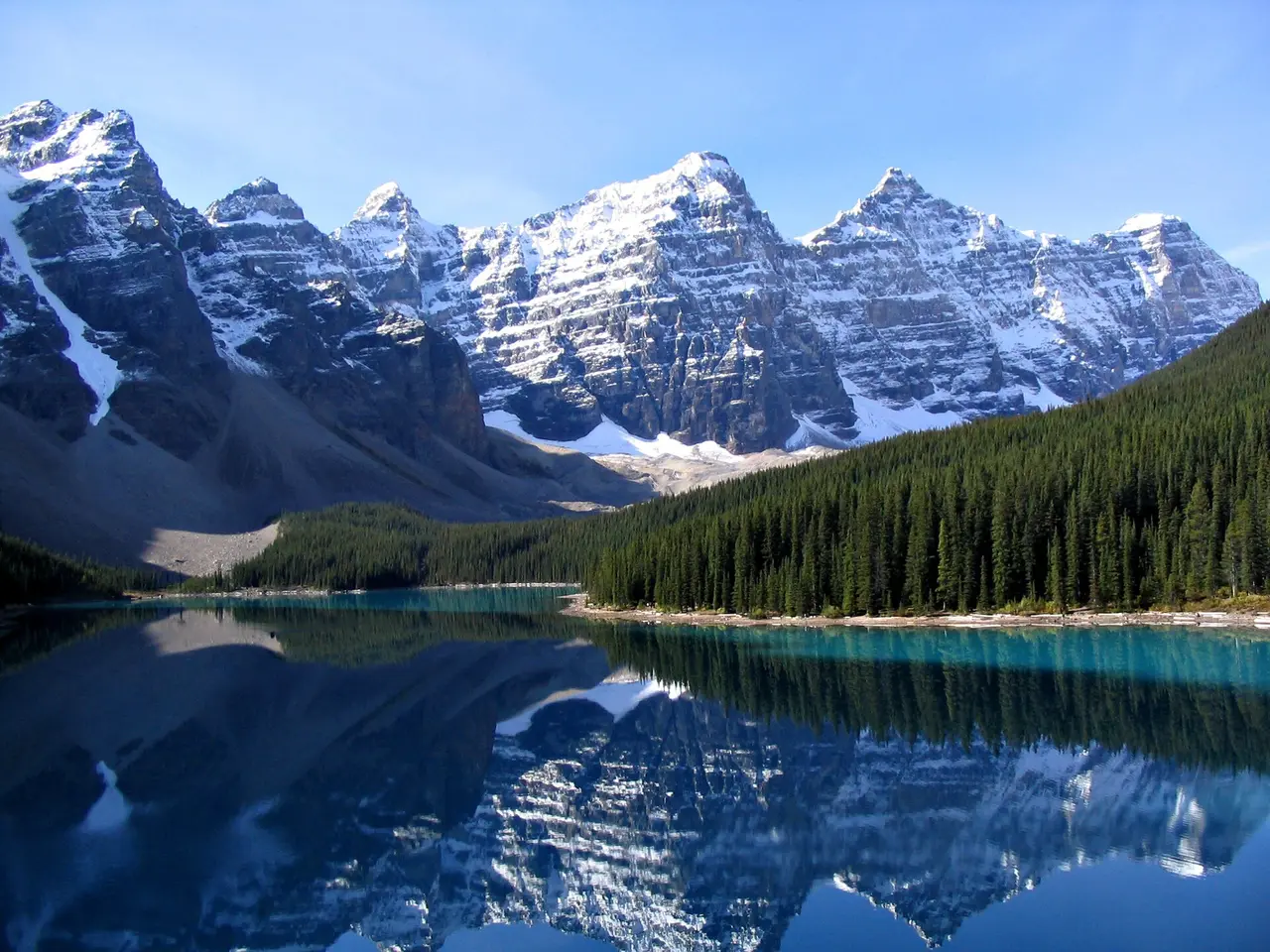
Moraine Lake

A turquoise lake in the Valley of the Ten Peaks, reached only by shuttle or private coach, best seen from the Rockpile at sunrise.

Lake Louise

An emerald lake below the Victoria Glacier, with canoe rentals in summer and trails to the Lake Agnes and Plain of Six Glaciers teahouses.

Banff Gondola

An eight-minute ride to the summit of Sulphur Mountain, with a panoramic boardwalk and 360-degree views over six mountain ranges.

Peyto Lake

A wolf-head-shaped lake along the Icefields Parkway, admired from a viewpoint a few minutes' walk from the car park.

Johnston Canyon

A limestone gorge fitted with catwalks clinging to the rock, leading to two waterfalls that freeze and can be visited with ice cleats in winter.

Banff Upper Hot Springs

An outdoor thermal pool at the foot of Sulphur Mountain, with views of Mount Rundle, open all year round.

Fairmont Banff Springs

A Scottish baronial-style railway hotel opened in 1888, overlooking Bow Falls, which you can visit even without staying.

Vermilion Lakes

A chain of shallow lakes just outside town where Mount Rundle is reflected at sunset, easy to reach by bike.

Larch Valley

A hike from Moraine Lake into a valley of larches that turn gold around mid-September, with views of the Ten Peaks.

Columbia Icefield

The largest icefield in the Rockies, along the Icefields Parkway, where you can approach the Athabasca Glacier on foot or by all-terrain vehicle.

What to discover in Banff and its national park?

Banff Avenue and downtown

The main street, Banff Avenue, packs hotels, restaurants and shops into little more than a kilometre, facing Cascade Mountain. The town sits at almost 1,400 m and is entirely walkable. At the end of the avenue, the Bow River bridge leads to the Cascade Gardens and the park museum, the oldest natural history museum in western Canada. The Whyte Museum, devoted to the history of the Rockies, takes an hour. Park in the free lot near the train station, as downtown parking is paid in summer.

Sulphur Mountain and the hot springs

South of town, the Banff Gondola climbs in about eight minutes to the summit of Sulphur Mountain, above 2,200 m, where a wooden boardwalk leads to a former weather observatory. Allow two hours at the top. Nearby, the Banff Upper Hot Springs, the highest-elevation hot springs in Canada, offer a warm pool facing the peaks, ideal at the end of the day or under falling snow. Lower down, Cave and Basin tells the story of the springs whose discovery led to the park's creation in 1885.

Lake Minnewanka and Tunnel Mountain

Eight kilometres northeast of town, Lake Minnewanka is the largest lake in the park, with a cruise of about an hour from May to October and trails along its shores. The road loop serving it passes Two Jack and Johnson lakes, which are quieter. Without a car, Tunnel Mountain, the small peak overlooking town, can be climbed in about an hour on a 2.4 km trail with 300 m of elevation gain, for views over the Bow Valley and the Banff Springs hotel.

The Bow Valley Parkway and Johnston Canyon

This secondary road of about 50 km runs parallel to the Trans-Canada between Banff and Lake Louise, slower but rich in wildlife. Johnston Canyon, about 25 km from Banff, is explored on catwalks bolted to the canyon wall: 1.2 km to the Lower Falls, about 2.6 km to the Upper Falls. Arrive before 9 am, as the car park fills up in summer. From March to late June, part of the road closes overnight to protect wildlife: check Parks Canada's schedule.

Lake Louise and Moraine Lake

About 57 km from Banff, or 45 minutes, Lake Louise and its Victoria Glacier are the best-known image of the Rockies, alongside Moraine Lake and its ten peaks. Since 2023, Moraine Lake has been closed to private vehicles: access is by Parks Canada shuttle, booked online, or by private coach. The lakes usually thaw in early June and the Moraine Lake road closes around mid-October. For the light, aim for sunrise or late afternoon.

The Icefields Parkway

Highway 93 North, the Icefields Parkway, links Lake Louise to Jasper over 232 km of glaciers, lakes and waterfalls. Allow three and a half hours non-stop, a full day in practice. The main stops are Peyto Lake, the waterfalls and the Columbia Icefield. There is almost no mobile coverage and only one gas station, at Saskatchewan Crossing: fill up before leaving. In winter, proper tyres are mandatory and closures for avalanche control are possible.

Skiing and winter in Banff

Three ski areas share the region: Mt Norquay, ten minutes from town, Sunshine Village, perched on the Continental Divide, and Lake Louise, one of the largest ski areas in Canada. A shared pass lets you move between them, with shuttles from hotels. The season usually runs from November to May. Winter also means ice walks in Johnston Canyon and skating on frozen Lake Louise. To combine with Calgary or the rest of Canada, aim for February or March, which are sunnier.

Getting there

Airports serving Banff, from main hubs to secondary ones.
  • KESKelsey AirportKelseySecondary
  • PIWPikwitonei AirportPikwitoneiSecondary
  • QBCBella Coola AirportBella CoolaSecondary
  • WPCPincher Creek AirportPincher CreekSecondary
  • XKSKasabonika AirportKasabonikaSecondary
  • XQUQualicum Beach AirportQualicum BeachSecondary

Practical info for Banff

Park pass

Required as soon as you enter the national park: a daily pass per person or per vehicle, or Parks Canada's annual Discovery Pass, worth it from about a week.

Moraine Lake shuttle

Book online with Parks Canada from spring, with a share of seats released 48 hours ahead: sunrise slots go fast.

Accommodation

The number of beds is capped by park regulations: book six months to a year ahead for July and August, or stay in Canmore, outside the park, 25 km away.

Bears

Grizzly and black bears are present everywhere: carry accessible bear spray, hike in groups and follow group-access restrictions posted at trailheads.

Wildlife

Keep at least 30 m from elk and 100 m from bears; feeding wildlife is illegal and can lead to fines.

Drones

Flying drones is prohibited in Canada's national parks without special permission.

Transport

Roam buses link town with the gondola, Lake Minnewanka, Canmore and Lake Louise, often easier than driving given the full car parks.

Wildfires

In July and August, smoke from regional fires can hide the peaks and close trails: check Parks Canada advisories every morning.

Mountain weather

Snow can fall at altitude in June and September: pack a fleece, a windbreaker and a hat even in summer.

Taxes

5% GST plus Alberta's 4% tourism levy on accommodation, often with an additional local destination fee.

Mobile coverage

Good in town and at Lake Louise, but almost non-existent on the Icefields Parkway and in many valleys: download your maps.

Banff in pictures

Photo credits : Gorgo, Public domain, Wikimedia Commons ; Chensiyuan, CC BY-SA 4.0, Wikimedia Commons ; Adam Bishop, CC BY-SA 4.0, Wikimedia Commons ; Tobias Alt, Tobi 87, CC BY-SA 4.0, Wikimedia Commons

Frequently asked questions about Banff

Can you still drive to Moraine Lake?
No, the Moraine Lake road has been closed to private vehicles since 2023. The options are the Parks Canada shuttle, by reservation, commercial coach operators, cycling, or hiking. The road is usually open from June to mid-October.
How many days do you need in Banff?
Four days is a good minimum: one for the town and gondola, one for Lake Louise and Moraine Lake, one for Johnston Canyon and Minnewanka, one for the Icefields Parkway. Add two or three days for longer hikes or a night in Jasper.
When are Banff's turquoise lakes thawed?
Lake Louise and Moraine Lake usually stay frozen until late May or early June. The most intense colour appears from late June to August, when glacial rock flour is suspended in the water. In September the water stays blue and golden larches add colour.
Do you need bear spray to hike in Banff?
Parks Canada recommends carrying it, within reach rather than at the bottom of your pack, on every trail. It can be bought or rented in town. Some trails require hiking in a tight group during berry season, from July onwards.
Is it better to stay in Banff or Canmore?
Banff is inside the park, closer to Lake Louise and livelier at night. Canmore, 25 km away, is outside the park, often cheaper, with larger apartments, but adds 20 minutes each day. With regular Roam buses, both work without a car.
When can you see golden larches around Banff?
Larches usually turn yellow from mid to late September, in a short window of about two weeks. Larch Valley, from Moraine Lake, and Healy Pass, from Sunshine, are the best-known trails. Book the shuttle early, as it is one of the busiest periods.
Can you drive the Icefields Parkway in winter?
Yes, but the road is not maintained like a highway: winter tyres are mandatory, there are no services or mobile coverage for 230 km, and avalanche closures are possible. Drive in daylight with a full tank and warm gear, and check road conditions right before leaving.
Can you swim in Banff's lakes?
It is allowed in most lakes, but the glacial water stays at a few degrees even in August. Johnson Lake, which is shallower, is the most popular for a swim. For warm water, the Banff Upper Hot Springs are the only real option.
Do you need to book campgrounds in Banff National Park?
Yes for summer: large campgrounds such as Tunnel Mountain and Lake Louise open for reservations on the Parks Canada website in winter and fill within days for July and August. A few smaller sites work on a first-come, first-served basis.

Plan your trip to Banff

Build your day-by-day itinerary and manage budget, bookings and packing in PlanTripNow.
Aperçu de l'application PlanTripNow