Skip to content

Visit Cape Town : neighbourhoods, the peninsula and tips for getting around safely

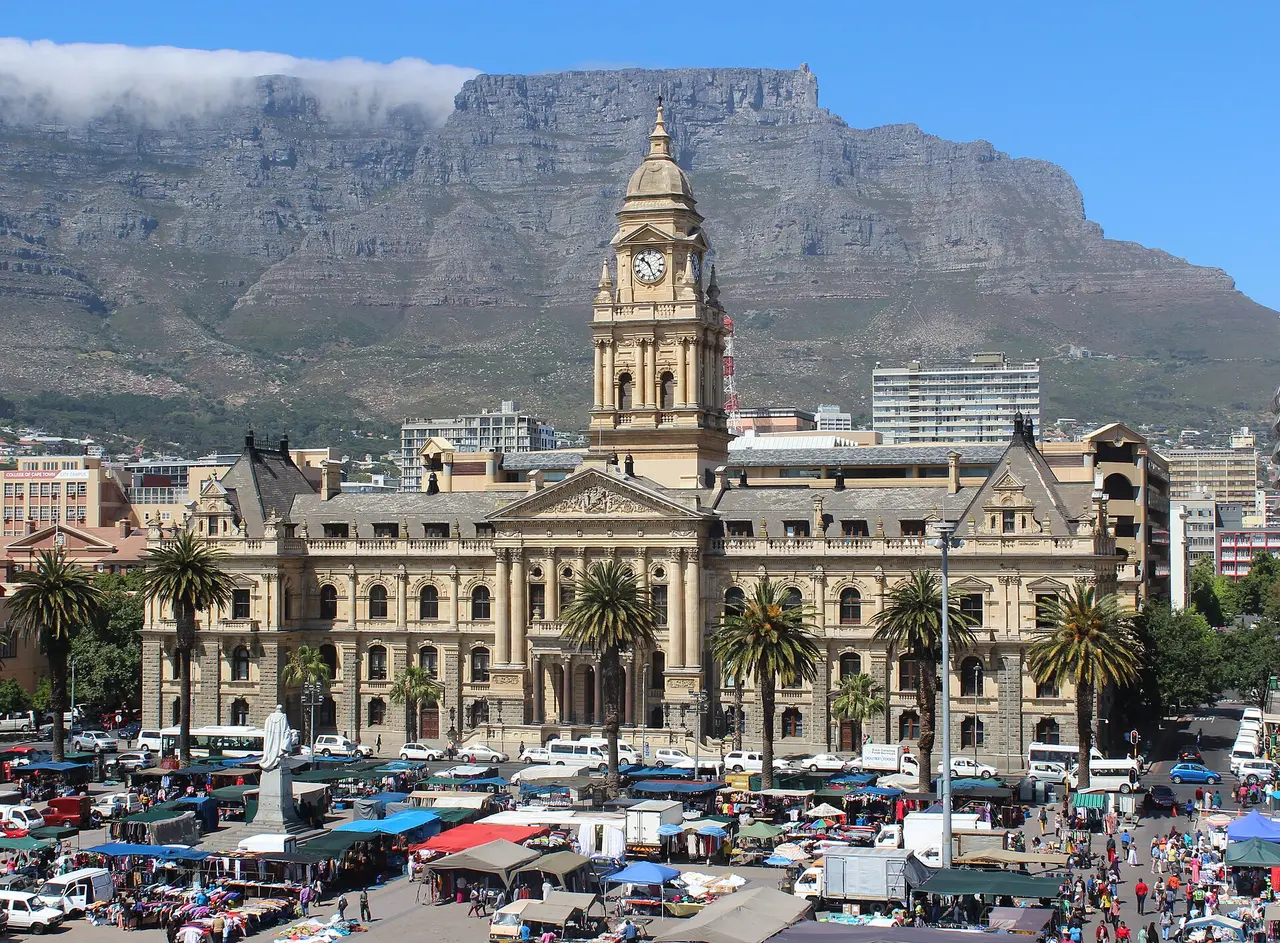
Here the mountain closes off the end of every street. Within a few kilometres, Cape Town strings together the colourful houses of the Bo-Kaap, ice-cold Atlantic beaches, the penguins of False Bay and the cellars of Constantia, along with a memory of apartheid you can visit, from Robben Island to District Six.

At a glance

Visa
None
Tourist stay of up to 90 days
7-day budget
€945
Per person, comfort profile, excluding international flights.
Recommended length
4 days
For a first trip, without rushing.

How many days do you need in Cape Town?

Four to five full days: two for the centre, Table Mountain and Robben Island, one for the peninsula down to Cape Point, one for the winelands. Keep a buffer day, as wind often shuts the cableway. The city is the classic starting point for a trip to South Africa, before the Garden Route or Kruger.

When to visit Cape Town

Temperatures, rainfall and crowds month by month, to pick your window.
When to visit Cape Town
MonthTemperaturesRainCrowdsVerdict
January17 to 27 °C2 dPackedHigh austral summer and South African holidays: 27C, crowded Camps Bay beaches, but the strong southeaster often shuts the cable car.
February17 to 27 °C2 dBusyThe hottest, driest month, the warmest sea at Muizenberg and grape harvest in Constantia and Stellenbosch.
March15 to 26 °C3 dBusyThe best balance of the year: still 26C, the southeaster easing off, Lion's Head and the peninsula in fine shape.
April12 to 24 °C6 dModerateMild 24C autumn, golden vines in the Winelands, the first short showers and falling prices outside Easter.
May10 to 21 °C9 dQuietWinter rain fronts roll in: crisp clear days between showers and discounted Waterfront hotels.
June8 to 18 °C9 dQuietWet midwinter, 18C and northwesterly gales on stormy days: lean on museums and wine estates.
July7 to 18 °C10 dQuietThe coolest month, 7C nights in poorly heated houses, but a green Table Mountain and the lowest rates.
August8 to 18 °C10 dQuietStill rainy, but fynbos wildflowers bloom and southern right whales move into False Bay.
September9 to 20 °C7 dModerateAustral spring at 20C, rain thinning out and whales visible from the shore between Simon's Town and Cape Point.
October12 to 22 °C5 dModerateA great month to hike Table Mountain and Lion's Head, 22C and a still calm city before summer.
November13 to 24 °C3 dBusyDry early summer at 24C, lively Waterfront terraces, but the southeaster returns in strong gusts.
December16 to 26 °C2 dPackedYear-end holidays and local summer break: near-guaranteed sun, but book stays and Robben Island weeks ahead.
Source: Temperatures : normales 1991-2020 de la station Cape Town International (Wikipedia, d'apres le South African Weather Service). Jours de pluie (seuil 1 mm) et temperature de la mer : Climates to Travel, releve octobre 2026 ; ces valeurs de mer correspondent a False Bay (Muizenberg, Simon's Town), la cote atlantique (Clifton, Camps Bay) restant 3 a 5 degres plus froide, autour de 13 degres en moyenne annuelle selon Wikipedia.

Cape Town's must-sees

A summit, an island prison, penguins and a few museums that tell the country's story better than a textbook.

Table Mountain Aerial Cableway

Its rotating car climbs in about five minutes to the plateau, at around 1,067 m. Return tickets cost 475 rand online or 530 rand at the office, 2026-2027 fares.

Lion's Head climb

A spiralling trail of 2 to 3 hours return, with chains and rungs near the top, and a 360-degree view over the bay and Camps Bay.

Robben Island

The UNESCO-listed island prison where Nelson Mandela spent 18 of his 27 years in detention. Allow about 4 hours including the crossing from the Waterfront.

Kirstenbosch Botanical Garden

Founded in 1913 on the eastern slope of Table Mountain, it showcases fynbos flora and a raised canopy walkway nicknamed the Boomslang.

Zeitz MOCAA

A museum of contemporary African art opened in 2017 in a former harbour grain silo, its atrium carved out of the concrete tubes.

Boulders Beach penguins

A colony of endangered African penguins watched from wooden boardwalks near Simon's Town. Entry is paid and managed by SANParks, and the birds are best seen early in the morning.

Cape Point

Cliffs, a lighthouse and trails at the tip of the peninsula, about 70 km from the centre. The true meeting of the oceans, though, is at Cape Agulhas.

Chapman's Peak Drive

A toll road carved into the cliff between Hout Bay and Noordhoek, with its many bends above the Atlantic. Closed in bad weather or when rockfalls threaten.

District Six Museum

The museum of a mixed-race neighbourhood razed under apartheid after 1966, its tens of thousands of residents evicted. Testimonies and an annotated floor map.

Neighbourgoods Market

The Saturday-morning market at Woodstock's Old Biscuit Mill: producers, street food, local wines and designers, inside a former biscuit factory.

Sunset on Signal Hill

Reachable by car, this headland looks over the city and the Atlantic. The Noon Gun fires from here every day except Sundays and public holidays.

Cape Town, neighbourhood by neighbourhood

City Bowl and Gardens, the historic heart

Downtown sits in a bowl backed by Table Mountain. This is where the Dutch East India Company founded its supply station in 1652, and its vegetable plot survives as the Company's Garden, now a public park. The Castle of Good Hope, completed in 1679, is the country's oldest colonial building; allow 1 hour 30 for its ramparts and museums. Gardens and Tamboerskloof, on the slopes, line up Victorian houses and guesthouses, handy for reaching the cableway's lower station in 10 minutes by car. Half a day covers the centre on foot, in daylight. Long Street, lively at night, calls for caution after dark: head home by ride-hailing app rather than on foot.

Bo-Kaap and De Waterkant, Cape Malay colour and cooking

On the slopes of Signal Hill, the Bo-Kaap is the historic quarter of descendants of slaves and exiles brought from Southeast Asia, the community known as Cape Malay. Its pink, green and yellow houses line Wale Street and Chiappini Street in particular, around the Auwal Mosque, founded in 1794, the oldest in South Africa. It is the best place to taste bobotie or local samoosas, or join a 3-hour cooking class in a family home. The area remains residential: photograph the facades without crowding the front steps. Just below, De Waterkant mixes cafés, shops and LGBTQ+ nightlife. Visit by day, as France Diplomatie recommends caution in the evening.

Waterfront, Green Point and Sea Point, the seafront

The V&A Waterfront, a still-working harbour redeveloped into a patrolled pedestrian district, brings together hotels, restaurants and the Robben Island ferry terminal. It is the easiest base for a first stay, evenings included. Allow half a day for the harbour and the Watershed, a covered hall of African designers. Heading west, Green Point is built around the stadium constructed for the 2010 World Cup and its urban park, then Sea Point unrolls its seafront promenade, busy with joggers at sunrise. These two neighbourhoods offer the best balance of price, safety and access: 5 to 10 minutes by ride-hailing app to the centre, 15 to Camps Bay.

Atlantic Seaboard: Clifton, Camps Bay and Hout Bay

At the foot of the Twelve Apostles, the peaks that extend Table Mountain southward, stretch Cape Town's most photographed beaches. Clifton's four wind-sheltered coves and the Camps Bay strip draw crowds from December to February. But the Atlantic, chilled by the Benguela Current, often tops out at around 12 to 15 °C: you sunbathe more than you swim. Parking is scarce on summer weekends, so come by ride-hailing app. Further south, Hout Bay is a real fishing harbour, where boats leave for Seal Island on a return trip of around 40 minutes. Sunset from Camps Bay at about 8pm in January is worth the trip on its own.

Woodstock and Observatory, the creative side

East of the centre, the former working-class district of Woodstock is now covered in murals and design studios, while Observatory, around the university and Groote Schuur Hospital, has a student feel. This is the Cape Town on the move, but also a city of sharp contrasts: gentrification sits alongside deep poverty. France Diplomatie calls for particular caution here, especially after dark. Come on a Saturday morning, when the crowds make the area safer, travel door to door by ride-hailing app and keep your phone and camera out of sight. Two to three hours are enough for the art streets around Albert Road and a relaxed lunch.

False Bay: Muizenberg, Kalk Bay and Simon's Town

On the peninsula's eastern shore, 30 to 50 minutes from the centre, False Bay has much warmer water, around 18 to 21 °C in summer. Muizenberg, with its multicoloured beach huts and steady waves, is the go-to surf spot for beginners, with board hire on the beach; watchers from the Shark Spotters organisation flag sharks with a system of coloured flags. Kalk Bay lines its harbour with antique shops and fish restaurants, where you eat snoek caught that day. Simon's Town, a naval base since the 19th century, is the stop before the penguins and Cape Point. A one-day loop, returning via Chapman's Peak, covers the whole peninsula.

Constantia, the Winelands and the road north

The Constantia valley, 20 minutes from the centre, is home to Groot Constantia, the country's oldest wine estate, founded in 1685. Stellenbosch, 50 km away, and Franschhoek, about 75 km, make a day trip with a driver, which saves you from driving between tastings; a night in Franschhoek lets you take in three or four estates without rushing. Cape Town is also a base for bigger journeys: the N7 runs north to neighbouring Namibia, whose Vioolsdrift border post lies about 680 km away, two days on the road with a night in the Cederberg. For the Okavango Delta in Botswana, you usually fly via Johannesburg.

Sample itineraries

Three routes built around the time you actually have.
4daysRecommended

Cape Town in 4 days: city, peninsula and the Stellenbosch wine route

  1. V&A Waterfront, Robben Island and Zeitz MOCAA
  2. Table Mountain, City Bowl and Bo-Kaap
  3. Peninsula: Boulders, Cape Point and Chapman's Peak
  4. Stellenbosch and Franschhoek

Best for: The full first-timer trip: Robben Island and the Waterfront, Table Mountain by cable car, the peninsula to Cape Point, then a day in Stellenbosch and Franschhoek rather than Constantia. Leave some slack in case wind shuts the cable car.

How much it costs

Per person per day, excluding international travel.
Budget
55 €/ day
2 240 € for 2 people, 7 days, return flights included
Accommodation
24 €
Food
16 €
Local transport
4 €
Sights and activities
11 €
Comfort
135 €/ day
3 490 € for 2 people, 7 days, return flights included
Accommodation
54 €
Food
38 €
Local transport
16 €
Sights and activities
27 €
Premium
322 €/ day
6 408 € for 2 people, 7 days, return flights included
Accommodation
122 €
Food
70 €
Local transport
49 €
Sights and activities
81 €
Prices checked: Relevé octobre 2026. Coûts au sol d'après The South African Guide (page budget-and-costs, publiée le 28 avril 2026, mise a jour le 20 juillet 2026 ; agrégateur non officiel) : budget journalier au Cap de R700 (petit budget) à R2 500 (moyen) et R5 000+ (confortable), dortoir R350-550, plats au restaurant R180-400, VTC centre-banlieue R50-120, téléphérique de Table Mountain R430 A/R, Robben Island R650, Boulders R220, Cape Point R353. Conversion au taux de référence BCE du 14 octobre 2026 : 1 EUR = 18,4382 ZAR. Vol A/R Paris-Le Cap hors vacances scolaires : 735 EUR/pers (backpacker, prix d'appel KLM 26 oct.-9 nov. 2026), 800 (confort, moyenne novembre 2026 de ou-et-quand.net à 796 EUR), 950 (premium, fourchette Air France 828-1 475 EUR, relevé octobre 2026). Lit en dortoir pour backpacker, chambre double partagée a deux pour confort et premium ; activités lissées sur la semaine (téléphérique, Robben Island, péninsule, une journée dans les vignobles). Le rand est volatil et les tarifs de décembre-janvier sont nettement plus élevés.

Getting there

Airports serving Cape Town, from main hubs to secondary ones.
  • AAMMalamala AirportMalamalaSecondary
  • AGZAggeneys AirportAggeneysSecondary
  • ALJAlexander Bay AirportAlexander BaySecondary
  • BIYBisho AirportBishoSecondary
  • FCBFicksburg Sentraoes AirportFicksburgSecondary
  • GCJGrand Central AirportMidrandSecondary

Entry, health and safety

For FR travellers

Entry requirements

No visa for a tourist stay

Dispense de visa pour un séjour touristique de moins de 90 jours : un permis de séjour de 90 jours est délivré à la frontière. Le passeport doit être valable 30 jours après la date de sortie prévue et comporter impérativement deux pages vierges, faute de quoi le voyageur est refoule. Un mineur non accompagne doit présenter des documents traduits en anglais (acte de naissance, consentement parental).

Stay allowed for up to 90 days.

Health

Required: Fièvre jaune uniquement en cas d'arrivée depuis une zone d'endémie ou de transit de plus de 12 heures dans un pays a risque, vaccination faite au moins 10 jours avant l'entrée (sauf enfants de moins d'un an).

Advised: Calendrier vaccinal français a jour. Selon la durée et les conditions du séjour : hépatites A et B, fièvre typhoïde ; méningite ACWY en saison sèche, rage surtout pour les jeunes enfants en milieu rural.

Le Cap n'est pas en zone de paludisme, limite au nord-est du pays (Kruger, Limpopo, Mpumalanga, KwaZulu-Natal). Risques liés à l'eau et aux aliments (choléra, typhoïde) et rage. Sécurité : vigilance renforcée sur tout le pays ; éviter absolument les Cape Flats (Khayelitsha, Langa, Gugulethu, Nyanga...) sans guide, vigilance de jour comme de nuit à Woodstock, Observatory et au Bo-Kaap, ne pas se déplacer seul à la nuit tombée, randonner en groupe sur Table Mountain et Lion's Head, pas de baignade à Diaz Beach. A l'aéroport, refuser les taxis du terminal et ne faire aucun arrêt sur la N2.

Safety

Increased caution

Emergency

10111

Checked in octobre 2026 against the official source. Entry rules change: check the official source before you travel, it alone is authoritative.

Cape Town practical information

Entering South Africa

Visa-free for up to 90 days for French citizens; passport valid 30 days beyond departure, with at least two blank pages

Online customs declaration

Required since 1 July 2026 on entry and exit; SARS advises completing it within 24 hours before travel, via the SATMS app

From the airport

About 20 km on the N2, 25 minutes; book a ride-hailing car or transfer, never stop on the way and do not follow a GPS that leaves the motorway

Getting around town

Ride-hailing apps are widespread and cheap; MyCiTi buses on tourist routes; France Diplomatie advises against minibus taxis

Power sockets

230 V; type M sockets with three large round pins, and more and more type N that take flat European plugs: bring an adapter

Tap water

Safe to drink and compliant with national standards according to the City's quarterly reports; water-saving notices may apply

Load-shedding

Rare since 2024 but never ruled out; the EskomSePush app shows outage slots by suburb

Tipping

10 to 15% in restaurants; a few rand for petrol attendants, who fill up for you, and for car guards in hi-vis vests

Cableway and wind

Closed in high wind and for about two weeks of annual maintenance, usually in the southern winter; check the status the same morning

Swimming and sharks

Look for Shark Spotters flags at Muizenberg; do not swim at Diaz Beach, near Cape Point, because of the currents

ATMs and cards

Cards accepted almost everywhere; withdraw in daytime inside a mall or bank branch, never on the street late in the day

Emergencies

Police 10111, 112 from a mobile; French Consulate General at 78 Queen Victoria Street, Gardens; embassy in Pretoria +27 12 425 1600

Cape Town in pictures

Photo credits : Martinvl, CC BY-SA 4.0, Wikimedia Commons ; Dietmar Rabich, CC BY-SA 4.0, Wikimedia Commons ; lumoplank, CC0, Wikimedia Commons ; Matti Blume, CC BY-SA 4.0, Wikimedia Commons

Cape Town FAQ

Which areas of Cape Town should I avoid?
France Diplomatie strongly advises against the Cape Flats townships, including Khayelitsha, Mitchell's Plain, Nyanga, Gugulethu, Manenberg and Delft. Woodstock, Observatory and the Bo-Kaap call for caution by day and by night, Long Street mainly in the evening. Do not walk alone after dark, keep valuables out of sight and watch your drink in bars.
Can I hike up Table Mountain via Platteklip Gorge?
Yes, it is the most direct trail, with 2 to 3 hours of steep climbing on stone steps. Attacks have occurred on Table Mountain and Lion's Head: hike in a group, never alone, and set off early with water and a jacket, as the cloud, the tablecloth, can roll in within minutes.
What if the Table Mountain cableway is closed because of wind?
Save the outing for another day and switch to Kirstenbosch, Robben Island or the peninsula. The south-easterly wind, nicknamed the Cape Doctor, blows mainly from November to March. Go up on the first calm morning rather than waiting until the end of your stay.
How far ahead should I book Robben Island?
Several days or even weeks between November and March, only on the museum's official website. Ferries leave from the Nelson Mandela Gateway at the Waterfront, usually in the morning and early afternoon, and are cancelled in rough seas. Avoid scheduling the visit the day before your flight home.
Can you swim in Cape Town despite the cold water and sharks?
Yes, but pick your coast. On the Atlantic side, the water rarely exceeds 15 °C. On the False Bay side, at Muizenberg or Fish Hoek, it reaches around 20 °C in summer. Great white sharks are present: swim at lifeguarded beaches and follow the Shark Spotters flags.
Do power cuts still affect Cape Town?
Eskom's load-shedding has become rare since 2024, but it can return when the grid is under strain. Almost all hotels and larger restaurants have a generator or batteries. Install EskomSePush to see outage slots by suburb and keep a power bank charged.
Should I rent a car to tour the Cape Peninsula?
It is the most flexible option: the Simon's Town, Cape Point and Chapman's Peak loop covers about 150 km in a day. Lock the doors, leave nothing visible inside and, in a car-jacking, hand over the keys without resisting. A guided tour avoids these constraints.
Can I visit a township in Cape Town?
France Diplomatie advises against going without a professional reason. If you want to see Langa or Khayelitsha, do so only with a recognised guide who lives or works there, in daytime, and never alone in a rental car. Tour-bus visits with no contact with residents are best avoided.
Is Cape Town worth visiting in the southern winter, June to August?
Yes, if you accept the rain: it is the wet season, with highs around 18 °C and more frequent cableway closures. In return, prices drop and southern right whales arrive from June in False Bay and at Hermanus, 1 hour 30 away by road, peaking in September and October.
How do I get from the airport to central Cape Town safely?
Land in daylight if possible and book a ride-hailing car in the app or a transfer, without accepting unbooked taxis waiting outside the terminal. Stay on the N2, signposted as an area where you must not stop, and ignore street performers at traffic lights near the airport.
Where should I stay in Cape Town on a first visit?
The Waterfront, Green Point and Sea Point offer the best balance of safety, restaurants and access to the centre. Gardens and Tamboerskloof suit guesthouse stays at the foot of the mountain. Camps Bay appeals for the beach, but means taking a ride-hailing car for almost every outing.

Plan your trip to Cape Town

Build your day-by-day itinerary and manage budget, bookings and packing in PlanTripNow.
Aperçu de l'application PlanTripNow