Skip to content

Visit Chengdu : what to see, what to eat and when to go

Chengdu takes its time: people drink tea for hours in People's Park, watch the pandas wake up and eat China's spiciest hotpot. Around it, the Leshan Giant Buddha and the Taoist temples of Mount Qingcheng are an hour away by train.

At a glance

Visa
None
Tourist stay of up to 30 days
7-day budget
€546
Per person, comfort profile, excluding international flights.

Why visit Chengdu?

Chengdu, the capital of Sichuan in western China, is home to the main giant panda research base and was named a UNESCO City of Gastronomy in 2011. It is the gateway to Leshan, Mount Emei and Dujiangyan. Allow three to four days, ideally in April or November.

When to visit Chengdu

Temperatures, rainfall and crowds month by month, to pick your window.
When to visit Chengdu
MonthTemperaturesRainCrowdsVerdict
January3 to 10 °C7 dQuietDamp cold without heating everywhere: the ideal season for Sichuan hotpot.
February6 to 13 °C9 dBusyChinese New Year and lantern festivals, but the panda base and temples are packed.
March9 to 17 °C11 dModerateRapeseed fields in bloom around the city and active pandas in the cool air.
April14 to 23 °C13 dModerateThe best month to combine the city, Leshan and Mount Emei, at 23 °C.
May18 to 27 °C15 dBusyPleasant, but the May Day holiday fills the sights and trains: book everything.
June21 to 29 °C15 dModerateMuggy heat and showers: see the pandas at opening time, they sleep afterwards.
July23 to 31 °C18 dBusyThe hottest and rainiest month, with Chinese school holidays.
August22 to 30 °C16 dBusyViolent mountain storms are possible: check road conditions to Emei and Qingcheng.
September19 to 26 °C16 dModerateLight rain but the heat has dropped: a good month for the People's Park teahouses.
October15 to 21 °C13 dPackedGolden Week at the start of the month: record crowds at the Leshan Buddha, best avoided.
November10 to 17 °C8 dQuietGolden ginkgos in the temples and quiet sights: the best weather-to-crowd ratio.
December5 to 11 °C5 dQuietThe driest month, often hazy skies, low prices and very active pandas.
Source: Normales 1991-2020 via climatestotravel.com, recoupées avec climate-data.org, Kupi et Weathermonth (janvier autour de 6,5 à 7 °C, juillet autour de 26,5 °C), relevé novembre 2026. Ville du bassin du Sichuan, sans température de mer.

Chengdu's must-sees

Pandas, temples, flavours and sacred mountains, the essentials of Chengdu.

Giant Panda Base

A wooded research and breeding park where you see giant and red pandas, most active in the morning.

People's Park

A central park famous for its Heming teahouse, mahjong players and ear cleaners.

Wenshu Monastery

An active Tang dynasty Buddhist monastery, rebuilt under the Qing, with a vegetarian teahouse.

Kuanzhai Xiangzi

Alleys of Qing dynasty courtyard houses, restored as cafés and shops, lively in the evening.

Wuhou Shrine

A temple devoted to the heroes of the Three Kingdoms, with gardens, statues and bamboo paths, near Jinli street.

Jinsha Museum

A museum built on an archaeological site more than 3,000 years old, famous for its golden sun and birds disc.

Leshan Giant Buddha

A 71 m statue carved into the cliff in the 8th century, UNESCO-listed together with Mount Emei.

Mount Qingcheng

A forest-covered sacred Taoist mountain of temples and pavilions, a World Heritage site.

What to discover in Chengdu?

The giant pandas

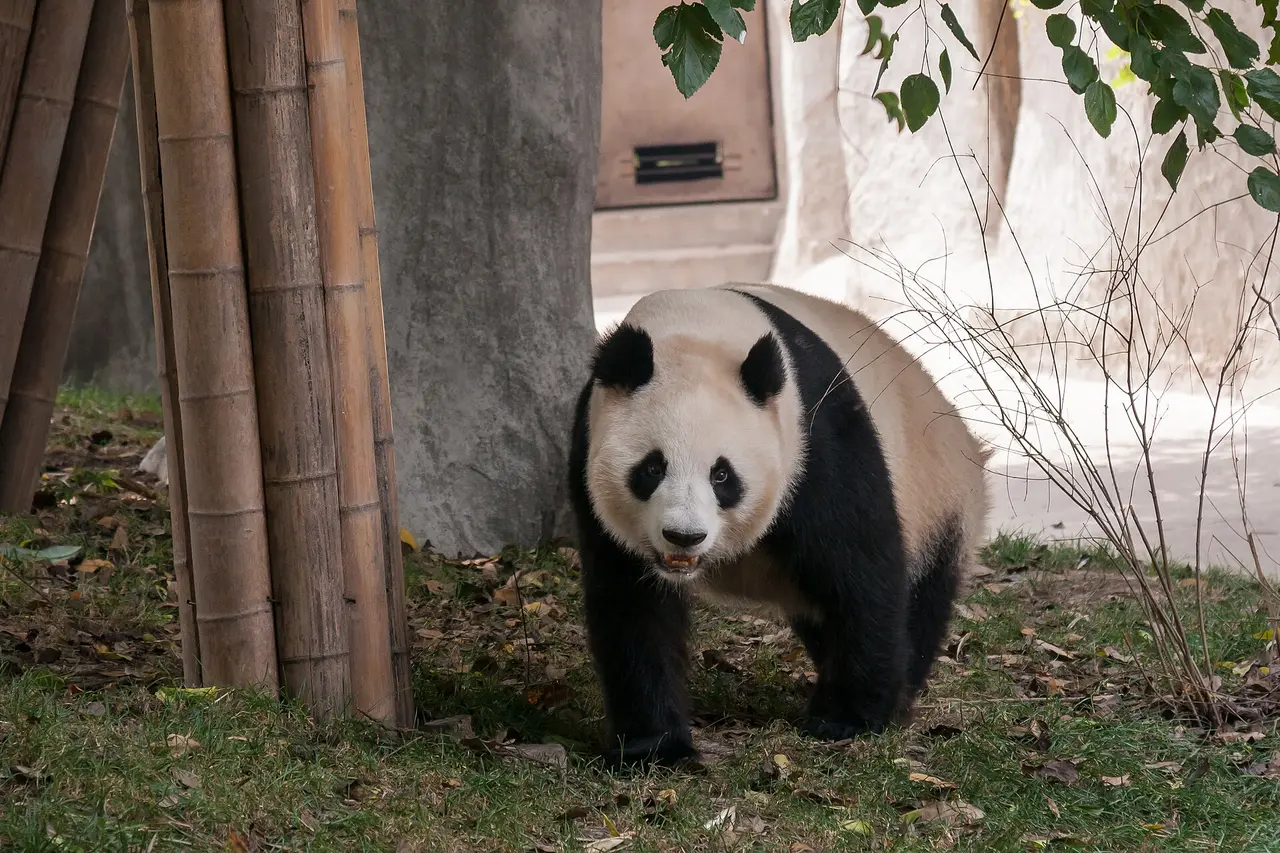
The Giant Panda Breeding Research Base, north of the city, is home to dozens of giant and red pandas in a large wooded park. Arrive at opening, around 7.30am: the animals eat in the morning and then sleep through the hot hours. Allow three hours, ideally on a weekday, and book your ticket online during Chinese holidays. Bring water and comfortable shoes.

Teahouses and People's Park

Tea is a way of life in Chengdu. In People's Park, the Heming teahouse has welcomed mahjong players, retirees and roaming ear cleaners for decades. Order a jasmine tea served in a lidded bowl, refilled at will. At Wenshu Monastery, the vegetarian teahouse offers a calmer setting. Allow at least an hour, without rushing. A cup costs only a few euros.

Kuanzhai Xiangzi, Jinli and old Chengdu

The Kuanzhai Xiangzi wide and narrow alleys keep Qing dynasty courtyard houses, restored and turned into cafés and shops; come in the evening when the lanterns light up. Near the Wuhou Shrine, devoted to the heroes of the Three Kingdoms, Jinli street recreates an old shopping street with street food stalls. These areas are very busy at weekends. Come on a weekday evening.

Jinsha, Du Fu and ancient history

The Jinsha Site Museum, to the west, displays the remains of a civilisation more than 3,000 years old, including the golden sun and birds disc that became an emblem of Chinese heritage. Nearby, the Thatched Cottage of Tang dynasty poet Du Fu is set among gardens and bamboo groves. Allow half a day by metro for both sites. Both close on some Mondays.

Hotpot, opera and nightlife

Sichuan cuisine owes its character to Sichuan pepper, which numbs the mouth, and to chillies. Hotpot, mapo tofu and dan dan noodles cost a few euros: a simple meal is about 2.60 euros according to Numbeo. In the evening, Sichuan opera mixes acrobatics, puppetry and instant face-changing, bian lian, in a show of about an hour and a half. Book opera seats a day ahead.

Leshan, Emei, Dujiangyan and Qingcheng

The Leshan Giant Buddha, 71 m tall and carved into the cliff in the 8th century, is about an hour away by high-speed train, then bus. Together with Mount Emei, a sacred Buddhist mountain, it forms a UNESCO site. To the north-west, an hour by train, the ancient Dujiangyan irrigation system and the Taoist temples of Mount Qingcheng are also World Heritage sites.

How much it costs

Per person per day, excluding international travel.
Budget
30 €/ day
2 620 € for 2 people, 7 days, return flights included
Accommodation
10 €
Food
9 €
Local transport
3 €
Sights and activities
8 €
Comfort
78 €/ day
3 292 € for 2 people, 7 days, return flights included
Accommodation
28 €
Food
22 €
Local transport
8 €
Sights and activities
20 €
Premium
195 €/ day
4 930 € for 2 people, 7 days, return flights included
Accommodation
70 €
Food
55 €
Local transport
25 €
Sights and activities
45 €
Prices checked: Relevé novembre 2026 : Numbeo (mis à jour le 10/11/2026) pour repas, cafés, bière, métro et taxis ; Hostelz, Skyscanner, Momondo et Trip.com pour l'hébergement (lit en auberge env. 10 €, 3 étoiles env. 55 € la chambre, 5 étoiles env. 140 € la chambre). Lit en dortoir pour backpacker, chambre double partagée à deux pour comfort et premium. Vol A/R Paris-Chengdu avec escale env. 1 100 € par personne (Liligo 1 221 € en moyenne sur 3 mois, PartirOu 1 140 €, Où et Quand entre 750 et 1 050 € selon les mois), hors Nouvel An et Golden Week.

Getting there

Airports serving Chengdu, from main hubs to secondary ones.
  • AATAltay Xuedu AirportAltaySecondary
  • ACXXingyi Wanfenglin AirportXingyiSecondary
  • AEBBaise (Bose) Bama AirportBaiseSecondary
  • AHJHongyuan AirportNgawaSecondary
  • AKUAksu Hongqipo AirportAksuSecondary
  • AOGAnshan Teng'ao Airport / Anshan Air BaseAnshanSecondary

Entry, health and safety

For FR travellers

Entry requirements

No visa for a tourist stay

Jusqu'au 31 décembre 2026, les titulaires d'un passeport ordinaire français sont exemptés de visa pour un séjour de 30 jours maximum (tourisme, affaires, visite familiale, échange, transit). Enregistrement auprès de la police dans les 24 heures, assuré par les hôtels. Au-delà de 30 jours ou pour un autre motif, visa obligatoire avant le départ.

Stay allowed for up to 30 days.

Passport valid for 6 months beyond your return date.

Health

Required: Fièvre jaune uniquement pour les voyageurs en provenance d'une zone d'endémie, y compris après un transit de plus de 12 heures dans un aéroport d'un pays concerné.

Advised: Calendrier vaccinal français à jour (diphtérie, tétanos, polio, coqueluche, rougeole) ; selon la durée et les conditions du séjour : hépatites A et B, typhoïde, encéphalite japonaise, chikungunya, dengue, rage.

Hausse des cas de rage en Chine, prudence avec les animaux errants. La Chine continentale, Chengdu comprise, est en vigilance normale ; seul le Xinjiang est en vigilance renforcée. Le Tibet voisin n'est accessible qu'avec un permis et en voyage organisé. Pollution de l'air plus marquée dans les villes du centre et du nord.

Safety

Normal precautions

Emergency

110 (police)

Checked in novembre 2026 against the official source. Entry rules change: check the official source before you travel, it alone is authoritative.

Practical information for Chengdu

Visa

French citizens are visa-exempt for up to 30 days until 31 December 2026; check the rules for your own nationality before travelling.

Two airports

Chengdu has two airports, Shuangliu and Tianfu, the latter over an hour from the centre: check yours before leaving.

Mobile payment

Alipay and WeChat Pay accept foreign cards; set them up before departure, as bank cards are rarely accepted.

Internet

Google and many networks are blocked: get an international eSIM or install a VPN before arriving.

Spice level

Ask for wei la (mildly spicy) or bu la (not spicy) in restaurants: by default, dishes are very hot.

Bookings

The panda base, Leshan and high-speed trains are booked ahead with your passport, especially during Chinese holidays.

Tibet

Neighbouring Tibet is only accessible with a special permit and on an organised tour; allow several weeks for paperwork.

Hazy skies

The Sichuan basin is often overcast and misty; sunny days are rare in winter.

Power plugs

220 V, type A, C and I sockets: a universal adapter is enough.

Chengdu in pictures

Photo credits : CEphoto, Uwe Aranas, CC BY-SA 3.0, Wikimedia Commons ; 王计, CC BY 2.5, Wikimedia Commons ; Daderot, CC0, Wikimedia Commons ; 星星, CC BY-SA 4.0, Wikimedia Commons

Frequently asked questions about Chengdu

When should you see Chengdu's pandas?
In the morning, at opening around 7.30am, when they eat their bamboo; in the afternoon they mostly sleep. Avoid weekends and Chinese holidays, when crowds are dense. Allow three hours for the visit and take a ride-hailing car or the metro to the base, north of the city.
Can you visit Leshan as a day trip from Chengdu?
Yes, by high-speed train to Leshan, about an hour, then bus or taxi to the site. The Buddha is seen by walking down the stairway alongside the statue or from a boat. Leave early: the queue for the stairway can exceed two hours at busy times.
Is Chengdu food too spicy?
It can be, but you can ask for milder dishes. Hotpot can be ordered with a split broth, spicy on one side and mild on the other. Also try less fiery dishes such as kung pao chicken or red-oil dumplings in a mild version.
Can Chengdu be combined with Xi'an or Beijing?
Yes, by high-speed train: Xi'an and its Terracotta Army are about three to four hours away, Beijing about eight hours or two and a half hours by plane. Chengdu fits well into a two-week circuit of China.
How many days should you spend in Chengdu?
Two days are enough for the pandas, teahouses and old districts. Three to four days let you add Leshan or Dujiangyan and Mount Qingcheng. Mount Emei deserves a night there to climb to the summit.
What is the best season for Chengdu?
April and November offer the best balance, around 17 to 23 °C. Summer is hot, humid and rainy, winter cool and often grey. Avoid Golden Week in early October and Chinese New Year, when sights are saturated.
Do you need a visa for Chengdu?
Not for French citizens until 31 December 2026, for stays of up to 30 days, with an ordinary passport valid six months after departure. Beyond that, a visa is required. Check the rules for your nationality and dates.

Plan your trip to Chengdu

Build your day-by-day itinerary and manage budget, bookings and packing in PlanTripNow.
Aperçu de l'application PlanTripNow