Skip to content

Visiting Delhi : Mughal old city, monuments and neighbourhoods

The lanes of Chandni Chowk at chai time, the vast courtyard of the Jama Masjid, the domes of Humayun's Tomb and the grand vistas of New Delhi: India's capital reveals itself layer by layer, with the metro's help. Three full days cover the essentials, between October and March.

Why visit Delhi?

Delhi holds three UNESCO World Heritage Sites, the Red Fort, the Qutb Minar and Humayun's Tomb, plus a Mughal old city that is still very much alive. Its metro serves most monuments and its airport is the main gateway to northern India, less than two hours by train from Agra and the Taj Mahal.

Delhi's must-sees

Mughal fortresses, garden tombs and places of worship of every faith in the country: the sites that justify the trip.

Red Fort

Shah Jahan's red sandstone citadel, a UNESCO site with audience halls and marble pavilions. Closed on Mondays, allow two hours for the visit.

Jama Masjid

A 17th-century great mosque whose courtyard holds thousands of worshippers. Closed to visitors during prayers, covering clothes required, climb to the south minaret possible.

Qutb Minar

A fluted sandstone minaret about 73 metres high, begun in the late 12th century and UNESCO-listed, surrounded by ruins and an ancient iron pillar.

Humayun's Tomb

A 16th-century Mughal mausoleum at the heart of a garden divided by water channels, often described as a forerunner of the Taj Mahal. UNESCO-listed, open daily.

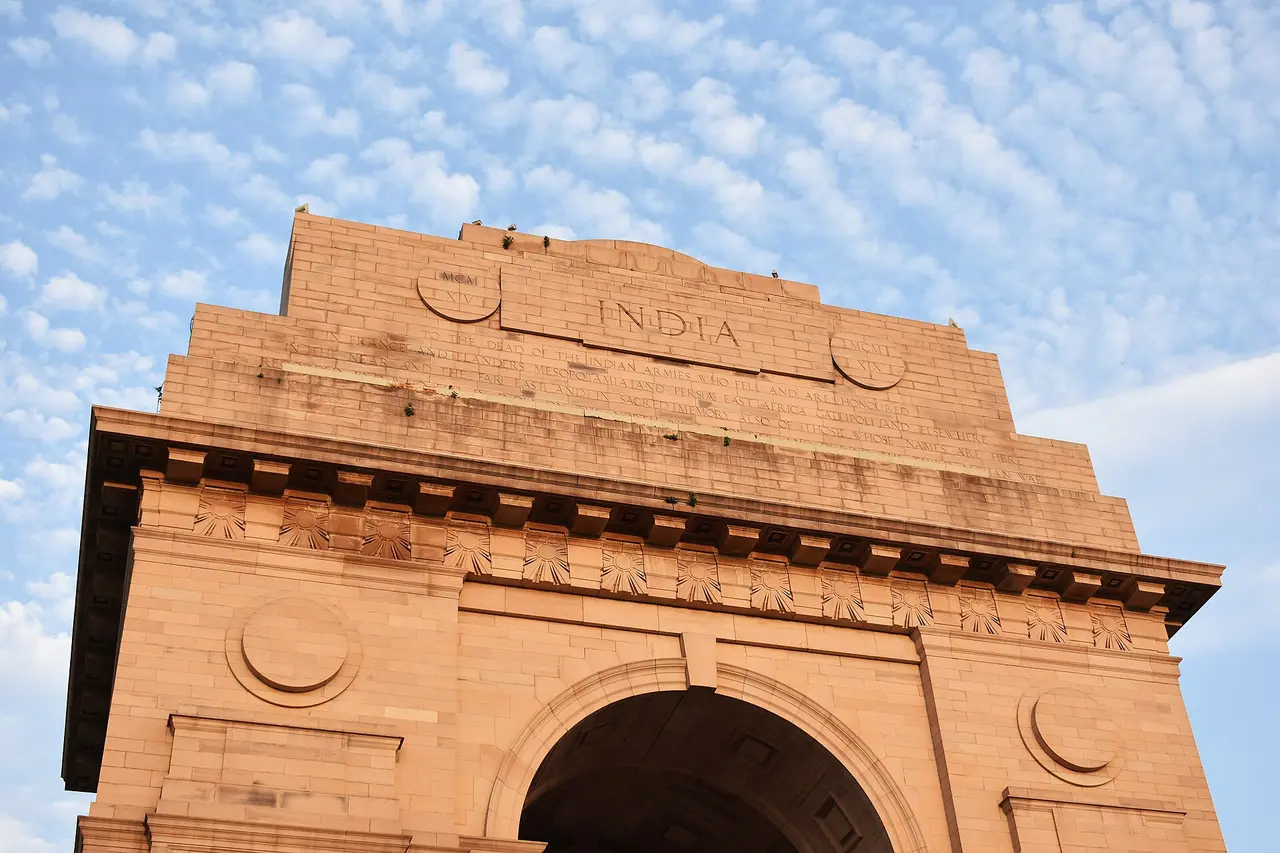
India Gate

A 42-metre triumphal arch honouring Indian soldiers who died in the First World War, lit up at night and surrounded by busy lawns.

Gurdwara Bangla Sahib

Delhi's main Sikh temple, near Connaught Place, with a sacred pool and a community kitchen serving free meals to everyone. Head covered and feet bare.

Lotus Temple

A Bahá'í house of worship completed in 1986, shaped from white marble petals. Open to all for silent reflection, closed on Mondays.

Akshardham

A vast Hindu complex opened in 2005, covered in lavish carvings. Phones and cameras are banned, with a compulsory cloakroom at the entrance, closed on Mondays.

Lodhi Gardens

A public park scattered with tombs of the 15th and 16th-century Sayyid and Lodi dynasties, where locals jog and picnic from dawn.

Agrasen ki Baoli

An ancient stepwell hidden between buildings near Connaught Place, with long flights of stone steps. Free entry, a twenty-minute visit.

National Museum

On Janpath, collections spanning five millennia of Indian art, from the Indus civilisation to Mughal miniatures. Closed on Mondays, allow at least two hours.

What to see in Delhi, neighbourhood by neighbourhood?

Shahjahanabad, the old city

Founded by Emperor Shah Jahan in the 17th century, the old city stretches between the Red Fort and the Jama Masjid. Chandni Chowk, its main artery, feeds specialised bazaars: spices at Khari Baoli, silver at Dariba Kalan, paper and fabrics in the nearby katras. Come in the morning around 10 am, when shops open without the afternoon crush, and allow at least half a day. A cycle rickshaw remains the best way to get through the lanes, and Chandni Chowk station on the metro's Yellow Line is the natural entry point.

Lutyens' Delhi and Kartavya Path

Designed by Edwin Lutyens and Herbert Baker for the British capital inaugurated in 1931, New Delhi lines up broad tree-lined avenues, roundabouts and white bungalows. The ceremonial axis, renamed Kartavya Path in 2022, runs for about 3 km from the presidential palace, Rashtrapati Bhavan, to the India Gate arch. Walk it in the late afternoon as the heat eases, combined with the nearby National Museum. On 26 January, the Republic Day parade closes the area several days in advance: check restrictions before planning this walk.

Connaught Place and Janpath

Built in the early 1930s, Connaught Place forms two rings of white colonnaded arcades around a central park, above the main metro hub, Rajiv Chowk. Banks, restaurants, bookshops and international brands cluster here, making it a convenient base for a first visit. To the south, Janpath and its Tibetan market sell crafts, shawls and jewellery: bargain firmly. Beware of touts claiming a shop or monument is closed in order to steer you towards an agency. Hotels around Connaught Place are preferable to the small establishments of Paharganj, which France's foreign ministry advises against.

Nizamuddin and Khan Market

Around the Sufi shrine of Hazrat Nizamuddin, a maze of lanes leads to the saint's mausoleum, where qawwali singers perform in the early evening, especially on Thursdays. Cover shoulders and legs, remove your shoes and bring a scarf for your head. Right next door, Humayun's Tomb and its gardens take two hours to visit. Further west, Khan Market gathers bookshops, cafés and designer boutiques popular with expats, ten minutes on foot from Lodhi Gardens. Allow a full day to string these three areas together.

Mehrauli and the historic south

South Delhi preserves the traces of the city's first Islamic capitals. Around the Qutb Minar, begun in the late 12th century, Mehrauli Archaeological Park spreads tombs, mosques, stepwells and little-visited ruins over some 80 hectares, free to wander. Mehrauli village also has several restaurants facing the minaret. Arrive at opening time, at sunrise, for the light and the cool air. Further east, the 14th-century ramparts of Tughlaqabad form a huge and almost deserted site, easy to combine into a half-day trip.

Hauz Khas and the southern districts

Hauz Khas Village grew up around a 13th-century reservoir and the ruins of a 14th-century madrasa, in a park shared by walkers and waterbirds. In the evening its bars and restaurants draw a young crowd, especially at weekends. The neighbouring areas of Shahpur Jat and Lado Sarai host designer workshops and art galleries. To the south-east, the Lotus Temple and Dilli Haat, a crafts market where each Indian state runs its own stalls, fit into one afternoon. These districts are served by the metro's Yellow, Magenta and Pink Lines.

Seasons, heat and pollution

The best period runs from October to March, with mild days and cool nights in December and January, sometimes under morning fog. From April to June temperatures frequently exceed 40 °C: sightsee early and keep the hottest hours for museums. The monsoon, from July to September, brings violent downpours and flooded streets. Above all, air pollution reaches dangerous levels in November and December: check the air quality index every day and pack FFP2 masks, especially if travelling with children or with respiratory issues.

Day trips to Agra and Rajasthan

Agra and the Taj Mahal can be reached by express train from New Delhi or Hazrat Nizamuddin stations in under two hours, which makes a same-day return possible, though a night there lets you see the monument at sunrise. Note that the Taj Mahal is closed on Fridays. Jaipur, capital of Rajasthan, is about four to five hours away by train or road. Together, Delhi, Agra and Jaipur form the Golden Triangle, a loop of six to eight days and the classic first circuit for travellers discovering India.
Getting there

Airports serving Delhi, from main hubs to secondary ones.
  • AGRAgra Airport / Agra Air Force StationAgraSecondary
  • AGXAgatti AirportAgattiSecondary
  • AHAMaa Mahamaya AirportAmbikapurSecondary
  • AJLLengpui AirportAizawlSecondary
  • AKDAkola AirportAkolaSecondary
  • AYJMaharshi Valmiki International AirportFaizabadSecondary

Practical information for Delhi

Indira Gandhi Airport

About 16 km south-west of the centre, linked to New Delhi station by the metro's Airport Express in around twenty minutes.

Visa and e-Arrival Card

e-Tourist visa to be obtained online before departure, plus the e-Arrival Card form to complete within 72 hours before your flight.

Metro

Around ten lines serve most sights. Security check at every entrance, the first carriage of each train is reserved for women.

Taxis and ride-hailing

Uber, Ola and rickshaw apps show the fare upfront and avoid haggling. Turn down drivers who suggest a detour via a shop.

Monument tickets

Sites run by the Archaeological Survey of India sell tickets online, with a foreigner rate higher than the Indian rate. Paying online skips the queue.

Closing day

Monday for the Red Fort, the National Museum, Akshardham and the Lotus Temple: plan Mehrauli or Humayun's Tomb for that day.

Air quality

Dangerous pollution peaks in November and December. Check the daily AQI and pack FFP2 masks.

Tap water

Not drinkable: sealed bottled or filtered water, avoid ice from street stalls, and prefer fruit you peel yourself.

Dress code

Shoulders and legs covered in mosques, temples and gurdwaras, shoes removed, head covered at Sikh temples and the Jama Masjid.

Power sockets

Types C, D and M, 230 V. Round European plugs often fit Indian sockets, but a universal adapter is safer.

Delhi in pictures

Photo credits : Mike_fleming from London, England, CC BY-SA 2.0, Wikimedia Commons ; Syed Sajidul Islam, CC BY-SA 4.0, Wikimedia Commons ; Komal Sambhudas, CC0, Wikimedia Commons ; Jakub Hałun, CC BY-SA 4.0, Wikimedia Commons

Frequently asked questions about Delhi

Can you do Delhi to Agra in a day to see the Taj Mahal?
Yes, the express train takes under two hours from New Delhi or Hazrat Nizamuddin. Leave at dawn, book tickets ahead and avoid Fridays, when the Taj Mahal is closed. A night in Agra is more comfortable and also leaves time for Agra Fort.
Should you avoid staying in Paharganj?
France's foreign ministry advises against the small hotels of Paharganj and Nabi Karim because of crime. For a similar budget, choose Connaught Place, Karol Bagh or the guesthouses of Hauz Khas and Defence Colony, which are better kept and close to the metro.
Is the Delhi metro practical for visiting the monuments?
Yes. The Yellow Line serves Chandni Chowk, Connaught Place and the Qutb Minar, the Violet Line runs near Jama Masjid and Khan Market. A rechargeable card avoids ticket queues. Just avoid rush hours, when trains are packed.
How do non-Muslims visit the Jama Masjid?
The mosque is open to visitors outside prayer times. Cover arms and legs, robes are lent at the entrance, remove your shoes and pay the camera fee. The climb up the south minaret costs extra and offers a view over the old city.
What to do in Delhi on a Monday, when many sites close?
Humayun's Tomb, the Qutb Minar, Lodhi Gardens and the Nizamuddin shrine stay open. Gurdwara Bangla Sahib welcomes visitors day and night. Keep the Red Fort, Akshardham, the Lotus Temple and the National Museum for another day.
How to avoid scams at New Delhi railway station?
Ignore anyone claiming your train is cancelled or that the booking office has moved: it is a classic ploy to steer you to an agency. Check your train's status on the railway app or website and head straight to the platform shown.
Where can you hear qawwali in Delhi?
At the Hazrat Nizamuddin shrine, singers perform in the early evening, especially on Thursdays. The atmosphere is fervent and crowded: come in covering clothes, barefoot, keep your belongings close and stay back to leave room for worshippers.
Can you eat for free at Gurdwara Bangla Sahib?
Yes, the community kitchen serves vegetarian meals to anyone, without distinction. You sit in rows on the floor, head covered and barefoot. A donation is welcome but not required, and you can also help with cooking or washing up.
Which area to choose for a night out in Delhi?
Hauz Khas Village gathers bars and restaurants around its lake, very lively at weekends. Connaught Place offers a more classic, central choice. Head back in an app-booked ride rather than a rickshaw hailed on the street, especially if you are a woman travelling alone.

Plan your trip to Delhi

Build your day-by-day itinerary and manage budget, bookings and packing in PlanTripNow.
Aperçu de l'application PlanTripNow
