Skip to content

Visit Muscat : what to see, when to go and how to plan

Muscat unfolds as a low, white city squeezed between brown mountains and a turquoise sea. You move from the Grand Mosque to the incense-scented lanes of Muttrah souq, from the Portuguese forts of the old port to dolphins offshore, with wadis and desert less than two hours away.

At a glance

Visa
Required
7-day budget
€749
Per person, comfort profile, excluding international flights.

Why visit Muscat?

Muscat, the capital of the Sultanate of Oman, offers well-preserved traditional architecture, the Sultan Qaboos Grand Mosque, Muttrah souq and easy access to wadis, the Hajar mountains and the Daymaniyat Islands. France advises heightened vigilance across the country. Allow three to four days, from November to March, when it stays under 30 °C.

When to visit Muscat

Temperatures, rainfall and crowds month by month, to pick your window.
When to visit Muscat
MonthTemperaturesRainCrowdsVerdict
January17 to 25 °C2 dBusyThe heart of the ideal season: 25 °C, sunshine and sea at 24 °C, book hotels early.
February18 to 27 °C3 dBusyPerfect for the wadis and the Wahiba desert, with the year's rare showers.
March20 to 29 °C2 dModerateStill pleasant at 29 °C, the last comfortable month for hiking in the Hajar mountains.
April24 to 34 °C1 dQuietThe heat climbs past 34 °C: sightseeing early in the morning, beach and snorkelling in the afternoon.
May29 to 39 °C0 dVery quietClose to 40 °C: luxury hotels at slashed prices, but gruelling daytime excursions.
June30 to 40 °C1 dVery quietThe hottest month, 30 °C nights and a cyclone risk over the Arabian Sea: best avoided.
July30 to 37 °C1 dQuietCrushing humid heat; Omanis head for Salalah's cool monsoon, an area France advises against visiting.
August28 to 36 °C1 dQuietStill stifling, with a 30 °C sea that no longer cools: best kept for stopovers.
September27 to 36 °C0 dQuietThe heat eases slowly, a good time for dolphins and diving at the Daymaniyat Islands.
October24 to 35 °C0 dModerateVisitors gradually return, with mild evenings on the Muttrah Corniche.
November21 to 30 °C0 dBusyThe best month: 30 °C, sea at 27 °C and dry skies before the December rush.
December18 to 27 °C2 dPackedYear-end holidays and cruise ships: full hotels and peak prices.
Source: Normales 1991-2020 via climatestotravel.com, cohérentes avec Wikipédia (climat aride, une dizaine de centimètres de pluie par an concentrés de décembre à avril, pointes estivales vers 45 °C) ; température de la mer climatestotravel.com, relevé novembre 2026

Muscat's must-sees

Heritage, souqs and nature, the visits that count in and around Muscat.

Sultan Qaboos Grand Mosque

A monumental mosque inaugurated in 2001, open to non-Muslims in the morning, with a huge hand-woven carpet.

Muttrah Souq

The old port's covered souq for frankincense, silverware, dates and fabrics, best in the late afternoon.

Muttrah Corniche

A seafront promenade several kilometres long, lined with traditional houses and lively at sunset.

Royal Opera House Muscat

An opera house opened in 2011, blending Omani architecture with a modern hall, with daytime guided tours.

Al Alam Palace

The sultan's ceremonial palace, seen from outside between the Portuguese forts of Jalali and Mirani.

National Museum of Oman

A museum tracing the country's maritime history, crafts and heritage, in Old Muscat.

Bimmah Sinkhole

A limestone hollow filled with turquoise water near the coast, where you can swim south of Muscat.

Wadi Shab

A canyon of emerald natural pools, explored on foot then by swimming to a cave.

Nizwa Fort

A 17th-century fort with a great round tower, at the heart of the former inland capital.

What to discover in Muscat?

The Grand Mosque and Qurum

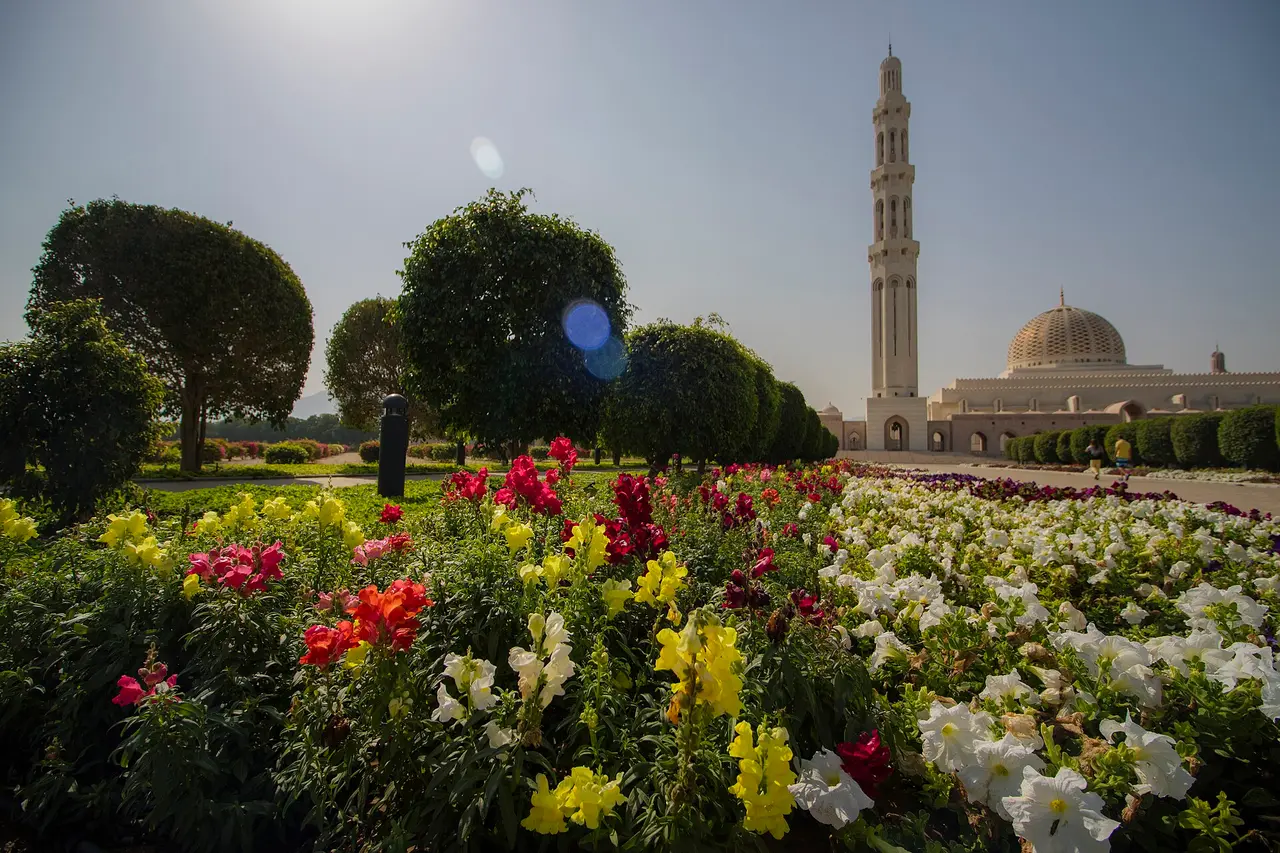
The Sultan Qaboos Grand Mosque, inaugurated in 2001, is the country's major monument: a prayer hall covered by a huge hand-woven carpet and a monumental chandelier. It opens to non-Muslims only in the morning, except Fridays, with arms and legs covered and a headscarf for women. Further east, the Qurum district brings together a beach, a park and the Royal Opera House, opened in 2011, which offers guided tours during the day.

Muttrah, its souq and corniche

The port of Muttrah is the liveliest district. Its covered souq, a maze of frankincense, silverware, dates and fabrics, usually closes in early afternoon and reopens late in the day, when the heat drops. The corniche, several kilometres long, is walked at sunset, from the latticed houses to Muttrah fort. The fish market, to the north, is busiest early in the morning.

Old Muscat and its forts

At the end of a small bay framed by cliffs, Old Muscat holds Al Alam Palace, the sultan's ceremonial residence seen only from outside, between the 16th-century Portuguese forts of Jalali and Mirani, also closed to the public. The National Museum of Oman, nearby, traces the country's maritime history, and Bait Al Zubair displays traditional costumes and objects. Allow half a day.

The sea: dolphins, beaches and the Daymaniyat Islands

Boat trips leave the marinas early in the morning to watch dolphins, in about two hours. Qurum and Al Bustan beaches are good for swimming almost all year, with a sea that never drops below 23 °C. To the north-west, the Daymaniyat Islands nature reserve, an hour away by boat, offers some of the best snorkelling in the Gulf, accessible only with a licensed operator.

The south coast: Bimmah and Wadi Shab

About an hour and a half south on the coastal highway, Bimmah Sinkhole, a turquoise pool linked to the sea, is free to visit. A little further, Wadi Shab requires a short boat crossing, then a walk of about forty-five minutes and a swim through natural pools to a cave. Set off early, wear closed shoes and covering clothes to pass through the villages.

The interior: Nizwa and the Hajar mountains

Nizwa, the former capital, is about an hour and three quarters by road. Its 17th-century fort with a great round tower and its craft souq fill half a day; a lively livestock market is held there on Friday mornings. Beyond, the Hajar mountains, including Jebel Akhdar, offer cool air and terraced villages, some roads accessible only by 4x4. Bring a warm layer for the heights.

How much it costs

Per person per day, excluding international travel.
Budget
44 €/ day
1 656 € for 2 people, 7 days, return flights included
Accommodation
18 €
Food
14 €
Local transport
6 €
Sights and activities
6 €
Comfort
107 €/ day
2 538 € for 2 people, 7 days, return flights included
Accommodation
30 €
Food
32 €
Local transport
20 €
Sights and activities
25 €
Premium
295 €/ day
5 170 € for 2 people, 7 days, return flights included
Accommodation
100 €
Food
75 €
Local transport
50 €
Sights and activities
70 €
Prices checked: Relevé novembre 2026 : Numbeo (mis à jour le 06/11/2026) pour repas, cafés, bus et taxis ; HotelsCombined, Booking.com et Momondo pour l'hébergement (lit en auberge ou chambre simple env. 18 €, 3 étoiles env. 60 € la chambre, 5 étoiles env. 200 € la chambre). Lit ou chambre basique pour backpacker, chambre double partagée à deux pour comfort et premium. Taxis non compteurisés et réseau de bus limité : les transports pèsent plus lourd qu'ailleurs. Vol A/R Paris-Mascate avec escale env. 520 € par personne (tarifs relevés chez Turkish Airlines, Etihad et Lufthansa entre 420 et 680 €), d'octobre à avril hors vacances de fin d'année.

Getting there

Airports serving Muscat, from main hubs to secondary ones.
  • DQMDuqm International AirportDuqmMain
  • MCTMuscat International AirportMuscat/SeebMain
  • OHSSuhar International AirportSuharMain
  • SLLSalalah International AirportSalalahMain
  • KHSKhasab AirportKhasabSecondary
  • MNHMussanah AirportAl Masna'ahSecondary

Entry, health and safety

For FR travellers

Entry requirements

Visa required

Visa obligatoire mais délivré gratuitement à l'arrivée, par simple tampon, pour un séjour de 14 jours au plus ; 21 rials à l'arrivée pour un séjour jusqu'à 30 jours. Au-delà, ou pour un visa à entrées multiples, e-visa en ligne, valable un mois à compter de sa délivrance. L'ambassade d'Oman à Paris ne délivre plus de visas.

Passport valid for 6 months beyond your return date.

Health

Advised: Calendrier vaccinal français à jour (diphtérie, tétanos, polio, coqueluche, rougeole) ; selon le séjour : hépatite A, typhoïde, hépatite B.

Tout Oman est en vigilance renforcée ; les régions de Salalah, Douqm et Musandam ainsi que la zone frontalière du Yémen sont déconseillées sauf raison impérative. Mascate relève de la vigilance renforcée, avec des précautions de base dans certaines périphéries. Forte chaleur : hydratation et pas de sortie aux heures chaudes. Paludisme sporadique, MERS-CoV.

Safety

Increased caution

Checked in novembre 2026 against the official source. Entry rules change: check the official source before you travel, it alone is authoritative.

Practical information for Muscat

Visa

Free on arrival for French citizens for up to 14 days, paid beyond or by eVisa; passport valid six months after departure. Check the rules for your nationality.

Safety

France advises heightened vigilance across Oman and advises against Salalah, Douqm, Musandam and the Yemen border unless essential.

Dress code

Shoulders and knees covered in town and villages; long clothes and a headscarf for women at the Grand Mosque.

Weekend

The weekend falls on Friday and Saturday; the Grand Mosque is closed to visitors on Fridays.

Taxis

Traditional taxis have no meter: agree the fare before getting in, or use local taxi apps with posted prices.

Driving

Renting a car is the most practical option for the wadis and Nizwa; roads are excellent, but a 4x4 is compulsory for Jebel Akhdar.

Alcohol

Served only in certain licensed hotels and restaurants; drinking in public is forbidden.

Ramadan

During Ramadan, do not eat or drink in public in daytime; site and shop hours are reduced.

Heat

From May to September, over 35 °C: sightsee early in the morning, stay hydrated and avoid midday hikes.

Currency

The Omani rial, one of the world's strongest currencies; cards accepted everywhere in town, cash useful in souqs.

Power plugs

240 V with type G three-pin sockets: an adapter is needed for continental European devices.

Muscat in pictures

Photo credits : Mostafameraji, CC BY-SA 4.0, Wikimedia Commons ; Diego Delso, CC BY-SA 4.0, Wikimedia Commons ; albinfo, CC BY-SA 4.0, Wikimedia Commons

Frequently asked questions about Muscat

Is Muscat safe for travellers?
France advises heightened vigilance across Oman and advises against Salalah, Douqm, Musandam and the Yemen border unless essential. Muscat is not in an advised-against area; a few basic precautions are recommended in some outskirts. Check your own government's latest advice before travelling.
How do you visit Muscat's Grand Mosque?
It is open to non-Muslims in the morning, from Saturday to Thursday. Arms and legs must be covered, and women must wear a headscarf; garments can be borrowed at the entrance. Arrive at opening to enjoy the cool and the calm.
Muscat or Dubai: what is the difference?
Dubai bets on skyscrapers, malls and excess; Muscat has kept low-rise architecture, traditional souqs and direct access to spectacular nature, between wadis, mountains and marine reserves. The two combine by plane in about an hour.
Do you need to rent a car in Muscat?
For the city, taxis and apps are enough. For Wadi Shab, Bimmah, Nizwa or the desert, a rental car gives real freedom on excellent roads. Jebel Akhdar requires a 4x4, checked at the foot of the mountain.
Can you combine Muscat with Abu Dhabi or Dubai?
Yes, flights are short and frequent to Abu Dhabi and Dubai, and a road crosses the border via Al Ain or Hatta. Many travellers spend a few days in the Emirates then a week in Oman, checking each country's visa rules.
When is the best time to visit Muscat?
From November to March, with highs between 25 and 30 °C and a still-warm sea. December and January are the busiest and most expensive. From May to September, the heat often exceeds 38 °C, making daytime excursions difficult.

Plan your trip to Muscat

Build your day-by-day itinerary and manage budget, bookings and packing in PlanTripNow.
Aperçu de l'application PlanTripNow