Skip to content

Visiting Tbilisi : what to do in three days in Georgia's capital

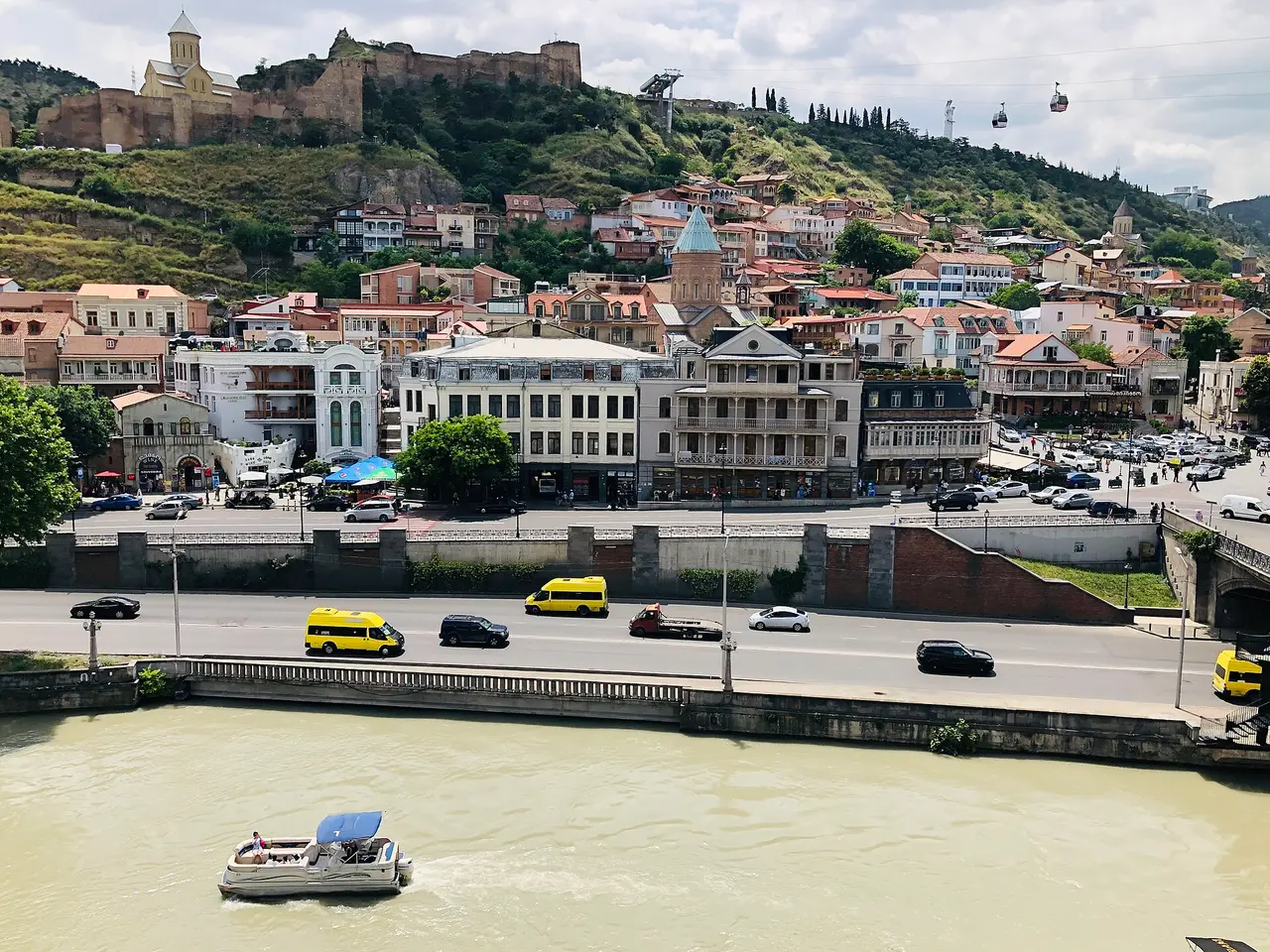
Brick domes over hot springs, houses with wooden balconies leaning over the Mtkvari, a fortress perched on the cliff and tables where wine flows from buried clay jars: Tbilisi takes three days to discover before heading for the Kakheti vineyards or the peaks of the Caucasus.

Why visit Tbilisi?

Tbilisi, the capital of Georgia, was founded in the 5th century around hot sulphur springs that gave it its name, from the Georgian tbili, meaning warm. Its old town brings Orthodox churches, baths, a synagogue and a mosque within a few streets of each other. It is also the gateway to the Kakheti vineyards and the Greater Caucasus.

Tbilisi's must-sees

Ten visits spanning a fortress, ancient churches, hot baths and markets, most of them on foot from the old town.

Narikala Fortress

Walls whose origins date back to the 4th century, on the ridge above the old town. A full view over both banks of the Mtkvari, best late in the day.

Abanotubani sulphur baths

Brick domes over naturally hot springs. The Orbeliani bath, with its blue mosaic facade, is the most photographed; private rooms are rented by the hour.

Holy Trinity Cathedral

A huge Orthodox cathedral consecrated in 2004 on Avlabari hill, one of the tallest in the Orthodox world. Covered clothing required, scarves available at the entrance.

Bridge of Peace

A glass and steel pedestrian bridge opened in 2010, linking the old town to Rike Park. Its thousands of LEDs light up at nightfall.

Anchiskhati Basilica

Tbilisi's oldest surviving church, from the 6th century, with frescoes darkened by time. Polyphonic choirs sometimes sing here during services.

Georgian National Museum

On Rustaveli Avenue, its archaeological treasury displays the gold jewellery of ancient Colchis, worked with astonishing finesse. Allow two hours.

Mother of Georgia

An aluminium statue from 1958 on the Sololaki ridge, holding a bowl of wine for friends and a sword for enemies. Reachable on foot from Narikala.

Mtatsminda funicular

A funicular opened in 1905, climbing to the amusement park and TV tower on Mount Mtatsminda, with a stop at the pantheon of great Georgian figures.

Dry Bridge Market

An open-air flea market by the Dry Bridge: Soviet souvenirs, drinking horns, paintings and old cameras. Bargain with a smile, especially at weekends.

Metekhi Church

A 13th-century church perched on a cliff above the Mtkvari, in front of the equestrian statue of King Vakhtang Gorgasali, the city's legendary founder.

What to see in Tbilisi, neighbourhood by neighbourhood?

Kala, the old town below the fortress

The historic Kala district stretches between Meidan Square and Freedom Square, at the foot of Narikala hill. Its sloping lanes combine Sioni Cathedral, the Great Synagogue, houses with wooden balconies and the leaning tower of the Gabriadze puppet theatre, whose clock comes to life at set times. Behind the baths, a path climbs a gorge to the Leghvtakhevi waterfall, a ten-minute walk. Allow a day for Kala and the fortress, in shoes with a good grip: the cobbles are slippery.

Sololaki and its Art Nouveau entrances

Just above Freedom Square, Sololaki was the wealthy merchants' district in the 19th century. Behind its facades hide painted entrance halls, decorated ceilings and wrought-iron staircases, sometimes visible when the door is open: be discreet, these are lived-in buildings. Lado Asatiani Street and its parallels gather wine cellars and cafés. Allow two to three hours of wandering, ideally in the morning, before heading to the National Botanical Garden, whose entrance is about fifteen minutes away on foot.

Rustaveli Avenue and Vera

About 1.5 km long, Rustaveli Avenue links Freedom Square to the Vera district, lined with Parliament, the Moorish Revival opera house, Kashveti Church and the National Museum. It is also the main site of near-daily protests since late 2024: avoid gatherings, as taking part can lead to a fine or detention. Beyond, Vera and Vake, newer residential districts, offer cafés, galleries and Stamba, a former Soviet printing house turned hotel and cultural venue. Half a day is enough for the avenue and one museum.

Avlabari, on the left bank of the Mtkvari

Crossing the Bridge of Peace or walking through Rike Park brings you to Avlabari, the historically Armenian district on the left bank. Metekhi Church stands on the cliff, then the streets climb to the vast Holy Trinity Cathedral, consecrated in 2004. Rike Park is the starting point of the cable car to Narikala, a ride of a few minutes above the river. In the evening, the riverbanks and the illuminated bridge draw strollers and families. Allow half a day combining Avlabari and the ride up to the fortress.

Marjanishvili and Aghmashenebeli Avenue

On the left bank, further north, David Aghmashenebeli Avenue has regained its 19th-century facades, partly built by German settlers, and its pedestrian section fills with terraces in the evening. Nearby, Fabrika, a former Soviet sewing factory turned hostel, workshops and bars around a graffiti-covered courtyard, is a meeting point for local youth. Marjanishvili metro station links the area to the centre in a few minutes. It is the most affordable district to stay and go out in, about twenty minutes' walk from the old town.

Wine, supra and the Georgian table

Qvevri winemaking, using large clay jars buried in the ground, has been on UNESCO's Intangible Cultural Heritage list since 2013. In Tbilisi, the natural wine bars of Sololaki and the old town pour dozens by the glass, including amber wines made with long skin contact. The traditional feast, the supra, is paced by the toasts of a tamada, the toastmaster. Try khinkali, juicy dumplings eaten by hand, and Adjarian khachapuri, a boat-shaped bread filled with cheese and an egg. Set aside at least two dinners for a proper introduction.

Day trips: Mtskheta, Kakheti and the Greater Caucasus

Mtskheta, the former capital listed by UNESCO with Jvari Monastery and Svetitskhoveli Cathedral, is about thirty minutes away by road. Wine country Kakheti and the hilltop town of Sighnaghi take around two hours, ideally with a night there. Kazbegi and Gergeti Church, below Mount Kazbek, are three hours away along the Georgian Military Road, sometimes closed in winter. When planning a wider tour of Georgia, note that Abkhazia and South Ossetia are formally advised against by the French authorities.

Getting there

Airports serving Tbilisi, from main hubs to secondary ones.
  • BUSAlexander Kartveli Batumi International AirportBatumiMain
  • KUTDavid the Builder Kutaisi International AirportKopitnariMain
  • TBSTbilisi International AirportTbilisiMain
  • SUIVladislav Ardzinba Sukhum International AirportSukhumiSecondary

Practical information for Tbilisi

Currency

Georgian lari (GEL). Cards are accepted almost everywhere in town; keep cash for markets and minibuses.

Visa

No visa for European Union citizens, with stays of up to one year allowed; other nationalities should check the rules before departure.

Protests

Near-daily gatherings since late 2024, mainly on Rustaveli Avenue: stay away, as taking part can lead to a fine or administrative detention.

Areas to avoid

Abkhazia and South Ossetia, outside Tbilisi's control, are formally advised against by the French Foreign Ministry.

Church dress code

Shoulders and knees covered; women cover their hair, with scarves and skirts often lent at the door. Men remove their hats.

Service charge

Often added automatically to restaurant bills: check before leaving an extra tip.

Taxis

Book through an app (Bolt is widely used): the price is fixed in advance, which avoids haggling on the street.

Metro

Two deep lines, fast and cheap, with contactless card payment at the gates. Handy for linking Rustaveli, the station and Marjanishvili.

Power sockets

Types C and F, 220 V: European plugs work without an adapter.

Summer heat

July and August often exceed 30 °C in a hilly, stony city: favour May-June and September-October.

Tbilisi in pictures

Photo credits : GeoO, CC BY-SA 4.0, Wikimedia Commons ; falco, CC0, Wikimedia Commons ; Marcin Konsek, CC BY-SA 4.0, Wikimedia Commons ; Roberto Strauss from Frankfurt am Main, Deutschland, CC BY-SA 2.0, Wikimedia Commons

Frequently asked questions about Tbilisi

How long should you stay in an Abanotubani sulphur bath?
Private rooms are usually rented for an hour, but soak in the hot pool for ten to fifteen minutes at a time, with breaks in the cold water. Avoid it if pregnant or with a heart condition, and book for evenings and weekends.
Cable car or walk up to Narikala Fortress?
The cable car leaves from Rike Park and climbs above the Mtkvari in a few minutes. On foot, allow about fifteen minutes of steps from Meidan Square. The most pleasant option: ride up, then walk down towards the baths.
Are the protests on Rustaveli Avenue a risk for tourists?
They are concentrated mainly outside Parliament, often in the evening. Foreign visitors should keep away: taking part can lead to a fine or detention, and the authorities photograph travellers at the borders. Bypass the area and follow your embassy's advice.
How do you eat khinkali the Tbilisi way?
By hand, holding the khinkali by its knot of dough. Bite gently into the side, sip the broth, then eat the rest, leaving the knot on the plate. They are ordered by the piece, often in fives or tens.
Can you visit Mtskheta in half a day from Tbilisi?
Yes. Minibuses leave from Didube bus station and reach Mtskheta in about thirty minutes. Jvari Monastery, on its hill, is best reached by taxi. Three to four hours on site are enough for the two great sanctuaries.
Where to buy qvevri wine in Tbilisi, and how much can you take home?
The wine cellars and bars of Sololaki and the old town sell bottles from small producers. When returning to the European Union, the customs allowance is 4 litres of still wine per adult. Pack bottles in checked luggage.
Is the road from Tbilisi to Kazbegi open in winter?
It generally remains passable, but the Jvari Pass, above 2,300 metres, sometimes closes for several days during snowfall or avalanche risk. Check the day before and build some slack into your plans from December to March.
When does the Tbilisoba festival take place?
Tbilisoba is held over a weekend in October and celebrates the city and the harvest: grape picking, regional stalls, concerts and dancing in the old town. It is an excellent time to visit, with milder temperatures than in summer.
What can you find at Tbilisi's Dry Bridge Market?
Soviet medals and objects, old cameras, drinking horns, jewellery, vinyl records and paintings by local artists. The choice is wider at weekends. For antiques or works of art, check the export rules before buying.

Plan your trip to Tbilisi

Build your day-by-day itinerary and manage budget, bookings and packing in PlanTripNow.
Aperçu de l'application PlanTripNow