Cambodia

Between the ancient temples of Angkor, the calm waters of Tonlé Sap lake and the energy of Phnom Penh, Cambodia reveals a fascinating history and warm hospitality. A Southeast Asian country where heritage, nature and gentle living come together at every step of the journey.

Why visit Cambodia and its temples?

Cambodia is home to Angkor, one of the largest religious complexes in the world and a UNESCO World Heritage Site. The country also offers varied landscapes, from Tonlé Sap lake to rice paddies and the coast along the Gulf of Thailand. Khmer culture, shaped by Buddhist spirituality, is reflected in local crafts, cuisine and daily life.

What can you discover in Cambodia?

Cambodia is inseparable from Angkor, the former capital of the Khmer empire, where the temples of Angkor Wat, the Bayon and Ta Prohm tell centuries of history and spirituality. Phnom Penh, the capital, combines a royal palace, lively markets and memorial sites that recall the country's recent history. In Siem Reap, the gateway to Angkor, and in Battambang, a quieter colonial-era town, Khmer architecture and art can be explored at a slower pace.
Beyond the temples, Cambodia stands out for the diversity of its landscapes: Tonlé Sap lake with its floating villages, the green rice paddies of the central plains, and the southern coast around Sihanoukville and nearby islands, well suited to relaxation. Khmer cuisine, built around rice, freshwater fish and aromatic herbs, rounds out a travel experience where nature, history and warm hospitality come together. Local markets and traditional crafts, such as silk weaving and stone carving, reflect skills passed down through generations.

Cities to visit in Cambodia

Featured destinations appear first.
Coming soon.

Cambodia in pictures

Cambodia highlights

A few must-sees to help plan your trip to Cambodia.

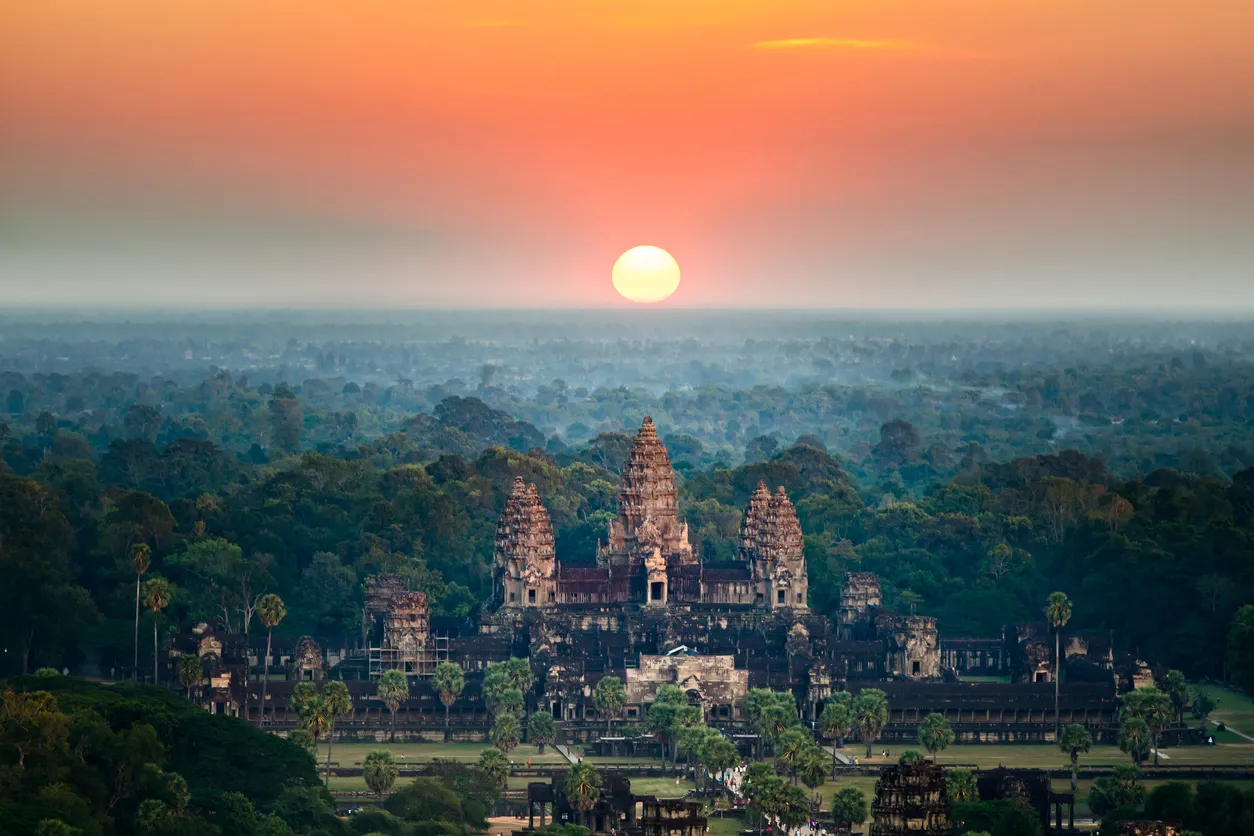
Temples of Angkor

The Angkor archaeological site brings together dozens of Khmer temples, including the iconic Angkor Wat, witnesses to centuries of history and sacred architecture.
Tonlé Sap Lake

This vast lake changes size with the seasons and is home to floating villages where daily life takes place almost entirely on the water.

Phnom Penh

Cambodia's capital combines a royal palace, lively markets and memorial sites, offering a vivid glimpse into the country's recent history and Khmer culture.

Siem Reap

The gateway to Angkor, this lively town offers night markets, restaurants and accommodation for every budget, right next to the temples.

Southern Coast

Sihanoukville and nearby islands offer sandy beaches and calm waters, a relaxed contrast to the temples and landscapes further inland.

Khmer Cuisine

Built around rice, freshwater fish and aromatic herbs, Cambodian cuisine can be enjoyed at local markets and family-run restaurants alike.

Practical information

Capital
Phnom Penh
Area
≈ 181,000 km²
Population
≈ 17 million
Language
Khmer
Currency
Cambodian riel (KHR)
Time zone
UTC+7
Climate
Tropical, with dry and rainy seasons
Best season
November to February

Frequently asked questions

What's the best time to visit Cambodia?
The dry season, from November to February, brings milder temperatures and generally clear skies, ideal for visiting the temples of Angkor and enjoying the southern coast. The rainy season, from June to October, makes the landscape lush green but can complicate some travel.
Do I need a visa to visit Cambodia?
Most travelers need a visa, available on arrival at major entry points or online before departure. It's best to check current entry requirements with the relevant authorities before traveling, as rules can change.
How many days should I plan for Angkor?
At least two to three days allow you to see the main temples, such as Angkor Wat, the Bayon and Ta Prohm, at a comfortable pace. Travelers wanting to explore further sites or avoid crowds may want to allow more time.
Is Cambodia suitable for families with children?
Cambodia can work well for families, especially when including easier stops like the floating villages of Tonlé Sap or the southern beaches, and building in rest time between temple visits, which can be long and hot.
What currency should I use in Cambodia?
The Cambodian riel is the official currency, but US dollars are widely accepted in shops, hotels and restaurants. Keeping some riel in small notes is still useful for local markets and transport.
How do you get around between cities in Cambodia?
Long-distance buses connect major cities at affordable prices, while domestic flights save time on longer routes between Phnom Penh, Siem Reap and Sihanoukville. Tuk-tuks and taxis remain practical and convenient for getting around within towns and cities.

Plan your trip to Cambodia

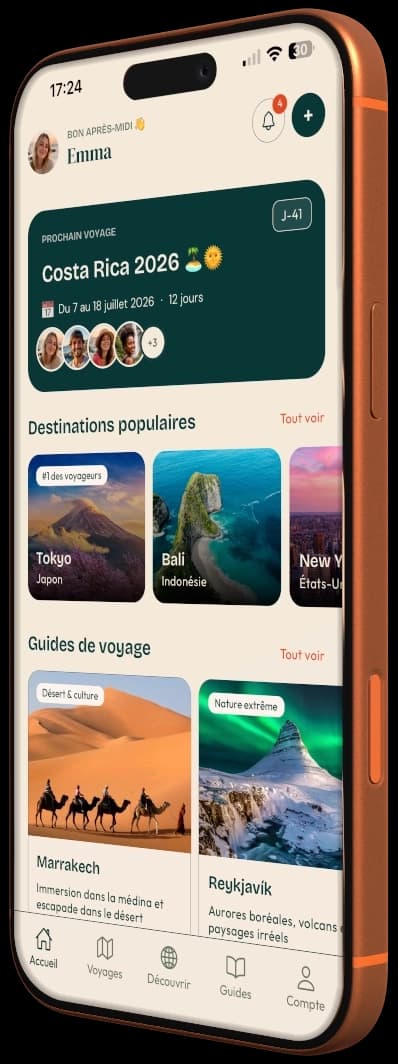
Day-by-day itinerary, budget, bookings and packing in a single app.
Aperçu de l'application PlanTripNow