Namibia

A land of endless open space in southern Africa, Namibia unfolds the orange dunes of Sossusvlei, the herds of Etosha National Park and the misty shores of the Skeleton Coast, under some of the starriest skies on the planet.

Why visit Namibia?

Namibia stands out for its spectacular desert landscapes and very low population density, ideal for travellers seeking space and independence. The country combines the Namib desert, safaris in Etosha National Park and safe roads well suited to self-drive trips, within an exceptionally well-preserved natural setting.

What to discover in Namibia?

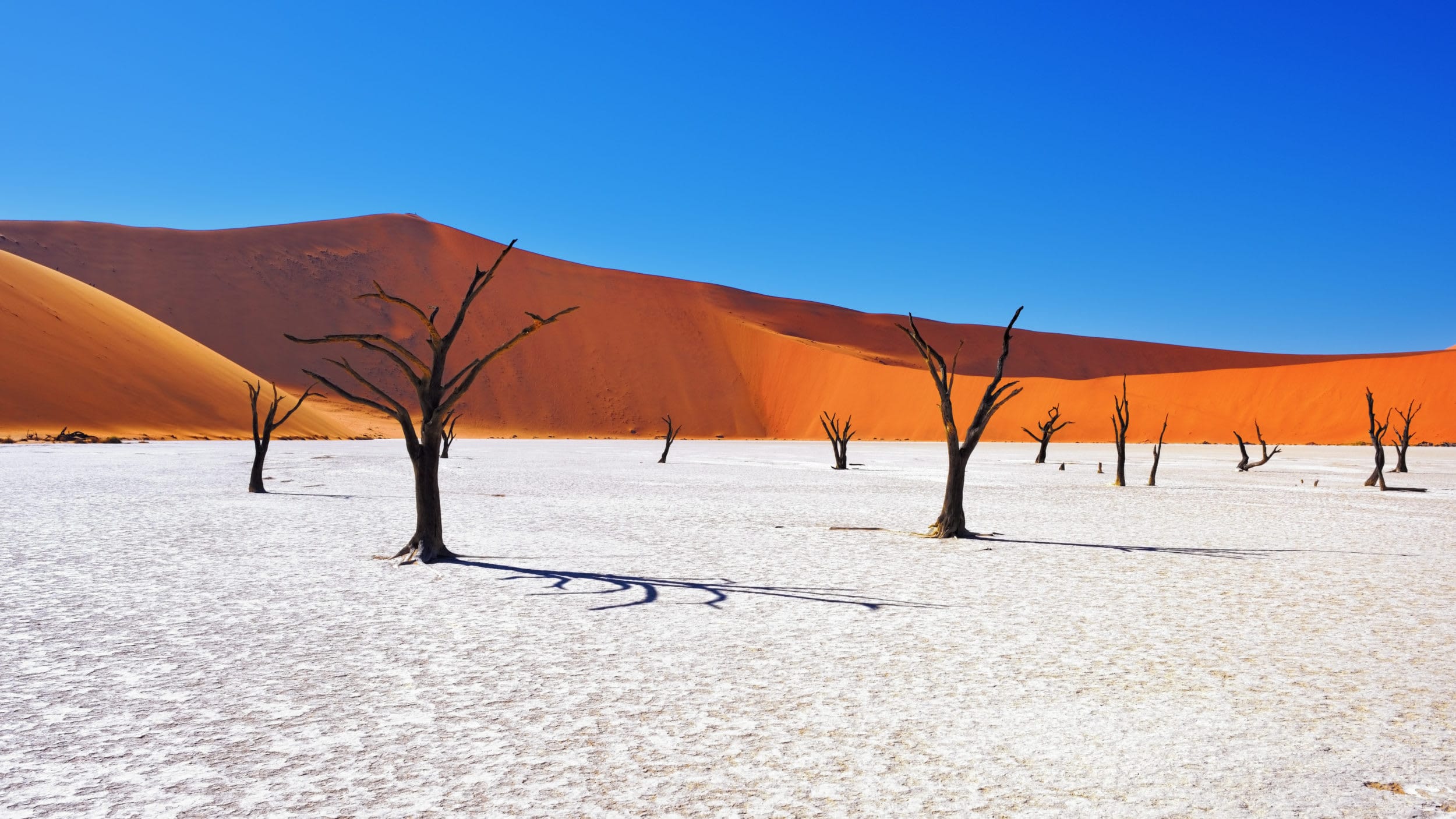
The Namib desert, one of the oldest deserts in the world, culminates in the red dunes of Sossusvlei and the petrified trees of Deadvlei, whose dark silhouettes stand in striking contrast against the orange sand and intense blue sky, creating an almost otherworldly scene that draws photographers and travellers from around the globe. Further north, Etosha National Park gathers abundant wildlife around its vast salt pan, offering self-drive safaris that remain particularly accessible to independent travellers exploring at their own pace.
Namibia also surprises with the sheer diversity of its regions: Damaraland and its desert-adapted elephants, the rugged Skeleton Coast with shipwrecks worn down by sea spray, or the Kalahari near the South African border. With a small population spread across a vast territory, the country offers a rare sense of space, ideal for self-drive road trips and for observing a remarkably clear night sky, far from any light pollution.

Cities to visit in Namibia

Featured destinations appear first.
Coming soon.

Namibia in pictures

Highlights of Namibia

A few iconic experiences to make the most of a trip to Namibia.

Sossusvlei dunes

Among the tallest sand dunes in the world, offering spectacular sunrises over a desert that is several million years old.

Deadvlei

A dried-out clay pan dotted with blackened dead trees, creating a striking contrast against the orange sand and blue sky.

Etosha National Park

A vast salt pan attracting elephants, lions and antelope around scattered waterholes accessible by self-drive safari throughout the entire year.

Damaraland

Rocky, arid landscapes home to desert-adapted elephants as well as ancient rock engravings several thousand years old and still well preserved.

Skeleton Coast

A wild and misty stretch of Atlantic coastline, famous for its many shipwrecks and large colonies of Cape fur seals along the shore.

Namib night sky

One of the clearest night skies anywhere in the world, thanks to remarkably low light pollution across the entire vast country.

Practical information

Capital
Windhoek
Area
About 825,600 km²
Population
About 2.5 million people
Languages
English (official), Afrikaans and local languages
Currency
Namibian dollar (NAD), pegged to the South African rand
Time zone
UTC+2
Climate
Desert and semi-arid, with cool nights all year round
Best season
Dry season, May to October

Frequently asked questions about Namibia

When is the best time to visit Namibia?
The dry season, from May to October, offers the best conditions for wildlife viewing around the Etosha waterholes and for exploring the desert, with pleasant daytime temperatures and generally clear skies.
Can you visit Namibia with a rental car?
Yes, self-drive trips are very common in Namibia thanks to a safe and well-maintained road network. A 4x4 vehicle is recommended for certain tracks, particularly in Damaraland and near Sossusvlei.
Do I need a visa to travel to Namibia?
Many nationalities can enter Namibia without a visa for a short tourist stay. It is recommended to check the exact requirements with the embassy according to your nationality before booking your flight.
What currency should I use in Namibia?
The Namibian dollar is used locally, and the South African rand is also accepted everywhere in the country. Card payments work in the main towns and at established tourist lodges.
Is Namibia a good choice for a first African safari?
Yes, the country is often recommended to first-time visitors thanks to its safe roads, low crime rate and the option of self-drive safaris in parks like Etosha, without a mandatory guide.
How much time should I plan for a trip to Namibia?
Two weeks allow you to combine Sossusvlei, Damaraland, the coastal town of Swakopmund and Etosha National Park without rushing, accounting for the long distances between the country's main regions and parks.

Plan your trip to Namibia

Day-by-day itinerary, budget, bookings and packing in a single app.
Aperçu de l'application PlanTripNow