Skip to content

Grand Canyon: when to go, what to see and how to plan

UNESCO-listed since 1979, the Grand Canyon reaches 1.8 km deep and nearly 30 km wide. Most visitors stick to the South Rim viewpoints; yet a few hours of walking below the rim, or a well-chosen season, completely change the experience.

At a glance

Currency
US Dollar ($)
Time difference
UTC-7
Visa
None
Tourist stay of up to 90 days
7-day budget
€1,603
Per person, comfort profile, excluding international flights.

South Rim or North Rim: which to choose?

The South Rim, at 2,100 m, is open all year, served by free shuttles and 3 hours 30 from Phoenix, 4 hours 30 from Las Vegas. The higher, wilder North Rim only opens from mid-May to mid-October, and has no lodging in 2026 after the Dragon Bravo fire. Since January 2026, foreign visitors pay a surcharge of 100 dollars per person.

When to visit Grand Canyon

Temperatures, rainfall and crowds month by month, to pick your window.
When to visit Grand Canyon
MonthTemperaturesRainCrowdsVerdict
January-7 to 7 °C6 dVery quietPossible snow and -7 °C nights on the South Rim, few crowds; North Rim closed.
February-6 to 8 °C6 dVery quietStill cold, upper trails sometimes icy: microspikes advised.
March-4 to 12 °C6 dModerateWarming to 12 °C, US spring break filling up lodging.
April-2 to 16 °C4 dBusyMild on the rim, 28 °C at the bottom: a good window for hiking.
May2 to 21 °C3 dBusyDry and sunny, 21 °C on the South Rim; North Rim open from mid-May.
June6 to 28 °C2 dPackedExtreme heat at the bottom, up to 38 °C: never hike down and back in a day.
July10 to 29 °C7 dPackedPeak crowds, afternoon monsoon storms, over 40 °C at the bottom.
August10 to 28 °C10 dPackedThe stormiest month: lightning on viewpoints, flash floods in side canyons.
September7 to 24 °C6 dBusyEnd of the monsoon, 24 °C on the rim and still busy in the first half.
October1 to 18 °C5 dBusyGolden light, 18 °C and the best month to hike into the canyon; North Rim closes mid-October.
November-4 to 12 °C4 dQuietCool and quiet, first frosts and early sunsets.
December-8 to 6 °C6 dQuietCanyon sometimes dusted with snow, busier year-end holidays.
Source: Normales 1991-2020 de Grand Canyon Village (rive sud, 2 100 m) via climatestotravel.com, relevé novembre 2026 ; le fond du canyon (Phantom Ranch, 760 m) est 12 à 15 °C plus chaud, jusqu'à 41 °C en juillet. Région continentale, sans température de mer. North Rim ouverte du 15 mai à mi-octobre, sans hébergement en 2026 après l'incendie Dragon Bravo.

What to discover at the Grand Canyon?

The South Rim viewpoints

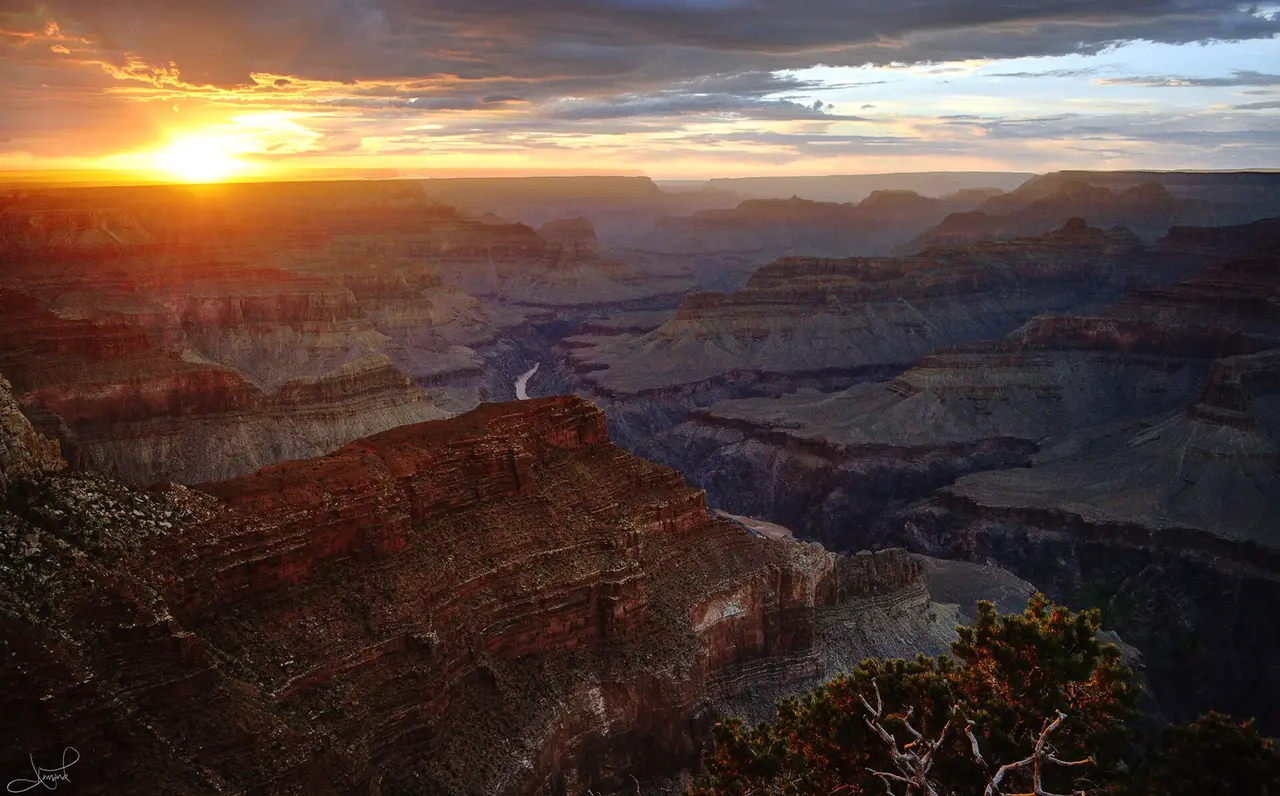
The Rim Trail follows the edge for about twenty kilometres, almost flat and partly paved, from South Kaibab to Hermits Rest. Mather Point, five minutes from the visitor centre, is most travellers' first panorama, often packed at noon. From March to November, Hermit Road is closed to cars: the free red shuttle serves its nine viewpoints, including Hopi Point, the favourite for sunset. Allow a full day to cover the Rim Trail, alternating walking and the shuttle.

Going below the rim

Two maintained trails drop from the South Rim. The South Kaibab Trail, with no water or shade, offers the most open views: Ooh Aah Point, 1.5 km down, takes one to two hours return, Cedar Ridge three. The shadier Bright Angel Trail has rest houses with seasonal water at 2.4 and 4.8 km. Remember the park's rule: the climb back takes twice as long as the descent. Reaching the river and back in a day is strongly discouraged, especially from May to September.

Desert View and the eastern road

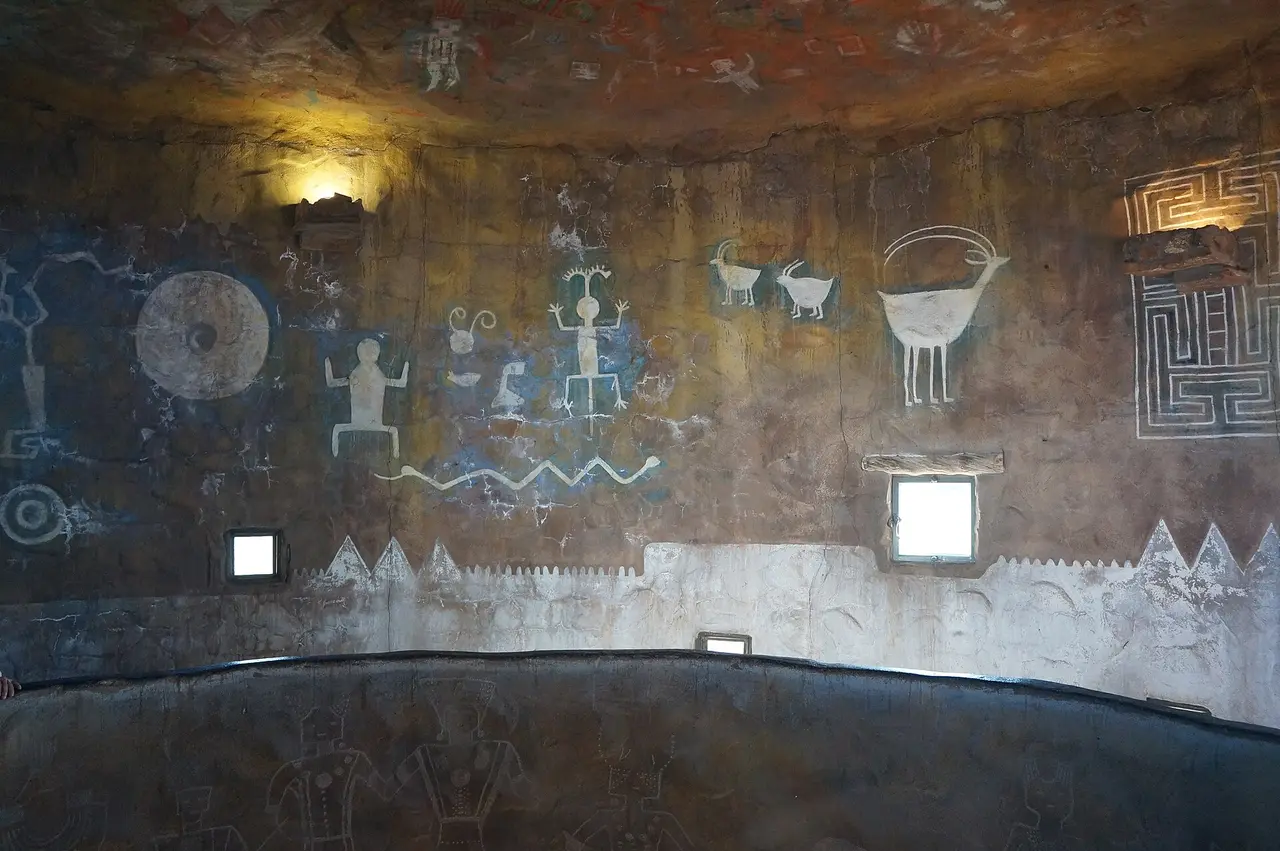
Desert View Drive follows the rim for 40 km eastward, to the park's east exit. Grandview, Moran and Lipan Point reveal bends of the Colorado invisible from the village. At the end, the Desert View Watchtower, built in 1932 by architect Mary Colter on the model of ancestral Puebloan towers, holds Hopi murals. The Tusayan ruin, a pueblo village around 800 years old, can be visited on the way. Plan half a day, ideally at sunrise.

The North Rim, higher and quieter

Only 16 km away as the crow flies but more than 4 hours by road from the South Rim, the North Rim rises to around 2,500 m amid the aspen forests of the Kaibab Plateau. It receives about ten times fewer visitors. Bright Angel Point and Cape Royal are its two main viewpoints, and the North Kaibab Trail reopens in 2026 to hikers only. The 2025 Dragon Bravo fire destroyed the Grand Canyon Lodge: in 2026, you need to sleep in Jacob Lake or Kanab, 45 minutes and 2 hours away.

Flights, rafting and a historic train

Helicopter flights leave from Tusayan airport and last 30 to 50 minutes over the eastern part of the canyon. Rafting down the Colorado, 6 to 18 days between Lees Ferry and Lake Mead, is often booked more than a year ahead with licensed operators. More relaxed, the Grand Canyon Railway has linked Williams to the historic village since 1901, in just over two hours, with Western entertainment on board. Helicopter seats are easier to find in winter.

Horseshoe Bend, Antelope Canyon and Havasupai

About 2 hours 30 from the east exit, the town of Page is the base for Horseshoe Bend, a bend of the Colorado seen from a 300 m cliff, and for Antelope Canyon, a narrow slot canyon with wavy walls, visited only with a Navajo guide. To the west, the turquoise Havasu falls, on the Havasupai reservation, require a paid permit drawn by lottery and a 16 km hike. The Grand Canyon West Skywalk, a glass walkway on the Hualapai reservation, is closer to Las Vegas than to the South Rim.

Sleeping on the rim

The South Rim village has six historic or newer hotels, from El Tovar, opened in 1905, to the simpler Maswik Lodge; all can be booked up to 13 months ahead and are full from spring. Tusayan, 10 minutes from the south entrance, lines up chain hotels, around 215 dollars a night on average. Williams and Flagstaff, an hour away, remain the cheapest options. For Phantom Ranch, at the bottom of the canyon, places are allocated by lottery fifteen months before the date.
Cities to visit in Grand Canyon

Featured destinations appear first.
Coming soon.

How much it costs

Per person per day, excluding international travel.
Budget
115 €/ day
2 890 € for 2 people, 7 days, return flights included
Accommodation
40 €
Food
30 €
Local transport
30 €
Sights and activities
15 €
Comfort
229 €/ day
4 486 € for 2 people, 7 days, return flights included
Accommodation
94 €
Food
55 €
Local transport
35 €
Sights and activities
45 €
Premium
465 €/ day
7 790 € for 2 people, 7 days, return flights included
Accommodation
175 €
Food
90 €
Local transport
50 €
Sights and activities
150 €
Prices checked: Relevé novembre 2026, conversion USD-EUR à environ 1,14. Hébergement : agrégateurs (HotelsCombined, Travelocity, Booking) pour Tusayan, prix moyen env. 215 dollars la nuit, à partir de 120 dollars ; Maswik Lodge 160 à 225 dollars, El Tovar 250 à 540 dollars ; profil backpacker en camping ou motel de Williams. Chambre partagée à deux pour les trois profils. Voiture de location indispensable, partagée à deux, essence comprise. Activités : droit d'entrée de 35 dollars par véhicule plus surtaxe de 100 dollars par non-résident de 16 ans et plus depuis le 1er janvier 2026 (étalés sur la semaine), survol en hélicoptère pour le profil premium. Vol A/R Paris-Las Vegas avec escale 640 € par personne (moyenne ou-et-quand.net septembre-novembre 2026, relevé du budget Las Vegas). Hors juin-août.

Entry, health and safety

For FR travellers

Entry requirements

No visa for a tourist stay

Pas de visa pour un séjour touristique de 90 jours maximum dans le cadre du programme d'exemption, mais une autorisation ESTA payante est obligatoire, à demander sur le seul site officiel au moins 72 heures avant le départ ; elle reste valable deux ans. Passeport électronique ou biométrique exigé, le passeport d'urgence ne permet pas d'entrer sans visa. Le moindre dépassement de la durée autorisée entraîne une reconduite immédiate et une interdiction de retour de plusieurs années.

Stay allowed for up to 90 days.

Passport valid for 6 months beyond your return date.

Health

Advised: Diphtérie, tétanos, poliomyélite, coqueluche et rougeole à jour ; dengue et chikungunya seulement en période épidémique ou pour un long séjour.

Assurance santé et rapatriement indispensable : aucune convention de sécurité sociale entre la France et les États-Unis, soins très coûteux ; les secours en fond de canyon se font souvent par hélicoptère. Rive sud à 2 100 m : essoufflement possible les premiers jours. Au fond du canyon, plus de 40 °C en été : le parc déconseille de descendre jusqu'au fleuve et de remonter dans la journée, emporter beaucoup d'eau et du salé. Orages et éclairs fréquents en juillet-août sur les points de vue. Alerte rougeole en cours (2026).

Safety

Normal precautions

Emergency

911

Checked in novembre 2026 against the official source. Entry rules change: check the official source before you travel, it alone is authoritative.

Grand Canyon in pictures

Photo credits : tsaiproject from Canada, CC BY 2.0, Wikimedia Commons ; Tuxyso, CC BY-SA 3.0, Wikimedia Commons ; Luca Galuzzi ( Lucag ), CC BY-SA 2.5, Wikimedia Commons ; © Pierre André, CC BY-SA 4.0, Wikimedia Commons ; Grand Canyon National Park, CC BY 4.0, Wikimedia Commons ; Dietmar Rabich, CC BY-SA 4.0, Wikimedia Commons

Grand Canyon must-sees

Viewpoints, trails and nearby sites not to miss.

Mather Point

The South Rim's first big panorama, a short walk from the visitor centre.

Hopi Point

The favourite sunset viewpoint, served by the Hermit Road shuttle.

South Kaibab Trail

A ridge trail with the most open views, down to Ooh Aah Point or Cedar Ridge.

Desert View Watchtower

A 1932 lookout tower by Mary Colter, at the east end of the South Rim.

Bright Angel Point

A North Rim viewpoint at the end of a short forest trail.

Horseshoe Bend

A horseshoe-shaped bend of the Colorado near Page.

Practical information for the Grand Canyon

Entrance fees
35 dollars per vehicle for 7 days, plus 100 dollars per non-resident visitor aged 16 and over since 1 January 2026; non-resident annual pass 250 dollars.
Entry requirements
ESTA required for visa-waiver travellers, to apply for at least 72 hours before departure, with an electronic or biometric passport.
Getting there
Flights to Las Vegas or Phoenix, then 4 hours 30 or 3 hours 30 by road to the South Rim; a car is essential outside organised tours.
Shuttles
Free shuttles on the South Rim; Hermit Road closed to cars from March to November.
Opening
South Rim all year; North Rim from mid-May to mid-October, with no lodging in 2026.
Heat and altitude
Rim at 2,100 m, canyon floor above 40 °C in summer: water, salt and pre-dawn starts.
Storms
In July and August, frequent afternoon lightning: leave exposed viewpoints at the first rumble.
Permits
Camping below the rim and Havasupai only with a permit; Phantom Ranch by lottery.
Time zone
Arizona does not observe daylight saving time (UTC-7 all year), unlike the neighbouring Navajo Nation.

Frequently asked questions about the Grand Canyon

How many days should you spend at the Grand Canyon?
One day covers the main South Rim viewpoints, but two nights on site let you see a sunrise and a sunset and hike a few hours down a trail. Add two days for Page and Horseshoe Bend, or for the North Rim in summer.
Can you hike down to the Colorado and back in a day?
The park strongly advises against it: the round trip from the South Rim is over 20 km with 1,400 m of elevation, and over 40 °C at the bottom in summer. Hikers are rescued every year. To reach the river, plan a night below with a permit or at Phantom Ranch.
How much does entry cost for a foreign visitor?
Since 1 January 2026, a surcharge of 100 dollars per non-resident visitor aged 16 and over is added to the 35-dollar vehicle ticket. The 250-dollar non-resident annual pass covers it and pays off from three major parks.
What is the best season?
April-May and September-October offer 16 to 24 °C on the South Rim and bearable temperatures at the bottom of the canyon. Summer brings crowds and storms, winter brings snow and freezing nights, but also a rare calm at the viewpoints.
Grand Canyon from Las Vegas: South Rim or Grand Canyon West?
Grand Canyon West, 2 hours 30 from Las Vegas, offers the Skywalk on a Hualapai reservation, outside the national park, at high prices. The South Rim, 4 hours 30 away, has far wider panoramas and trails; it justifies at least one night on site.
Should you book lodging far ahead?
Yes for the South Rim village hotels, which open for booking 13 months ahead and are often full from March to October. Tusayan, Williams and Flagstaff leave more flexibility, at the cost of one to two hours of driving each day.
Can you visit the Grand Canyon without a car?
It is possible but restrictive: coach tours from Las Vegas, Phoenix or Flagstaff, or the historic train from Williams. On site, free shuttles serve the South Rim. The North Rim, Page and Desert View remain hard to reach without a vehicle, though.

Plan your trip to Grand Canyon

Day-by-day itinerary, budget, bookings and packing in a single app.
Aperçu de l'application PlanTripNow