Skip to content

Kerala: when to go, what to see and how to plan

Nicknamed God's Own Country, Kerala charms with its slow pace: a night on a houseboat gliding between rice fields, sunrise over tea estates, an Ayurvedic massage facing the sea. It is also one of the easiest Indian states to travel around.

At a glance

Currency
Indian Rupee (₹)
Time difference
UTC+5:30
Visa
Required
7-day budget
€700
Per person, comfort profile, excluding international flights.

When to go to Kerala?

From November to March, the dry season brings 31 to 33 °C on the coast, the sea at 28 °C and cool nights in Munnar. The south-west monsoon, from June to September, brings up to 23 rainy days a month, low prices and the Ayurveda treatment season. Most visitors, including French citizens, need an e-visa and the e-Arrival Card.

When to visit Kerala

Temperatures, rainfall and crowds month by month, to pick your window.
When to visit Kerala
MonthTemperaturesRainCrowdsVerdict
January23 to 32 °C1 dPackedIdeal dry season, 32 °C and clear skies; houseboats and Varkala beaches in high demand.
February24 to 32 °C1 dBusyStill dry and bright, temple festivals with caparisoned elephants in some villages.
March25 to 33 °C3 dModerateThe humid heat rises, but the Munnar hills stay pleasant.
April26 to 33 °C7 dQuietThe hottest month, 33 °C, first showers before the monsoon; Vishu festival.
May26 to 33 °C11 dQuietStormy pre-monsoon, falling prices, rough sea on the beaches.
June24 to 31 °C23 dVery quietThe south-west monsoon arrives: 23 rainy days, dangerous swimming, Ayurveda treatment season.
July24 to 30 °C23 dVery quietPeak monsoon, very green landscapes, risk of floods and landslides.
August24 to 30 °C19 dQuietStill heavy rain, snake boat races on the backwaters and Onam depending on the calendar.
September24 to 30 °C13 dQuietEnd of the monsoon, low rates and Athirappilly falls at their fullest.
October24 to 31 °C14 dModerateNorth-east monsoon: shorter afternoon showers, visitors gradually returning.
November24 to 32 °C7 dBusyDry weather returns, nature still green: a very good month before peak season.
December23 to 32 °C2 dPackedPeak season, 32 °C and the sea at 28.5 °C; year-end holidays and top prices.
Source: Normales 1991-2020 de Kochi via climatestotravel.com (températures), jours de pluie et température de la mer de la même source, relevé novembre 2026. Les collines de Munnar, vers 1 600 m, sont 8 à 10 °C plus fraîches. Mousson du sud-ouest de juin à septembre, du nord-est en octobre-novembre.

What to discover in Kerala?

The backwaters by houseboat

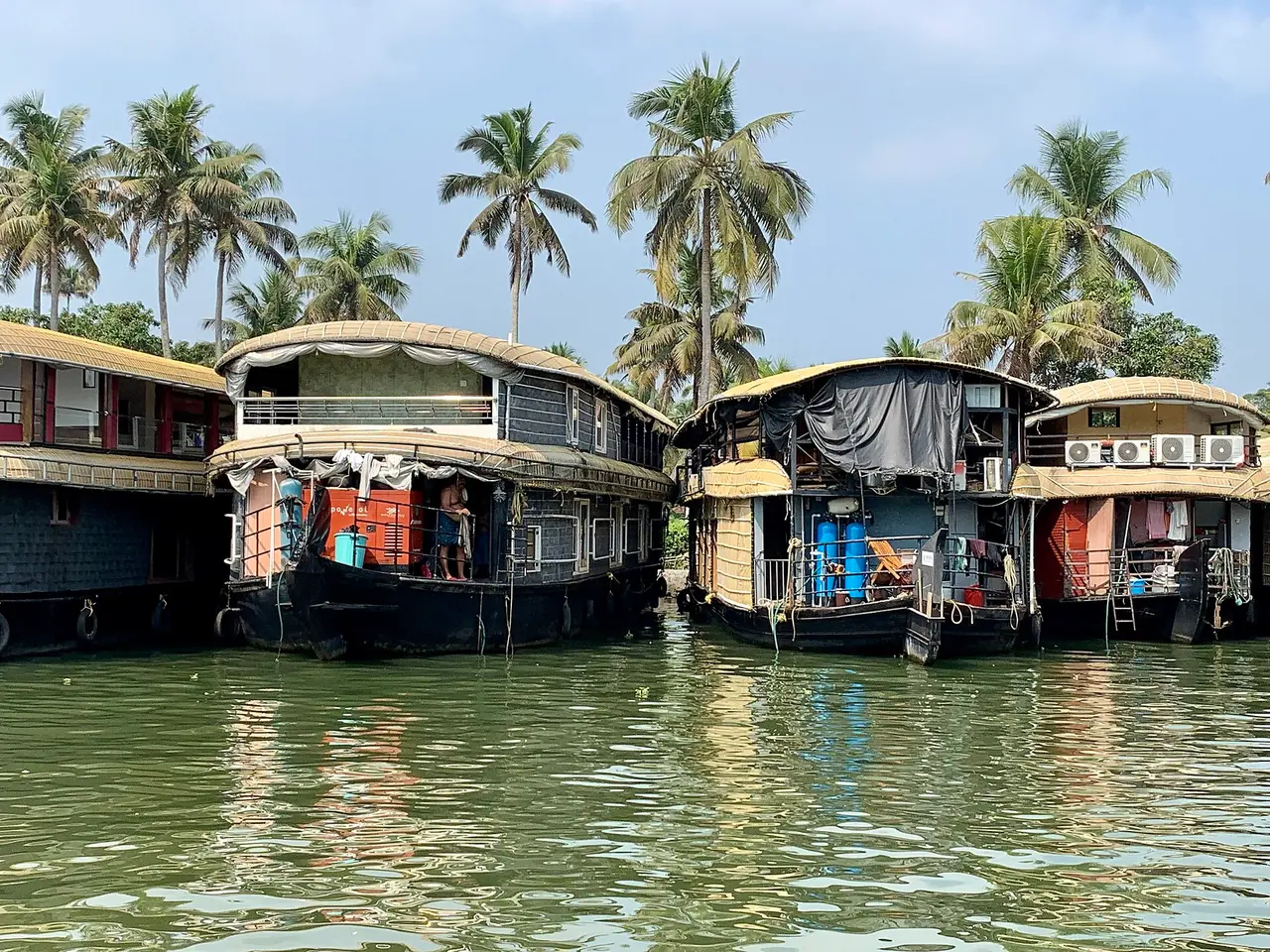
Between Alleppey and Kumarakom, a network of nearly 900 km of canals, lagoons and lakes runs along the coast. Kettuvallam, former wooden rice barges with woven palm roofs, have become houseboats with a bedroom and a cook. A one-night cruise on Lake Vembanad is enough to see villages, rice fields and fishermen. To avoid boat traffic jams, choose the small canals by canoe.

Munnar and the tea hills

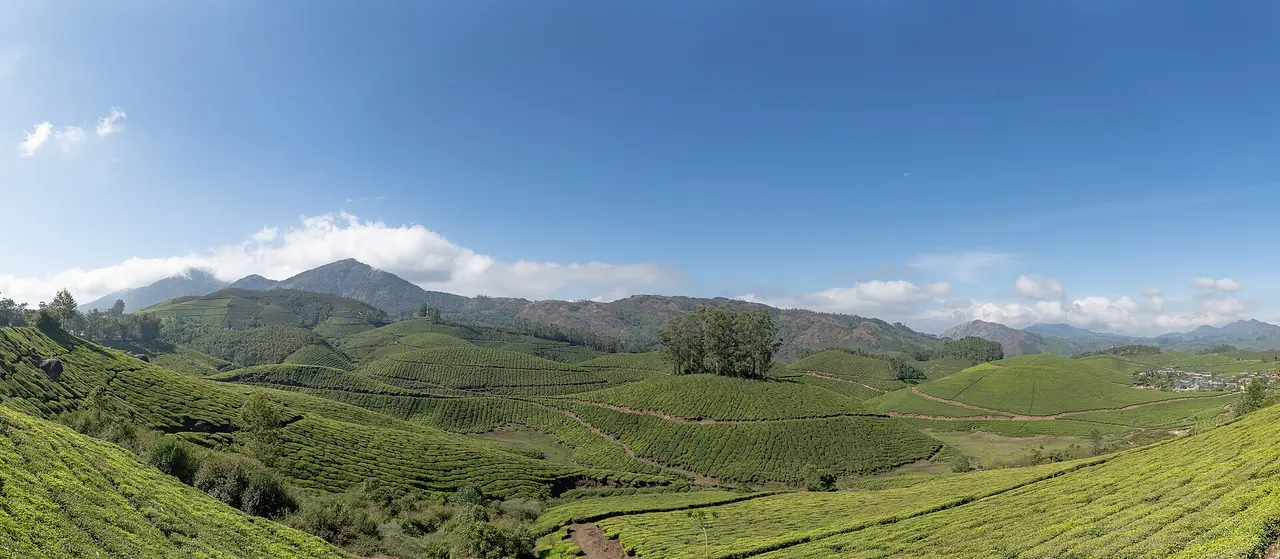
At around 1,600 m, Munnar is surrounded by tea estates covering the hills of the Western Ghats. Eravikulam park is home to the Nilgiri tahr, an endangered wild goat. Three hours away by road, Thekkady is the gateway to the Periyar Tiger Reserve and its spice gardens. Nights can drop below 15 °C in winter. Bring a warm layer for the early mornings.

Fort Kochi, a crossroads of trading posts

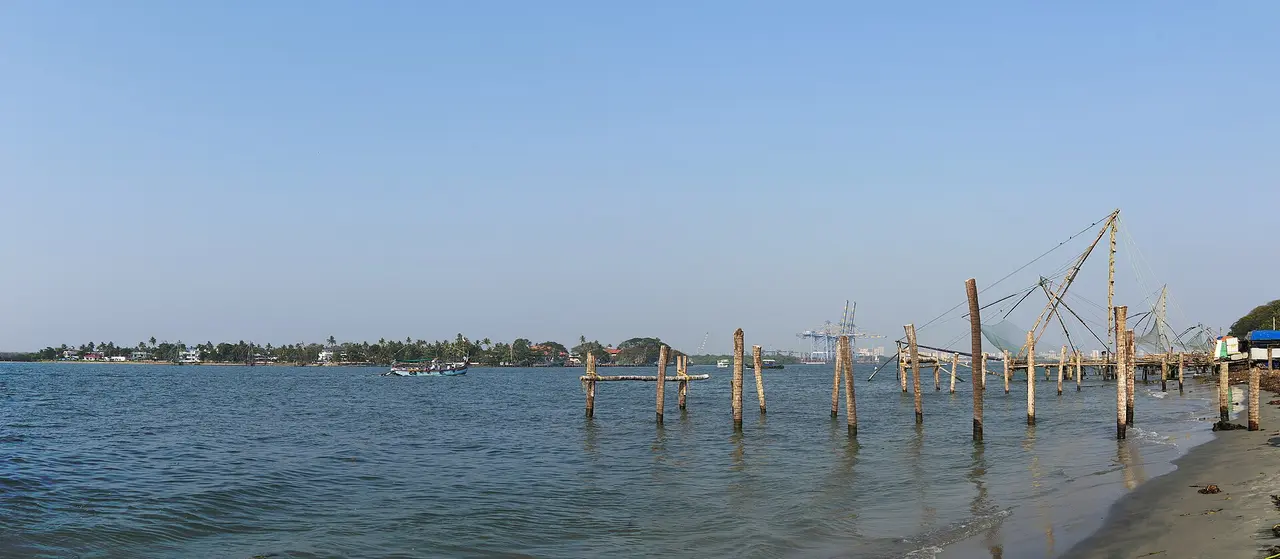
The Portuguese, the Dutch and then the British left their mark on Fort Kochi: St Francis Church of 1503, the Dutch Palace with its Ramayana murals, the Mattancherry Synagogue of 1568. The hand-operated Chinese fishing nets are best watched at sunset. In the evening, Kathakali shows start with the make-up session. The district is easily explored on foot or by bike in a day.

Varkala and Ayurveda

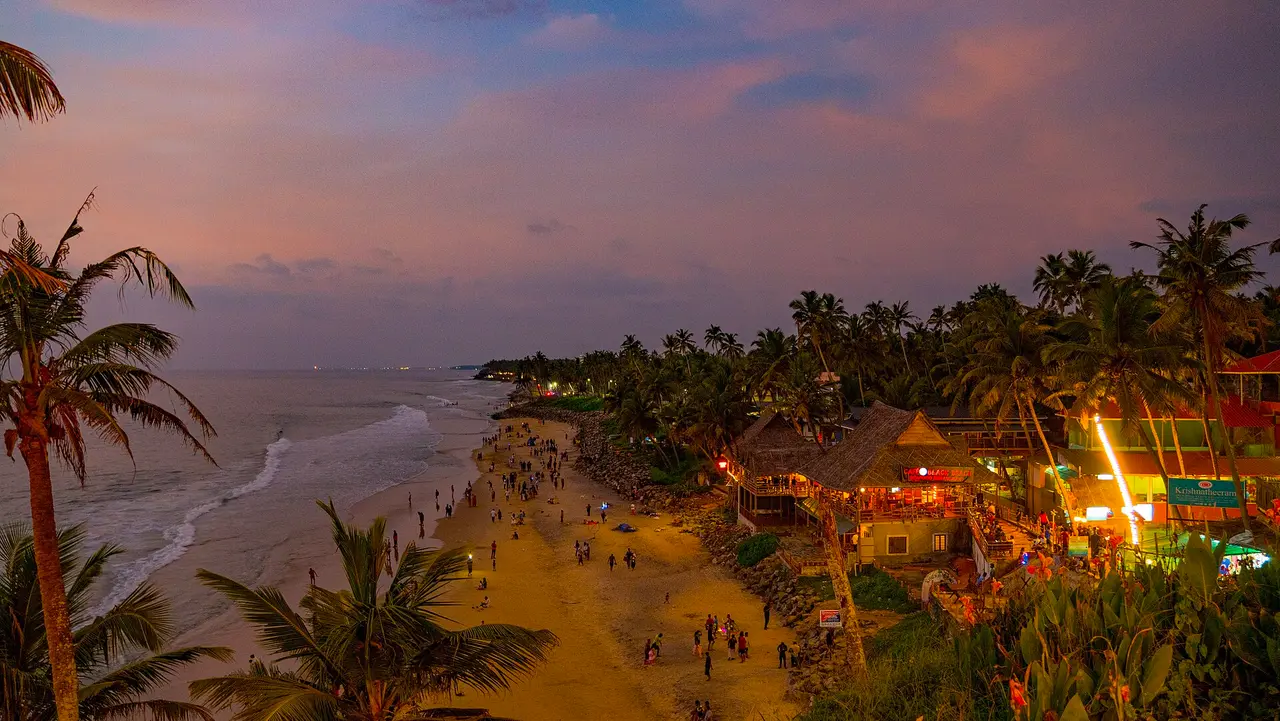
In the south, Varkala's beaches stretch below red cliffs, with cafés and guesthouses on top. Ayurveda, traditional Indian medicine, is widely practised there: a classic treatment lasts 7 to 21 days. Swimming becomes dangerous during the monsoon. Thiruvananthapuram airport is an hour away. Choose a centre approved by the Kerala government, after an initial medical check, and allow time to rest between sessions.

Cities to visit in Kerala

Featured destinations appear first.
Coming soon.

How much it costs

Per person per day, excluding international travel.
Budget
43 €/ day
1 902 € for 2 people, 7 days, return flights included
Accommodation
19 €
Food
10 €
Local transport
6 €
Sights and activities
8 €
Comfort
100 €/ day
2 700 € for 2 people, 7 days, return flights included
Accommodation
35 €
Food
20 €
Local transport
20 €
Sights and activities
25 €
Premium
220 €/ day
4 380 € for 2 people, 7 days, return flights included
Accommodation
90 €
Food
40 €
Local transport
30 €
Sights and activities
60 €
Prices checked: Relevé novembre 2026, conversion INR-EUR à environ 100 roupies pour 1 €. Hébergement : homestays du Kerala env. 37 € la nuit en moyenne (Trip.com), dès 20 dollars à Kumarakom (Booking.com) ; houseboats d'Alleppey de 7 000 à 18 000 roupies la nuit pour deux avec repas (Traveolla, juin 2026), 20 000 à 40 000 roupies en premium (Boats N Beds, guide 2026). Chambre partagée à deux pour les trois profils. Transport : bus et trains pour backpacker, voiture avec chauffeur partagée à deux pour comfort et premium. Activités : une nuit en houseboat lissée sur la semaine, spectacle de kathakali, entrées de Periyar. Vol A/R Paris-Kochi avec escale retenu à 650 € par personne (PartirOu env. 500 € en moyenne, Momondo 668 à 905 €, Kayak de 278 € en décembre à 970 € en février). Hors fêtes de fin d'année.

Entry, health and safety

For FR travellers

Entry requirements

Visa required

Visa obligatoire. Les Français peuvent demander un e-visa touristique en ligne sur le site officiel indianvisaonline.gov.in (30 jours, 1 an ou 5 ans) ou un visa consulaire. Depuis octobre 2025, formulaire e-Arrival Card à remplir en ligne au plus tôt 72 heures avant le départ. Passeport valable six mois. Arriver sans visa valide entraîne un refoulement ; l'aéroport de Kochi accepte l'e-visa.

Passport valid for 6 months beyond your return date.

Health

Required: Aucun vaccin obligatoire en provenance directe d'Europe. Vaccination contre la fievre jaune exigee pour les voyageurs arrivant d'une zone d'endemie amarile ; vaccination DTP a jour exigee en cas de provenance d'un pays a risque de poliomyelite.

Advised: Mise a jour du DTP (diphterie-tetanos-poliomyelite), hepatites A et B, typhoide. Selon la duree et les conditions du sejour : rage (notamment jeunes enfants et zones rurales), encephalite japonaise (sejours longs ou ruraux), meningite ACWY (surtout en saison seche).

Kerala sans zone déconseillée (France Diplomatie, sécurité mise à jour le 5 octobre 2026). Mousson de juin à septembre : inondations et glissements de terrain possibles, notamment dans les collines ; baignade dangereuse sur les plages pendant la mousson. Dengue, chikungunya et leptospirose plus fréquentes en saison des pluies, cas sporadiques de virus Nipah signalés dans le nord du Kerala ces dernières années. Eau en bouteille uniquement. Routes de montagne sinueuses et circulation dangereuse : préférer un chauffeur. Urgences : 112.
Safety

Increased caution

Emergency

112

Checked in novembre 2026 against the official source. Entry rules change: check the official source before you travel, it alone is authoritative.

Kerala in pictures

Photo credits : Paul Arps from The Netherlands, CC BY 2.0, Wikimedia Commons ; Rainer Halama, CC BY-SA 4.0, Wikimedia Commons ; Ingo Mehling, CC BY-SA 4.0, Wikimedia Commons ; Krissubh, CC BY-SA 4.0, Wikimedia Commons ; Evan Silver, CC BY-SA 4.0, Wikimedia Commons ; Pranchiyettan, CC BY-SA 3.0, Wikimedia Commons

Kerala's must-sees

Backwaters, mountains and coasts not to miss.

Lake Vembanad

Kerala's largest lake, the heart of houseboat cruises.

Munnar

Hills covered with tea estates at 1,600 m.

Periyar reserve

A forest of tigers, elephants and spice gardens around Thekkady.

Fort Kochi's Chinese nets

Giant fishing nets operated by hand.

Varkala cliffs

Beaches below red cliffs in the south of the state.

Eravikulam

The national park of the Nilgiri tahr, near Munnar.

Athirappilly Falls

A 25 m waterfall, at its fullest after the monsoon.

Practical information for Kerala

Visa
e-Tourist visa on the official indianvisaonline.gov.in site and the e-Arrival Card no earlier than 72 hours before departure.
Getting there
Connecting flights to Kochi, around 650 euros return from Paris, much less in December.
Getting around
A car with driver is advised on mountain roads; coastal trains between Kochi and Varkala.
Health
Bottled water, dengue repellent; caution during the monsoon (floods, leptospirosis).
Dress
Shoulders and legs covered in temples, whose inner sanctum is often closed to non-Hindus.

Frequently asked questions about Kerala

How much does a night on a houseboat cost?
Allow 7,000 to 18,000 rupees, about 70 to 180 euros, for a night for two with three meals on an air-conditioned one-bedroom boat, and far more for luxury boats. Prices climb at Christmas and during Onam.
Alleppey or Kumarakom for the backwaters?
Alleppey offers the widest choice of houseboats and prices, but traffic is heavy on the main canals. Kumarakom, on the east shore of Lake Vembanad, is quieter and more upmarket, with a bird sanctuary.
Can you visit Kerala during the monsoon?
Yes, with low prices and very green landscapes, but expect heavy rain, mountain roads sometimes cut off and a dangerous sea. It is the best season for an Ayurvedic treatment.
How many days do you need for Kerala?
A week lets you combine Kochi, Munnar, Periyar, a night on a houseboat and a few beach days in Varkala. In five days, you can cover the hills and the backwaters, without the southern coast.
Is Kerala safe to travel?
Kerala has no area advised against by France Diplomatie. The main risks are traffic, monsoon floods and mosquitoes. Women travellers stay cautious at night, as everywhere in India, and favour covering clothes away from the beaches.
What budget for Kerala?
About 45 euros per person per day in a homestay with buses and trains, and 100 euros with a car and driver and a night on a houseboat, excluding flights. Kerala is slightly pricier than the Indian average.
Kerala or Goa?
Goa focuses on beaches and nightlife, Kerala on nature, backwaters, mountains and Ayurveda. The two combine by plane or train in two weeks. Allow at least a week in each state to enjoy them at an unhurried pace.

Plan your trip to Kerala

Day-by-day itinerary, budget, bookings and packing in a single app.
Aperçu de l'application PlanTripNow