Skip to content

Visit Macao: what to do between Portuguese heritage and Cotai

Wavy Portuguese cobblestones, a baroque church facade with no church behind it, incense from Chinese temples and, a few kilometres away, the glowing towers of the Cotai resorts: Macao packs four centuries of encounters into some thirty square kilometres. Two days are enough, one night at the very least.

At a glance

Currency
Macanese Pataca
Time difference
UTC+8

Why visit Macao?

Administered by Portugal until 1999, Macao is today a Special Administrative Region of China. Its historic centre, a UNESCO World Heritage Site since 2005, preserves churches, squares and temples bearing witness to more than four centuries of exchanges between Europe and China, and the city is a UNESCO Creative City of Gastronomy.

What to see in Macao, area by area?

The historic centre of the peninsula

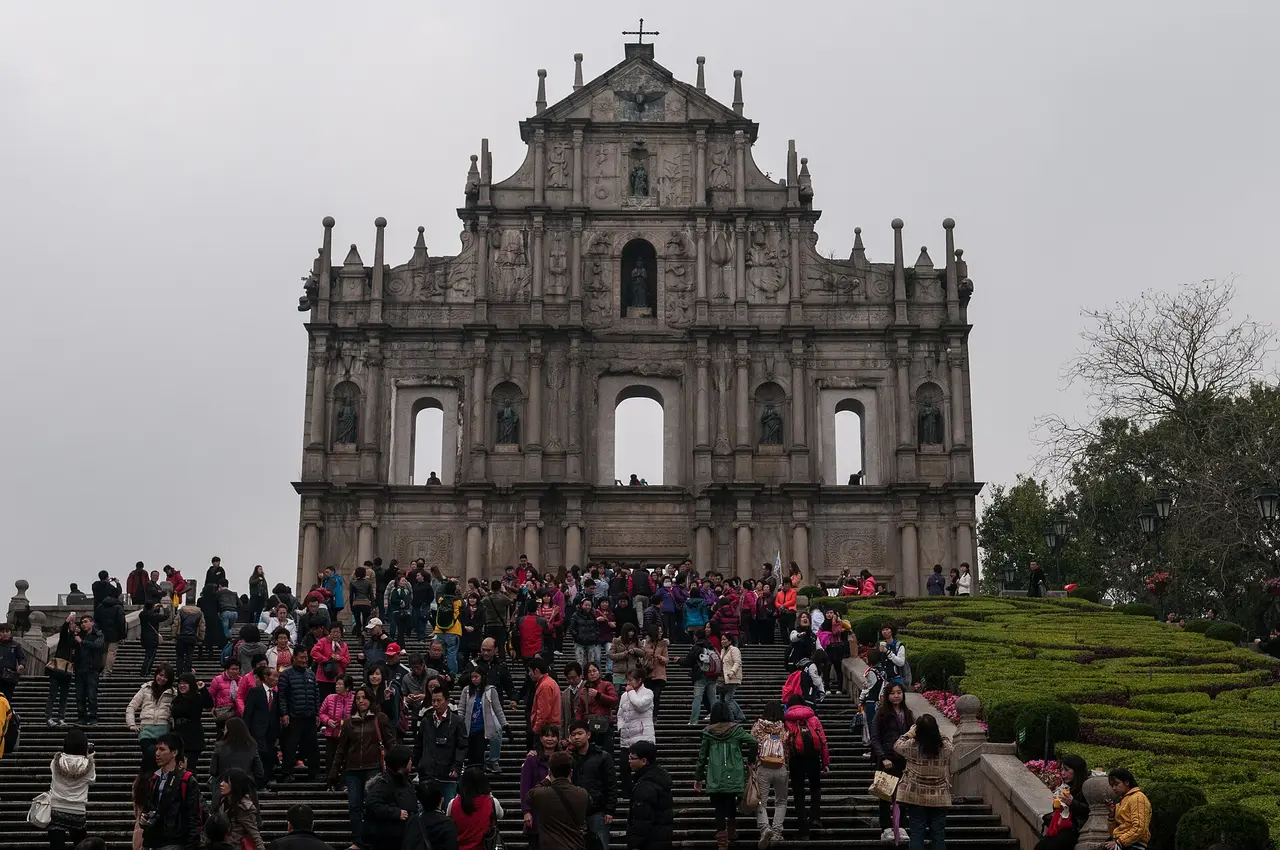
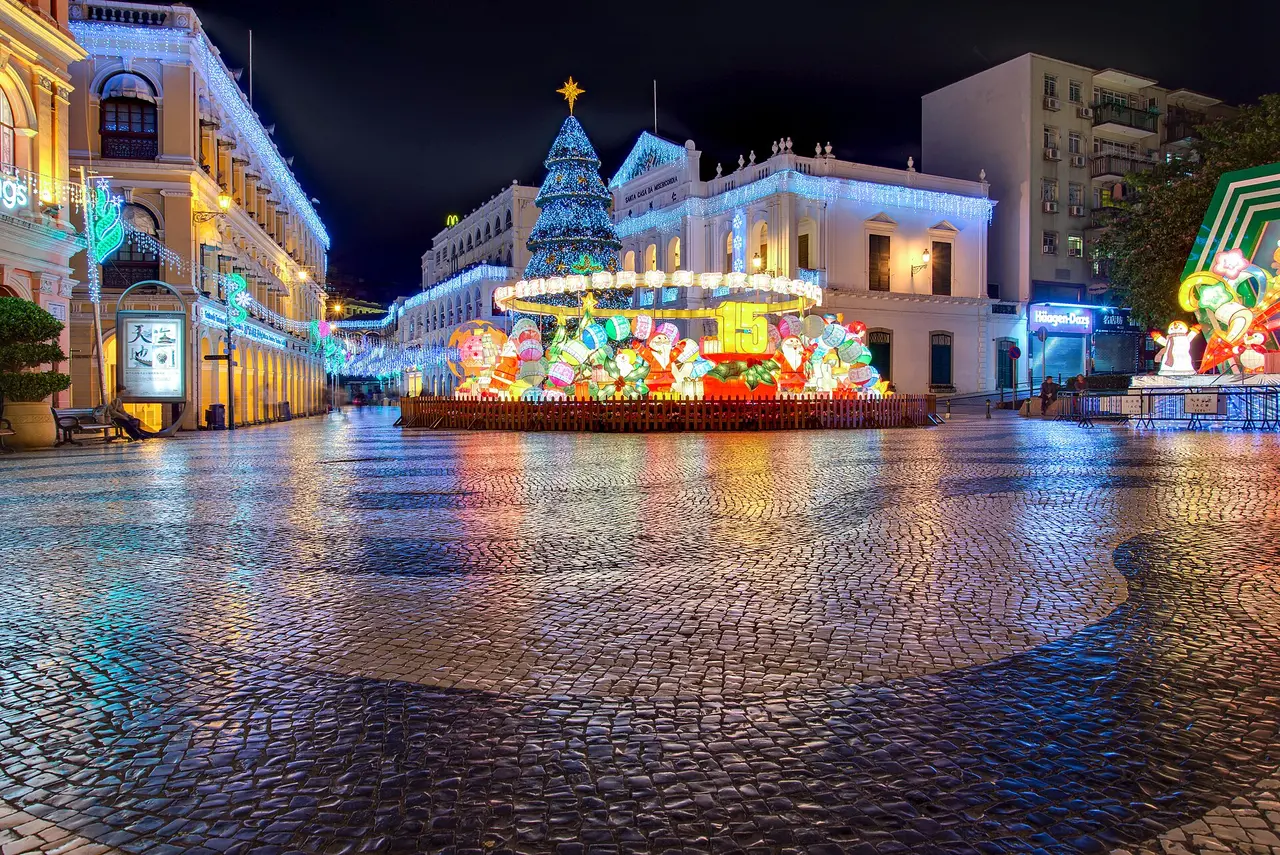
Old Macao is explored on foot in half a day, from Senado Square to the Ruins of St. Paul's, about ten minutes' walk through lanes paved with Portuguese calçada and lined with almond cookie shops. Just above, Monte Fort and the Macao Museum tell the story of the trading post. Come on a weekday before 10 am: in the afternoon and at weekends, the Senado to St. Paul's route is packed with visitors from all over China. In the evening, the floodlit colonial facades gain in charm.

The southern peninsula, from Barra to Nam Van

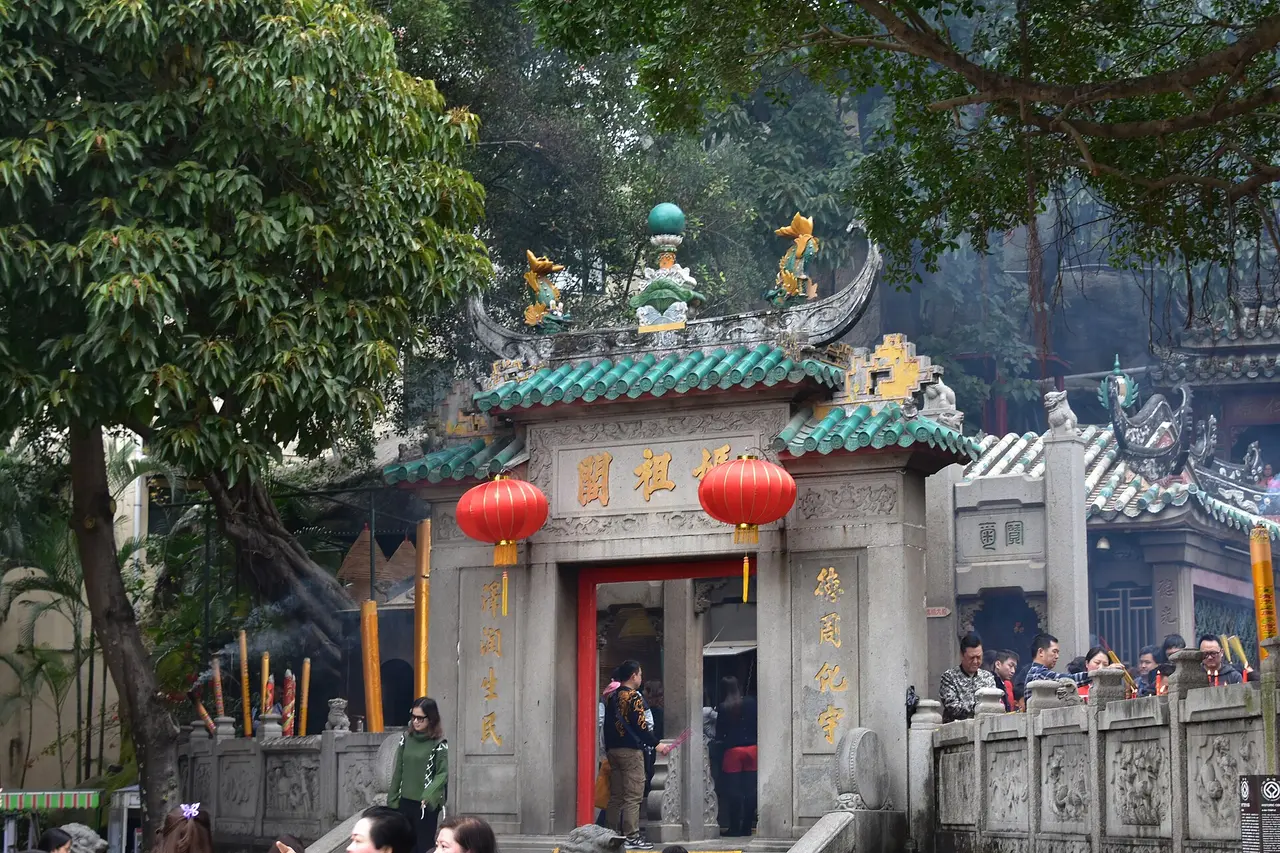
The southern tip holds the oldest traces of the place: A-Ma Temple, which predates the arrival of the Portuguese and is said to have given Macao its name, the Moorish Barracks, the Mandarin's House and little Lilau Square, one of the first Portuguese residential quarters. A climb up Penha Hill gives a view over the Nam Van lakes and Macau Tower. Allow half a day on foot, combining this area with the historic centre for a loop of about 5 km.

Taipa and Cotai

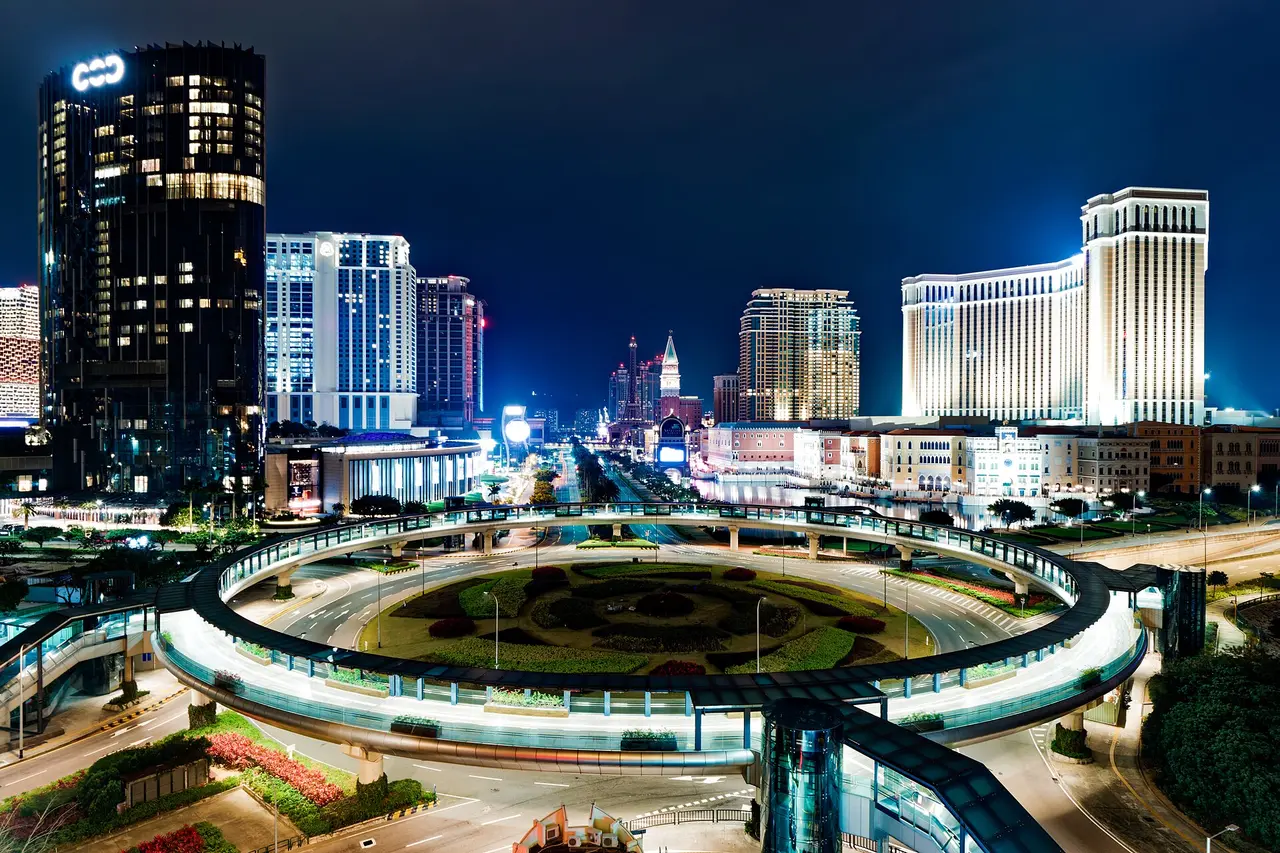
Linked to the peninsula by three bridges and the light rail, Taipa keeps a village of narrow lanes around Rua do Cunha, packed with snack stalls, Macanese restaurants and sea-green colonial houses. To the south, Cotai, land reclaimed from the sea between Taipa and Coloane, lines up the big hotel complexes and their casinos, open to visitors aged 21 and over. Allow an evening for Cotai and two hours for Taipa village, ten minutes' walk from each other.

Coloane, the green side

The southernmost island remains the calmest: wooded hills, marked hiking trails and the beaches of Hac Sa, with its dark sand, and Cheoc Van. Coloane village, about 30 minutes by bus from the centre, is built around the yellow-fronted Chapel of St. Francis Xavier and a small square where you taste the Portuguese tart from Lord Stow's Bakery. Half a day is enough, a full day if you walk the trails. Avoid swimming during alerts and in typhoon season.

Macanese gastronomy

Born from the meeting of Portuguese and Chinese cooking, spiced up with ingredients from Africa, Southeast Asia and South America, Macanese cuisine is a reason to travel in itself. Try minchi, minced meat fried with potatoes and onions, African chicken, grilled and coated in piri piri sauce, or crab curry in coconut milk, a whole crab to share between two or three. Portuguese tables serve bacalhau, clams in white wine and grilled sardines. For dessert, go for a warm Portuguese egg tart and serradura, layers of whipped cream and biscuit crumbs. Keep at least one dinner for a Macanese restaurant in Taipa or on the peninsula.

Getting around Macao

From Hong Kong, TurboJET ferries take about an hour from the Sheung Wan terminal to the Outer Harbour terminal, on the peninsula, or to Taipa, also served by Cotai Water Jet. By road, shuttle buses on the Hong Kong-Zhuhai-Macao Bridge run day and night to the Macao border post, with buses 101X and 102X onward into town. Once there, the light rail links Barra to the Taipa Ferry Terminal via Cotai and the airport, with two branches to Seac Pai Van, on Coloane, and the Hengqin border crossing. Buses cover the whole territory but give no change: carry coins or a Macau Pass card, accepted on all public transport.

Cities to visit in Macao

Featured destinations appear first.
Coming soon.

Getting there

Airports serving Macao, from main hubs to secondary ones.
  • MFMMacau International AirportNossa Senhora do CarmoMain

Macao in pictures

Photo credits : Michal Osmenda from Brussels, Belgium, CC BY 2.0, Wikimedia Commons ; kewl, CC BY 2.0, Wikimedia Commons ; Richard Mortel from Riyadh, Saudi Arabia, CC BY 2.0, Wikimedia Commons ; Melvinnnnnnnnnnn (FN2187) from Macau, Macau, CC BY-SA 2.0, Wikimedia Commons ; travel oriented from Manila, Philippines, CC BY-SA 2.0, Wikimedia Commons ; Diego Delso, CC BY-SA 3.0, Wikimedia Commons ; LN9267, CC BY-SA 4.0, Wikimedia Commons ; Bahnfrend, CC BY-SA 4.0, Wikimedia Commons ; Abasaa, Public domain, Wikimedia Commons ; Iswzo, CC BY-SA 4.0, Wikimedia Commons

Macao's must-sees

Six sites that tell Macao's singular story, from Portuguese trading post to today's city.

Ruins of St. Paul's

Only the carved stone facade of the early 17th-century Church of the Mother of God survived the fire of 1835. It stands at the top of a grand staircase.

Senado Square

A square paved in black and white waves, framed by pastel facades and St. Dominic's Church: Macao's open-air living room, lit up during festivals.

A-Ma Temple

Dedicated to the goddess who protects seafarers, this tiered hillside temple combines pavilions, inscribed rocks and hanging incense coils.

Guia Fortress

On the peninsula's highest hill, a 17th-century fort, a chapel with frescoes mixing Christian and Chinese motifs and the first modern lighthouse on the Chinese coast.

Macau Tower

Standing 338 m tall, it offers an observation deck with a partly glass floor and one of the highest commercial bungee jumps in the world.

Taipa Houses Museum

Five restored 1920s residences facing a former shoreline, now wetlands, showing the interior of a Macanese family home of the period.

Practical information for Macao

Status and border
Macao has its own immigration controls, separate from those of mainland China. Crossing on to Zhuhai or arriving from Hong Kong means another passport check.
Entry for French citizens
French nationals enter without a visa for a short tourist stay. Check the permitted length and your conditions before departure, especially if you continue to mainland China.
Pataca and Hong Kong dollar
The currency is the pataca (MOP). The Hong Kong dollar is accepted almost everywhere, often at par; the pataca, however, is not accepted in Hong Kong.
From Hong Kong
Fast ferries from Sheung Wan in about an hour, or shuttle buses over the Hong Kong-Zhuhai-Macao Bridge, with a crossing of about forty minutes.
Hotel shuttles
The big Cotai and peninsula resorts run free shuttles from the ferry terminals, the border gate and the airport, open to everyone.
Casinos
Entry from age 21, ID sometimes requested. Photos are forbidden on the gaming floors.
Typhoons and signal 8
From May to October, when typhoon signal no. 8 is hoisted, ferries, shops and sights close. Typhoon Hato in 2017 showed how exposed low-lying areas are to flooding.
November Grand Prix
The Macau Grand Prix, a street motor race in November, closes part of the peninsula's streets and pushes hotel rates up.
Driving on the left
As in Hong Kong, traffic drives on the left. Look right before crossing, especially in the narrow streets of the centre.
Languages and signs
Cantonese Chinese and Portuguese are the official languages; street signs are bilingual. English is common in hotels, less so in small restaurants.

Frequently asked questions about Macao

Can you visit Macao as a day trip from Hong Kong?
Yes, by ferry or over the bridge, a day lets you see the historic centre, A-Ma Temple and Taipa village. A night there is better for enjoying the floodlit peninsula and Cotai in the evening, then Coloane the next day.
Do you need patacas for a stay in Macao?
Not necessarily if you arrive from Hong Kong: Hong Kong dollars are accepted almost everywhere. Change is often given in patacas, to spend locally as they are not taken back in Hong Kong. Bank cards are widely accepted.
Where can you taste the best Portuguese egg tarts in Macao?
Two addresses compete for the reputation: Lord Stow's Bakery, opened in Coloane in 1989, and Margaret's Café e Nata, in the centre. Eat them warm, straight from the oven, rather than boxed up for later.
What is Macanese cuisine?
It is a fusion cuisine born from exchanges between the Portuguese, the Chinese and ports of call in Africa and Asia: minced meat minchi, African chicken, tamarind pork, bacalhau. It is found mostly in family restaurants in Taipa and on the peninsula.
Can you walk from Macao to Zhuhai?
Yes, through the Border Gate crossing in the north of the peninsula, which leads to Gongbei in Zhuhai. You must meet the entry conditions for mainland China, which differ from Macao's, and expect queues at peak times.
What can you do in Macao without going to a casino?
The historic centre and its churches, A-Ma Temple, Guia Fortress, Taipa village and the Coloane trails easily fill two days. The shows and shopping galleries of the Cotai resorts can also be visited without gambling.

Plan your trip to Macao

Day-by-day itinerary, budget, bookings and packing in a single app.
Aperçu de l'application PlanTripNow