Skip to content

Yellowstone: when to go, what to see and how to plan

Across nearly 9,000 km², Yellowstone lines up more than 10,000 hot springs, fumaroles and geysers set on a still-active volcanic caldera. The 230 km Grand Loop road links the main sites, but wildlife is found at dawn, far from the packed summer car parks.

At a glance

Currency
US Dollar ($)
Time difference
UTC-7 (UTC-6 en été)
Visa
None
Tourist stay of up to 90 days
7-day budget
€1,624
Per person, comfort profile, excluding international flights.

When can you visit Yellowstone by car?

Interior roads open gradually from mid-April to late May and close at the end of October, depending on snow; only the northern road, from Gardiner to Cooke City through Lamar Valley, stays open all year. From mid-December to mid-March, Old Faithful can only be reached by guided snowcoach. Since January 2026, foreign visitors pay a surcharge of 100 dollars per person.

When to visit Yellowstone

Temperatures, rainfall and crowds month by month, to pick your window.
When to visit Yellowstone
MonthTemperaturesRainCrowdsVerdict
January-11 to 0 °C11 dQuietWinter season: interior roads open only to guided snowcoaches and snowmobiles, geysers in icy steam.
February-11 to 1 °C11 dQuietDeep winter, -11 °C nights at Mammoth: wolves visible in Lamar Valley, the only road open to cars.
March-7 to 6 °C10 dVery quietShoulder season: the winter season ends in mid-March and most roads close.
April-3 to 10 °C11 dVery quietRoads gradually reopen from mid-April, with snow still at altitude.
May1 to 15 °C13 dModerateBison and calves in the valleys, lodges reopening, 15 °C at Mammoth and possible snow.
June6 to 21 °C12 dBusyAll roads open, waterfalls swollen by snowmelt, crowds rising fast.
July9 to 27 °C9 dPackedThe warmest month, 27 °C, peak crowds and traffic jams near Old Faithful.
August8 to 27 °C8 dPackedStill very busy, afternoon storms and possible wildfire smoke.
September4 to 20 °C9 dBusyElk rut, fewer crowds and cool nights: arguably the best time.
October-2 to 12 °C10 dQuietFirst snow, lodges and most roads closing at the end of the month.
November-7 to 4 °C10 dVery quietPark almost closed to cars, only the northern road between Gardiner and Cooke City stays open.
December-11 to -1 °C12 dQuietWinter season opens in mid-December, snowcoaches to Old Faithful.
Source: Normales 1991-2020 de Mammoth (1 900 m), station la plus basse du parc, via climatestotravel.com, relevé novembre 2026 ; Old Faithful (2 240 m) et le lac Yellowstone (2 357 m) sont 3 à 5 °C plus froids. Région continentale, sans température de mer. Routes intérieures ouvertes aux voitures de la mi-avril à fin octobre selon la neige (NPS, dates prévisionnelles 2026), route nord Gardiner-Cooke City ouverte toute l'année.

What to discover in Yellowstone?

Old Faithful and the geyser basins

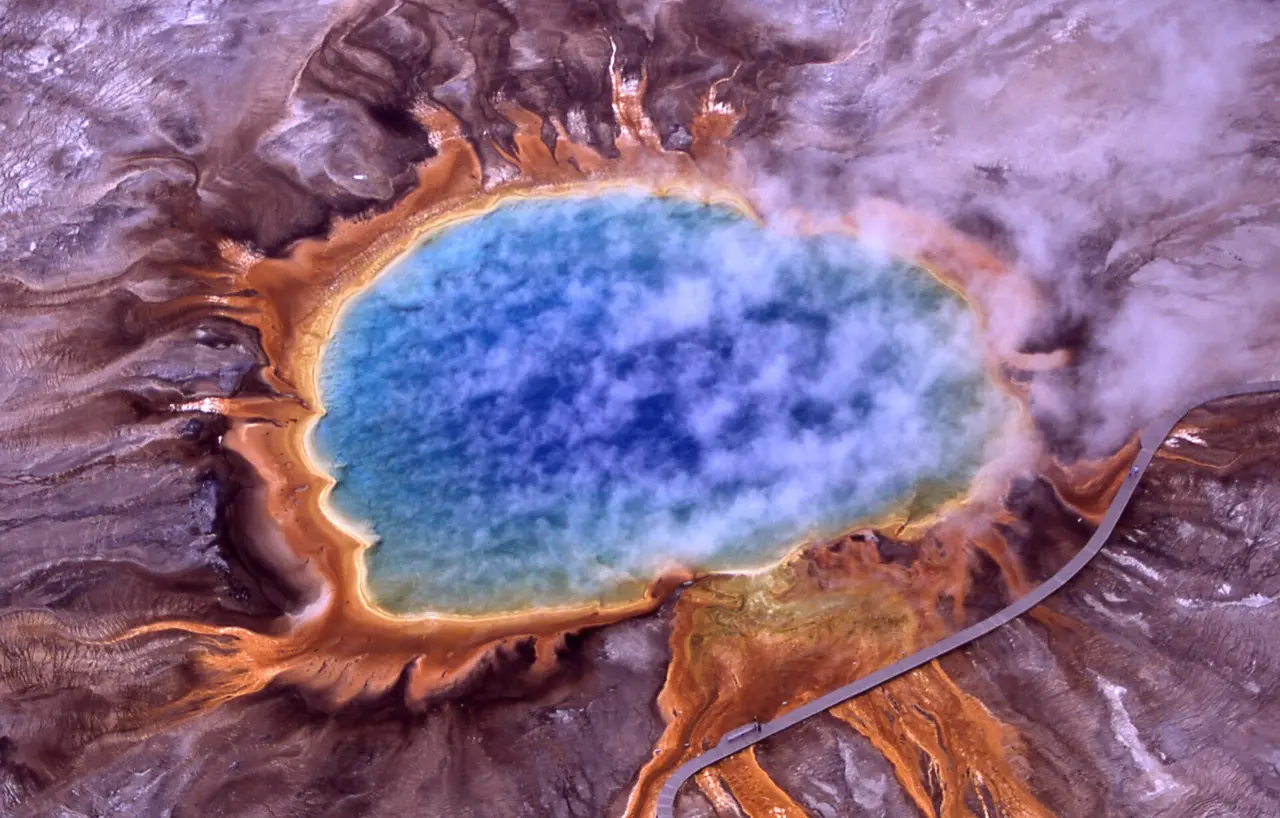
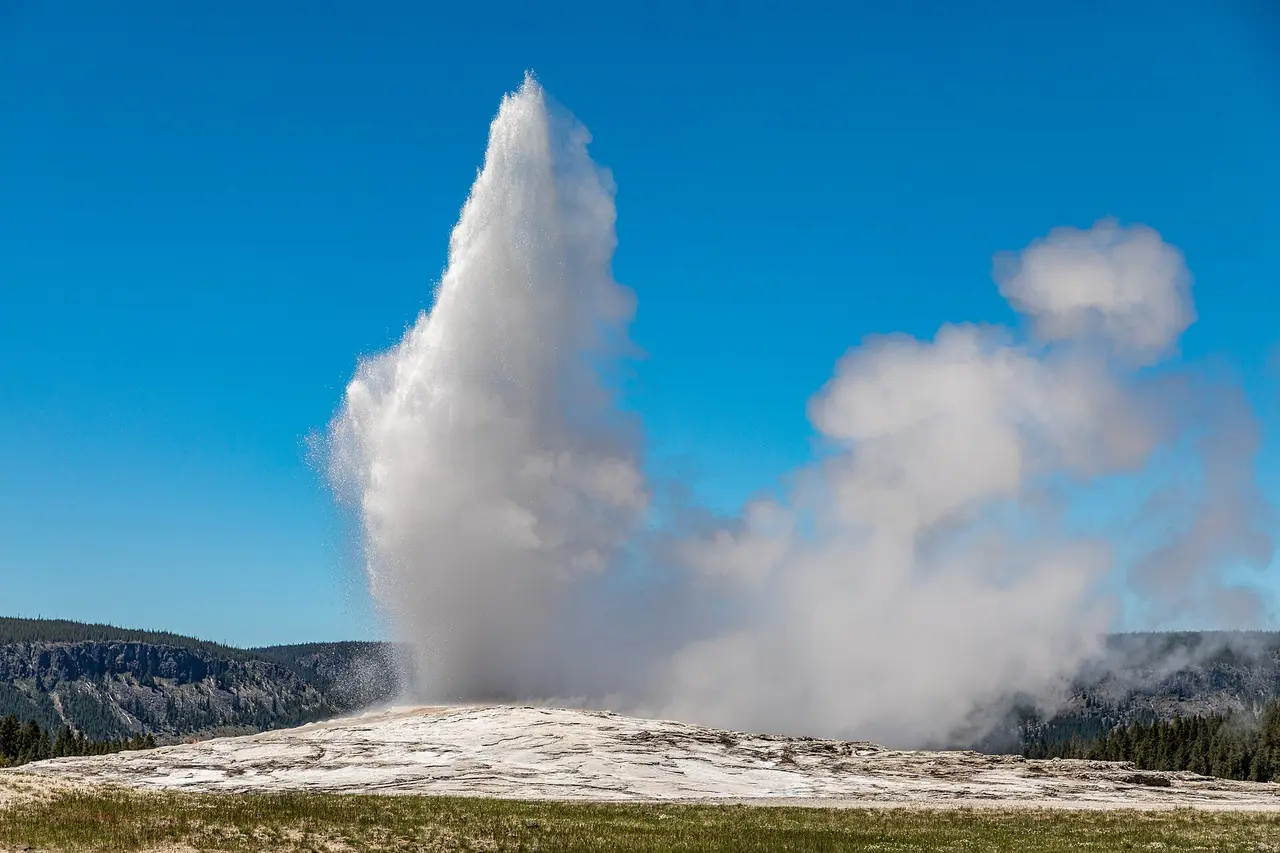
The Upper Geyser Basin has the world's highest density of geysers. Old Faithful erupts every 60 to 110 minutes, up to 55 m high; predicted times are posted at the visitor centre. A 5 km boardwalk loop leads to Morning Glory Pool, Grand Geyser and Castle Geyser. Further north, Grand Prismatic Spring, over 90 m wide, is best seen from the Fairy Falls overlook, a 1 km walk. Arrive before 9 am: car parks are full by 10 am in summer.

The Grand Canyon of the Yellowstone

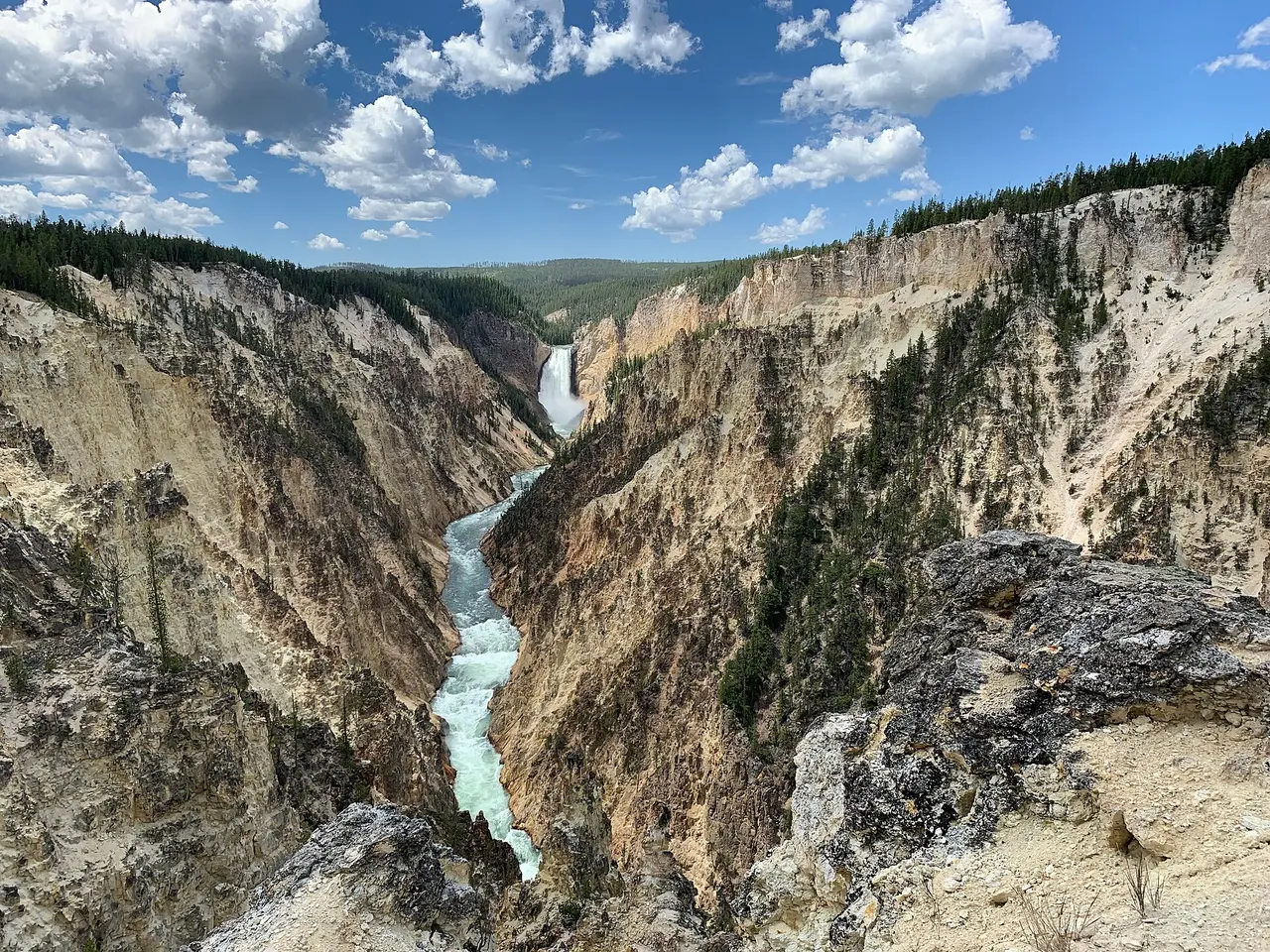
The Yellowstone River has carved a canyon nearly 40 km long with yellow, orange and pink walls, which gave the park its name. The 94 m Lower Falls, almost twice the height of Niagara, are viewed from Artist Point on the south rim and Lookout Point on the north rim. The Brink of the Lower Falls trail drops to the edge of the waterfall in a quarter of an hour, but the climb back is steep. Allow half a day combining both rim roads.

Lamar and Hayden, the wildlife valleys

Nicknamed America's Serengeti, Lamar Valley in the north-east is the best place to see wolves, reintroduced in 1995, with binoculars and at dawn. Hayden Valley, in the centre, hosts large bison herds that often block the road in summer. The park has about 5,000 bison, as well as black bears and grizzlies. Keep your distance: at least 23 m from bison and elk, 91 m from bears and wolves.

Mammoth Hot Springs and the north

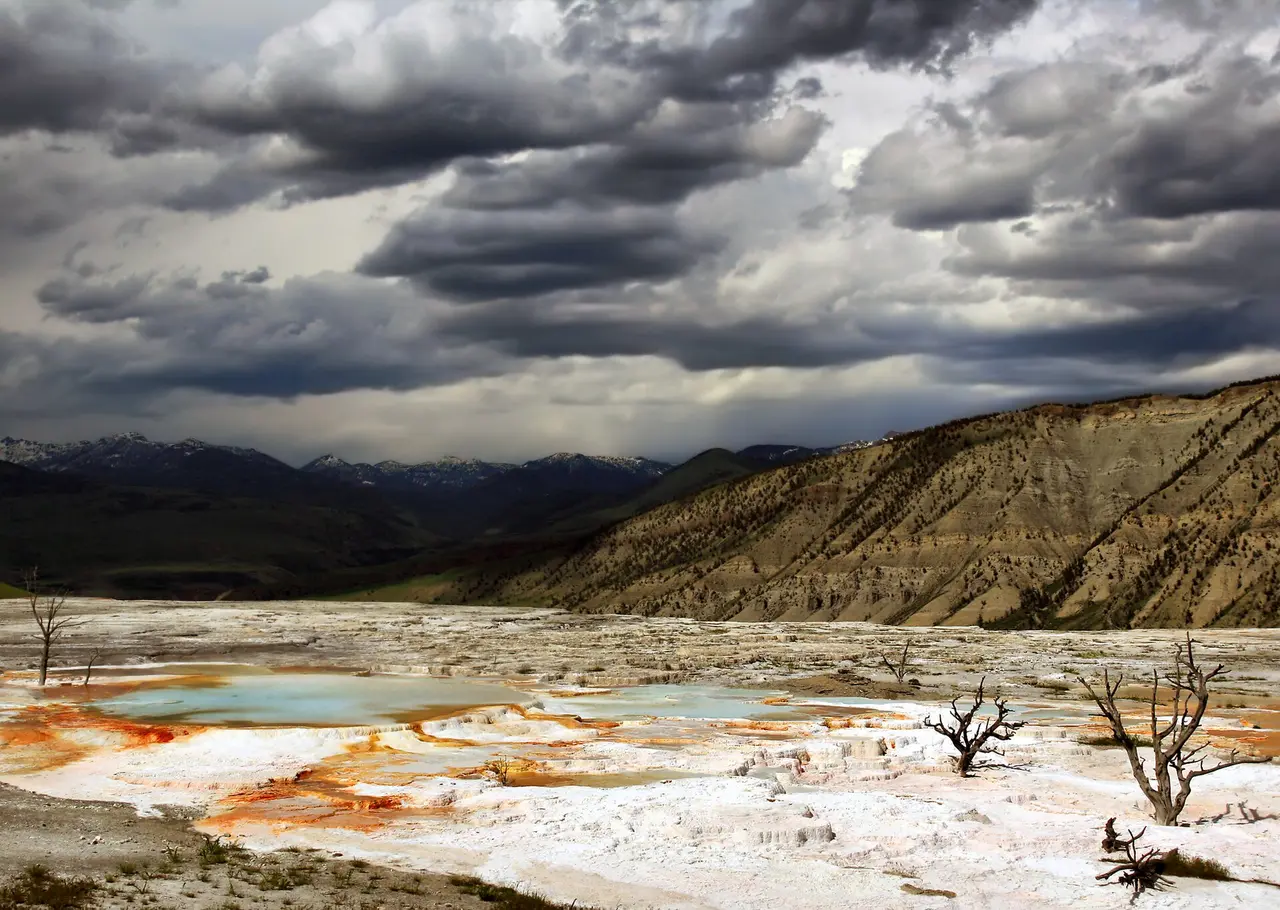
Near the north entrance, the travertine terraces of Mammoth Hot Springs are explored on about 3 km of boardwalks, with colours that shift as springs turn on and off. The neighbouring village, a former army fort, sees elk grazing on its lawns. In Gardiner, the 1903 Roosevelt Arch marks the park's historic entrance. It is the only area reachable by car all year, making it the ideal base for a winter visit focused on wolves.

Yellowstone Lake and West Thumb

At 2,357 m, Yellowstone Lake is the largest high-altitude lake in North America, with more than 200 km of shoreline. At West Thumb, hot springs bubble beside the icy water, including Fishing Cone, once used to cook fish. Mud Volcano, to the north, recalls the caldera's activity. The lake stays frozen until June and rarely exceeds 15 °C, even in August: swimming there is dangerous.

Cities to visit in Yellowstone

Featured destinations appear first.
Coming soon.

How much it costs

Per person per day, excluding international travel.
Budget
126 €/ day
3 564 € for 2 people, 7 days, return flights included
Accommodation
48 €
Food
32 €
Local transport
32 €
Sights and activities
14 €
Comfort
232 €/ day
5 048 € for 2 people, 7 days, return flights included
Accommodation
96 €
Food
58 €
Local transport
38 €
Sights and activities
40 €
Premium
460 €/ day
8 240 € for 2 people, 7 days, return flights included
Accommodation
200 €
Food
95 €
Local transport
55 €
Sights and activities
110 €
Prices checked: Relevé novembre 2026, conversion USD-EUR à environ 1,14. Hébergement : West Yellowstone env. 142 dollars la nuit en moyenne hors saison, nettement plus en juin-juillet (Kayak, getcostidea.com) ; Old Faithful Inn de 205 à 730 dollars hors taxes (15,47 %) pour la saison du 1er mai au 12 octobre 2026 ; profil backpacker en camping ou motel de Gardiner. Chambre partagée à deux pour les trois profils. Voiture de location indispensable, partagée à deux, essence comprise. Activités : droit d'entrée de 35 dollars par véhicule plus surtaxe de 100 dollars par non-résident de 16 ans et plus depuis le 1er janvier 2026 (étalés sur la semaine), sortie guidée d'observation de la faune pour comfort et premium. Vol A/R Paris-Bozeman avec escale env. 900 € par personne (United, à partir de 900 € ; moyennes d'agrégateurs autour de 1 000 dollars). Hors juillet-août.

Entry, health and safety

For FR travellers

Entry requirements

No visa for a tourist stay

Pas de visa pour un séjour touristique de 90 jours maximum dans le cadre du programme d'exemption, mais une autorisation ESTA payante est obligatoire, à demander sur le seul site officiel au moins 72 heures avant le départ ; elle reste valable deux ans. Passeport électronique ou biométrique exigé, le passeport d'urgence ne permet pas d'entrer sans visa. Le moindre dépassement de la durée autorisée entraîne une reconduite immédiate et une interdiction de retour de plusieurs années.

Stay allowed for up to 90 days.

Passport valid for 6 months beyond your return date.

Health

Advised: Diphtérie, tétanos, poliomyélite, coqueluche et rougeole à jour ; dengue et chikungunya seulement en période épidémique ou pour un long séjour.

Assurance santé et rapatriement indispensable : aucune convention de sécurité sociale entre la France et les États-Unis, soins très coûteux et hôpitaux éloignés du parc. Sols des bassins thermaux fragiles et eaux brûlantes : restez sur les passerelles, des visiteurs y sont gravement brûlés chaque année. Faune sauvage : au moins 23 m des bisons et wapitis, 91 m des ours et des loups ; spray anti-ours conseillé en randonnée. Altitude de 1 900 à 2 400 m, neige possible tous les mois en altitude. Alerte rougeole en cours (2026).

Safety

Normal precautions

Emergency

911

Checked in novembre 2026 against the official source. Entry rules change: check the official source before you travel, it alone is authoritative.

Yellowstone in pictures

Photo credits : Jim Peaco, National Park Service, Public domain, Wikimedia Commons ; Dietmar Rabich, CC BY-SA 4.0, Wikimedia Commons ; Erik Whalen, CC BY-SA 4.0, Wikimedia Commons ; Brocken Inaglory, CC BY-SA 3.0, Wikimedia Commons ; Acroterion, CC BY-SA 4.0, Wikimedia Commons ; User:MatthiasKabel, CC BY-SA 3.0, Wikimedia Commons ; Dirtsc, CC BY-SA 3.0, Wikimedia Commons

Yellowstone must-sees

Geysers, waterfalls and valleys not to miss.

Old Faithful

The world's most famous geyser, with predictable eruptions.

Grand Prismatic Spring

A giant hot spring with blue, yellow and orange rings.

Artist Point

A viewpoint over the grand canyon and its 94 m falls.

Lamar Valley

The valley of wolves and bison, in the park's north-east.

Mammoth Hot Springs

White and ochre travertine terraces near the north entrance.

Hayden Valley

Large bison herds along the Yellowstone River.

West Thumb

Hot springs on the shore of Yellowstone Lake.

Norris Geyser Basin

The park's hottest and most changeable basin.

Practical information for Yellowstone

Entrance fees
35 dollars per vehicle for 7 days, plus 100 dollars per non-resident visitor aged 16 and over since 1 January 2026.
Entry requirements
ESTA required for visa-waiver travellers, at least 72 hours before departure, with an electronic or biometric passport.
Getting there
Bozeman, Jackson Hole or Cody airports, or Salt Lake City 5 hours away by road; a car is essential.
Road seasons
Interior roads from mid-April to late October, northern road Gardiner-Cooke City all year.
Lodging
Park hotels to book a year ahead; West Yellowstone and Gardiner as alternatives.
Safety
Stay on boardwalks in thermal areas, keep your distance from wildlife, carry bear spray on hikes.
Mobile coverage
No signal across much of the park: download maps and geyser times beforehand.

Frequently asked questions about Yellowstone

How many days do you need for Yellowstone?
Three days cover the geysers, Grand Prismatic and the grand canyon. Five days leave time for a morning in Lamar Valley and the lake. The park is huge: drives between areas often take an hour because of bison and roadworks.
Where to stay to visit Yellowstone?
Inside the park, Old Faithful Inn, Canyon or Lake Hotel cut down driving but are booked a year ahead. West Yellowstone is the most practical base for the geysers, Gardiner for the north and wildlife. Switching base during your stay saves hours.
Can you see bears and wolves in Yellowstone?
Yes, especially at dawn and dusk, with binoculars or a spotting scope. Wolves are spotted in Lamar Valley, grizzlies in spring near Hayden and Dunraven Pass. A trip with a naturalist guide greatly increases your chances.
Can you visit Yellowstone in winter?
Yes, from mid-December to mid-March, with a different face: geysers in icy steam and wolves on the snow. Only the northern road is open to cars; Old Faithful is reached by guided snowcoach or snowmobile from West Yellowstone or Mammoth.
Yellowstone and Grand Teton on the same trip?
It is the most common combination: Grand Teton lies less than an hour south of Yellowstone's south entrance. Allow two days for its lakes and peaks. Each park charges its own entrance fee and its own 100-dollar surcharge.
Which airport for Yellowstone?
Bozeman, 1 hour 30 from the north entrance, has the most domestic flights. Jackson Hole suits a combined trip with Grand Teton. Salt Lake City, about 5 hours by road, often offers cheaper flights from Europe and a city worth exploring.

Plan your trip to Yellowstone

Day-by-day itinerary, budget, bookings and packing in a single app.
Aperçu de l'application PlanTripNow