Skip to content

Visiting Arusha and planning a northern Tanzania safari

Almost every safari in northern Tanzania starts here, below the slopes of Mount Meru. Before heading off to Tarangire, Ngorongoro or the Serengeti, Arusha deserves a proper day: Maasai markets, flamingo lakes, a walking safari and coffee grown in the shadow of the volcano.

At a glance

Visa
Required
7-day budget
€1,071
Per person, comfort profile, excluding international flights.
Recommended length
3 days
For a first trip, without rushing.

How long should you stay in Arusha before a safari?

One or two nights are enough. The first is for recovering from the flight and meeting your guide, the second allows a trip to Arusha National Park or Lake Duluti. Any longer, and the time is better spent in the northern circuit parks.

When to visit Arusha

Temperatures, rainfall and crowds month by month, to pick your window.
When to visit Arusha
MonthTemperaturesRainCrowdsVerdict
January16 to 28 °C12 dBusyA short lull after the year-end rains, 28C in the afternoon: 4x4s head for the southern Serengeti for the wildebeest calving season.
February16 to 28 °C12 dBusyThe safest month for the calving on the Ndutu plains; brief showers, Meru often clear in the morning.
March17 to 28 °C15 dModerateThe long rains set in during the month, tracks to Tarangire get slippery; lodges start lowering their rates.
April17 to 25 °C21 dVery quietThe wettest month, around 340 mm: muddy dirt roads, a poor time to climb Meru, but low-season prices everywhere.
May16 to 23 °C14 dVery quietThe rains ease late in the month, very green countryside around Usa River; some seasonal camps stay closed.
June15 to 22 °C5 dModerateStart of the cool dry season, 22C at most: a fleece is essential for dawn departures, vegetation still thick in the parks.
July14 to 22 °C5 dPackedThe coolest month, grey mornings at 14C; peak season for safaris and climbs, lodges and guides to book months ahead.
August14 to 23 °C4 dPackedDry and cool, wildlife gathered around Tarangire's waterholes: ideal for viewing, but many vehicles in the crater.
September15 to 25 °C3 dBusyThe driest month, skies often clear over Kilimanjaro; European crowds thin after the school year starts, rates stay high.
October16 to 27 °C6 dModerateWarmth returning, dust on the tracks, wildlife still concentrated: one of the best weather-to-crowds ratios of the year.
November16 to 27 °C15 dQuietShort rains, often as afternoon storms; shoulder-season rates and quiet parks, at the cost of a few cut-short drives.
December16 to 27 °C15 dBusyStill rainy early in the month, then the festive rush from the 20th: Ngorongoro lodges full and peak rates.
Source: Climat tropical d'altitude (environ 1 350 m), tempéré par le mont Meru : nuits fraîches toute l'année, deux saisons des pluies (courtes pluies de novembre à décembre, longues pluies de mars à mai, pic en avril). Normales de la station d'Arusha publiées par Climates to Travel, relevé octobre 2026. Ville sans façade maritime : pas de température de la mer. Affluence et prix calés sur la saison des safaris du circuit nord et des ascensions du Meru et du Kilimandjaro.

What to see in Arusha itself

Enough to fill a day before setting off by 4x4, without rushing.

Momella Lakes

Alkaline lakes in Arusha National Park where flamingos and waterbirds gather, with Kilimanjaro visible on the horizon on clear mornings.

Cultural Heritage Centre

A vast gallery of African art and crafts on the Dodoma road, useful for comparing quality and prices before buying at the Maasai market.

Arusha Declaration Museum

A small museum devoted to the 1967 text in which Julius Nyerere committed Tanzania to African socialism, ujamaa, after independence.

The Clock Tower

The town's central landmark, long described as the midpoint between Cairo and Cape Town, more of a legend than a measurement.

What to do in Arusha, and from Arusha

The town centre, markets and safari agencies

The centre fans out from the Clock Tower, with shopping streets and safari agency offices all around it. The covered central market takes an hour to explore for its spices, fruit and sacks of coffee beans. The Maasai market, more touristy, sells beadwork, shuka cloth and carvings: bargain openly, often halving the first price. Everything is walkable by day, but take a taxi once night falls, around 7pm all year round.

Usa River and Lake Duluti, the green outskirts

To the east, on the road to Kilimanjaro airport, the town gives way to coffee and banana plantations. This is where most lodges are, quieter than the centre. Lake Duluti, a small crater lake about fifteen kilometres from the centre, makes a half-day outing: a walk around the crater rim in roughly two hours or a canoe trip. Several coffee farms offer two to three-hour tours, from picking to roasting.

The slopes of Mount Meru

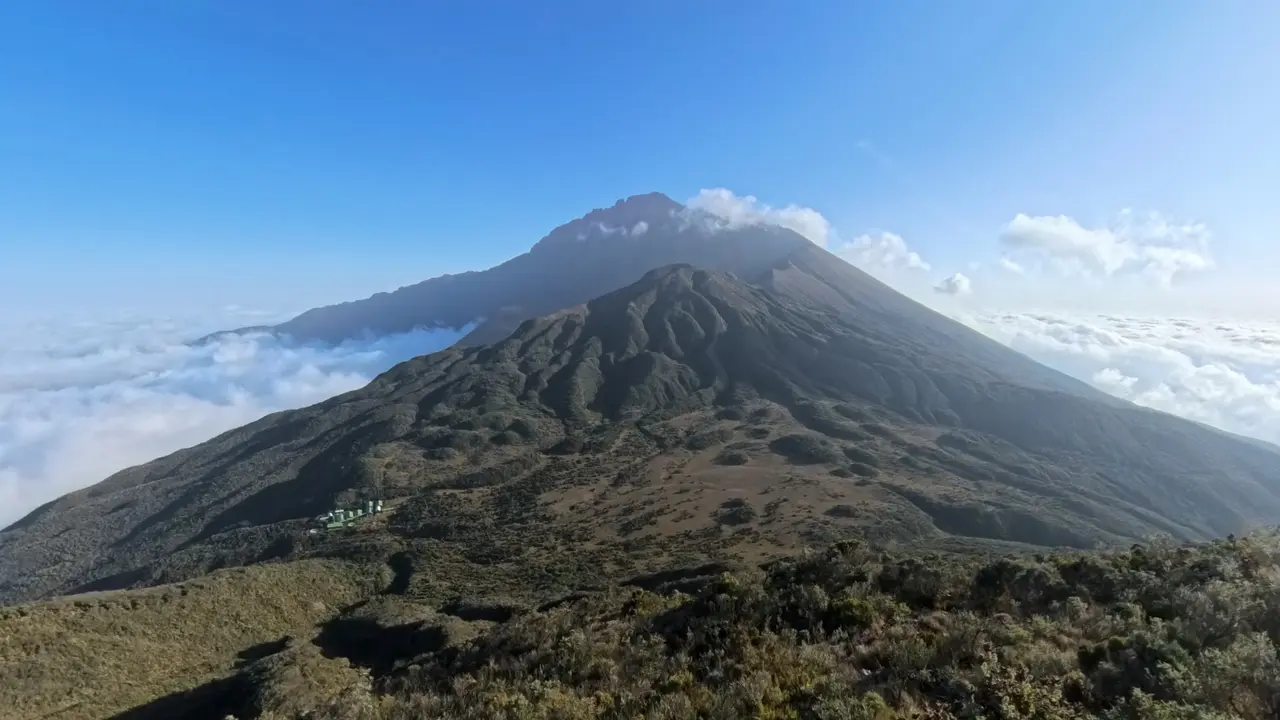
Arusha National Park, less than an hour's drive away, is the only park on the northern circuit where you can walk with an armed ranger. Giraffes, buffaloes and black-and-white colobus monkeys live among forest and alkaline lakes. Mount Meru, 4,566 m, is climbed in three or four days from Momella Gate: excellent acclimatisation before Kilimanjaro. TANAPA entry fees are paid by card or online, never in cash at the gate.

The northern circuit, distances and drive times

Tarangire is about two hours by road, the Ngorongoro Crater three and a half hours, the central Serengeti seven to eight hours on dirt tracks. Four days cover Tarangire and Ngorongoro, six days add the Serengeti without driving from dawn to dusk. The crater descent costs 295 USD per vehicle, on top of each passenger's fees. To place these parks in a wider trip, the page on Tanzania and its main regions explains the migration seasons.

Arriving and leaving: JRO, ARK and the Indian Ocean

International flights land at Kilimanjaro International Airport (JRO), about 50 km away, a one-hour drive. Arusha Airport (ARK), west of town, only handles domestic flights to the Serengeti airstrips and the coast. Ending a safari on the beach therefore means flying from ARK or JRO: Zanzibar and Stone Town are under two hours away by air, against two days by road.

Sample itineraries

Three routes built around the time you actually have.
3daysRecommended

Arusha in 3 days: Lake Duluti, highland coffee and a day in Tarangire

  1. Usa River: Lake Duluti and a coffee farm
  2. A day's safari in Tarangire National Park
  3. Town centre: central market, Maasai market and Cultural Heritage Centre

Best for: Three days based in Arusha without changing hotels: the coffee country around Usa River, a proper one-day safari in Tarangire with its elephants and baobabs, then the town centre and its markets to finish.

How much it costs

Per person per day, excluding international travel.
Budget
43 €/ day
2 052 € for 2 people, 7 days, return flights included
Accommodation
12 €
Food
8 €
Local transport
3 €
Sights and activities
20 €
Comfort
153 €/ day
3 890 € for 2 people, 7 days, return flights included
Accommodation
50 €
Food
20 €
Local transport
8 €
Sights and activities
75 €
Premium
360 €/ day
6 830 € for 2 people, 7 days, return flights included
Accommodation
140 €
Food
40 €
Local transport
20 €
Sights and activities
160 €
Prices checked: Relevé octobre 2026. Budget d'un séjour basé à Arusha avec excursions à la journée, HORS safari de plusieurs jours sur le circuit nord (voir le budget Tanzanie pour les forfaits safari et les droits des grands parcs). Conversion au taux de référence BCE du 14/10/2026 : 1 EUR = 1,1195 USD. Hébergement : lit en dortoir avec petit-déjeuner autour de 10 EUR (Ibrahim Garden Hostel), hôtel 3 étoiles 86 EUR la nuit en moyenne et fourchette 13 à 448 EUR (combien-coute.net, relevé octobre 2026, agrégateur non officiel, contributeurs non précisés), hôtel boutique type Sanna autour de 155 EUR la nuit ; chambre double partagée à deux pour comfort et premium. Repas : déjeuner simple 3 EUR, dîner trois plats 12 EUR (combien-coute.net, octobre 2026). Transport : dala dala environ 0,20 EUR, course Bolt en centre-ville environ 2,60 EUR (agrégateurs 2026, tarifs dynamiques). Activités : offres d'opérateurs revendues sur Expedia et Travelocity, non officielles et à reconfirmer : lac Duluti canoë et randonnée 65 à 90 USD, avec visite de ferme caféière et déjeuner 120 USD, version privée 195 USD ; journée au parc national d'Arusha droits inclus 290 USD par personne sur la base de deux voyageurs (offre d'opérateur relevée en ligne, octobre 2026). Aucun tarif officiel TANAPA trouvé pour le parc d'Arusha : droits non détaillés ici. Vol A/R Paris-Kilimandjaro (JRO) avec escale, hors vacances scolaires : 725 EUR (Kenya Airways, départs septembre 2026) pour backpacker, 874 EUR (prix moyen Liligo sur trois mois) pour comfort, 895 EUR (Air France, grille 2026) pour premium. Visa 50 USD non inclus. Pourboires des guides compris dans les activités.

Getting there

Airports serving Arusha, from main hubs to secondary ones.
  • DARJulius Nyerere International AirportDar es SalaamMain
  • JROKilimanjaro International AirportArushaMain
  • MWZMwanza International AirportMwanzaMain
  • ZNZAbeid Amani Karume International AirportZanzibarMain
  • ARKArusha AirportArushaSecondary
  • DODDodoma AirportDodomaSecondary

Entry, health and safety

For FR travellers

Entry requirements

Visa required

Visa touristique obligatoire, 50 EUR ou 50 USD, payable par carte ou en espèces : e-visa sur visa.immigration.go.tz avant le départ, ou visa à l'arrivée à l'aéroport international du Kilimandjaro (JRO), porte d'entrée habituelle pour Arusha. Seuls les dollars émis après 2006 sont acceptés et la monnaie n'est pas rendue. La durée accordée peut être inférieure à celle demandée : la vérifier sur le tampon. Passeport valide plus de 6 mois après l'arrivée. L'assurance obligatoire de Zanzibar n'est ni demandée ni valable sur le continent, parcs du nord et Kilimandjaro compris.

Passport valid for 6 months beyond your return date.

Health

Required: Fièvre jaune : en principe obligatoire pour les voyageurs venant d'un pays d'endémie ou y ayant transité plus de 12 heures ; la preuve est souvent demandée en pratique à l'arrivée, un carnet international évite les difficultés.

Advised: Calendrier vaccinal français à jour. Selon la durée et les conditions du séjour : hépatite A, fièvre typhoïde ; selon le profil : hépatite B, méningite ACWY, rage (jeunes enfants, milieu rural), dengue et chikungunya en cas d'épidémie ou de séjour prolongé.

Paludisme : protection contre les moustiques et traitement préventif à définir avec un médecin. Dengue en hausse dans le pays, choléra présent dans les quartiers insalubres. Ascension du mont Meru ou du Kilimandjaro : guide, assurance spécialisée et bonne préparation physique, secours médicaux limités en altitude. Sécurité : vigilance renforcée dans les régions d'Arusha et du Kilimandjaro ; ne pas marcher la nuit dans Arusha, taxis officiels à plaque blanche uniquement, pas de conduite de nuit hors des villes, vigilance renforcée sur la route Arusha-Nairobi. Suivre les consignes des tour-opérateurs dans les parcs. Vols, agressions et arrachages violents de téléphones en hausse, surtout après la tombée de la nuit.

Safety

Increased caution

Checked in octobre 2026 against the official source. Entry rules change: check the official source before you travel, it alone is authoritative.

Arusha practical information

JRO or ARK

Kilimanjaro (JRO) for international flights, 1 hour by road; Arusha (ARK) only for domestic flights to the parks and the coast

Visa

Required, 50 USD, online at visa.immigration.go.tz or on arrival; only dollar notes issued after 2006

Park fees

Paid by card or online to TANAPA, cash is not accepted at park gates

Safari tipping

About 20 to 25 USD per day for the driver-guide, plus an envelope for the camp staff

Highland chill

Cool mornings from June to August at about 1,400 m: bring a fleece for dawn departures

Safety

Heightened vigilance according to France Diplomatie; avoid gatherings and use taxis in the evening

Arusha in pictures

Photo credits : AmyAbroad, CC BY-SA 4.0, Wikimedia Commons ; Xiaotong Gao, CC BY-SA 3.0, Wikimedia Commons ; Harald Ulver, CC BY-SA 4.0, Wikimedia Commons ; Erasmus Kamugisha, CC BY-SA 4.0, Wikimedia Commons ; Sikjunior, CC0, Wikimedia Commons ; Charles J. Sharp, CC BY-SA 4.0, Wikimedia Commons ; ProfessorX, Public domain, Wikimedia Commons

Arusha FAQ

Should I fly into Kilimanjaro airport or Arusha airport?
From Europe it will be Kilimanjaro (JRO), the only one of the two with international flights, one hour's drive from Arusha. Arusha Airport (ARK) is for light aircraft to the Serengeti or the coast: check the code on your domestic ticket carefully.
Is Arusha National Park worth it before the Serengeti?
Yes, for what the big parks do not offer: walking with an armed ranger, canoeing on the Momella Lakes and colobus monkeys in the forest. There are no lions and few elephants, so treat it as a half-day warm-up rather than a full safari.
Does climbing Mount Meru help you summit Kilimanjaro?
It is one of the best possible warm-ups. The three or four days of climbing to 4,566 m get the body used to altitude, which improves the odds on Kilimanjaro. Plan a few rest days in Arusha or Moshi between the two.
Can you reach the Serengeti from Arusha in one day?
By road, allow seven to eight hours to the central Serengeti, via Ngorongoro: doable but exhausting. It is better to break the journey with a night near Karatu, or take a flight of about an hour from ARK to a park airstrip.
Is it safe to walk around Arusha alone in the evening?
It is not advisable. France Diplomatie calls for heightened vigilance, notably because of protests since the October 2025 elections. By day, the centre is fine to explore on foot; after dark, have your hotel book a taxi.

Plan your trip to Arusha

Build your day-by-day itinerary and manage budget, bookings and packing in PlanTripNow.
Aperçu de l'application PlanTripNow