Skip to content

Visiting Bruges : canals, Flemish Primitives and the belfry

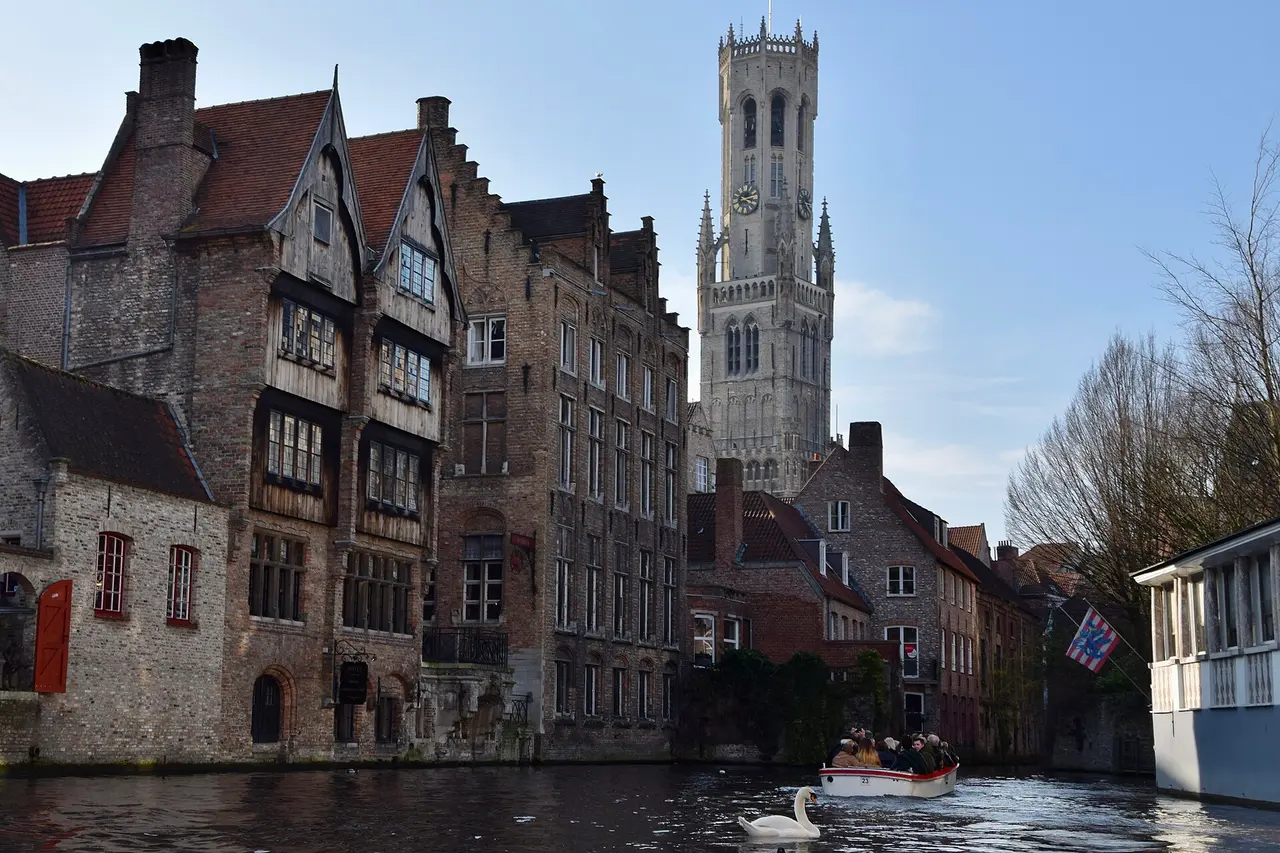
Canals lined with brick gables, a belfry towering over the Markt, paintings by Van Eyck and Memling still in the city where they were painted: Bruges is small, but it deserves more than a day trip. Stay overnight to see it in the evening, once the day visitors have left.

Why visit Bruges?

Bruges is one of the best-preserved medieval cities in Europe: its historic centre has been UNESCO-listed since 2000. It holds masterpieces by the Flemish Primitives, a Madonna by Michelangelo and a network of canals that can be explored by boat or on foot in one to two days.

Bruges must-sees

Monuments and museums all within walking distance, in a centre you can cross in twenty minutes.

Belfry of Bruges

The UNESCO-listed medieval tower on the Markt, whose top, reached after 366 steps, reveals the carillon and a view over every rooftop in the city.

Basilica of the Holy Blood

A low Romanesque chapel topped by a neo-Gothic one holding a relic of the Holy Blood, carried through the streets every year in a procession on Ascension Day.

Groeninge Museum

A small fine arts museum with big names: Jan van Eyck, Memling, Gerard David and Bosch, including the Madonna with Canon van der Paele.

Church of Our Lady

A Gothic church with a tall brick tower, home to Michelangelo's Madonna and Child, one of the sculptor's few works to leave Italy in his lifetime.

St John's Hospital

One of Europe's oldest hospitals, with its historic pharmacy and medieval wards, where you can admire works by Memling including the Shrine of St Ursula.

Beguinage

An enclosure of white houses around a tree-planted lawn, UNESCO-listed with the Flemish beguinages, where visitors are asked to keep silent.

De Halve Maan Brewery

A family brewery in the centre, active on this site since 1856, open for tours with tasting, which sends its beer through an underground pipeline.

What to see in Bruges, district by district?

The Markt and the Burg

The two squares, two minutes apart on foot, sum up the city's merchant and religious power. On the Markt, the 83-metre belfry is climbed via 366 steps with limited time slots. The Burg gathers the Gothic town hall, begun in 1376 and among the oldest in the former Low Countries, and the Basilica of the Holy Blood. Arrive before 10 am or after 5 pm: in between, coach and cruise groups fill the squares. This is the best-known image of Flemish Belgium, and you quickly see why.

The canals and the St Anna district

Boats leave from several landing stages in the centre for a tour of about 30 minutes, mainly from March to November; the Rozenhoedkaai is the most photographed viewpoint. To escape the crowds, cross east to the St Anna district, more residential, with the Jerusalem Church and the lace centre. Further on, on the Kruisvest ramparts, four windmills survive, one of which can be visited in season. Half a day on foot is enough to cover this area, ending on the quays at sunset.

The quiet south around the Lake of Love

South of the centre, the Church of Our Lady and its brick tower of about 115 m house Michelangelo's Madonna and Child and the tombs of Charles the Bold and Mary of Burgundy. Opposite, the former St John's Hospital displays six works by Memling. A few minutes further on, the beguinage founded in the 13th century and the Minnewater, the willow-lined Lake of Love, are the calmest corners of the city early in the morning. Allow half a day with the museums, and a break at De Halve Maan brewery on the way.

Beyond the ramparts: Damme and the coast

The Damme canal starts at the Damme Gate and runs about 7 km to this village, once the outer port of Bruges, with its Gothic town hall and bookshops: half an hour by bike on a flat, poplar-lined path. The North Sea is a quarter of an hour away by train, at Ostend or Blankenberge, where the coastal tram runs along the entire Belgian shoreline, from De Panne to Knokke. These outings take half a day and offer a breather when the centre is saturated, especially in July and August.

Getting there

Airports serving Bruges, from main hubs to secondary ones.
  • BRUBrussels AirportZaventemMain
  • CRLBrussels South Charleroi AirportCharleroiMain
  • OSTOstend-Bruges International AirportOostendeMain
  • ANRAntwerp International Airport (Deurne)AntwerpSecondary
  • KJKKortrijk-Wevelgem International AirportWevelgemSecondary
  • LGGLiège AirportGrâce-HollogneSecondary

Practical information for Bruges

From Brussels

Direct trains in about an hour from the Midi, Central and North stations, several an hour. Ghent is on the line, halfway.

From the station to the Markt

About 20 minutes on foot via Minnewater park, or a few minutes by bus, with services to the centre every few minutes.

Arriving by car

The centre is almost closed to traffic and parking there is expensive. Use the large station car park, linked to the centre by frequent buses.

Crowds

Day trippers and passengers from Zeebrugge cruise ships arrive mainly between 10 am and 5 pm, and at weekends. Evenings and mornings stay peaceful.

Canal boats

Several landing stages, tours of about half an hour, mainly from March to November. In severe cold or high water, departures may be suspended.

Bike rental

Rental shops near the station and in the centre. Note that many streets are one-way for cars but two-way for bikes.

Bruges lace

Much of the lace sold in shops is imported and machine-made. Handmade pieces can be recognised by their much higher price.

Tourist tax

A per-person, per-night tax is added to the accommodation price, often paid on arrival. Check whether it is included when booking.

Bruges in pictures

Photo credits : Ank Kumar, CC BY-SA 4.0, Wikimedia Commons ; Tim Adams, CC BY 3.0, Wikimedia Commons ; Marc Ryckaert ( MJJR ), CC BY 3.0, Wikimedia Commons ; Marc Ryckaert, CC BY-SA 4.0, Wikimedia Commons

Frequently asked questions about Bruges

Is one day enough to visit Bruges?
One day covers the Markt, the Burg, the canals and the beguinage, but not the museums at a relaxed pace. One night there changes everything: you enjoy the centre in the evening and early morning without the groups, and keep the next day for the Groeninge and St John's Hospital.
Should you book the climb up the Bruges belfry?
It is advisable: the number of people inside the tower at any one time is limited and tickets are sold by time slot. In high season, the queue can be long without a booking. Expect 366 steps, with narrow passages, and about an hour's visit.
When is the Holy Blood Procession?
Every year on Ascension Day, in May or June depending on the calendar. Hundreds of costumed participants parade through the centre, staging biblical scenes and the history of the relic. The procession has been on UNESCO's intangible cultural heritage list since 2009.
Where can you see Michelangelo's Madonna in Bruges?
In the Church of Our Lady, in the paid section of the choir and chapels, which also includes the tombs of Charles the Bold and Mary of Burgundy. It was bought by a Bruges merchant in the early 16th century and has been taken away and returned several times.
Does De Halve Maan beer really travel by pipeline?
Yes. Since 2016, an underground pipeline of about 3 km has linked the brewery in the centre to its bottling plant on the outskirts, keeping lorries out of the medieval lanes. The project was partly funded by residents and fans of the beer.
How do you get from Bruges to Damme?
The nicest way is by bike, along the poplar-lined canal: about 7 km from the Damme Gate, or half an hour at a gentle pace. On foot, allow an hour and a half. In season, a small paddle steamer, the Lamme Goedzak, also links the two.
Where can you see paintings by Van Eyck in Bruges?
At the Groeninge Museum, which holds the Madonna with Canon van der Paele, dated 1436, and the portrait of Margaret van Eyck, the painter's wife. The museum is small, one to two hours is enough, and it closes on Mondays like most museums in the city.
Where can you buy genuine Bruges lace?
The lace centre, in the St Anna district, displays antique pieces and hosts bobbin lace demonstrations. In shops, ask explicitly for local handmade lace: it costs far more than the imported lace that dominates the shop windows in the centre.

Plan your trip to Bruges

Build your day-by-day itinerary and manage budget, bookings and packing in PlanTripNow.
Aperçu de l'application PlanTripNow