Skip to content

Visiting Bucharest : what to do in 3 days in the capital

A palace among the largest administrative buildings in the world, monasteries tucked between apartment blocks, Parisian-style boulevards and vast parks: Bucharest rewards those who look closer. Three days cover the city, a fourth adds a castle in the surroundings.

Why visit Bucharest?

Bucharest is Romania's capital and largest city, nicknamed the "Little Paris" between the wars for its boulevards and Arch of Triumph. It brings together the Palace of the Parliament, Ceaușescu's monumental legacy, 17th and 18th-century Orthodox churches and a renowned nightlife, on a budget well below that of Western Europe.

Bucharest must-sees

Landmarks, museums and addresses that tell three centuries of Romanian history.

Palace of the Parliament

Built under Ceaușescu, one of the largest administrative buildings in the world. Guided tour by reservation, passport required, with access to marble halls and sometimes the terrace.

Stavropoleos Monastery

A small 1724 church in the heart of the Old Town, a gem of the Brâncovenesc style with carved columns, frescoes and a courtyard of tombstones.

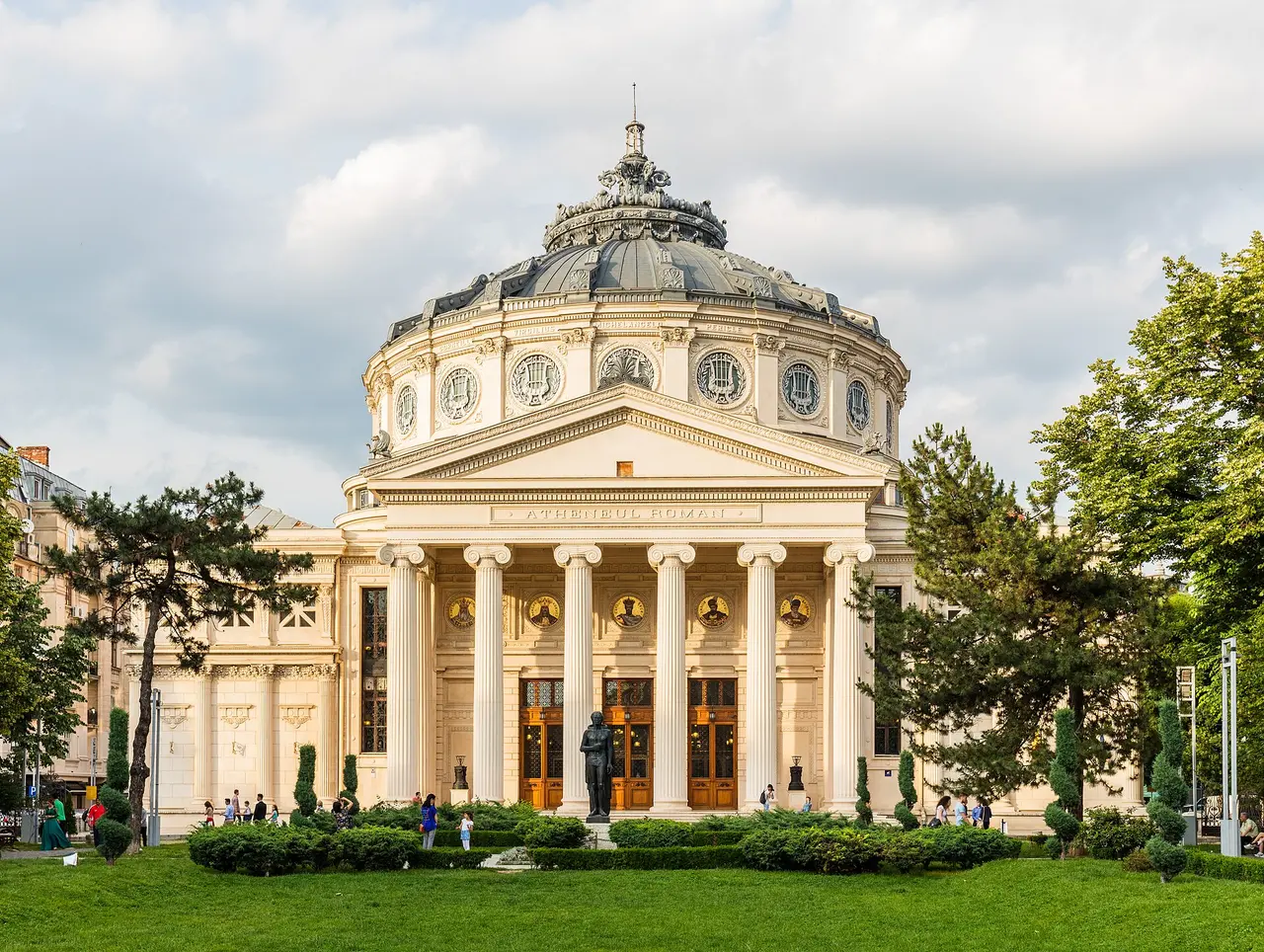
Romanian Athenaeum

A neoclassical concert hall opened in 1888, beneath a dome painted with a fresco of Romanian history. Home of the George Enescu Philharmonic.

Village Museum

An open-air museum founded in 1936 on the shore of Lake Herăstrău, bringing together dozens of farms, wooden churches and mills from across the country.

National Museum of Art

Housed in the former royal palace, it presents a rich gallery of medieval Romanian art and a European collection including El Greco and Rembrandt.

Cărturești Carusel

A bookshop in a restored Old Town building with white spiralling floors. Café under the glass roof; visit early to avoid the queue.

Caru' cu Bere

An 1879 beer hall with neo-Gothic wood panelling and stained glass on Stavropoleos street. Traditional Romanian food; booking advised evenings and weekends.

Ceaușescu Mansion Primăverii

The Ceaușescu couple's private residence, with a mosaic pool, cinema room and gold-plated bathroom. Guided tours only, to be booked ahead.

Arch of Triumph

A 27-metre arch on Kiseleff Boulevard, rebuilt in stone in 1936 to celebrate independence and the Great Union. Terrace open on some public holidays.

What to see in Bucharest, neighbourhood by neighbourhood?

Lipscani and the Old Town

The Centrul Vechi, around Lipscani and Covaci streets, is the only old district to have escaped the demolitions of the 1980s. Its pedestrian lanes line up bars, terraces and restored facades, between Stavropoleos Monastery, the Hanul lui Manuc inn and the remains of Vlad the Impaler's Princely Court. The area takes two hours to see by day, but it truly lives in the evening and at weekends, until late at night. If you stay here, pick a side street: bar noise often lasts past 2 am on Fridays and Saturdays.

The Civic Centre and the Palace of the Parliament

To build his Civic Centre, Ceaușescu had much of the old Uranus district razed in the 1980s. Unirii Boulevard, deliberately wider than the Champs-Élysées, runs towards the Palace of the Parliament, a colossal project completed after the fall of the regime in 1989. The compulsory guided tour lasts about an hour to an hour and a half, by reservation, with a passport or ID card required at the entrance. Next door, the National Museum of Contemporary Art occupies a wing of the palace, and the new People's Salvation Cathedral now towers over the whole area.

Calea Victoriei and Revolution Square

The city's oldest thoroughfare, Calea Victoriei runs north from the Old Town for about 2.7 km, an hour's walk without stops. Along it stand the CEC Palace, the Romanian Athenaeum, an 1888 domed concert hall, and the former royal palace, now the National Museum of Art. Revolution Square keeps the memory of December 1989: from the balcony of the former Central Committee building, Ceaușescu gave his last speech before fleeing by helicopter. Book a seat at the Athenaeum for a George Enescu Philharmonic concert, season from September to June.

The north: Herăstrău, villas and museums

North of Victoriei Square, Kiseleff Boulevard, lined with Belle Époque villas, leads to the Arch of Triumph and then to King Michael I Park, formerly Herăstrău, laid out around a lake of more than 70 hectares. On its shore, the Village Museum gathers houses, wooden churches and mills brought from all over Romania: allow two hours. The neighbouring Primăverii district holds the Ceaușescus' private residence, open for guided tours by reservation. This is the greenest area to stay in, a few metro stops from the centre.

Cotroceni, Cișmigiu and garden Bucharest

Cișmigiu Garden, laid out in the 19th century around a lake used for boating in summer and skating in winter, is the city's oldest public park, ten minutes' walk from the Old Town. Further west, the Cotroceni district lines up neo-Romanian houses and the presidential palace, part of which can be visited by reservation. The Botanical Garden opposite holds several thousand species. Allow half a day to combine the two areas, ideal in the heat of July and August.

Climate, seasons and earthquakes

Bucharest has a markedly continental climate: summers often above 30 °C in July and August, cold winters with possible snow from December to February. May, June and September are the best months for walking. The city lies in a seismic region, that of Vrancea: some older buildings carry a red dot indicating a high risk in a major earthquake, useful to know when choosing a rental. The last destructive earthquake dates back to 1977, but noticeable tremors remain regular.

Day trips from the capital

Mogoșoaia Palace, in Brâncovenesc style, is some fifteen kilometres north-west, and Snagov Monastery, where tradition places Vlad the Impaler's tomb, about 40 km away. The Therme baths, a vast water complex near the airport, draw families all year round. For the mountains, Peleș Castle in Sinaia is about two hours away by train, and the Prahova Valley leads on to Transylvania. These sites link up easily in a week-long tour of Romania.

Getting there

Airports serving Bucharest, from main hubs to secondary ones.
  • BBUBucharest Băneasa Aurel Vlaicu International AirportBucharestMain
  • BCMBacău George Enescu International AirportBacăuMain
  • CLJAvram Iancu Cluj International AirportCluj-NapocaMain
  • CNDMihail Kogălniceanu International AirportConstanțaMain
  • CRACraiova International AirportCraiovaMain
  • GHVBrașov-Ghimbav International AirportBrașovMain

Practical information for Bucharest

Henri Coandă Airport

In Otopeni, about 17 km north. Direct train to Gara de Nord, express bus 783 to the centre, or ride-hailing via app.

Taxis

Order a taxi from the official airport kiosks or via an app; avoid drivers who approach you in the arrivals hall.

Currency

Romanian leu (RON), not the euro. Cards accepted almost everywhere, contactless payment common on the metro.

Schengen Area

Romania has been a full Schengen member since January 2025: no more systematic checks at internal borders.

Metro

Five clean, fast lines serving Gara de Nord, Piața Unirii and Piața Victoriei; tap your bank card at the gates.

Tipping

Around 10% in restaurants, left in cash or added to a card payment by telling the waiter.

Dress code

Shoulders and knees covered in Orthodox churches; a headscarf for women is appreciated in monasteries.

Summer heat

July and August often exceed 30 °C: sightsee in the morning, head to the parks in the afternoon and drink regularly.

Power sockets

Type F, 230 V, compatible with continental European plugs.

Staying alert

Pickpockets in the Old Town and crowded transport; beware of fake money changers on the street.

Bucharest in pictures

Photo credits : Diego Delso, CC BY-SA 4.0, Wikimedia Commons ; William John Gauthier from Denmark, CC BY-SA 2.0, Wikimedia Commons ; Ștefan Jurcă from Munich, Germany, CC BY 2.0, Wikimedia Commons ; Neoclassicism Enthusiast, Public domain, Wikimedia Commons

Frequently asked questions about Bucharest

Do you need to book the Palace of the Parliament tour in advance?
Yes, ideally several days ahead, by phone or online depending on the period. Visits are guided only, in several languages including English. Arrive with your passport or ID card at least 15 minutes early, at the entrance on Națiunile Unite Boulevard.
How to get from Otopeni Airport to central Bucharest?
The train links the airport to Gara de Nord in about twenty minutes, then the metro takes over. Express bus 783 serves Piața Victoriei, Universitate and Piața Unirii. By ride-hailing, allow 30 to 60 minutes depending on traffic, often heavy at rush hour.
Which neighbourhood to stay in for a first visit to Bucharest?
The Universitate and Piața Romană area offers the best balance: walking distance from the Old Town and Calea Victoriei, well served by the metro, and quieter than Lipscani at night. Families prefer the north, towards Aviatorilor and King Michael I Park.
Bucharest or Brașov: which to choose for a short trip?
They complement each other rather than compete. Bucharest offers museums, communist history and nightlife, Brașov a Saxon old town at the foot of the Carpathians. With four or five days, spend two nights in each, linked by about three hours by train.
Is Bucharest worth visiting in winter?
Yes, the city suits a cultural break from December to February: museums, concerts at the Athenaeum and a Christmas market on Constitution Square, in front of the Palace of the Parliament. Expect frequent sub-zero temperatures and slippery pavements after snow.
What to eat in Bucharest's traditional restaurants?
Sarmale, stuffed cabbage rolls served with mămăligă, ciorbă de burtă, a sour tripe soup, grilled mici with mustard and, for dessert, papanași, doughnuts with cream and jam. Wash them down with țuică, a plum brandy.
Is the Bucharest Village Museum worth the trip?
Yes, it is the best introduction to rural Romania before a tour of Transylvania or Maramureș. The houses were dismantled and rebuilt on site. Allow two hours, wear comfortable shoes, and combine it with a walk around the neighbouring lake.
Can you do Dracula's Castle as a day trip from Bucharest?
Bran Castle is about three hours away by road: a return day trip is possible on an organised tour, often combined with Peleș, but the day is long. Better to sleep in Brașov, half an hour from Bran.

Plan your trip to Bucharest

Build your day-by-day itinerary and manage budget, bookings and packing in PlanTripNow.
Aperçu de l'application PlanTripNow