Skip to content

Visiting Djerba : beaches, souks and island villages

Fine sandy beaches lined with palms, white mosques with thick walls, covered souks and isolated menzels among the olive trees: flat and luminous, Djerba suits lazy beach days as much as exploring. A week lets you alternate beach, inland villages and a trip to the ksour of the south.

Why go to Djerba?

Djerba is an island in the Gulf of Gabès, in southeastern Tunisia, linked to the mainland by a causeway and a ferry. It combines a hotel zone on the east coast, a rich Ibadi, Jewish and Berber heritage listed by UNESCO in 2023, and a climate suitable for swimming from June to October. Djerba-Zarzis airport receives many direct flights from Europe.

Djerba's must-sees

Places of worship, forts, lagoons and workshops: nine stops to go beyond the beach.

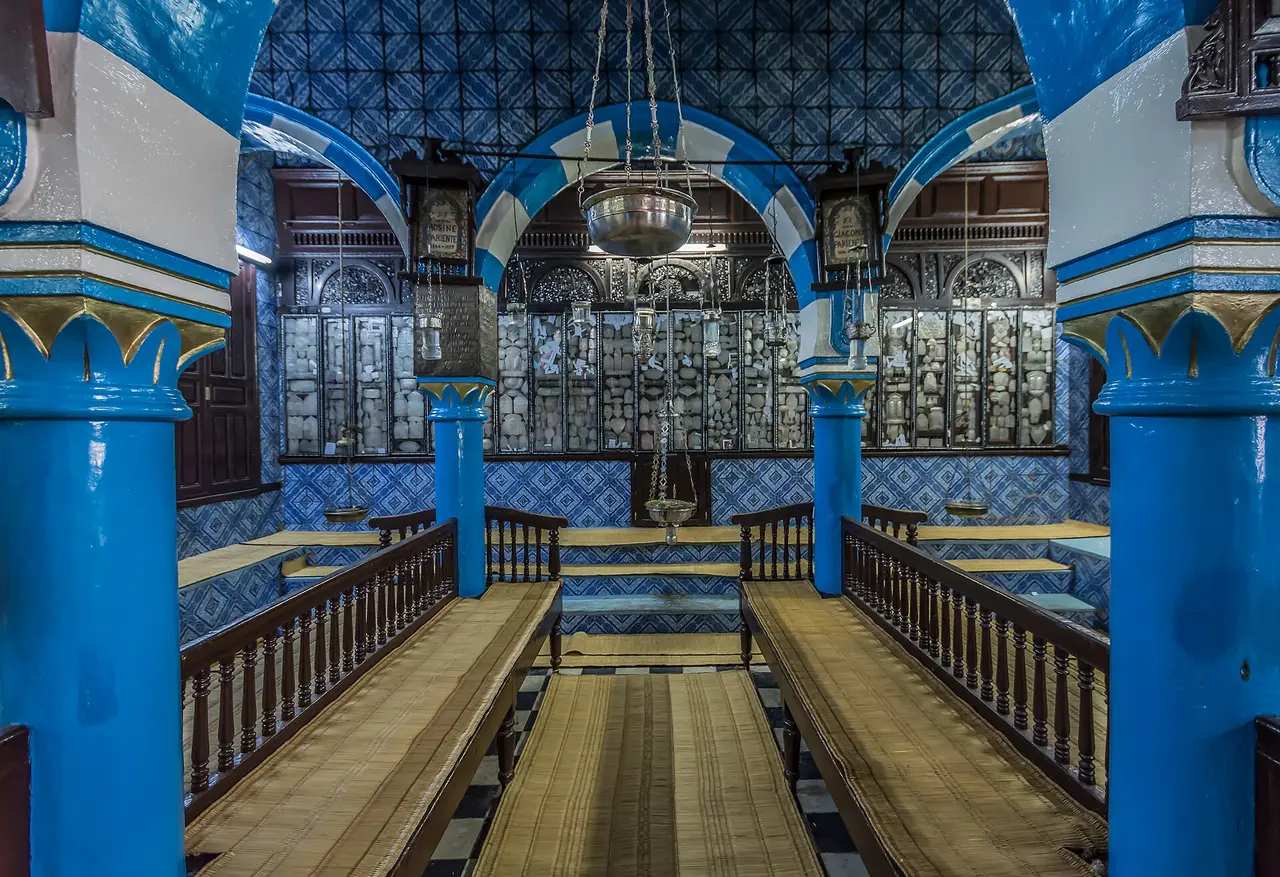
El Ghriba Synagogue

One of the oldest Jewish sanctuaries in North Africa, in Erriadh, the goal of an annual spring pilgrimage. Interior covered in blue tiles, modest dress required.

Djerbahood murals

Several dozen walls painted by artists from many countries in the lanes of Erriadh, born of a 2014 project. Explore on foot with a map in hand.

Borj el-Kebir

Houmt Souk's coastal fort, rebuilt in the 15th century, scene of battles against the Spanish. Ramparts facing the sea and views over the fishing port.

Ras R'mel

A sandy peninsula north of Houmt Souk, known as Flamingo Island, reached by boat. Flamingos mostly visible in winter, swimming in very shallow water.

Guellala Museum

On the hill of the potters' village, recreated scenes of Djerbian life: weddings, crafts, costumes. A fine sea view from the terrace.

Fadhloun Mosque

A fortified Ibadi mosque standing alone in the countryside near Midoun, with thick whitewashed walls, emblematic of the island's religious architecture.

El Kantara Roman causeway

A dyke of about 7 km between the island and the mainland, following an ancient causeway, with the remains of the Roman city of Meninx nearby.

Djerba Explore

A park near Midoun combining a crocodile farm, a reconstructed traditional village and the Lalla Hadria museum devoted to Islamic arts.

Houmt Souk fish auction

Every morning, the auctioneer perched on his chair sells fish and octopus to the highest bidder in the covered market. Arrive before 10 am.

What to see in Djerba, area by area?

Houmt Souk and its fondouks

The island's main town on the north coast, Houmt Souk gathers covered souks, old fondouks, caravanserais turned into hotels and cafés, and white-domed mosques. In the morning, the fish market auction sells the catch out loud. Allow half a day to wander, avoiding Friday midday when many shops close for prayer. Haggling is the rule in the souks: start well below the asking price. The town also suits a stay away from the resort hotels, in a guesthouse.

Erriadh and the Hara Sghira

7 km south of Houmt Souk, Erriadh, the former Hara Sghira, is one of the historic villages of the island's Jewish community, still present today. In 2014, the Djerbahood project invited street artists from around the world: several dozen murals still cover the white walls, some faded by the sun. The walk takes one to two hours, preferably in the morning. The area around the synagogue has been under reinforced security checks since the May 2023 attack: carry ID.

The tourist zone, from Sidi Mahrez to Aghir

The east coast stretches about twenty kilometres of beaches, from Sidi Mahrez in the north to Aghir, lined with resort hotels and a few residences. The sand is fine and the sea shallow, ideal for children, though seaweed sometimes piles up in summer. Midoun, 5 km inland, is the town for shopping and hosts a weekly market. For swimming, June and September offer warm water without the crowds or the intense heat of July and August. From November to March, the water drops below 18 °C.

The southwest and its potters' workshops

In the southwest, Guellala has been the potters' village since Antiquity: clay is dug from galleries in the hillside and fired in half-buried kilns. Around fifteen workshops welcome visitors, often with a wheel demonstration. Allow two hours, including the museum on the hill overlooking the sea. Further on, Ajim is the ferry port for the mainland and home to sponge fishermen, a historic island trade. The roads here are quiet and easy to cycle in the milder seasons.

The inland menzels and fortified mosques

Between the villages, the island's interior is a patchwork of olive trees, palms and menzels, family farms tucked behind earthen walls, with weaving workshops and cisterns. This rural landscape, with several hundred small fortified Ibadi mosques, underpins the island's UNESCO listing in 2023. Plan a day by car or scooter, stopping at the Fadhloun mosque near Midoun. Respect prayer times and do not enter active mosques without being invited.

Reaching the mainland and trips to the south

Two routes link Djerba to the mainland: the El Kantara causeway, about 7 km long, towards Zarzis, and the Ajim-Jorf ferry, a crossing of around fifteen minutes, busier in summer. Matmata and its troglodyte dwellings are about two and a half hours by road, Tataouine and the ksour roughly the same. Desert areas near the Libyan border, including Ben Guerdane, are advised against or formally advised against by France Diplomatie: check its map before any trip to the southeast.

Getting there

Airports serving Djerba, from main hubs to secondary ones.
  • DJEDjerba Zarzis International AirportMellitaMain
  • TUNTunis Carthage International AirportTunisMain
  • EBMEl Borma AirportEl BormaSecondary
  • GAEGabès Matmata International AirportGabèsSecondary
  • GAFGafsa Ksar International AirportGafsaSecondary
  • MIRMonastir Habib Bourguiba International AirportMonastirSecondary

Practical information for Djerba

Airport

Djerba-Zarzis International Airport, about ten kilometres from Houmt Souk and roughly 25 minutes from the hotels of the tourist zone.

Entering Tunisia

No visa required for short tourist stays for French nationals; passport valid for at least three months on entry.

Tunisian dinar

Non-convertible and banned from import and export: exchange on arrival and keep receipts to convert the balance back.

Ajim-Jorf ferry

Free for foot passengers, paid for vehicles; long waits possible in summer and at weekends, so allow extra time.

Taxis

Yellow metered taxis, insist on the meter at the start; higher night rate. Louages link Houmt Souk to mainland towns.

Power sockets

Types C and E, 230 V: French and most continental European plugs fit without an adapter.

Alcohol

Served in hotels and some restaurants, rarely elsewhere on the island; during Ramadan, availability shrinks sharply outside hotels.

Places of worship

Shoulders and legs covered for El Ghriba and mosques; several Ibadi mosques are closed to non-Muslims.

Jellyfish and seaweed

Variable presence of jellyfish and seaweed in high summer on the east coast: ask at your hotel before swimming.

Safety

Heightened vigilance on the island; the Libyan border and Ben Guerdane, about an hour's drive away, are in a formally advised-against zone.

Djerba in pictures

Photo credits : IssamBarhoumi, CC BY-SA 4.0, Wikimedia Commons ; Skander zarrad, CC BY-SA 4.0, Wikimedia Commons ; Noland architect, CC BY-SA 4.0, Wikimedia Commons ; Rahma026, CC BY-SA 4.0, Wikimedia Commons

Frequently asked questions about Djerba

Can you swim in Djerba in April or November?
It is possible but cool: the water is around 18 to 20 °C in April and slightly warmer in early November, with pleasant days. For comfortable swimming, aim for June or September. In midwinter, many hotels rely on heated pools and thalassotherapy.
Houmt Souk or the tourist zone: where to stay in Djerba?
The east coast tourist zone suits a beach holiday in a resort hotel with everything on site. Houmt Souk offers guesthouses in old fondouks, souks within walking distance and local life, but the nearest beach requires transport.
How do you visit El Ghriba Synagogue?
It is open during the day, except on Saturdays and holidays, for a small entry fee. Security checks have been strict since the May 2023 attack: passport requested, bags searched. Cover shoulders and legs, and visitors are asked to wear a scarf in the prayer hall.
Do you need to rent a car to tour Djerba?
For the island's interior and Guellala, it is the simplest option: distances are short and the roads flat. Scooters and e-bikes also work well outside summer. To stay within the tourist zone and Houmt Souk, taxis and hotel shuttles are enough.
Can you reach Matmata and Tataouine in a day from Djerba?
Yes, but it makes a long day: about five hours of driving round trip for each. Many tours combine Matmata, Douz and a night in the desert over two days. Avoid July and August, when the heat makes sightseeing in the south exhausting.
When does the El Ghriba pilgrimage take place?
It is held every spring around the Jewish festival of Lag BaOmer, usually in May. The island then welcomes thousands of pilgrims and security is stepped up throughout the Erriadh area. Check the exact dates and access conditions before planning a visit.
What to buy in the souks of Houmt Souk?
Guellala pottery, rugs and blankets woven in the menzels, silver jewellery, esparto baskets and straw hats. Compare several shops, bargain with a smile and pay in dinars: euros are sometimes accepted, but at an unfavourable rate.
Is Sidi Mahrez beach suitable for children?
Yes, the slope is very gentle and the water stays shallow for several dozen metres. The downside: with an easterly wind, seaweed can pile up. Choose a hotel that cleans its beach every morning and ask about sea conditions before booking.
Is the pirate boat trip to Ras R'mel worth it?
Decorated boat trips from Houmt Souk last half a day with a grilled lunch on the peninsula. Festive atmosphere, shallow water and white sand. To see the flamingos, choose winter and a quieter outing with a local fisherman.

Plan your trip to Djerba

Build your day-by-day itinerary and manage budget, bookings and packing in PlanTripNow.
Aperçu de l'application PlanTripNow