Skip to content

Visit Fethiye : lagoon, Lycian tombs and boat trips

Lycian tombs carved into the cliff above the harbour, a gulf scattered with islands to explore by boat, the turquoise Ölüdeniz lagoon beneath paragliders and a ghost village in the pine forest: Fethiye lends itself to a week of sea, hiking and ancient sites.

Why choose Fethiye on the Turkish coast?

Fethiye, ancient Telmessos, is a mid-sized port town that serves as a base for the wildest stretch of the Lycian coast. It combines beaches, ancient sites and hiking without the large resorts of Antalya or Bodrum. Dalaman airport is about an hour's drive away.

Fethiye's must-sees

Between cliffs, lagoons and ruins, the key sites are spread over some fifty kilometres around the harbour.

Tomb of Amyntas

An Ionic temple facade carved into the cliff in the 4th century BC, visible from all over town and lit at night; the access stairs start in Karagözler.

Ölüdeniz lagoon

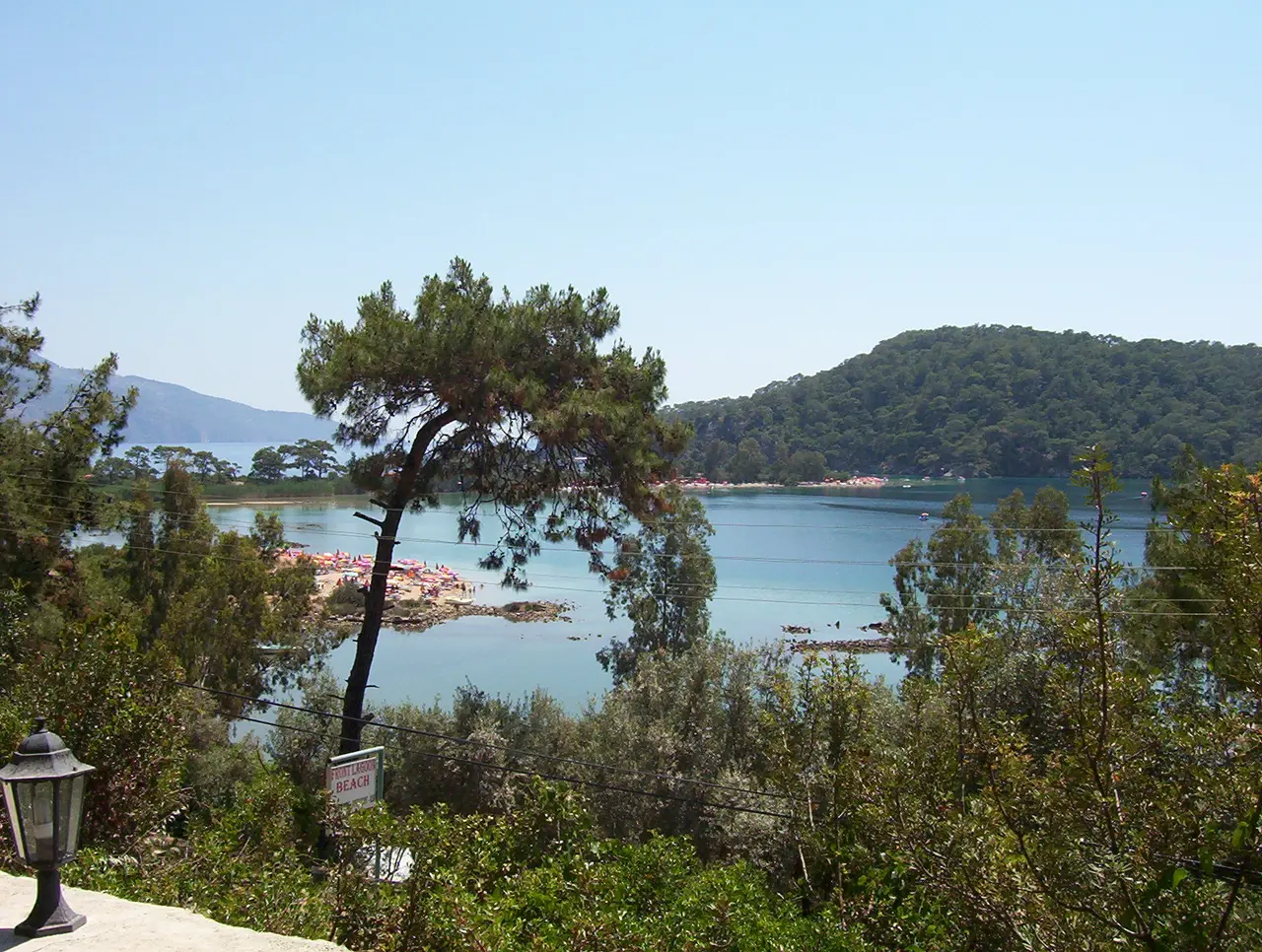
A turquoise lagoon closed off by a sand spit, protected as a nature park, with calm shallow water fringed by pines.

Babadağ paragliding

Tandem flights from the slopes of the mountain overlooking Ölüdeniz, landing on Belcekız beach; expect around 30 minutes in the air.

Kayaköy ghost village

A Greek village deserted since 1923 whose stone houses cover an entire hillside, free to wander at sunset.

Saklıkent gorge

A narrow canyon with towering walls that you walk up through the cold river water, refreshing in the height of summer.

Kabak beach

A wild cove at the foot of a wooded valley on the Lycian Way, popular with campers and hikers for its secluded feel.

Ruins of Tlos

An ancient Lycian city perched on a spur, with rock tombs, a theatre and baths facing the Eşen valley.

Sunset at Çalış

A long beach north of town, known for sunsets over the gulf islands, linked to the centre by water taxi.

What to discover in Fethiye and its gulf?

Town centre, harbour and Paspatur

Rebuilt after the 1957 earthquake, Fethiye has a modern, unpretentious centre around the marina and its seafront promenade stretching several kilometres. The old Paspatur quarter gathers shops, bars and restaurants in lanes draped with bougainvillea. The Tuesday market, one of the largest in the region, spreads along the canal. At the fish market, you choose your fish at the stall and a neighbouring restaurant cooks it for a set fee: a typical evening in town.

Ölüdeniz and Belcekız

15 km to the south, Ölüdeniz refers both to the sheltered lagoon, reached through a paid entrance to the nature park, and to the long free pebble beach of Belcekız. The water is calm and shallow, ideal with children. It is also the landing zone for paragliders launching from Babadağ. Dolmuş minibuses link Fethiye in about thirty minutes, with frequent departures in season. Arrive early in July and August: lagoon sunbeds are taken by 10 am.

Kayaköy and the Hisarönü heights

On the hills between Fethiye and Ölüdeniz, Kayaköy, formerly Livissi, is a village of stone houses abandoned during the 1923 Greek-Turkish population exchange. Its hundreds of roofless houses and two churches take one or two hours to visit, ideally in late afternoon. A marked trail of about two hours leads down from Kayaköy to Ölüdeniz through the pine forest. Neighbouring Hisarönü and Ovacık are lively holiday villages, more convenient than charming.

The gulf and the 12 Islands cruise

The Gulf of Fethiye is best discovered from the water. The so-called 12 Islands trips leave the harbour in the morning and string together swims in coves, a stop at Göcek Island or Tersane Bay, lunch on board and a return in late afternoon. Pick a modest-sized boat, as the biggest ones often play loud music. For more freedom, wooden schooners called gulets offer multi-day cruises towards Göcek or Kaş.

Saklıkent, Tlos and the hinterland

About 45 km east, Saklıkent gorge slices through the mountain for some twenty kilometres; you wade up the first few hundred metres in icy water, wearing sandals. On the way, the Lycian site of Tlos lines up rock tombs and an acropolis at the foot of the mountains. Further on, Xanthos and the Letoon sanctuary, jointly UNESCO-listed, are about an hour's drive away. A rental car lets you combine all three in one day.

The Lycian Way and Butterfly Valley

The Lycian Way, a waymarked trail of over 500 km to Antalya, starts above Ölüdeniz. Its first stages, from Faralya to Kabak, offer plunging sea views: hike in spring or October, as summer is too hot. Below Faralya, Butterfly Valley is a steep-sided cove reached mainly by boat from Ölüdeniz in about 30 minutes. The area has been hit by forest fires, a recurring summer risk on this coast in Turkey: respect fire bans.

Getting there

Airports serving Fethiye, from main hubs to secondary ones.
  • ADFAdıyaman AirportAdıyamanSecondary
  • AFYAfyon Air BaseAfyonkarahisarSecondary
  • AJIAğrı AirportAğrıSecondary
  • ANKEtimesgut Air BaseAnkaraSecondary
  • BALBatman AirportBatmanSecondary
  • BDMBandırma AirportBandırmaSecondary

Practical information for Fethiye

Dalaman airport

About an hour's drive; Havaş shuttles to Fethiye bus station timed with flights, plus taxis and private transfers.

Dolmuş

Frequent minibuses to Ölüdeniz, Kayaköy, Hisarönü and Çalış, paid on board; the easiest way to explore without a car.

Fish market

Buy fish at the central stalls, then a restaurant in the hall cooks it for a fixed, posted fee, with side dishes.

Forest fires

The French foreign ministry flags a high wildfire risk on the Aegean and Mediterranean coasts in summer; no barbecues or cigarette ends in the pines.

Lagoon entrance

Access to the Ölüdeniz lagoon is paid as it is a nature park; the neighbouring Belcekız beach is free.

Power sockets

Type F at 230 V, as in most of continental Europe; UK and US travellers need an adapter.

Season

May, June, September and October are ideal; July and August are very hot and crowded, and many Ölüdeniz restaurants close in winter.

Fethiye in pictures

Photo credits : Jongleur100, Public domain, Wikimedia Commons ; Feridun F.Alkaya, CC BY-SA 2.0, Wikimedia Commons ; Nikodem Nijaki, CC BY-SA 3.0, Wikimedia Commons ; Ezzeldin.Elbaksawy, CC BY-SA 4.0, Wikimedia Commons

Frequently asked questions about Fethiye

Should I stay in Fethiye or Ölüdeniz?
Fethiye is a real town with a market, harbour and restaurants open year-round, handy for day trips. Ölüdeniz is a beach resort right on the water, pricier and very seasonal. Hisarönü is lively at night but has little particular charm.
Is Babadağ paragliding suitable for beginners?
Yes, it is done in tandem with a pilot, with no prior experience needed. Take-off involves running a few steps down the slope. Flights are cancelled in strong wind; book early in your stay to keep some leeway.
How do you get to Butterfly Valley?
The easiest way is by boat from Ölüdeniz beach, in about 30 minutes. A very steep path also descends from Faralya, not advised without mountain experience. Check the state of the site locally, as it has been affected by fires.
Can you hike the Lycian Way without a guide?
Yes, the trail is waymarked in red and white and the first stages from Ölüdeniz can be done as day hikes. Carry plenty of water, as supply points are rare. Guesthouses in Faralya and Kabak welcome hikers for the night.
How long is the 12 Islands boat trip?
A full day: departure around 10.30 am from the harbour and return in late afternoon, with five or six swim stops and lunch on board. Prices are negotiated along the quay the day before, comparing boat sizes.
What to see on the road from Fethiye to Kaş?
The coastal road passes Saklıkent, Xanthos, the Letoon and Patara beach, one of the longest in Turkey. Allow two hours of driving without stops, or a full day to visit these sites along the way.
Is Fethiye a good base for Pamukkale?
It is possible but long: about four hours' drive each way. Rather than a day trip, plan a night in Pamukkale to enjoy the travertines in peace, early in the morning or at sunset.

Plan your trip to Fethiye

Build your day-by-day itinerary and manage budget, bookings and packing in PlanTripNow.
Aperçu de l'application PlanTripNow