Skip to content

Visiting Kotor : city walls, Old Town and the Bay of Kotor

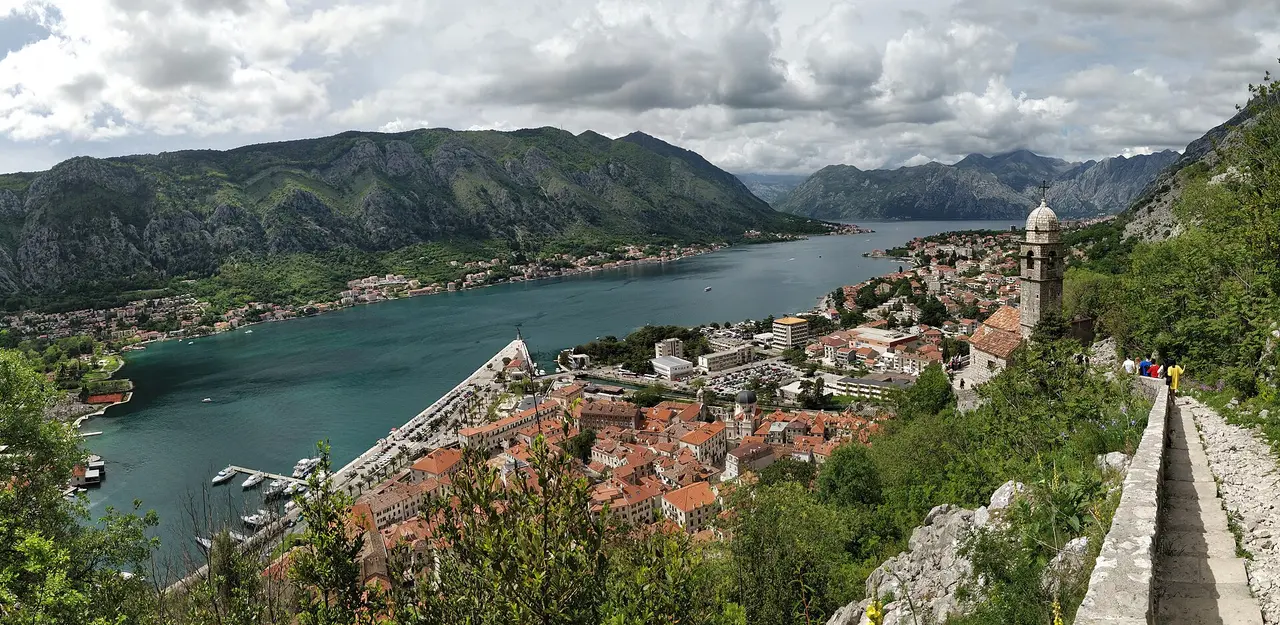
Stone lanes where cats doze, a wall clambering up the mountainside and a bay framed by sheer peaks: Kotor is best savoured early in the morning, before the cruise ships. Two days cover the town and Perast, a third adds Mount Lovćen.

Why visit Kotor?

Kotor is a fortified old town of Venetian architecture, listed by UNESCO with its natural and cultural region in 1979. Its walls climb the mountain up to a fortress overlooking the entire bay. Perast, Mount Lovćen and the Budva coast are all less than an hour's drive away.

Kotor's must-sees

Fortifications, medieval churches and islets in the bay, between the Old Town and the peaks.

St John's Fortress

After roughly 1,350 steps along the walls, this fort towers over the town. Allow an hour to climb, ideally at dawn or late in the day.

St Tryphon's Cathedral

Consecrated in 1166, this twin-towered Romanesque cathedral holds a treasury of silverwork and frescoes. It dominates the main square of the Old Town.

St Luke's Church

A small church from 1195 that has served both Catholic and Orthodox worship, with two altars side by side. It stands on St Luke's Square.

Maritime Museum

Housed in a baroque palace, it traces the naval tradition of the Bay of Kotor through ship models, weapons, captains' portraits and navigation instruments.

Our Lady of the Rocks

An artificial islet off Perast, topped by a blue-domed church whose interior is covered in sailors' votive offerings. A few minutes by boat from the quay.

Njegoš Mausoleum

On the summit of Lovćen, reached by a staircase cut through the rock. A circular panorama over the mountains, the bay and sometimes the Albanian coast.

Ladder of Kotor

An old zigzagging mule track linking Kotor to Njeguši. Several hours of uphill walking on a rocky path, with plunging views over the bay.

What to see in Kotor and its bay?

The fortified Old Town

The Stari Grad forms a compact triangle you can cross in ten minutes but explore for half a day. Most visitors enter through the Sea Gate, facing the harbour, or the River Gate to the north. Paved squares, palaces of sea captains' families, Romanesque and Orthodox churches follow one another in a deliberately twisting maze, designed to confuse attackers. The whole area is pedestrian. On July and August mornings, visit before 9 am: cruise calls then pour thousands of passengers into it until late afternoon.

Dobrota and the northern shore

North of the Old Town, Dobrota stretches for several kilometres along the water, dotted with baroque palaces of shipowning families and small swimming jetties. The waterfront promenade can be walked or cycled, away from the bustle of the centre, and accommodation there is often quieter and roomier. Allow around twenty minutes on foot to reach the Sea Gate from the start of the village. It is a pleasant base for those travelling by car, as parking near the walls is almost impossible.

Perast and the inner bay

Some twelve kilometres north-west, Perast is a one-street baroque village that grew rich on its navy. From its quay, boats reach the artificial islet of Our Lady of the Rocks in a few minutes, built up over the centuries from stones thrown into the sea. Every 22 July, the Fašinada keeps the rite alive with a procession of boats at sunset. Further on, Risan preserves Roman mosaics. Allow half a day by local bus or car, and aim for late afternoon for the light on the water.

The Vrmac peninsula and Tivat

Across from Kotor, the shore of Prčanj and Muo lines up fishing villages and sailors' churches at the foot of Mount Vrmac. The coastal road makes a peaceful loop by bike. Beyond the tunnel, Tivat and its Porto Montenegro marina, about twenty minutes away, offer a more modern atmosphere, restaurants and the nearest airport. To reach Herceg Novi or the Croatian border without driving round the bay, the Kamenari to Lepetane ferry crosses the Verige strait in around ten minutes.

Mount Lovćen and the hinterland

Above Kotor, a dizzying road with 25 hairpin bends climbs to the village of Njeguši, known for its cured ham and cheese, then on to Lovćen National Park. At the top, the mausoleum of prince-bishop Njegoš offers a view reaching, on clear days, to the Adriatic and the mountains of inland Montenegro. Allow a full day by car, with a possible detour to the former royal capital of Cetinje. Hikers can climb to Njeguši on the Ladder of Kotor, best avoided in the summer midday sun.

Getting there

Airports serving Kotor, from main hubs to secondary ones.
  • TGDPodgorica Airport / Podgorica Golubovci AirbasePodgoricaMain
  • TIVTivat AirportTivatSecondary

Practical information for Kotor

Cruise ship calls

On some days, several cruise ships dock at once. Check the port's call schedule and plan the Old Town early in the morning or in the evening.

City walls access

Paid entry in season for the climb to the fortress. Bring water and closed shoes: there is little shade and the steps are uneven.

Entering Montenegro

A valid ID card or passport is enough for EU and Swiss nationals on a tourist stay; the country is not part of the Schengen area.

Stay registration

Every visitor must be registered with the authorities within 24 hours. Hotels and hosts handle this, along with the tourist tax.

Currency

Euro, used even though the country is not an EU member. Keep cash for boats and small restaurants.

Driving

Dipped headlights are compulsory day and night. Roads around the bay are narrow and winding; parking near the Old Town is very limited.

Kamenari ferry

Crosses the Verige strait in about ten minutes, with a fee for cars. Saves driving all the way round the bay towards Herceg Novi.

Winter rain

The Bay of Kotor is among the wettest areas in Europe in winter. Aim for May, June or September for settled weather.

Church dress code

Shoulders and knees should be covered in the Catholic and Orthodox churches of the Old Town.

Kotor in pictures

Photo credits : Jaakko Luttinen, CC BY-SA 4.0, Wikimedia Commons ; Dennis G. Jarvis, CC BY-SA 2.0, Wikimedia Commons ; Marcin Konsek, CC BY-SA 4.0, Wikimedia Commons ; Miomir Magdevski, CC BY-SA 4.0, Wikimedia Commons

Frequently asked questions about Kotor

How long does it take to climb to St John's Fortress?
Allow about an hour up and forty minutes down at a normal pace, for some 1,350 steps. In summer, set off at opening time or two hours before sunset: the heat is intense at midday on this shadeless slope.
How can you avoid the cruise crowds in Kotor Old Town?
Check the port's call schedule and visit the Stari Grad before 9 am or after 6 pm, once passengers have left. Staying in the Old Town or in Dobrota lets you enjoy the lanes in peace in the evening.
Can you see Perast and Our Lady of the Rocks in half a day?
Yes. Perast is about twenty minutes from Kotor by car or local bus. The boat to the islet from Perast quay takes only a few minutes, and visiting the church and its small museum takes less than an hour.
Is the 25-hairpin road to Lovćen dangerous?
It is narrow, without guardrails in places, and passing buses takes patience, but it is technically easy to drive at low speed. Avoid it at night, in fog or during storms, and sound your horn before blind bends.
Should you stay in Kotor or Budva to explore the bay?
For the Bay of Kotor, Perast and Lovćen, Kotor or Dobrota are far better placed. Budva, around forty minutes away, suits those who favour beaches and nightlife and only come to Kotor for a day.
Which airport is best for Kotor?
Tivat airport is the closest, about twenty minutes away, but its flights are mostly seasonal. Podgorica, around two hours by road, operates all year. Dubrovnik, in Croatia, is an alternative just over two hours away including the border crossing.
Why are there so many cats in Kotor's streets?
Cats have been part of the town's identity since the days when they protected ships and warehouses from rodents. Residents and shopkeepers feed them, a small museum is devoted to them and they have become the emblem of local souvenirs.
Can you swim in Kotor itself?
Yes, from small pebble beaches and jetties, especially along the Dobrota promenade, where the water is often clearer than near the harbour. For proper beaches, the Budva Riviera is less than an hour's drive away.

Plan your trip to Kotor

Build your day-by-day itinerary and manage budget, bookings and packing in PlanTripNow.
Aperçu de l'application PlanTripNow