Skip to content

Visit Kuala Lumpur : what to do in 3 days in the capital

Glass skyscrapers, stilt houses in Kampung Baru, Hindu and Taoist temples, air-conditioned malls and smoky night markets: Kuala Lumpur reveals itself district by district, by elevated train and on foot after dark. Three days cover the essentials, four with Batu Caves and Putrajaya.

Why visit Kuala Lumpur?

Kuala Lumpur brings together Malaysia's three main cultures, Malay, Chinese and Indian, with their places of worship and cuisines, within a few kilometres. It is also the country's main air gateway, linked to the airport by an express train, and a one or two day stop before the islands or the Cameron Highlands.

Kuala Lumpur's must-sees

Viewpoints, places of worship and food stops, most of them reachable by elevated train or on foot.

Petronas Towers

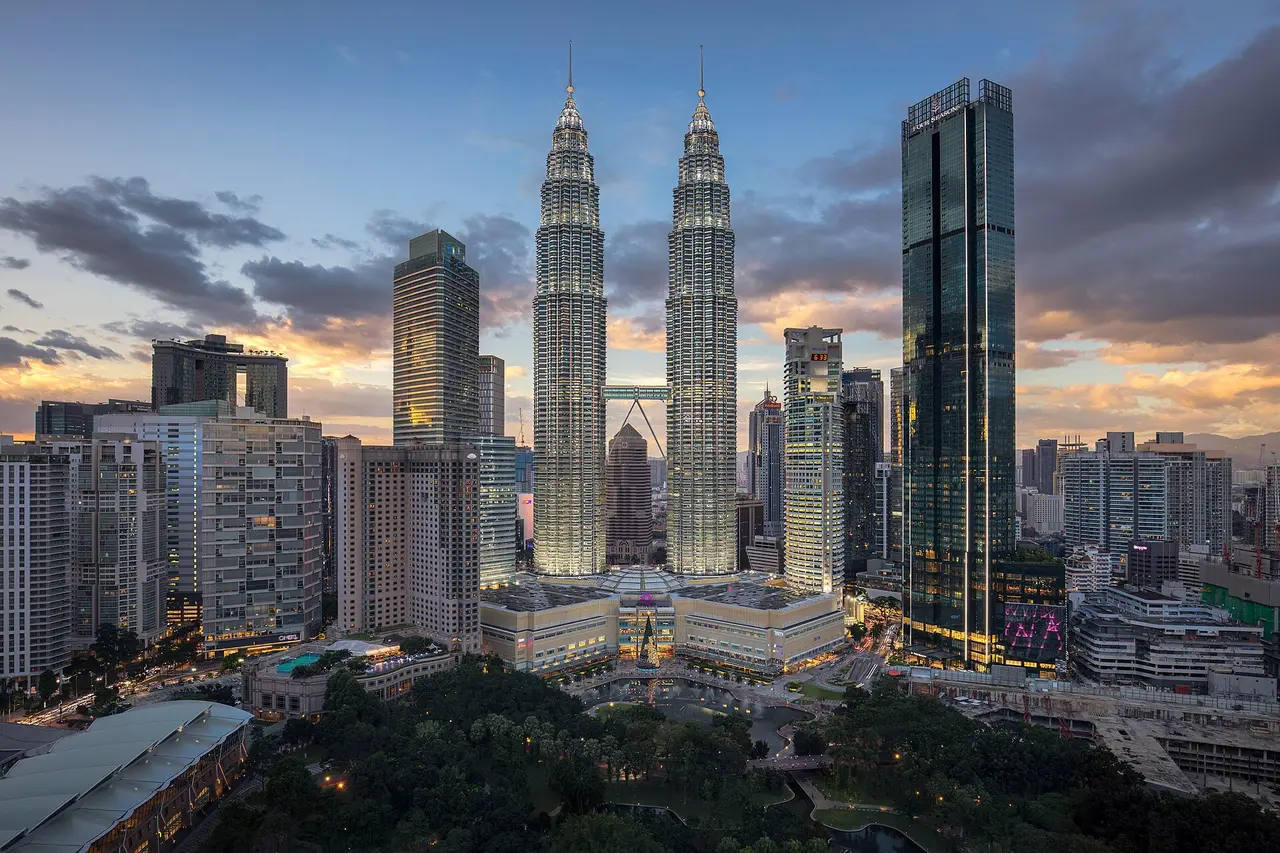
Twin 452 m towers joined by a skybridge on the 41st floor, once the tallest in the world, worth seeing by day and again lit up at night.

Batu Caves

Hindu shrine set inside a limestone hill at the top of 272 rainbow steps, focal point of the Thaipusam festival which draws huge crowds every year.

Menara KL Tower

A 421 m telecom tower on a forested hill, with an observation deck giving a clear view of the Petronas Towers at sunset.

Islamic Arts Museum

Ceramics, textiles, manuscripts and weapons from the Muslim world under decorated domes, one of the most complete collections in all of Southeast Asia.

National Mosque

Masjid Negara, a 1965 modernist building with a folded star roof, open to visitors outside prayer times, with loan robes provided at the entrance.

Thean Hou Temple

Multi-tiered Chinese temple dedicated to the sea goddess, hung with red lanterns and especially photogenic around Lunar New Year.

Sultan Abdul Samad Building

An 1897 Indo-Saracenic landmark with a clock tower and copper domes, lining Independence Square and beautifully lit at night.

Jalan Alor night market

Bukit Bintang food street lined with grills, woks and tropical fruit sellers, ideal for tasting Chinese and Malay cooking without a booking.

KL Forest Eco Park

A patch of primary rainforest in the city centre, crossed by a canopy walkway, at the foot of Menara KL, free to enter.

Putrajaya Mosque

The pink granite Putra Mosque on the shore of an artificial lake, symbol of the administrative capital, open to modestly dressed visitors outside prayers.

What to discover in Kuala Lumpur, district by district?

KLCC, the twin towers district

Kuala Lumpur City Centre is built around the 452 m Petronas Towers, completed in 1998, and a 20 hectare park with a lake and a children's water play area. The skybridge on the 41st floor and the observation deck on the 86th are visited in timed slots, best booked several days ahead. In the evening, around 8 pm, the Lake Symphony fountain show draws crowds to the esplanade. The convention centre and the Aquaria aquarium connect to the district by a covered, air-conditioned walkway, handy during afternoon downpours.

Bukit Bintang and Jalan Alor

Bukit Bintang is the city's shopping and nightlife district: Pavilion, Lot 10 and Fahrenheit 88 line up within less than a kilometre. Two streets away, Jalan Alor turns into an open-air restaurant strip every evening from 5 pm, known for satay skewers, seafood and durian in season, from June to August. It is the most practical base to stay, on the monorail and the MRT Kajang line, a 15 minute walk from the Petronas Towers via the covered walkway.

Chinatown and Petaling Street

Around Petaling Street, the old Chinese quarter mixes a covered market of knock-offs, restored shophouses, specialty coffee bars and temples. The Sze Ya Taoist temple, founded in the 1860s, is one of the oldest in the city, a short walk from the Sri Maha Mariamman Hindu temple. Central Market, or Pasar Seni, houses Malay craft shops in an Art Deco building. Allow half a day on foot, ideally in the morning before the heat, and come back in the evening for the food stalls of Jalan Petaling.

Dataran Merdeka and the colonial centre

Merdeka Square is where the Malaysian flag was raised at midnight on 31 August 1957, independence day. The Sultan Abdul Samad Building, with copper domes and Moorish arches, faces it. Nearby, Masjid Jamek marks the confluence of the Klang and Gombak rivers, the origin of the city's name, "muddy confluence". In the evening, the River of Life project lights the banks in blue. A two hour walking loop links these sites with the historic railway station and the National Mosque.

Lake Gardens and the museums

Perdana Botanical Garden, the former Lake Gardens, offers more than 90 hectares of greenery west of the centre, with a bird park and an orchid garden. On its edge, the Islamic Arts Museum displays one of the richest collections in Southeast Asia, from manuscripts to mosque models. The National Museum tells the history of the peninsula. Allow half a day for the whole area and take a Grab car to reach the park, which is poorly connected on foot from the centre because of the highways.

Kampung Baru and Brickfields

Kampung Baru, created in 1900 as a Malay agricultural reserve, keeps wooden stilt houses at the foot of the Petronas Towers, a striking contrast at dusk. Nasi lemak and satay are served in simple stalls, especially in the evening during Ramadan, when the bazaar sets up. On the other side of the centre, Brickfields is the capital's Little India, next to KL Sentral station: sari shops, jasmine garlands and restaurants serving banana leaf rice. One hour of strolling is enough for each of the two districts.

Day trips

Batu Caves, about 13 km north, are reached in 30 minutes on the KTM Komuter train: 272 colourful steps lead to the Hindu temple in the main cave, guarded by a golden statue of Murugan. Go early, before 9 am, to beat the heat and the crowds. Putrajaya, the administrative capital about 25 km south, takes half a day for its pink mosque and lake. The Thean Hou Taoist temple, on a hill south of the centre, has a fine view in late afternoon. The rest of Malaysia then begins with Malacca, two hours away by road.

Getting there

Airports serving Kuala Lumpur, from main hubs to secondary ones.
  • BKIKota Kinabalu International AirportKota KinabaluMain
  • IPHSultan Azlan Shah AirportIpohMain
  • JHBSenai International AirportJohor BahruMain
  • KCHKuching International AirportKuchingMain
  • KULKuala Lumpur International AirportSepangMain
  • LGKLangkawi International AirportLangkawiMain

Practical information for Kuala Lumpur

From KLIA airport

The international airport lies about 50 km south. The KLIA Ekspres train reaches KL Sentral non-stop in around thirty minutes, faster than the road at rush hour.

Digital arrival card

The Malaysia Digital Arrival Card (MDAC) must be completed online within three days before arrival. Most European and North American passport holders do not need a visa for a short tourist stay.

City transport

LRT and MRT metros, the monorail and KTM trains are paid with a Touch 'n Go card. GO KL buses in the centre are free. Grab is the most widely used ride-hailing app.

Rain and haze

It is hot and humid all year, with frequent afternoon storms, heaviest in April and from October to November. Between August and October, smoke from regional forest fires can degrade air quality.

Mosque dress code

Shoulders, arms and legs covered, hair covered for women. Major mosques lend robes and scarves. Shoes come off at the entrance of mosques and Hindu temples.

Tourism tax

Foreign visitors pay a tourism tax per room and per night, often settled at the hotel on check-out, on top of the taxes shown on the booking.

Tipping

Not widespread. Sit-down restaurants often add a service charge and tax to the bill. Rounding up a taxi fare or leaving the change is appreciated but not expected.

Power sockets

Type G sockets with three square pins, as in the United Kingdom, at 240 V. Visitors from continental Europe or North America need an adapter.

Tap water

Treated, but locals boil or filter it. Stick to bottled water or the filtered water dispensers found in hotels.

Kuala Lumpur in pictures

Photo credits : James Kerwin from Tbilisi, CC BY 2.0, Wikimedia Commons ; KQuhen, CC BY-SA 4.0, Wikimedia Commons ; Marcin Konsek, CC BY-SA 4.0, Wikimedia Commons ; Renek78, CC BY-SA 4.0, Wikimedia Commons

Frequently asked questions about Kuala Lumpur

Do you need to book the Petronas Towers visit in advance?
Yes, tickets for the skybridge and observation deck are sold in limited timed slots and sell out fast, especially at weekends. Book online a few days ahead and choose late afternoon to see the city by day and then lit up. The visit is closed on some Mondays.
How do you get to Batu Caves without a taxi?
The KTM Komuter train leaves from KL Sentral and stops at the foot of the caves, the end of the line, in about half an hour. Leave before 9 am to climb the 272 steps in the cool. Short shorts and bare shoulders are refused: sarongs can be rented at the entrance.
Which area should you stay in Kuala Lumpur?
Bukit Bintang for nightlife, restaurants and the monorail; KLCC for tower views and upscale hotels; Chinatown for small budgets and street atmosphere. KL Sentral is the most convenient if you arrive or leave early on the airport train.
Is Kuala Lumpur a good idea during Ramadan?
Yes, with a few adjustments. Chinese and Indian restaurants stay open during the day, and Ramadan bazaars, such as the one in Kampung Baru, come alive before the fast is broken. Avoid eating conspicuously in the street near mosques. The Eid holiday empties the city for several days.
Does the haze spoil a trip to Kuala Lumpur?
In some years, between August and October, smoke from fires in Indonesia veils the sky and the air quality index turns unhealthy. Check the Malaysian API index before outdoor outings, favour museums and malls on those days and bring a mask if you are sensitive.
How many days in Kuala Lumpur before Penang or Langkawi?
Two to three days cover the Petronas Towers, Chinatown, the colonial centre, the museums and Batu Caves. Add a day for Putrajaya or a round trip to Malacca. Penang is then reached by ETS train in about four hours to Butterworth, Langkawi more easily by plane.
Where to try nasi lemak and roti canai in Kuala Lumpur?
Nasi lemak, coconut rice with sambal, anchovies and egg, is a breakfast dish found in the stalls of Kampung Baru. Roti canai, a flaky flatbread dipped in curry, is ordered at mamaks, Indian Muslim canteens often open late, in Brickfields or Bukit Bintang.
Can you walk easily between KLCC and Bukit Bintang?
Yes, a covered and air-conditioned pedestrian walkway of about 1.2 km links the KLCC convention centre to Pavilion in Bukit Bintang. It is the most pleasant way to move between the two districts in the heat or a downpour, in about fifteen minutes.

Plan your trip to Kuala Lumpur

Build your day-by-day itinerary and manage budget, bookings and packing in PlanTripNow.
Aperçu de l'application PlanTripNow