Skip to content

Visiting Cairo : pyramids, historic districts and the Grand Museum

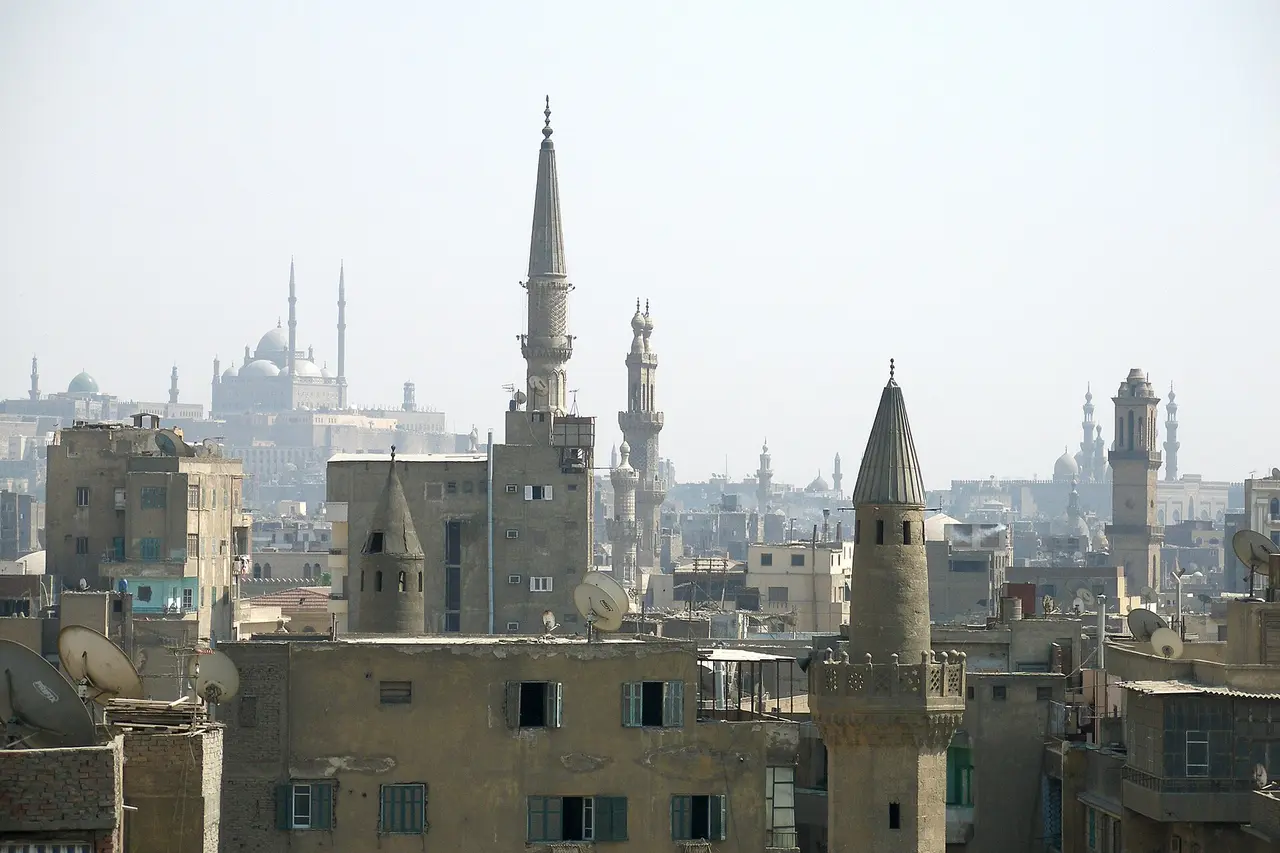
In Cairo, you eat breakfast facing the last wonder of the ancient world still standing, have lunch beneath Fatimid minarets and end the day on a felucca on the Nile. A loud, vast and endearing city that deserves far more than a stopover on the way to Luxor.

At a glance

Visa
Required
Tourist stay of up to 30 days
7-day budget
€665
Per person, comfort profile, excluding international flights.
Recommended length
3 days
For a first trip, without rushing.

How many days should you spend in Cairo?

Three full days is the minimum, four if you add Saqqara and Dahshur. One day barely covers Giza and the Grand Egyptian Museum, another goes on Islamic and Coptic Cairo. The city is also the starting point for most trips to Egypt, before heading south to the Nile Valley.

When to visit Cairo

Temperatures, rainfall and crowds month by month, to pick your window.
When to visit Cairo
MonthTemperaturesRainCrowdsVerdict
January10 to 19 °C1 dBusy19 °C afternoons, ideal for walking the Giza plateau, though mornings are cool and hazy.
February11 to 21 °C2 dBusyPerfect mildness for walking Islamic Cairo, with the year's rare showers and still plenty of tour groups.
March13 to 24 °C1 dBusy24 °C and long days, but the khamsin wind can fill the air with sand and hide the pyramids for a few days.
April16 to 28 °C1 dModerateAlready 28 °C: visit Saqqara and Dahshur at opening time; evenings by the Nile stay pleasant.
May19 to 32 °C1 dQuietHighs pass 32 °C and the coaches thin out: the air-conditioned Grand Museum in the afternoon, the plateau in the morning.
June22 to 35 °C1 dQuiet35 °C and heavier smog, but hotels in Giza and Zamalek cut their rates noticeably.
July24 to 35 °C1 dQuietThe most oppressive month, with 24 °C nights: only for travellers who fit every visit in before 11am.
August24 to 35 °C1 dModerateHeat on a par with July, but European families on holiday crowd the Giza plateau a little more.
September23 to 33 °C1 dQuietStill 33 °C, but the sites are calm and prices low: a good bet for a short stay late in the month.
October20 to 30 °C0 dBusyThe driest month, 30 °C easing off at night: high season resumes, so book the Grand Museum online.
November16 to 25 °C1 dPacked25 °C and golden light on the minarets: the best month for Cairo, and the most in demand.
December12 to 21 °C1 dPacked20 °C days, but Christmas and New Year send prices soaring and pack Giza and Khan el-Khalili.
Source: Normales 1991-2020, station Le Caire-aéroport international (Wikipédia, article Cairo, tableau climatique), relevé octobre 2026. Jours de pluie arrondis (seuil 1 mm). Pas de température de mer : ville intérieure. Affluence et prix estimés d'après la saison touristique égyptienne (haute saison d'octobre à avril, pointe à Noël et au Nouvel An).

Cairo's must-sees

Five thousand years of history packed into a single urban area, from the pharaohs to the Mamluk sultans.

Giza pyramids

Khufu, Khafre and Menkaure, the last of the seven wonders of the ancient world still standing, are best discovered on foot early in the morning, walking around the plateau.

The Sphinx

Carved directly from the plateau's limestone, the human-headed lion guards Khafre's valley temple, which offers the best head-on view of the monument.

Grand Egyptian Museum

The largest museum devoted to a single civilisation displays the complete treasure of Tutankhamun, brought together for the first time, and a grand staircase lined with royal statues.

Tahrir Egyptian Museum

The pink 1902 building holds thousands of pharaonic objects in a cabinet-of-curiosities atmosphere, with antique display cases and rooms far quieter than they once were.

Khan el-Khalili bazaar

Lanterns, spices, copper and perfumes pile up in this 14th-century bazaar, where El Fishawy café has been serving mint tea for more than two centuries.

Mosque of Ibn Tulun

A huge arcaded courtyard of striking simplicity and a minaret with a spiral ramp, which you climb to take in the rooftops of old Cairo.

Muhammad Ali Mosque

Topped with domes and two slender minarets, the 19th-century alabaster mosque dominates the city from within the walls of Saladin's Citadel.

The Hanging Church

Al-Muallaqa owes its name to its position above a gate of the Babylon fortress; you reach it by a staircase, beneath a ceiling shaped like a ship's hull.

NMEC royal mummies

In a dimly lit underground hall, the Museum of Civilization displays the mummies of Ramesses II, Seti I and other New Kingdom rulers.

Pyramid of Djoser

Saqqara's step pyramid, the first large cut-stone building in history, surrounded by an enclosure wall and tombs with remarkably well-preserved reliefs.

Al-Azhar Park

Laid out on a former rubbish dump and opened in 2005, this hilltop garden offers one of the finest sunsets over the minarets of the old city.

Felucca on the Nile

An hour under sail from the Corniche, far from the din of car horns, to watch the city light up from the water as the call to prayer rings out.

Which districts should you explore in Cairo?

Giza, the city on the edge of the desert

On the west bank, Giza is a city in its own right, whose buildings stop abruptly at the foot of the plateau. Arrive at opening time, around 8am: before 10am the light is soft and tour coaches are still scarce. The Grand Egyptian Museum, officially inaugurated in November 2025 about 2 km from the pyramids, needs at least half a day, a full day if you want to see everything. Tickets are sold online by time slot. Staying in Giza, with a pyramid view, saves more than an hour of traffic jams from downtown.

Downtown and Tahrir Square, khedival Cairo

The city centre was laid out in the 19th century by Khedive Ismail on a Parisian model: Art Deco facades, Talaat Harb Street, cafés and bookshops. The Egyptian Museum on Tahrir Square, opened in 1902, keeps its collection of statues and sarcophagi even though Tutankhamun has moved to Giza; allow two to three hours. This is also the area for budget hotels, often set on the upper floors of old buildings. The metro, from Sadat station, links Downtown to Coptic Cairo in about ten minutes.

Fatimid Cairo, from Al-Muizz to Bab Zuweila

Founded in 969 by the Fatimid dynasty, the old city is best explored on foot along Al-Muizz Street, pedestrianised for much of its length. Mamluk mosques, madrasas and caravanserais follow one another for about a kilometre, from Bab al-Futuh in the north to the Bab Zuweila gate, whose minarets you can climb. Al-Azhar Mosque, founded in 970, opens onto the same district. Come in the late afternoon, when the heat eases and the facades light up: allow three hours without rushing.

Sayeda Zeinab and the heights of the Citadel

South of the old city, the working-class district of Sayeda Zeinab is home to the Mosque of Ibn Tulun, completed in 879, the oldest in Cairo to keep its original layout. The Gayer-Anderson house, built against its wall, shows a furnished Ottoman interior. Twenty minutes' walk away, the Citadel built by Saladin from 1176 overlooks the city; on a clear day, you can see the pyramids from its terraces. Group these three visits into one morning and finish in Al-Azhar Park for sunset.

Old Coptic Cairo and Fustat

Stepping out of Mar Girgis metro station, you enter the old Roman fortress of Babylon, the Christian cradle of the city. Coptic churches, the Ben Ezra Synagogue and the Coptic Museum take about two hours, in lanes set below street level. Next door in Fustat, the National Museum of Egyptian Civilization has housed the royal mummies since April 2021, after they were moved in a televised parade. On Sunday mornings, a day of mass, the churches are very busy: pick another day to move around freely.

Zamalek and Garden City, the leafy side of the Nile

On Gezira Island, Zamalek gathers embassies, art galleries, cafés and restaurants along tree-lined streets that are calmer than the rest of the city. The Cairo Tower, 187 m high and completed in 1961, gives the widest panorama over the megacity, best enjoyed late in the day. Opposite, Garden City lines up its colonial villas along the Corniche. It is the best starting point for an hour on a felucca at sunset, with the price agreed directly with the boatmen before boarding.

Saqqara, Memphis and Dahshur, a day trip south

About thirty kilometres south of Giza, these three sites tell the story of how the pyramid was invented, from Djoser's steps around 2650 BC to the smooth faces of Dahshur. The Bent Pyramid and the Red Pyramid there see far fewer visitors than Giza, and you can go inside the latter. Memphis, the ancient capital, comes down to an open-air museum around a reclining colossus of Ramesses II. You need a car with a driver for the day: leave at 8am and return before dark.

Reaching the Nile Valley from Cairo

There are two ways south. Flights link Cairo to Luxor, ancient Thebes, in about an hour, and to Aswan and its feluccas in under an hour and a half. The overnight sleeper train takes around ten hours to Luxor and about fifteen to Aswan, with dinner and breakfast served in the cabin, and should be booked several days ahead. Avoid the road at night, however: France Diplomatie strongly advises against driving after dark outside built-up areas.

Sample itineraries

Three routes built around the time you actually have.
3daysRecommended

Cairo in 3 days: Giza, the Citadel and khedival Cairo

  1. Giza: the pyramids, the Sphinx and the Grand Egyptian Museum
  2. Saladin Citadel, Ibn Tulun and Al-Azhar Park
  3. Tahrir Square museum, Downtown and Zamalek

Best for: The classic first visit, with no trip out of town: Giza on day one, the Citadel heights and medieval Cairo on day two, the Tahrir Square museum and the Zamalek side of the Nile to finish.

How much it costs

Per person per day, excluding international travel.
Budget
44 €/ day
1 186 € for 2 people, 7 days, return flights included
Accommodation
12 €
Food
14 €
Local transport
3 €
Sights and activities
15 €
Comfort
95 €/ day
2 280 € for 2 people, 7 days, return flights included
Accommodation
40 €
Food
22 €
Local transport
8 €
Sights and activities
25 €
Premium
240 €/ day
4 614 € for 2 people, 7 days, return flights included
Accommodation
100 €
Food
50 €
Local transport
30 €
Sights and activities
60 €
Prices checked: Relevé du 14 octobre 2026, hors vacances scolaires, Noël et Nouvel An. Change : la BCE ne publie pas de taux pour la livre égyptienne ; taux Wise (cours moyen du marché, sans horodatage affiché) consulté le 14 octobre 2026 : 1 € = 59,00 EGP ; taux de référence BCE du 14 octobre 2026 : 1 € = 1,1195 USD. Repas et transports d'après Numbeo Le Caire (source non officielle, mise à jour du 12 octobre 2026, 1 999 relevés de 249 contributeurs sur 12 mois) : repas bon marché 250 EGP, dîner pour deux en restaurant moyen 1 500 EGP, ticket de métro ou bus 18 EGP, taxi 20 EGP de prise en charge puis 10 EGP le km. Hébergement d'après momondo (page hôtels Le Caire consultée le 14 octobre 2026, moyennes non datées et parfois incohérentes) : auberges et hôtels 2 étoiles et moins vers 20 € la nuit, hôtels 3 étoiles dès 29 €, 5 étoiles jusqu'à 161 €, hôtels de luxe vers 197 € ; janvier est le mois le plus cher, juillet le moins cher. Hébergement par nuit et par personne : lit en dortoir ou chambre simple de Downtown pour backpacker, chambre double 3 ou 4 étoiles partagée à deux pour comfort, 5 étoiles au bord du Nil ou face aux pyramides partagé à deux pour premium. Activités lissées sur la semaine (entrées du plateau de Gizeh, du Grand Musée égyptien, de Saqqarah, guide et chauffeur pour les profils comfort et premium) : estimation, faute de grille tarifaire officielle consultable en ligne ce jour-là. Vol A/R Paris-Le Caire par personne d'après KAYAK (page consultée le 14 octobre 2026, statistiques sur 12 mois glissants, sans date de mise à jour affichée) : 285 € en backpacker (prix le plus bas relevé, Transavia direct depuis Orly), 475 € en comfort (moyenne sur 12 mois), 627 € en premium (haut de la fourchette habituelle de 347 à 627 €) ; vols directs Egyptair, Air France, Transavia et Vueling, environ 4 h 30 ; juillet (607 €) et août (564 €) sont les mois les plus chers. La livre égyptienne connaît une forte inflation : budget à revalider tous les trois à quatre mois. weekTwoPax = deux vols + sept jours à deux.

Getting there

Airports serving Cairo, from main hubs to secondary ones.
  • AACEl Arish International AirportEl ArishMain
  • ASWAswan International AirportAswanMain
  • ATZAsyut International AirportAsyutMain
  • CAICairo International AirportCairoMain
  • DBBEl Alamein International AirportEl AlameinMain
  • EESBerenice International Airport / Banas Cape Air BaseBerenice TroglodyticaMain

Entry, health and safety

For FR travellers

Entry requirements

Visa required

Visa obligatoire. Le plus simple est de l'acheter à l'arrivée à l'aéroport international du Caire, en espèces uniquement (dollars ou euros) : 30 USD ou l'équivalent en euros pour une entrée simple, 60 USD pour des entrées multiples. Il peut aussi être demandé à l'avance auprès d'un consulat d'Égypte en France. Valable un mois, prolongeable auprès du bureau de l'immigration pour les titulaires d'un passeport. La carte nationale d'identité est acceptée si elle est valide six mois après le retour, avec deux photos d'identité ; le visa est alors apposé sur un formulaire et ne peut pas être prolongé.

Stay allowed for up to 30 days.

Passport valid for 6 months beyond your return date.

Health

Advised: Calendrier vaccinal français à jour (diphtérie, tétanos, poliomyélite, coqueluche, rougeole). Selon les conditions de séjour : hépatite A et fièvre typhoïde, méningite ACWY en saison sèche (hiver et printemps), rage pour les jeunes enfants ou les séjours ruraux, hépatite B pour les séjours fréquents ou prolongés.

Fièvre jaune exigée seulement en provenance d'une zone d'endémie. Dengue et Zika transmises par les moustiques : se protéger des piqûres, femmes enceintes à consulter avant le départ. Fièvre typhoïde : eau capsulée uniquement. Pollution de l'air particulièrement élevée au Caire : lors des pics, limiter les activités extérieures. Rage : le protocole est assuré par les hôpitaux publics, au Caire notamment Oum El Masreyeen, Al Agouza et Zayed. Vigilance renforcée au Caire : prudence sur les sites très fréquentés, éviter les rassemblements, et ne pas circuler de nuit hors des villes.

Safety

Increased caution

Checked in octobre 2026 against the official source. Entry rules change: check the official source before you travel, it alone is authoritative.

Cairo practical information

Airport visa

Tourist visa sold at the international airport desks, 30 USD for a single entry according to France Diplomatie; e-visa available before travel at visa2egypt.gov.eg

Passport

Valid for at least six months after your return date

Airport to centre

About 22 km to Downtown, 45 minutes to over an hour and a half depending on traffic; allow longer to Giza

Ride-hailing

Uber and Careem work well and avoid haggling; France Diplomatie advises sitting in the back and avoiding night journeys

Metro

Three lines, very cheap; two cars per train are reserved for women, shown by markings on the platform

Site tickets

Grand Egyptian Museum online by time slot; bank cards accepted, and often required, at archaeological site ticket offices

Baksheesh

Tips expected for almost any service: a guard opening a tomb, a porter, toilets; keep small notes in Egyptian pounds

Dress code in mosques

Shoulders and knees covered, shoes removed, headscarf for women, often lent at the entrance of Al-Azhar or Muhammad Ali

Heat

Over 35 °C by day from June to August; from October to April, temperatures suit long visits on foot

Daily budget

About 44 € per person on a tight budget, 95 € mid-range, 240 € top-end, excluding international flights

Emergencies

Police 122, ambulance 123, tourist police 126; French embassy +20 2 35 67 32 00

Cairo in pictures

Photo credits : Vyacheslav Argenberg, CC BY 4.0, Wikimedia Commons ; مصطفى الشربجى, CC BY-SA 4.0, Wikimedia Commons ; Frank Schulenburg, CC BY-SA 3.0, Wikimedia Commons ; Jorge Láscar from Melbourne, Australia, CC BY 2.0, Wikimedia Commons

Cairo FAQ

Does the Grand Egyptian Museum replace the Tahrir Square museum?
No, both remain open. Tutankhamun's treasure has left Tahrir for the Grand Museum in Giza, but the old museum still holds thousands of statues, sarcophagi and everyday objects. If you are short of time, choose the Grand Museum first, then Tahrir if half a day is left.
Can you see the pyramids and the Grand Egyptian Museum on the same day?
Yes, they are about 2 km apart. Do the Giza plateau at opening time, before the heat, then the museum in the afternoon on a time slot booked online. It makes for a packed day: many travellers prefer to give the museum a full day.
How do you avoid scams at the Giza pyramids?
Turn down the "guides" who approach you before the entrance claiming the site is closed or that you need a special ticket. For a camel or carriage ride, agree on the total price and duration before getting on, and only pay at the end.
Where should you stay in Cairo: Giza, Zamalek or Downtown?
Giza for the pyramids and the Grand Museum, with rooftop terraces facing the plateau. Zamalek for calm, restaurants and closeness to the Nile. Downtown for tight budgets and metro access. For a three-night stay, two nights in the centre and one in Giza work well.
Can you buy your visa on arrival at Cairo airport?
Yes, for French citizens: bank desks before passport control sell it for 30 USD for a single entry, according to France Diplomatie. Bring cash in dollars or euros. An e-visa obtained before departure lets you skip the queue.
Is Cairo safe for a woman travelling alone?
France Diplomatie places Cairo under heightened vigilance, like the rest of the country's tourist areas. Street comments are common. Favour covering clothes, the women-only metro cars and ride-hailing apps, and avoid taking a taxi alone at night.
Should you take the night train or fly from Cairo to Luxor?
The flight takes about an hour and saves a day. The sleeper train takes around ten hours but saves a hotel night and gets you to Luxor early in the morning. Avoid making the trip by car at night, which is strongly advised against outside towns.
Are Saqqara and Dahshur worth the trip from Cairo?
Yes, if you have a fourth day. Saqqara shows the very first pyramid, Djoser's, and Dahshur the Bent and Red pyramids, with very few visitors. The visit is done by car with a driver, leaving early to get back before dark.
What is visiting Cairo like during Ramadan?
Sites stay open but often close earlier, and the city empties just before the fast is broken, then comes alive until late at night around Al-Hussein and Khan el-Khalili. Avoid eating and drinking conspicuously in public during the day.
How do you get from Cairo airport to the city centre?
Uber and Careem are the simplest option, with the fare shown in advance. The trip to Downtown takes from 45 minutes to over an hour and a half at rush hour. Hotels also offer transfers, more expensive but useful for a late arrival.

Plan your trip to Cairo

Build your day-by-day itinerary and manage budget, bookings and packing in PlanTripNow.
Aperçu de l'application PlanTripNow