Skip to content

Lima , Peru's capital of clifftops, ceviche and adobe ruins

Many travellers see nothing of Lima but the airport before rushing on to Cusco. They miss a city of ten million people perched on cliffs, where a pre-Inca pyramid rises between two apartment blocks, where ceviche is eaten at lunchtime and where people surf all year below the Malecón.

At a glance

Visa
None
Tourist stay of up to 90 days
7-day budget
€623
Per person, comfort profile, excluding international flights.
Recommended length
3 days
For a first trip, without rushing.

How many days should you spend in Lima before heading to the Andes?

Two to three days are enough for the UNESCO World Heritage historic centre, the Larco museum, Miraflores and Barranco. Add a night on the southern coast for the Paracas reserve and the Ballestas Islands. At sea level, Lima is also a restful stop on the way back down from the altitude.

When to visit Lima

Temperatures, rainfall and crowds month by month, to pick your window.
When to visit Lima
MonthTemperaturesRainCrowdsVerdict
January20 to 27 °C1 dModeratePeak southern summer: bright sun over the Malecón, and Costa Verde beaches packed with locals at weekends.
February21 to 28 °C1 dModerateThe hottest month with the warmest sea of the year, ideal for a surf lesson in Miraflores, though the city feels muggy.
March20 to 27 °C1 dQuietStill summer, but the Peruvian school year empties the beaches: a good balance of blue skies and affordable hotels.
April19 to 25 °C0 dModerateThe sunniest month, with processions in the historic centre if Holy Week falls in April.
May17 to 23 °C1 dQuietThe last sunny days before the grey sets in, with few visitors: a good window to pair Lima with the Andes in the dry season.
June16 to 21 °C2 dModerateThe garúa sets in: white skies, light drizzle and barely an hour and a half of sun a day, so bring a jacket.
July16 to 20 °C3 dPackedGrey and damp, but the late-July Fiestas Patrias and European holidays push up prices and queues at the Larco museum.
August15 to 19 °C4 dBusyThe coolest month under a stubborn cloud ceiling: Lima is mostly a stopover before the southern Andes, at peak season.
September15 to 20 °C3 dQuietStill overcast and cool, but the crowds leave: tables at the big cevicherías are easier to book.
October16 to 21 °C1 dModerateThe garúa fades and the purple Señor de los Milagros processions fill the centre, with the sea still too cold for swimming.
November17 to 22 °C0 dQuietAfternoon sun returns and prices stay low: a good month to explore Barranco on foot and take the Paracas trip.
December19 to 24 °C1 dModerateSummer begins with the year-end holidays: clearer skies over the Costa Verde, pricier Miraflores hotels at Christmas.
Source: Normales 1991-2020 de Lima d'après climatestotravel.com (minimales, maximales, moyennes, jours de pluie, température de la mer), relevé octobre 2026. Désert côtier sous l'influence du courant de Humboldt : presque aucune pluie, mais de juin à octobre un plafond nuageux bas et une bruine fine, la garúa, avec 1 à 2 heures de soleil par jour. Les années El Niño réchauffent l'air et la mer en début d'année. Affluence et prix estimés d'après le calendrier local (saison des plages de janvier à mars, Semaine sainte, Fiestas Patrias des 28 et 29 juillet, processions du Señor de los Milagros en octobre, fêtes de fin d'année) et les vacances scolaires françaises.

Lima's must-sees

Museums, clifftop districts and ceviche counters, the reasons to stretch your stopover.

Larco museum

A colonial mansion in Pueblo Libre housing thousands of Moche ceramics, pre-Inca gold jewellery and a storeroom open to visitors, set in a bougainvillea garden.

Plaza Mayor

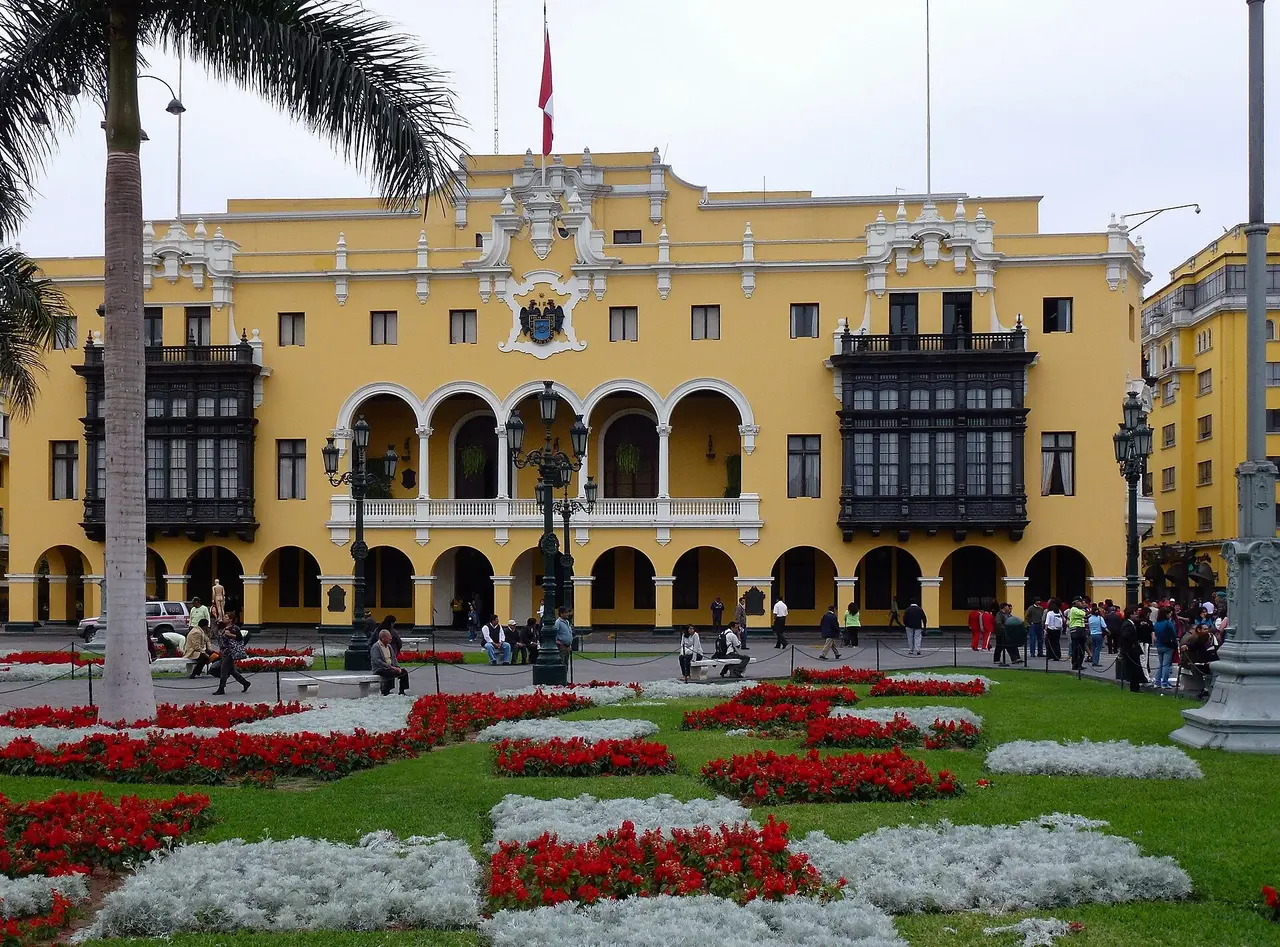
The heart of the UNESCO-listed centre, between the cathedral, the Government Palace and the Archbishop's Palace with its carved wooden balconies.

San Francisco convent

A yellow baroque church, azulejo-lined cloisters and catacombs holding the bones of thousands of colonial-era Limeños.

Huaca Pucllana

An adobe pyramid built by the Lima culture long before the Incas, visited with a guide among the Miraflores apartment blocks.

Miraflores Malecón

A clifftop promenade above the Pacific, from the Love Park to the paraglider take-offs at Raimondi park.

Barranco

A former seaside resort turned artists' haunt, with the Puente de los Suspiros, murals, galleries and bars.

Surfing on the Costa Verde

Pebble beaches below the cliffs where schools teach all year round, with a wetsuit essential in the cool water.

Ballestas Islands

Arch-pierced rocks off Paracas where sea lions, Humboldt penguins and thousands of seabirds gather.

What to do in Lima?

Why not to rush through Lima

Almost every long-haul flight to Peru lands at Jorge Chávez airport, and it is tempting to connect straight on to Cusco. Yet Lima deserves more than a transit night: this is where you understand Peruvian cooking, see the finest pre-Inca ceramics in the country and grasp the scale of a capital built in the desert. Keep it for the end of the trip instead, when your body is recovering from the altitude and you are in the mood for good restaurants.

The historic centre, ideally in the morning

A UNESCO World Heritage Site, the colonial centre is laid out around the Plaza Mayor, with the cathedral, the Government Palace and the Archbishop's Palace and its wooden balconies. A few streets away, the San Francisco convent hides catacombs and an old library. France Diplomatie advises against staying there after dark: visit in the morning, then take an app-booked taxi to Pueblo Libre for the Larco museum, its Moche collection and its bougainvillea-draped garden.

Miraflores and Barranco, the city facing the Pacific

Most travellers stay in Miraflores, a safe and lively district set on the cliffs. Its Malecón links the Love Park, the paragliders at Raimondi park and the Larcomar mall on foot, while Huaca Pucllana, an adobe pyramid visited with a guide, rises between the apartment blocks. Further south, Barranco lines up colourful houses, galleries and bars around the Puente de los Suspiros. Even here, avoid walking alone at night away from busy streets.

Eating in Lima: ceviche at lunch, chifa at night

The city owes its reputation to its food. Ceviche, raw fish marinated in lime and chilli, is ordered at lunchtime in the cevicherías, because the morning's catch does not keep. In the evening, it is time for beef-heart anticuchos, lomo saltado or chifa, the Chinese-Peruvian cuisine born in Chinatown. A simple meal costs under €4 according to Numbeo in October 2026, while the most celebrated restaurants are booked weeks ahead.

Garúa or sunshine: choosing your season

It hardly ever rains in Lima, but from June to October a low cloud ceiling and a fine drizzle, the garúa, leave barely an hour of sun a day, at 17 to 20 °C. From December to April, the southern summer brings back blue skies, a sea at 22 to 23 °C and the best conditions for a surf lesson on the Costa Verde. Allow about €34 a day in hostels, €89 in a 3-star hotel and €232 in high comfort, flights excluded.

Paracas and the Ballestas Islands, a southern coast escape

About 3 h 37 by bus along the Pan-American Highway South according to Rome2Rio, Paracas offers the perfect contrast with the capital: red cliffs, desert plunging into the ocean and, offshore, the Ballestas Islands home to sea lions and Humboldt penguins. Boats leave in the morning for about two hours, weather permitting, which is why sleeping there makes sense. The coast then continues towards Nazca and the Andes of southern Peru, the first leg of a long journey across South America.

Sample itineraries

Three routes built around the time you actually have.
3daysRecommended

Lima in 3 days: the historic centre, Miraflores, Barranco and surfing on the Costa Verde

  1. Day 1: the UNESCO-listed historic centre
  2. Day 2: the Larco museum, Huaca Pucllana and the Malecón
  3. Day 3: a surf lesson, Barranco and ceviche

Best for: The most balanced format for understanding Lima: a day in the colonial city, a day between museums and the Miraflores cliffs, and a last one between Costa Verde waves and the bohemian lanes of Barranco. Each day revolves around a ceviche lunch, served at midday in the cevicherías.

How much it costs

Per person per day, excluding international travel.
Budget
34 €/ day
2 476 € for 2 people, 7 days, return flights included
Accommodation
10 €
Food
12 €
Local transport
2 €
Sights and activities
10 €
Comfort
89 €/ day
3 246 € for 2 people, 7 days, return flights included
Accommodation
29 €
Food
25 €
Local transport
10 €
Sights and activities
25 €
Premium
232 €/ day
5 248 € for 2 people, 7 days, return flights included
Accommodation
87 €
Food
60 €
Local transport
25 €
Sights and activities
60 €
Prices checked: Relevé octobre 2026. Taux Wise consultés le 12 octobre 2026 : 1 € = 3,86 soles, 1 £ = 1,18 €. Repas et transports d'après Numbeo Lima (mise à jour du 2 octobre 2026, 914 relevés de 75 contributeurs sur 12 mois : repas bon marché 3,91 €, dîner pour deux en restaurant moyen 31,26 €, ticket de transport 0,62 €, taxi 3,52 € puis 1,82 €/km). Dortoirs de 5 à 18 € la nuit, environ 10 € en moyenne sur la première page de résultats Hostelworld (octobre 2026, prix d'appel). Hôtels : moyenne 49 £ la chambre en 3 étoiles, 64 £ en 4 étoiles, 147 £ en 5 étoiles (HotelsCombined, prix mis à jour le 7 octobre 2026). Activités lissées sur une semaine : musée Larco 50 soles sur place, 45 en ligne (tarifaire officiel du musée daté d'octobre 2025, plus ancien) ; excursion d'une journée à Paracas et aux îles Ballestas depuis Lima entre 58 et 119 USD en groupe, 185 à 230 USD en privé (listings Travelocity, Expedia et Peru Hop relevés en octobre 2026, sources commerciales non officielles, tarifs Peru Hop marqués 2025). Tarif de la Huaca Pucllana non retenu, faute de source officielle récente. Vol A/R Paris-Lima estimé à 1 000 € par personne (PartirOu, statistiques du 11 octobre 2026 : moyenne 1 040 €, plus bas 682 €, prix jugé attractif vers 700 €). Hébergement par nuit et par personne : lit en dortoir pour backpacker, chambre double 3 étoiles partagée à deux pour comfort, 5 étoiles partagée à deux pour premium. Repas premium estimés, hors menus dégustation des tables les plus réputées. Sol sensible au change, budget à revérifier d'ici quelques mois.

Getting there

Airports serving Lima, from main hubs to secondary ones.
  • AQPRodríguez Ballón International AirportArequipaMain
  • CIXCapitán FAP José A. Quiñones González International AirportChiclayoMain
  • CUZAlejandro Velasco Astete International AirportCuscoMain
  • IQTCoronel FAP Francisco Secada Vignetta International AirportIquitosMain
  • JULInca Manco Capac International AirportJuliacaMain
  • LIMJorge Chávez International AirportLimaMain

Entry, health and safety

For FR travellers

Entry requirements

No visa for a tourist stay

Pas de visa pour un séjour touristique de moins de trois mois au Pérou : la durée accordée va de 1 à 90 jours sur une période de 183 jours, et chaque jour de dépassement coûte 4,40 soles d'amende. À l'aéroport Jorge-Chávez de Lima, l'entrée n'est plus tamponnée depuis le 29 mai 2023 : elle est enregistrée dans le système électronique TAM, consultable en ligne. Par voie terrestre, exigez les tampons d'entrée et de sortie.

Stay allowed for up to 90 days.

Passport valid for 6 months beyond your return date.

Health

Advised: Être à jour du calendrier vaccinal français, rougeole comprise (hausse des cas signalée en mars 2026). Selon la durée et les conditions : hépatites A et B, typhoïde, rage. Fièvre jaune fortement recommandée seulement si le voyage se poursuit vers l'Amazonie.

Pas de paludisme à Lima ni sur la côte au sud de la ville. Eau du robinet à éviter : eau capsulée, filtrée ou bouillie, prudence avec les crudités et les coquillages. Cliniques privées bien équipées à Lima, paiement souvent exigé à l'admission : une assurance frais médicaux et rapatriement est impérative. Sécurité : centre historique déconseillé à la tombée de la nuit, plages dangereuses le soir, vigilance renforcée à Callao, San Juan de Lurigancho, San Martín de Porres, El Agustino, Rímac, Independencia, Los Olivos et Comas ; vols à l'arraché et agressions aussi signalés à Miraflores, San Isidro et Barranco. Agressions près de l'aéroport : ne pas sortir à pied, réserver son taxi dans l'enceinte. Taxis officiels ou applications uniquement, jamais hélés dans la rue ; mototaxis et transports informels à éviter, surtout pour les femmes seules. Ne pas laisser son verre sans surveillance. Zone sismique. Le VRAEM et la frontière amazonienne avec la Colombie restent formellement déconseillés. Police : 105, pompiers : 116, SAMU : 106 ; le 911 unique est en test à Lima et Callao.

Safety

Increased caution

Emergency

105

Checked in octobre 2026 against the official source. Entry rules change: check the official source before you travel, it alone is authoritative.

Practical information for Lima

Arrival

Jorge Chávez airport, book your taxi inside the terminal, do not leave on foot

Taxis

Apps or official companies, never hailed in the street

Historic centre

Visit by day, not advised after nightfall

Where to stay

Miraflores, or Barranco for evening atmosphere

Garúa

Grey skies and drizzle from June to October, bring a jacket

Water

No tap water, drink bottled or filtered water

Larco museum

50 soles at the door, 45 soles online (October 2025 rate)

Currency

Peruvian sol (PEN), about 3.86 soles to €1 in October 2026

Lima in pictures

Photo credits : Pierre André Leclercq, CC BY-SA 4.0, Wikimedia Commons ; David Bush, CC BY 2.0, Wikimedia Commons ; Diego Delso, CC BY-SA 4.0, Wikimedia Commons ; Jaime Troncoso, CC BY-SA 2.0, Wikimedia Commons

Frequently asked questions about Lima

Is Lima dangerous for tourists?
France Diplomatie advises heightened vigilance in Lima. The historic centre is not recommended after nightfall, beaches are dangerous in the evening and bag snatching is reported even in Miraflores and Barranco. Use app-booked taxis and avoid walking around Callao.
Which district should you stay in in Lima?
Miraflores is the easiest choice: safe and lively, with the Malecón and a wide range of hotels and hostels. Barranco, more bohemian, suits those who want to go out at night. The historic centre is best visited by day and is not recommended for overnight stays.
What is the best time to visit Lima?
From December to April, the southern summer brings sunshine, a sea around 22 °C and good surfing conditions. From June to October, the garúa covers the city with grey skies and a fine drizzle, without real rain: sightseeing is still fine, but forget the beach.
Where can you eat good ceviche in Lima?
In a cevichería, at lunchtime: tradition says it is eaten with the day's catch, never in the evening. Miraflores and Barranco have plenty, from popular counters to renowned addresses. The city's top fine-dining restaurants need booking several weeks ahead.
Can you do Paracas and the Ballestas Islands as a day trip from Lima?
Yes, on an organised tour leaving at dawn, but it makes a long day with more than three hours on the road each way. Boats to the Ballestas Islands leave in the morning and depend on sea conditions: spending a night in Paracas gives more leeway.
How do you get from Lima airport to Miraflores?
Book an official taxi inside the airport or use an app. France Diplomatie reports attacks on tourists around the airport, in Callao, and advises against leaving on foot. The iPerú desk in the arrivals hall can advise on safe companies and fares.

Plan your trip to Lima

Build your day-by-day itinerary and manage budget, bookings and packing in PlanTripNow.
Aperçu de l'application PlanTripNow