Skip to content

Visiting Machu Picchu : tickets, access and best season

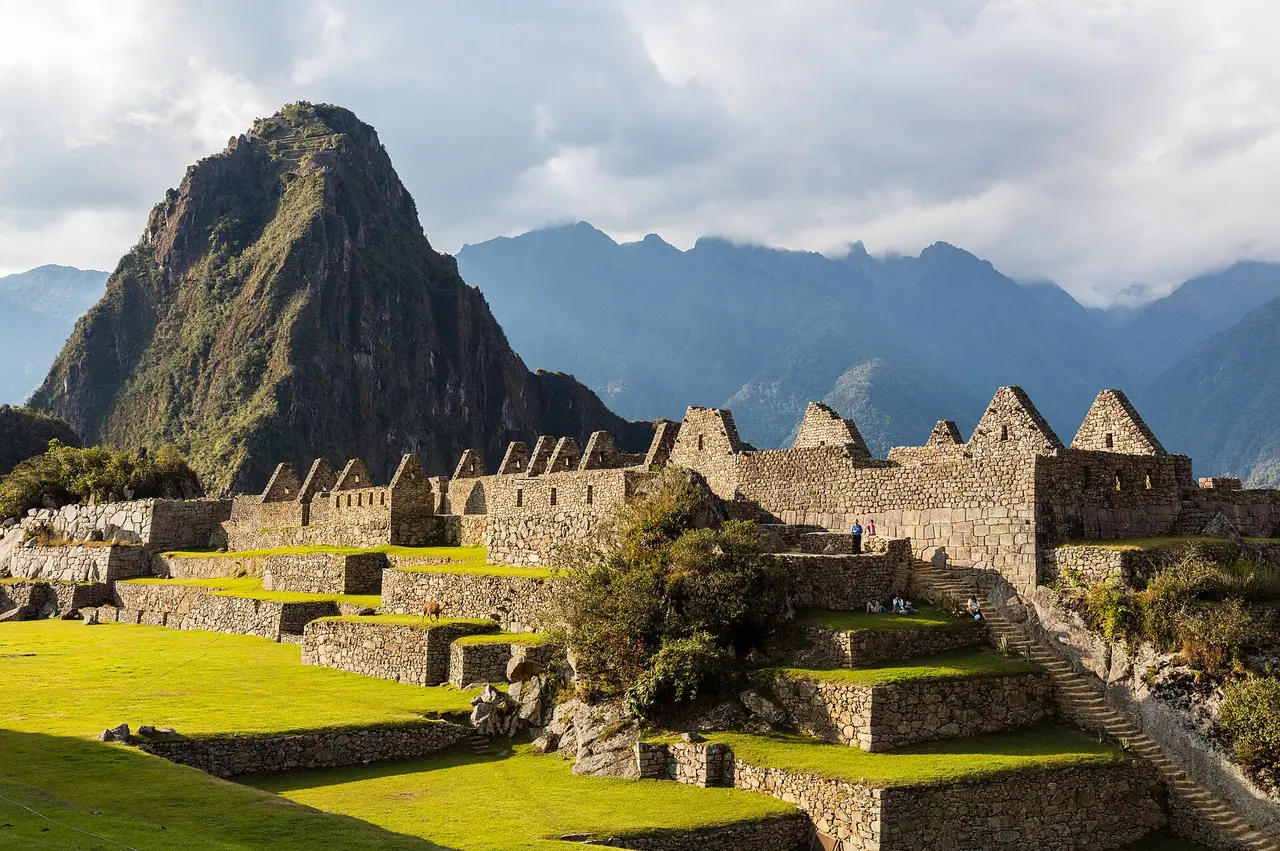
Terraces clinging to a ridge, granite temples cut with millimetre precision and the outline of Huayna Picchu in the morning mist: the Inca citadel needs planning weeks ahead, between timed circuits, Sacred Valley trains and a night in Aguas Calientes.

Why is Machu Picchu so captivating?

Machu Picchu is a 15th-century Inca city, attributed to the reign of Pachacútec, which escaped the Spanish and was brought to world attention in 1911 by explorer Hiram Bingham. It has been a UNESCO World Heritage Site since 1983, for both its architecture and its mountain forest. It can only be reached by train or on foot, which makes it a stop to plan carefully.

Machu Picchu's must-sees

The temples, viewpoints and trails behind the site's fame, to be spread across your circuit.

Temple of the Sun

A semicircular tower of perfectly fitted stones, built on a rock and aligned so that one of its windows catches the light of the June solstice.

The Intihuatana

A carved rock atop a terraced pyramid, often described as a solar observatory. Access depends on the circuit chosen on your ticket.

Temple of the Three Windows

On the sacred plaza, a wall of polygonal blocks pierced by three large trapezoidal openings facing east towards the mountains.

Huayna Picchu

The pointed peak behind every photo, crowned with terraces and a small temple. A steep climb of about an hour, on a limited ticket.

Guardhouse

A small thatched building above the farming terraces: this is where the classic view of the citadel and Huayna Picchu is taken.

Sun Gate

Inti Punku, a former checkpoint where the Inca Trail arrives, gives the first full view of the site, about an hour's walk away.

The Inca Bridge

A path cut into the cliff face, broken by a few wooden logs above the void, on an old defensive approach west of the city.

Manuel Chávez Ballón Site Museum

At the foot of the mountain near the Ruinas bridge, it covers artefacts, building techniques and excavation history. A useful primer before the visit.

Aguas Calientes Hot Springs

Natural hot water pools at the top of the village, popular after a day of walking or on returning from the Inca Trail.

How to prepare your visit to Machu Picchu?

Aguas Calientes, the village below the site

Officially called Machu Picchu Pueblo, Aguas Calientes stretches along the Urubamba at around 2,040 metres, with no road linking it to the rest of the country. Everything arrives by train: hotels, restaurants and a craft market squeeze between the tracks and the river. Shuttle buses to the citadel leave from the main street and climb for about 25 minutes up the zigzagging Hiram Bingham road. A night here is strongly advised if you are aiming for an early entry: the first buses leave around 5.30 am and the queue forms well before.

The citadel's visiting circuits

Visits now follow one-way circuits set when you buy your ticket, with a precise entry time. Some pass the upper viewpoint, the one for classic photos, while others stay in the lower section closest to the temples: choose according to what you want to see. Allow two to three hours on site. An official guide is mandatory, to be booked with the ticket or hired at the entrance. You cannot walk back along the route or exit and re-enter, and the only toilets are outside the walls.

The peaks above the citadel

Two mountains frame the site and can be climbed with a specific ticket, available in limited numbers. The most famous, rising over the ruins to the north, takes about an hour via very steep Inca steps, sometimes with cables: not advised if you suffer from vertigo. To the south, Machu Picchu Mountain rises above 3,000 metres and requires an hour and a half to two hours of steady climbing, less exposed and often less in demand. These tickets sell out months ahead from June to August: book them before your trains.

The Inca Trail and its short version

The classic Inca Trail links kilometre 82 of the railway to the citadel in four days and around forty kilometres, crossing Warmiwañusca pass at over 4,200 metres. The number of daily permits is limited, porters included, and the trek is only allowed with a licensed agency. The trail closes for the whole of February for maintenance. Permits for May to August often sell out as soon as they are released, several months ahead. The two-day short version starts at kilometre 104 and passes the Wiñay Wayna site.

The Sacred Valley trains

Two companies, PeruRail and Inca Rail, serve Aguas Calientes. From Ollantaytambo, in the Sacred Valley, the journey takes around an hour and a half to two hours; from Poroy station near Cusco, allow three and a half hours. The panoramic trains are mainly worth it for the gorge scenery between forest and glaciers. Luggage on board is limited to a small bag of about 5 kg: leave your big suitcase at your Cusco hotel. During the rainy season, part of the journey from Cusco may run by bus.

The Hidroeléctrica and Salkantay routes

The cheapest route goes via Santa Teresa and the hydroelectric plant: six to seven hours by minibus from Cusco on mountain roads, then about two and a half hours walking along the tracks to Aguas Calientes, roughly ten kilometres. The Salkantay trek, over four or five days, joins the same line after a pass above 4,600 metres beneath a glaciated peak. These routes need no limited permit and remain possible when the Inca Trail is full, but landslides are frequent in the wet season.

Seasons, mist and crowds

The dry season, from May to September, brings the most reliable skies but also the biggest crowds, peaking from June to August. From November to March rain is frequent, and February is the wettest month. April, May, September and October make the best compromise. Whatever the season, mist often covers the site at dawn and lifts by mid-morning: an entry slot around 9 or 10 am is not a bad choice. Build two spare days into your trip to Peru in case a train is cancelled.

Getting there

Airports serving Machu Picchu, from main hubs to secondary ones.
  • AQPRodríguez Ballón International AirportArequipaMain
  • CIXCapitán FAP José A. Quiñones González International AirportChiclayoMain
  • CUZAlejandro Velasco Astete International AirportCuscoMain
  • IQTCoronel FAP Francisco Secada Vignetta International AirportIquitosMain
  • JULInca Manco Capac International AirportJuliacaMain
  • LIMJorge Chávez International AirportLimaMain

Practical information for Machu Picchu

Entry tickets

Named, with a set circuit and entry time, sold in limited numbers each day. Show the same passport entered at the time of purchase.

Mandatory guide

Every visit to the citadel is with an official guide; guides wait at the entrance, but booking ahead avoids waiting in high season.

Banned bags and items

Large backpacks, metal-tipped trekking poles, drones and single-use plastic bottles are not allowed: there is a left-luggage office at the entrance.

Toilets

Only outside the walls, paid: go before entering, as the circuit does not let you exit and come back.

Train luggage

About 5 kg per person on tourist trains: a daypack is enough for one or two nights in Aguas Calientes.

Altitude

About 2,430 m for the citadel and 2,040 m for the village, lower than Cusco: the site is rarely a problem once acclimatised.

Biting sandflies

Very common in the forest and around the ruins: repellent and long clothing are essential, especially in the wet season.

Weather

Frequent mist at dawn and showers possible all year: bring a light poncho and shoes that grip on wet stone.

Cash

Cards are accepted in most hotels, but carry soles in cash for small restaurants, the hot springs and tips.

Current alerts

France Diplomatie reported severe weather in the Cusco region in September 2026 and a rise in measles cases in Peru: check trains and vaccinations.

Machu Picchu in pictures

Photo credits : Diego Delso, CC BY-SA 4.0, Wikimedia Commons ; Antón Jáuregui antonjau, CC0, Wikimedia Commons ; Steve FUNG, CC BY-SA 4.0, Wikimedia Commons ; Apollo, CC BY 2.0, Wikimedia Commons

Frequently asked questions about Machu Picchu

How far ahead should you book Machu Picchu tickets?
From June to August, book at least one or two months ahead for standard entry, and three to six months if you want Huayna Picchu or the Inca Trail. Off season, a few weeks is usually enough. Buy the entry ticket before the trains, never the other way round.
Which circuit gives the postcard view of Machu Picchu?
Choose a circuit that goes through the upper section near the Guardhouse: that is where you see the citadel with Huayna Picchu behind. Circuits staying in the lower section get you closer to the temples but miss this panorama.
Huayna Picchu or Machu Picchu Mountain: which to climb?
Huayna Picchu is shorter, about an hour, but very steep and exposed, with narrow steps. Machu Picchu Mountain is longer and higher but less vertiginous, with a wider view over the valley. If you suffer from vertigo, choose the latter.
Can you do Machu Picchu as a day trip from Cusco?
Yes, by taking an early morning train and returning in the late afternoon, but the day lasts over fifteen hours and leaves little margin for delays. A night in Aguas Calientes or the Sacred Valley makes the visit far more relaxed.
Should you stay in Aguas Calientes or Ollantaytambo?
Stay in Aguas Calientes if you want one of the first morning slots or plan to climb a mountain. Ollantaytambo, more authentic and quieter, works if your entry is late morning, taking a very early train.
Is the Inca Trail doable without hiking experience?
Yes, provided you are fit and acclimatised: two or three days in Cusco before setting off are essential. Porters carry tents and food, so you only carry your daypack. The second day, with the pass crossing, is the hardest.
What to do if the Inca Trail is fully booked?
The Salkantay and Lares treks also lead to Aguas Calientes with no limited permit. The two-day short Inca Trail from kilometre 104 sometimes still has places when the classic route is full.
Can you walk up from Aguas Calientes to the citadel?
Yes, a stepped trail starts at the Ruinas bridge and reaches the entrance in one to one and a half hours of steady climbing. It avoids the shuttle queue, but arriving sweaty at the start of the visit is not ideal: many take the bus up and walk down.
Is Machu Picchu worth it in the rainy season?
Yes, with fewer people and very green vegetation, but mist can hide the view for hours and landslides sometimes disrupt trains and roads. Avoid February if you were aiming for the Inca Trail, which is closed that month.
What documents do you need at the Machu Picchu entrance?
Your ticket, printed or on your phone, and the passport whose number was entered at purchase. A simple photocopy may be refused. Students who bought a reduced ticket must also show a valid student card.
Can you still get a Machu Picchu stamp in your passport?
A souvenir stamp is often offered near the site exit, on the page of your choice. It has no official value: some travellers prefer to skip it so as not to clutter a nearly full passport before other visas.

Plan your trip to Machu Picchu

Build your day-by-day itinerary and manage budget, bookings and packing in PlanTripNow.
Aperçu de l'application PlanTripNow