Skip to content

Visit Pokhara : what to do around the lake and how to plan your trek

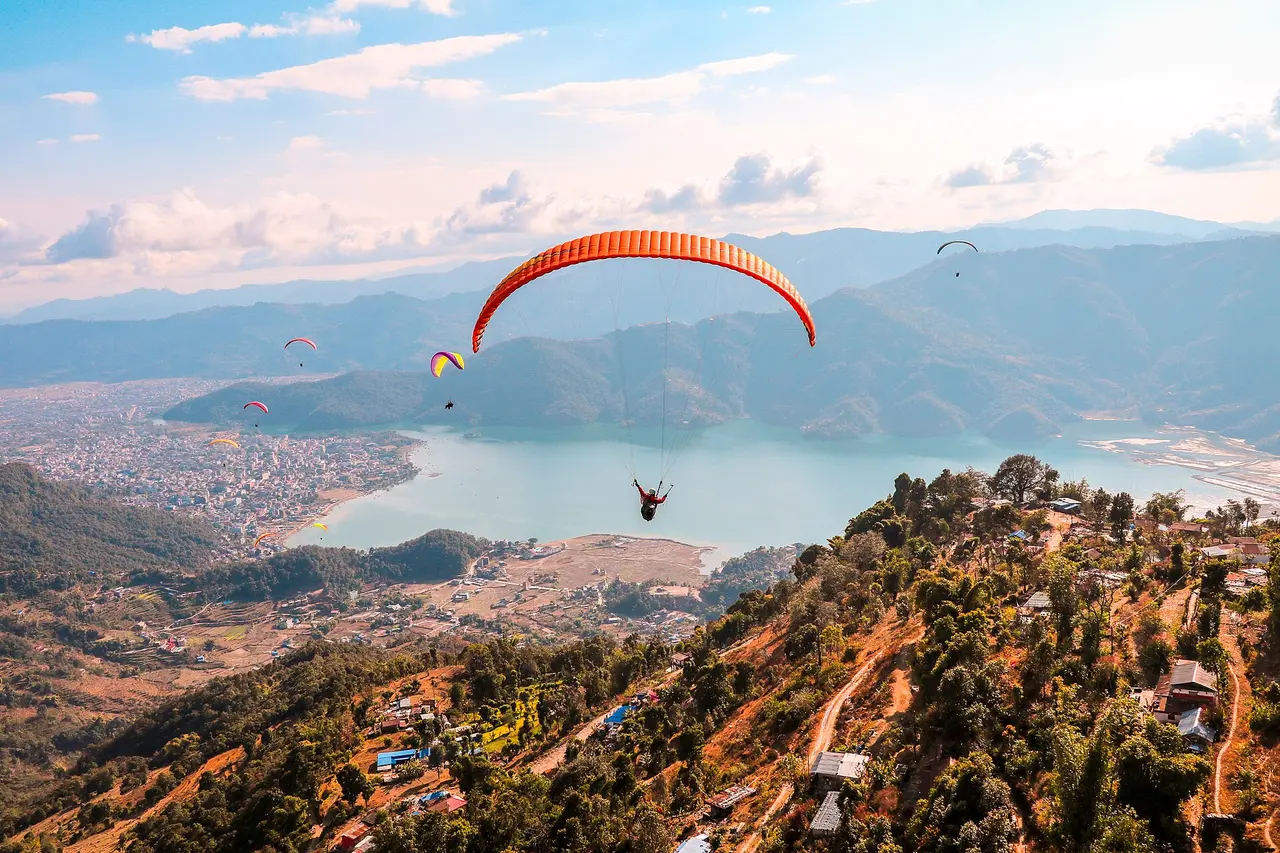
Nepal's second tourist city, Pokhara stretches along the shore of Phewa Lake, at the foot of a wall of peaks rising above 7,000 and 8,000 metres. People come to rest facing the mountains, paraglide above the lake and, above all, set off hiking in the Annapurna range.

At a glance

Visa
Required
Tourist stay of up to 150 days
7-day budget
€406
Per person, comfort profile, excluding international flights.

Why go to Pokhara?

Pokhara, about 200 kilometres west of Kathmandu and around 800 metres above sea level, is the starting point for treks in the Annapurna region. On clear days Phewa Lake reflects Machapuchare, a sacred 6,993-metre peak closed to climbing. Two to three days are enough without a trek.

When to visit Pokhara

Temperatures, rainfall and crowds month by month, to pick your window.
When to visit Pokhara
MonthTemperaturesRainCrowdsVerdict
January7 to 20 °C2 dQuietThe coolest month, 7 °C at dawn but 20 °C in the afternoon, and the clearest skies of the year: the peaks often stay visible all day.
February10 to 23 °C4 dModerateMild days around 23 °C and little rain; a heat haze sometimes starts to veil Annapurna late in the month.
March13 to 27 °C6 dBusyThe start of the second high season: rhododendrons in bloom on the hills and busy treks, but spring haze often cuts the view after 9 am.
April16 to 30 °C11 dBusy30 °C in town and the first late-afternoon storms; a good month to head up into the mountains, less so for crisp photos from the lake.
May19 to 30 °C18 dQuietPre-monsoon rain approaches 355 mm and the peaks hide more and more; the last month of the paragliding season, with quieter hotels.
June21 to 31 °C22 dVery quietThe monsoon sets in, close to 650 mm over the month: muddy trails and leeches, with possible landslides on the road to Kathmandu.
July22 to 30 °C26 dVery quietThe wettest month, 941 mm with rain almost every day: the mountains are invisible, but the rice fields around Begnas Lake are an intense green.
August22 to 31 °C24 dVery quietAnother 840 mm of rain and heavy humidity; domestic flights are often delayed by cloud, best avoided for a first visit.
September21 to 30 °C19 dQuietThe monsoon weakens late in the month and the flight from Paris is the cheapest of the year, 743 euros median: a good bet to arrive just before high season.
October17 to 28 °C8 dPackedAir washed clean by the monsoon, sharp peaks above the lake and paragliding back on; peak trekking season and the time of the Dashain and Tihar festivals (lunar dates vary), with flights at their highest, 1,011 euros median.
November12 to 24 °C1 dPackedThe best month for views: just one day of rain on average and crystal-clear sunrises at Sarangkot; Lakeside is often fully booked.
December8 to 21 °C1 dModerateDry and sunny, 21 °C in the afternoon but 8 °C at daybreak: bring a fleece for Sarangkot; flights are expensive over the holidays, around 1,000 euros.
Source: Températures (moyennes des maxima, des minima et moyenne journalière) et précipitations : normales 1991-2020 de la station de l'aéroport de Pokhara (827 m), Organisation météorologique mondiale et Department of Hydrology and Meteorology du Népal, reprises par Wikipédia (relevé du 9 novembre 2026). Jours de pluie au seuil de 1 mm. Cumul annuel 3 868 mm, dont 3 063 mm de juin à septembre. Ville de lac, sans façade maritime : pas de température de la mer. Prix : vols Paris-Katmandou sur Kayak (septembre le mois le moins cher à 743 € en médiane, octobre 1 011 € et décembre 1 003 € les plus chers), relevé du 9 novembre 2026 ; Pokhara se rejoint ensuite en bus ou en vol intérieur. Saison du parapente d'octobre à mai. Affluence : estimation éditoriale.

Pokhara's must-sees

Six places for two to three days by the lake, before or after the trek.

Tal Barahi Temple

Small pagoda temple on an island in Phewa Lake, dedicated to the goddess Barahi, reached by boat from the Lakeside jetty.

Sarangkot

Ridge village north of the lake, famous for its sunrise over Annapurna and Machapuchare, and the main take-off site for paragliders.

World Peace Pagoda

White stupa built by Japanese Buddhist monks on the hill south of the lake, with a clear view over Pokhara and the whole range.

Davis Falls

Waterfall plunging into an underground gorge south of the city, to combine with the Gupteshwor Mahadev cave just across the road.

International Mountain Museum

Museum devoted to the Himalaya, the first ascents and mountain peoples, useful for identifying the peaks visible from the city.

Begnas Lake

Wilder lake in the east of the valley, edged with rice fields and a few guesthouses, for a day on the water away from busy Lakeside.

What to discover in Pokhara?

Lakeside, the east shore of Phewa Lake

The Lakeside district, or Baidam, lines two kilometres of shore with hotels, cafés, trekking agencies and boat hire. This is where people stay, far calmer than Thamel. Rent a rowing boat for an hour or two and cross to the wooded south shore; the best time is morning, before clouds hide the peaks around 10 am. In the evening, the waterfront fills with walkers heading for the lake to watch the sunset.

The ridges above the lake

To the north, the Sarangkot ridge tops out around 1,600 metres: drive up before dawn to watch the sun rise over Annapurna and Machapuchare, and this is also where paragliders take off. On the south shore, a trail of about an hour climbs through the forest to the white stupa. Set aside a morning for each ridge, and come down by boat across the lake to save your knees.

Base camp for Annapurna treks

Pokhara is the logistics hub for treks in the range. The Ghorepani and Poon Hill circuit, 4 to 5 days, peaks at 3,210 metres; Annapurna Base Camp, at 4,130 metres, takes 7 to 12 days. Since 2023 a licensed guide has been mandatory for foreigners. Get your ACAP permit at the Damside counter, by the lake, the day before you leave.

Getting to Pokhara and choosing your season

From Kathmandu, allow seven to nine hours by tourist bus or twenty-five minutes by plane. October-November and March-April give the best visibility; from June to September Pokhara receives more than 3,000 mm of rain and the peaks stay hidden. To the south, the road reaches Lumbini, then the Sunauli border, the gateway to Varanasi and northern India. Pokhara is also the natural second stop of any trip to Nepal.

How much it costs

Per person per day, excluding international travel.
Budget
21 €/ day
2 144 € for 2 people, 7 days, return flights included
Accommodation
7 €
Food
7 €
Local transport
2 €
Sights and activities
5 €
Comfort
58 €/ day
2 662 € for 2 people, 7 days, return flights included
Accommodation
18 €
Food
16 €
Local transport
6 €
Sights and activities
18 €
Premium
163 €/ day
4 552 € for 2 people, 7 days, return flights included
Accommodation
60 €
Food
38 €
Local transport
20 €
Sights and activities
45 €
Prices checked: Relevé du 9 novembre 2026. Roupie népalaise convertie au taux de la Nepal Rastra Bank du 9 novembre 2026 (1 € = 167,12 NPR à l'achat, 167,78 à la vente ; 1 USD = 149,96 NPR). Hébergement, repas et transport local : PriceNepal, guide de coûts Népal vérifié le 14 mai 2026 et cadré sur Katmandou et Pokhara (lit en dortoir 8 à 15 USD, chambre privée avec salle de bains 30 à 55 USD, hôtel 3-4 étoiles 70 à 130 USD la nuit ; dal bhat local 150 à 300 NPR, en restaurant touristique 400 à 800 NPR ; transport local 1 à 3 USD par jour en bus ou taxi partagé, 3 à 8 USD en taxi au compteur). Numbeo Pokhara écarté (26 contributeurs, valeurs en partie estimées par le site). Activités : permis ACAP 3 000 NPR (site officiel ePermit de la NTNC), parapente biplace de 20 à 30 minutes autour de 8 500 NPR chez un opérateur local et jusqu'à 90 USD en forfait (guides d'agences 2026, sources commerciales). Trajet Katmandou-Pokhara : bus touristique dès 700 NPR et jusqu'à plus de 2 000 NPR selon la catégorie (Bussewa, mai 2026) pour les profils routard et confort ; vol intérieur 105 à 145 USD l'aller pour un étranger (PriceNepal, mai 2026) pour le profil premium. Vol A/R Paris-Katmandou hors vacances scolaires estimé à 910 € par personne, moyenne Kayak sur douze mois (fourchette habituelle 770 à 1 085 €, septembre 743 € en médiane), relevé du 9 novembre 2026. Hébergement par nuit et par personne : dortoir pour le profil routard, chambre double partagée à deux pour les autres. Le poste activités répartit sur la semaine un vol en parapente (confort et premium), les barques sur le Phewa et les entrées des sites. weekTwoPax = 7 jours x 2 personnes + 2 vols Paris-Katmandou + 2 trajets A/R Katmandou-Pokhara (bus 15 € A/R pour routard et confort, avion 225 € A/R pour premium).

Getting there

Airports serving Pokhara, from main hubs to secondary ones.
  • BWAGautam Buddha International AirportSiddharthanagarMain
  • KTMTribhuvan International AirportKathmanduMain
  • PHHPokhara International AirportPokharaMain
  • BIRBiratnagar AirportBiratnagarSecondary
  • JKRJanakpur AirportJanakpurSecondary
  • KEPNepalgunj AirportNepalgunjSecondary

Entry, health and safety

For FR travellers

Entry requirements

Visa required

Visa touristique obligatoire, à entrées multiples : il s'obtient à l'ambassade du Népal à Paris avant le départ, à l'arrivée à l'aéroport de Katmandou ou aux postes-frontières terrestres, avec deux photos d'identité. Prévoir 200 USD ou l'équivalent en euros en espèces pour le visa à l'arrivée, le paiement en ligne générant de longues files d'attente. Prolongeable sur place par périodes d'un mois, jusqu'à 150 jours par année civile. Depuis 2026, hôtels, agences de trek et compagnies aériennes enregistrent leurs clients étrangers dans une base de données gouvernementale. Pour marcher autour de Pokhara dans l'aire de conservation de l'Annapurna (Poon Hill, Australian Camp, camp de base) : permis ACAP, carte TIMS délivrée par une agence agréée et guide agréé obligatoires depuis le 31 mars 2023.

Stay allowed for up to 150 days.

Passport valid for 6 months beyond your return date.

Health

Advised: Vaccinations du calendrier français à jour (diphtérie, tétanos, poliomyélite, coqueluche, rougeole) ; selon le voyage, hépatites A et B, typhoïde, rage et encéphalite japonaise (surtout au Teraï pendant la saison des pluies).

Dengue, chikungunya, Zika et encéphalite japonaise transmis par les moustiques, paludisme surtout dans le Teraï : vêtements longs et répulsif. Eau en bouteille, filtrée ou bouillie uniquement. Mal aigu des montagnes possible dès 2 500 m sur les treks partant de Pokhara : montée progressive et avis médical avant le départ. Tout secours en montagne est payant et l'hélicoptère ne décolle qu'avec une garantie de paiement : assurance couvrant recherche, évacuation et rapatriement indispensable. Sécurité : tout le pays est en vigilance renforcée, sans zone déconseillée ; séismes fréquents, mousson de juin à octobre avec inondations et glissements de terrain pouvant couper les routes plusieurs jours, risque d'avalanche en altitude. Passer par une agence de trek reconnue plutôt que par des rabatteurs. Fiche France Diplomatie mise à jour le 15 septembre 2026.

Safety

Increased caution

Emergency

Ambassade de France à Katmandou +977 1 451 2332 (heures ouvrables), +977 980 101 7201 (en dehors des heures ouvrables)

Checked in novembre 2026 against the official source. Entry rules change: check the official source before you travel, it alone is authoritative.

Practical information for Pokhara

ACAP permit

Mandatory to enter the Annapurna Conservation Area, Poon Hill included; 3,000 rupees for foreigners, free under 10, and double if bought at a checkpoint.

TIMS card

Still required according to France Diplomatie (September 2026 advice): since 2023 it is only issued through a licensed agency, together with the mandatory guide.

Licensed guide

Solo trekking has been banned for foreigners in national parks and protected areas since spring 2023: go through a registered agency, which also obtains the permits.

Permit office

ACAP counter in Damside, south of Lakeside, with your passport and payment in cash; the permit can also be bought in Kathmandu or online on the NTNC website.

Paragliding season

From October to May, mostly in the morning from Sarangkot; flights are rare during the monsoon and cancelled as soon as the wind picks up.

Boats on Phewa

Hourly hire at the Lakeside jetty, with or without a rower; always ask for a life jacket.

Airport

Pokhara International Airport, opened in 2023, is mainly served by domestic flights from Kathmandu; expect delays in cloudy weather.

Tourist buses

Early departures from Kathmandu along the Prithvi Highway, arriving early afternoon; take a right-hand seat for the view over the Trishuli river.

Monsoon leeches

Common on wooded trails from June to September: gaiters and salt or repellent in your bag for any hike around the lake.

Altitude sickness

Pokhara sits low, but treks quickly pass 3,000 metres: ascend gradually and take out insurance covering helicopter evacuation.

Water

Never from the tap: many Lakeside cafés offer filtered water refill stations to avoid plastic bottles.

Pokhara in pictures

Photo credits : Nirmal Dulal, CC BY-SA 4.0, Wikimedia Commons ; Iamavinashk, CC BY-SA 4.0, Wikimedia Commons ; Saroj Pandey, CC BY-SA 3.0, Wikimedia Commons ; Saddam Hussain Ansari, CC BY 4.0, Wikimedia Commons ; Bijay Chaurasia, CC BY-SA 4.0, Wikimedia Commons

Frequently asked questions about Pokhara

What time should you go up to Sarangkot for sunrise?
Leave Lakeside by taxi about an hour before sunrise, around 5 am in October and November. The road stops below the viewpoint, which you reach by a short climb up steps. December and January mornings are cold but often the clearest.
Poon Hill or Annapurna Base Camp from Pokhara?
Poon Hill takes 4 to 5 days and peaks at 3,210 metres, within reach of a fit hiker with no altitude experience. Base Camp, at 4,130 metres, takes 7 to 12 days and serious acclimatisation. In both cases, a licensed guide and the ACAP permit are mandatory.
Is paragliding in Pokhara safe for a beginner?
Flights are tandem with a pilot, with no experience required. Choose an operator registered in Lakeside, check that flight insurance is included and accept a postponement if the wind or clouds are not right. The season runs from October to May.
Can you really see the mountains from Phewa Lake?
Yes, but mainly in the morning and in the dry season. From October to April, Machapuchare and Annapurna often stay clear until mid-morning, then the clouds rise. During the monsoon, you can go several days without glimpsing a single peak.
Where do you get the ACAP permit in Pokhara?
At the Damside counter, a few minutes from Lakeside, with your passport and rupees in cash, or through your trekking agency. Bought at a checkpoint on the trail, it costs double. Keep it on you: it is checked several times along the way.
How do you get from Pokhara to Lumbini, the Buddha's birthplace?
By the southern road, by bus or private car, for a full day's drive through the hills down to the Terai plain. Lumbini also has an airport at Bhairahawa. From there, the Indian border at Sunauli is only about thirty kilometres away.
How many nights should you plan in Pokhara around a trek?
One night before setting off to sort out permits and gear, then two nights afterwards to recover, go boating and climb to Sarangkot. Without a trek, two to three days are enough to explore the lake and its hills before heading to Kathmandu or Chitwan.

Plan your trip to Pokhara

Build your day-by-day itinerary and manage budget, bookings and packing in PlanTripNow.
Aperçu de l'application PlanTripNow