Skip to content

Planning a trip to Nepal: trekking, budget and itinerary

Eight of the world's fourteen highest peaks stand in Nepal, but the country is just as rewarding without crampons, between the stupas of Kathmandu, the lake in Pokhara and the jungle of Chitwan. This page brings together month-by-month climate, a real budget and workable itineraries to plan your own.
  • 2 cities

At a glance

Currency
Nepalese Rupee
Time difference
UTC+5:45
Visa
Required
Tourist stay of up to 150 days
7-day budget
€546
Per person, comfort profile, excluding international flights.

Why visit Nepal?

Nepal packs the Himalayan range, centuries-old Buddhist and Hindu valleys, and the tropical jungle of the Terai into a territory a third the size of France. Trekking is accessible to a fit hiker with no high-altitude experience thanks to a network of teahouse lodges that removes the need to carry a tent. October and November bring the clearest air of the year for mountain views.

When to visit Nepal

Temperatures, rainfall and crowds month by month, to pick your window.
When to visit Nepal
MonthTemperaturesRainCrowdsVerdict
January3 to 19 °C2 dQuietClear, dry skies in Kathmandu, but the high mountain passes are snowbound and closed.
February5 to 22 °C3 dQuietStill chilly at dawn in the valley, a quiet month for temples and bazaars.
March9 to 26 °C4 dModerateRhododendrons bloom along the trails as the trekking season picks up before the heat.
April12 to 29 °C7 dBusySecond peak trekking window, with clear Everest and Annapurna views before the haze sets in.
May16 to 29 °C12 dModerateMuggy heat and a pre-monsoon haze that often blurs out the peaks.
June19 to 30 °C17 dVery quietMonsoon sets in, with muddy trails and leeches on most trekking routes.
July20 to 29 °C23 dVery quietMonsoon peak with near-daily rain; only Mustang and Dolpo stay dry in the rain shadow.
August20 to 29 °C23 dVery quietStill deep in monsoon, with mountain roads sometimes cut by landslides.
September19 to 29 °C15 dModerateMonsoon retreats late in the month, clearing the air and reopening the trails.
October14 to 27 °C4 dPackedThe busiest month of the year: crystal-clear skies, Dashain festivities and peak-season prices.
November8 to 24 °C1 dPackedCool nights at altitude but flawless Himalayan visibility, still busy on the classic treks.
December4 to 20 °C1 dModerateBiting cold after dark in the mountains, but dry, bright days down in the valley.
Source: Cadré vallée de Katmandou (aéroport Tribhuvan, ~1400 m), normales 1991-2020 recoupées Wikipedia/WMO-DHM et climate-data.org, relevé septembre 2026. Le climat varie fortement avec l'altitude : les hautes vallées de trek (Everest, Annapurna) restent nettement plus froides toute l'année.

What to see in Nepal?

The Kathmandu Valley

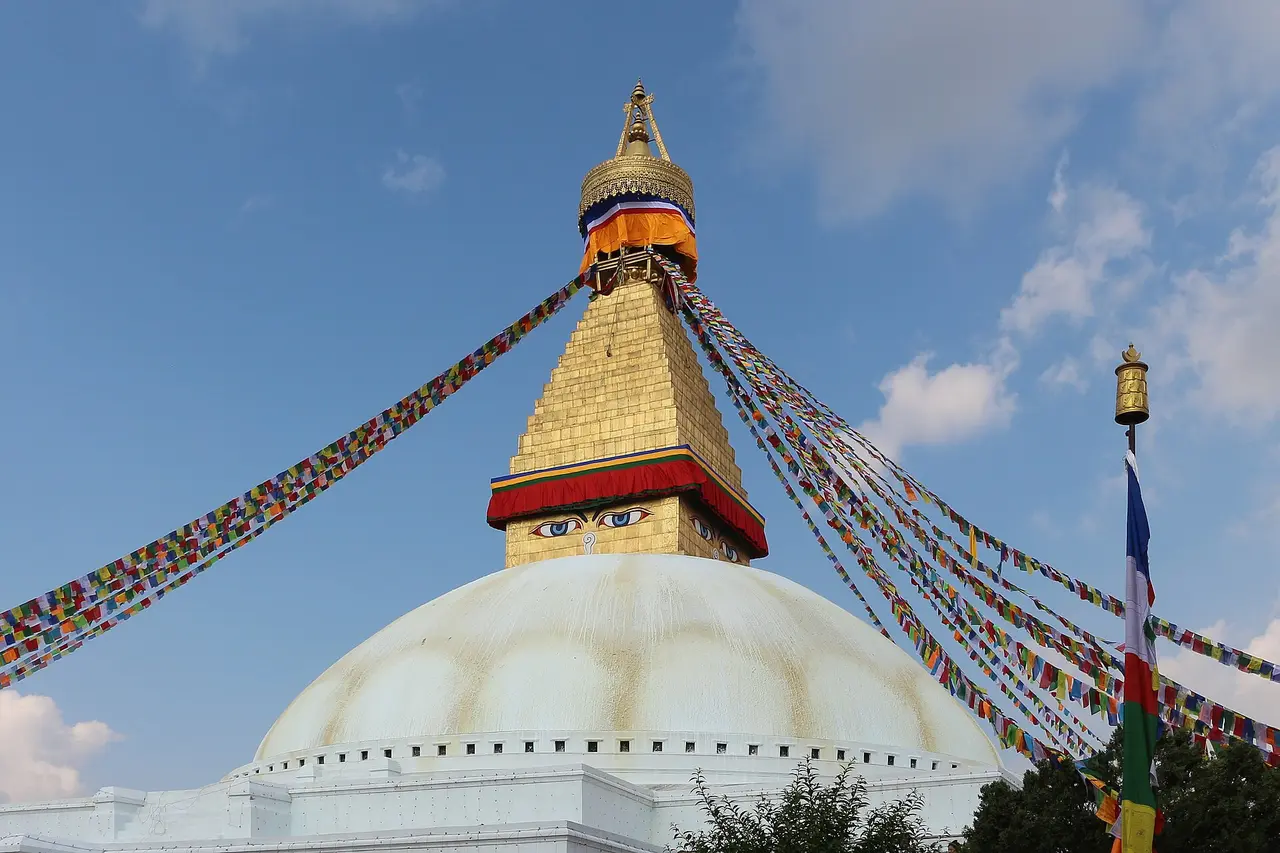
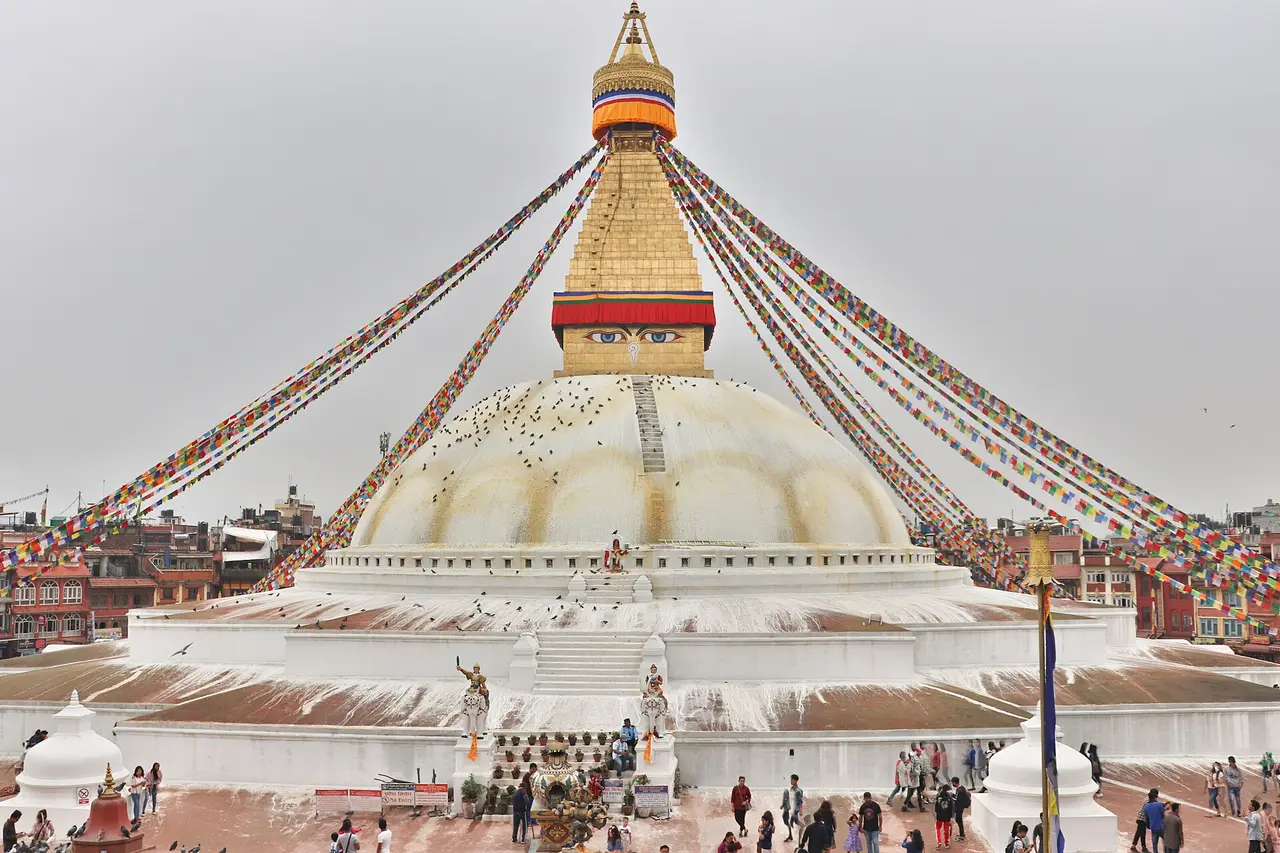
The capital packs seven UNESCO-listed sites into a small area: the Boudhanath stupa, Swayambhunath perched on its hill, and the royal squares of Kathmandu, Patan and Bhaktapur. Two to three days are enough to cover them on foot, though some museums close on Mondays. Air pollution here ranks among the worst in the world by the end of the dry season, from March to May.

Pokhara and the Annapurna foothills

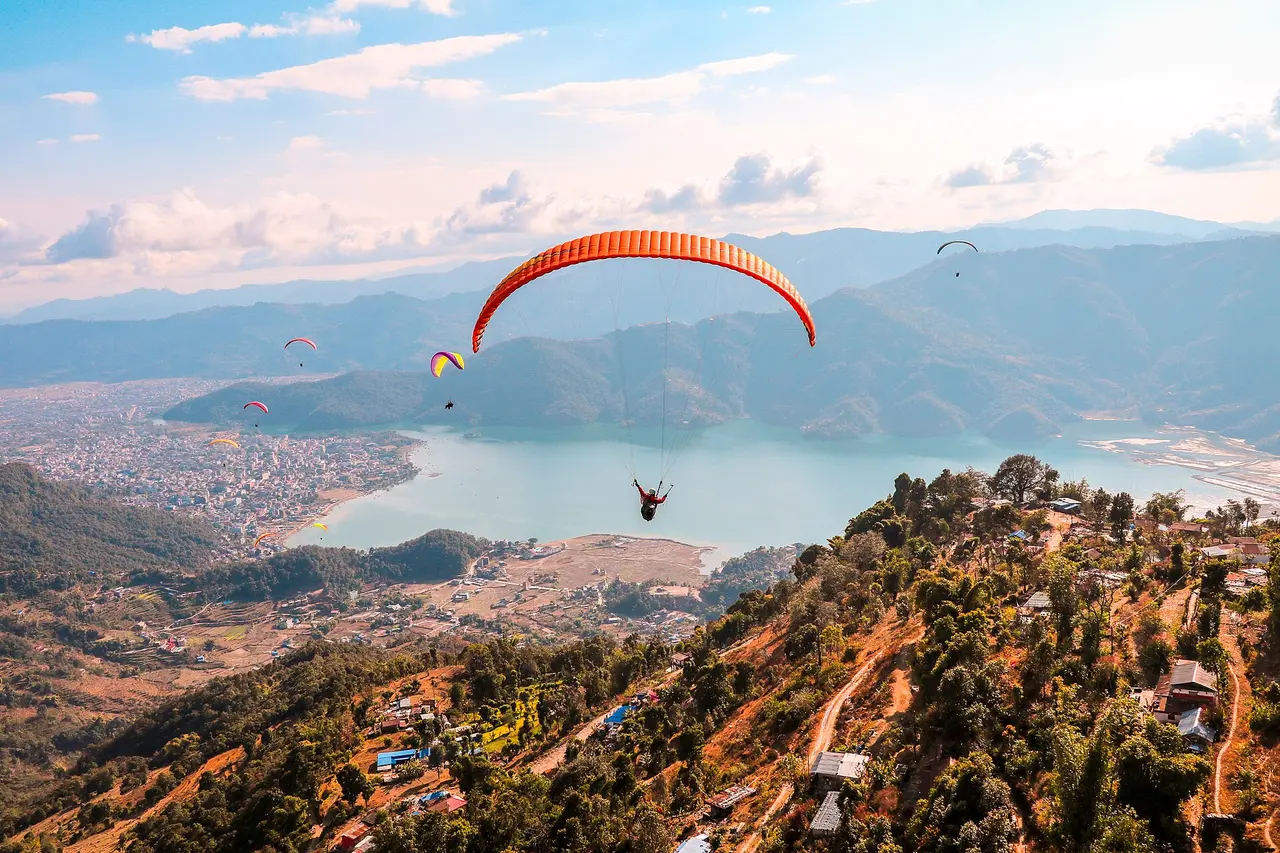
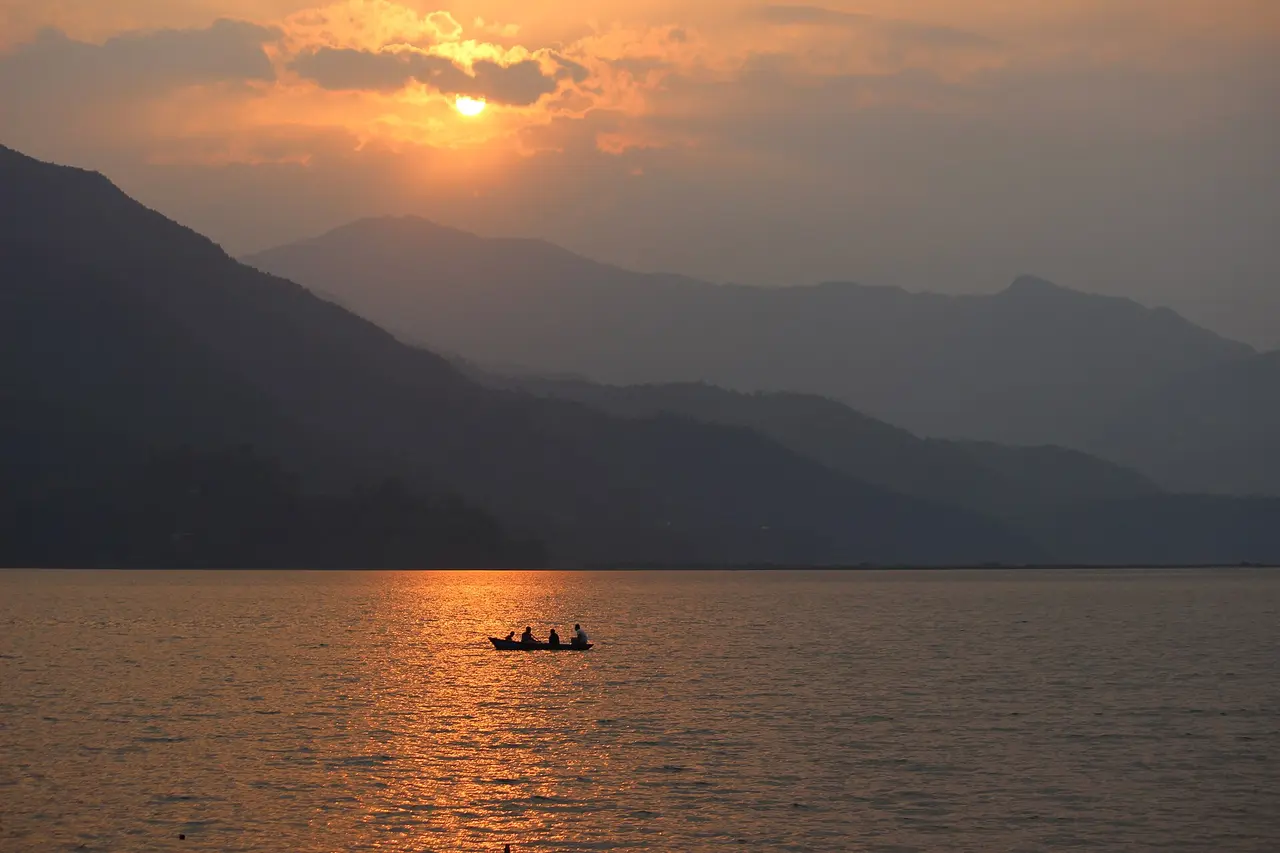
Seven hours by road or a 25-minute flight from Kathmandu, Pokhara serves as a base for trekking without the extreme altitude: the Poon Hill loop, four to five days of walking, tops out at 3,210 metres through Gurung villages. Phewa Lake, at the foot of Annapurna South, is a good spot for a rest day by rowing boat before or after the trek.

The Khumbu and Everest Base Camp

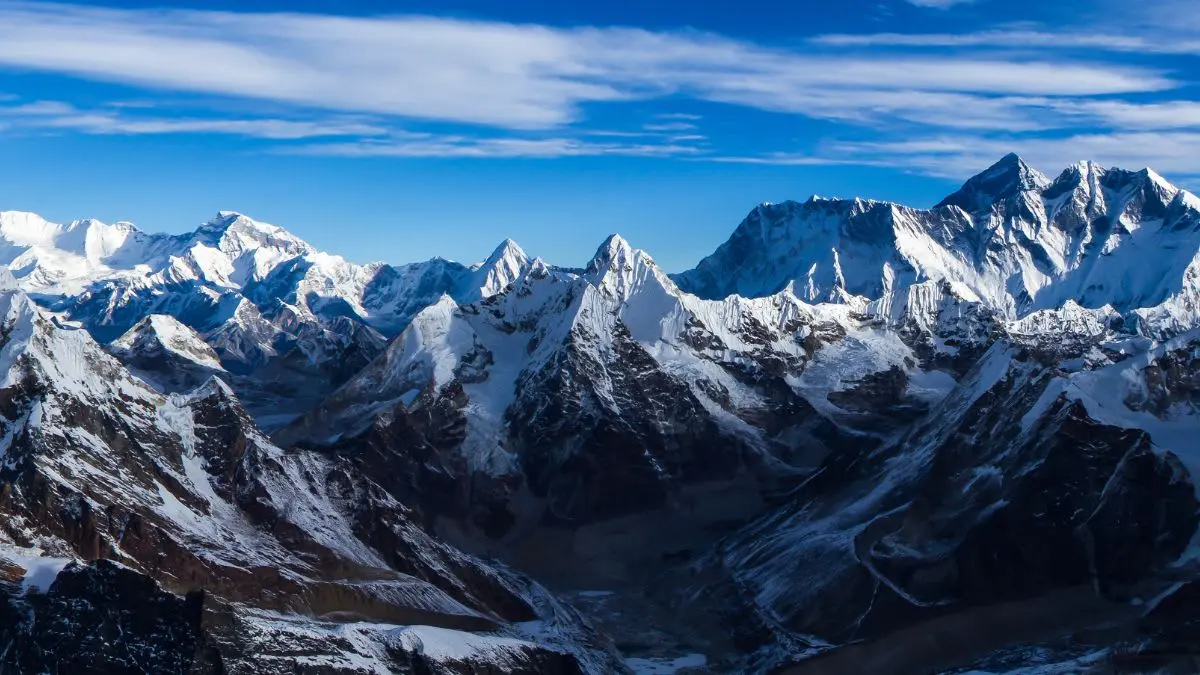
The Everest region is reached by a 30-minute flight to Lukla, on one of the shortest runways in the world, often delayed by fog. Allow ten to twelve days round trip to Base Camp at 5,364 metres, with two mandatory acclimatisation days at Namche Bazaar and Dingboche. A licensed guide has been required for every trek since March 2023, and insurance must explicitly cover helicopter rescue.

Chitwan and the Terai lowlands

On the Indian border, Chitwan National Park protects one-horned rhinos, crocodiles and, more rarely, Bengal tigers, in jungle below 200 metres of elevation. Two nights are enough for a canoe trip on the Rapti River and a guided walk in search of wildlife. The climate here is markedly hotter and more humid than up in the mountains, with malaria a real consideration and mosquito precautions worth taking seriously.

Lumbini and the Buddhist heritage

The UNESCO-recognised birthplace of the Buddha, Lumbini can be seen in a single day from the western Terai, its monasteries built by around twenty Buddhist countries each in a strikingly different architectural style. It pairs well with a route heading into neighbouring India, with which Nepal shares an open border for Indian nationals and a similar Terai lowland landscape stretching along the frontier.

Planning the trek: permits, guides and altitude

Two documents are required for most treks: the TIMS card and the relevant conservation area permit (ACAP for Annapurna, Sagarmatha for Everest), picked up in Kathmandu or Pokhara before setting off. A licensed guide has been mandatory since 2023. Acute mountain sickness affects a meaningful share of trekkers above 3,500 metres, so acclimatisation days are worth keeping rather than cutting to save time.

Cities to visit in Nepal

Featured destinations appear first.

How much it costs

Per person per day, excluding international travel.
Budget
20 €/ day
1 580 € for 2 people, 7 days, return flights included
Accommodation
6 €
Food
5 €
Local transport
3 €
Sights and activities
6 €
Comfort
78 €/ day
2 392 € for 2 people, 7 days, return flights included
Accommodation
28 €
Food
18 €
Local transport
12 €
Sights and activities
20 €
Premium
300 €/ day
5 500 € for 2 people, 7 days, return flights included
Accommodation
130 €
Food
45 €
Local transport
35 €
Sights and activities
90 €
Prices checked: Relevé septembre 2026, cadré sur l'itinéraire classique Katmandou / vallée de Pokhara / trek court en Annapurna ou Everest. Sources : Google Flights et Trip.com pour le vol (round trip Paris-Katmandou dès 663 € avec Qatar Airways via Doha, hors vacances scolaires) ; guides de coût datés 2026 (The Longest Way Home, Hostelz, Budget Your Trip, EcoTourNepal, Pride Nepal Travel) pour hébergement, repas et transport local. Hébergement : lit en dortoir à Thamel pour le profil routard, chambre double partagée à deux en hôtel milieu de gamme pour le confort, chambre double partagée à deux en hôtel 4-5 étoiles (type Dwarika's, resorts du lac Phewa à Pokhara) pour le premium. Roupie népalaise volatile face à l'euro : montants à recontrôler après plusieurs mois.

Getting there

Airports serving Nepal, from main hubs to secondary ones.
  • BWAGautam Buddha International AirportSiddharthanagarMain
  • KTMTribhuvan International AirportKathmanduMain
  • PHHPokhara International AirportPokharaMain
  • BIRBiratnagar AirportBiratnagarSecondary
  • JKRJanakpur AirportJanakpurSecondary
  • KEPNepalgunj AirportNepalgunjSecondary

Entry, health and safety

For FR travellers

Entry requirements

Visa required

Visa touristique obligatoire, à entrées multiples : il s'obtient à l'ambassade du Népal à Paris avant le départ, à l'arrivée à l'aéroport de Katmandou (Tribhuvan) ou aux postes-frontières terrestres, munie de deux photos d'identité. Prévoir 200 USD ou l'équivalent en euros EN ESPÈCES pour le visa à l'arrivée, le paiement en ligne générant de longues files d'attente. Prolongeable sur place par périodes d'un mois, jusqu'à 150 jours de séjour cumulé par an. Depuis 2026, hôtels, agences et compagnies aériennes doivent enregistrer les voyageurs étrangers dans une base de données gouvernementale.

Stay allowed for up to 150 days.

Passport valid for 6 months beyond your return date.

Health

Advised: Mise à jour DTP, hépatite A, typhoïde, hépatite B en cas de séjour prolongé, rage (notamment pour les enfants et les séjours ruraux), encéphalite japonaise selon la durée et la saison des pluies au Teraï.

Paludisme dans le Teraï, dengue, chikungunya et encéphalite japonaise transmis par moustiques ; pollution de l'air très élevée dans la vallée de Katmandou. Pour tout trek en altitude : certificat médical d'aptitude recommandé avant le départ, mal aigu des montagnes à connaître, et assurance couvrant explicitement le secours en montagne et l'hélicoptère (l'ambassade ne prend en charge aucun frais médical, le sauvetage est intégralement payant et l'hélicoptère ne décolle qu'avec une garantie de paiement). Eau du robinet à proscrire, fruits à peler, cuisson complète recommandée. Niveau de vigilance renforcée sur tout le pays : risque sismique élevé, aléas de mousson (inondations, glissements de terrain, notamment district de Rasuwa), tensions communautaires ponctuelles avec couvre-feux dans le sud, arnaques ciblant les touristes à Thamel, guide agréé obligatoire pour tout trek depuis le 31 mars 2023.
Safety

Increased caution

Checked in septembre 2026 against the official source. Entry rules change: check the official source before you travel, it alone is authoritative.

Nepal in pictures

Photo credits : Sanu N, CC BY-SA 4.0, Wikimedia Commons ; Bernard Gagnon, CC BY-SA 4.0, Wikimedia Commons ; Janak Bhatta, CC BY-SA 4.0, Wikimedia Commons ; Charles J. Sharp, CC BY-SA 4.0, Wikimedia Commons ; Bijay Chaurasia, CC BY-SA 4.0, Wikimedia Commons ; Vyacheslav Argenberg, CC BY 4.0, Wikimedia Commons

Not to miss in Nepal

From UNESCO-listed sites to some of the world's most famous peaks, what structures most trips to Nepal.

Everest Base Camp

The country's most iconic trek, ten to twelve days of walking up to 5,364 metres at the foot of the world's highest peak.

Boudhanath stupa

One of the largest Buddhist stupas in the world, the spiritual heart of Kathmandu's Tibetan refugee community.

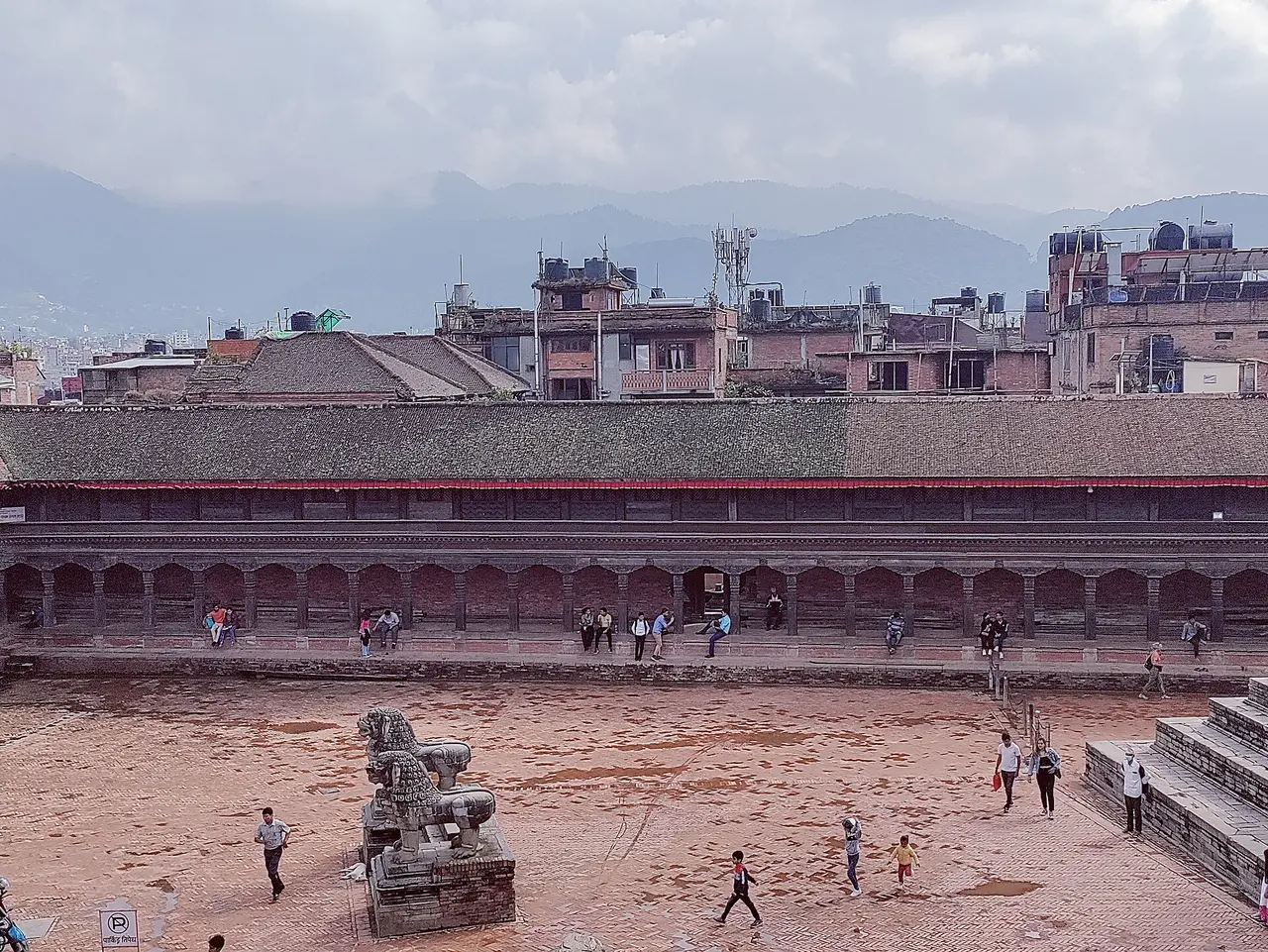
Kathmandu Durbar Square

The former royal square with carved wooden pagodas, UNESCO-listed despite damage from the 2015 earthquake.

Phewa Lake, Pokhara

A calm stretch of water at the foot of the Annapurnas, the starting point for treks and a place to rest afterwards.

Poon Hill

A viewpoint at 3,210 metres famous for its sunrise over Dhaulagiri, reached in four to five days of walking.

Chitwan National Park

A jungle and grassland reserve where one-horned rhinos and, more rarely, Bengal tigers can be spotted.

Bhaktapur

A medieval royal city with a still-working Pottery Square, quieter than Kathmandu.

Lumbini

The birthplace of the Buddha, surrounded by monasteries built by Buddhist countries from around the world.

Practical information

Currency
Nepalese rupee (NPR)
Time zone
UTC+5:45, one of the world's few quarter-hour offsets
Visa
Mandatory, on arrival at the airport for around 200 USD in cash
Trekking permits
TIMS card and area permit (ACAP, Sagarmatha) required, licensed guide mandatory since 2023
Tap water
Avoid everywhere, even in Kathmandu: bottled or filtered water only
Altitude sickness
Build in acclimatisation days from 3,500 metres, know the symptoms
Payments
A largely cash-based economy outside major hotels in Kathmandu and Pokhara
Insurance
Must explicitly cover mountain rescue and helicopter evacuation, not included in standard card coverage
Power sockets
Type C, D and M, 230V, power cuts common outside the main cities

Similar destinations

Other countries you might like as much as Nepal.

Similar regions

Other regions you might like as much as Nepal.

Frequently asked questions about Nepal

Do you need a guide for the Everest Base Camp trek?
Yes, a licensed guide has been mandatory for every independent trek in Nepal since 31 March 2023, including Everest Base Camp and Annapurna: local agencies in Kathmandu arrange one easily.
Can you see Everest without a long trek?
Yes, a one-hour scenic flight from Kathmandu passes along the range, and the viewpoint at Everest View Hotel near Namche Bazaar only takes three to four days of walking to reach.
How much do Nepal's trekking permits cost?
The TIMS card costs around 20 USD and the conservation area permit (ACAP or Sagarmatha) around 30 USD per person, payable in cash in Kathmandu or Pokhara before setting off.
Is altitude sickness common on the Everest trek?
Yes, a meaningful share of trekkers feel symptoms above 3,500 metres. The acclimatisation days at Namche Bazaar and Dingboche are built in to limit this risk, not to be skipped.
When does the Dashain festival happen in Nepal?
Dashain, the main Nepali Hindu festival, usually falls in September or October depending on the lunar calendar; transport fills up and some businesses close for several days in a row.
What insurance do you need for a high-altitude trek?
Insurance that explicitly covers helicopter evacuation and mountain rescue with an immediate payment guarantee: standard travel policies or card-based coverage usually fall well short of this specific requirement for Nepal.
Can Nepal be combined with India in the same trip?
Yes, Lumbini can be seen in a single day from the western Terai near the Indian border, and many travellers combine Kathmandu with a route through northern India next door.

Plan your trip to Nepal

Day-by-day itinerary, budget, bookings and packing in a single app.
Aperçu de l'application PlanTripNow