Skip to content

Visiting Sydney : the harbour, the beaches and the Blue Mountains

Sydney is best discovered from the water first: one ferry takes you from the Opera House to the beaches of Manly. Add the Bondi coastal walk, a day in the Blue Mountains and the Victorian neighbourhoods, and three days fly by. The mild, dry southern winter remains the cheapest season.

At a glance

Visa
Required
Tourist stay of up to 90 days
7-day budget
€1,169
Per person, comfort profile, excluding international flights.
Recommended length
3 days
For a first trip, without rushing.

Why visit Sydney?

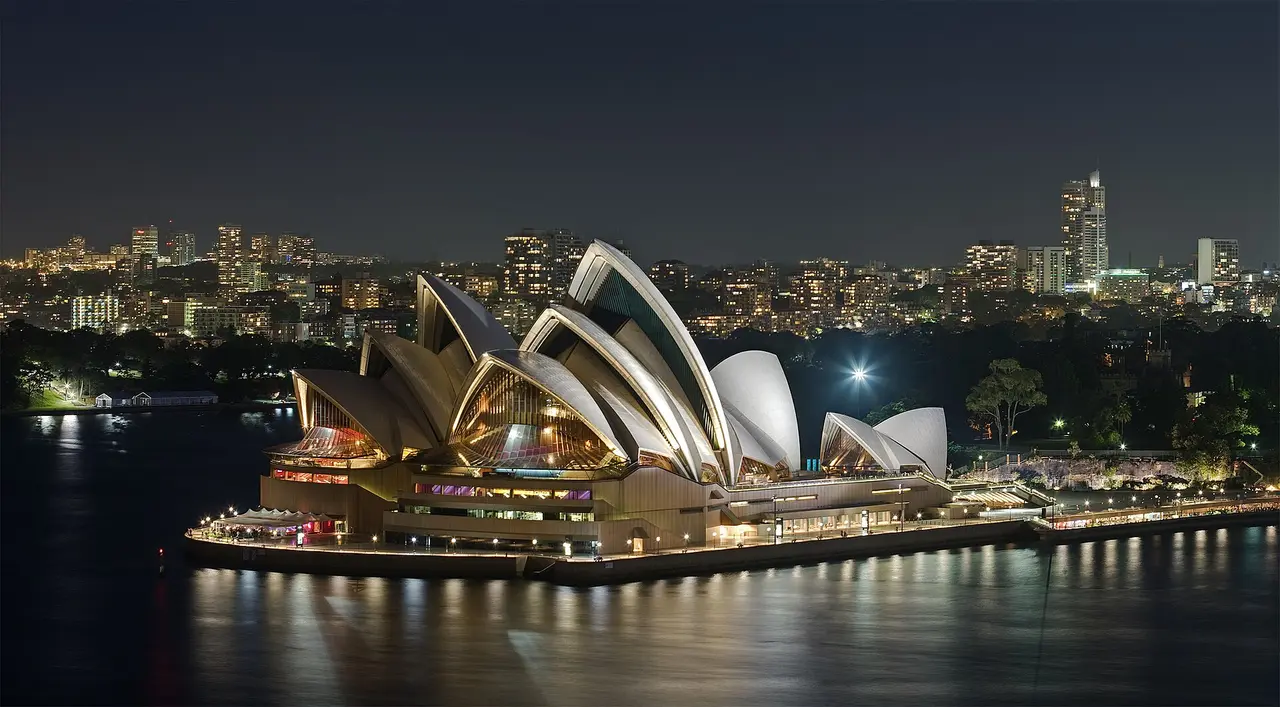
Sydney, capital of New South Wales and the largest city in Australia, spreads around a deep natural harbour where the Opera House faces the Harbour Bridge. More than a hundred beaches line the metropolitan area, and the UNESCO-listed Blue Mountains are two hours away by train.

When to visit Sydney

Temperatures, rainfall and crowds month by month, to pick your window.
When to visit Sydney
MonthTemperaturesRainCrowdsVerdict
January20 to 28 °C8 dPackedPeak summer and the long Australian school holidays: Bondi and Manly packed, hotel rates at their highest, late-afternoon storms.
February20 to 27 °C9 dModerateBack-to-school thins the beaches while the sea holds at 24C; a humid, sticky month, with Mardi Gras taking over Oxford Street late on.
March19 to 26 °C9 dModerateA late summer still good for swimming, with the water at its warmest, though also one of the wettest months by volume.
April15 to 23 °C8 dModerateA mild 23C autumn and clear light over the harbour; the Easter school holidays lift crowds for two weeks.
May12 to 21 °C8 dQuietGreat weather for the price: 20C, pleasant coastal walks, the first whales and the start of Vivid Sydney late in the month.
June10 to 18 °C9 dModerateA cool but often sunny start to winter; the Vivid light shows on the Opera House draw crowds until mid-June.
July9 to 18 °C7 dQuietThe coldest month, 18C in the afternoon under mostly blue skies; peak humpback whale season along the cliffs.
August9 to 19 °C5 dQuietThe driest month, ideal for the Bondi to Coogee walk or the Blue Mountains, with hotel rates at rock bottom.
September12 to 22 °C6 dModerateA bright 22C spring with parks in bloom; the sea is still too cool for most swimmers.
October14 to 24 °C8 dModerateAn ideal window for doing everything on foot: 24C, long days, a few hot windy spells and the first bushfire risk.
November17 to 25 °C9 dModeratePurple jacarandas bloom across the city and swimming turns pleasant again; storms become more frequent later in the month.
December18 to 26 °C8 dPackedSummer and the holidays: New Year's Eve fireworks over the Harbour Bridge and school holidays from mid-December, so book months ahead.
Source: Hémisphère sud : l'été austral va de décembre à février. Normales 1991-2020 de climatestotravel.com (températures, jours de pluie, température de la mer au large de la ville), relevé octobre 2026. Affluence et prix : vacances scolaires de Nouvelle-Galles du Sud, Nouvel An, Mardi Gras et Vivid Sydney.

Sydney's must-sees

Seven visits that sum up the city, from the harbour to the cliffs.

Sydney Opera House

Jørn Utzon's UNESCO-listed sails can be toured with a guide in an hour; better still, catch a concert or an opera.

Harbour Bridge

Cross for free on the eastern footpath, or climb roped-up to the top of the arch with BridgeClimb, 134 metres above the harbour.

Bondi to Coogee walk

Six kilometres of sandstone cliffs, coves and ocean pools, the city's signature walk.

Manly ferry

A thirty-minute harbour crossing for the price of a transport fare, with the Opera House and South Head in view.

Royal Botanic Garden

Thirty hectares of free garden on the harbour, out to the rock-carved bench of Mrs Macquarie's Chair.

Three Sisters

The three sandstone pinnacles of Echo Point, emblem of the Blue Mountains, two hours by train from Central.

Taronga Zoo

Koalas, kangaroos and platypuses in a hillside zoo, a twelve-minute ferry ride from Circular Quay.

What to see in and around Sydney?

Around Circular Quay: the Opera House, the bridge and The Rocks

Everything starts at Circular Quay, the ferry terminal. To the east, the Opera House can be toured with a guide in an hour, and the Royal Botanic Garden leads out to the Mrs Macquarie's Chair lookout. To the west, The Rocks keeps its sandstone warehouses and the city's oldest pubs. The Harbour Bridge footpath is free; the BridgeClimb costs over 200 AUD and must be booked.

The eastern beaches, from Bondi to Coogee

Bondi is thirty minutes by bus from the centre. Its ocean pool, Icebergs, is open all year round. The six-kilometre coastal path then runs to Coogee via Tamarama, Bronte and the seaside Waverley Cemetery, an easy two hours with cafés at every beach. Lifeguards plant red and yellow flags: swim only between them, as rip currents carry off careless swimmers every summer.

Manly and the north shore by ferry

The Manly ferry, thirty minutes from Circular Quay, is the country's cheapest cruise, with views of the Opera House and the South Head cliffs. On arrival, the ocean beach at the end of the Corso draws surfers, and the small bay of Shelly Beach, a marine reserve, is great for snorkelling among the fish. The North Head cliffs make a two-hour walking loop.

The Blue Mountains in a day

To the west, the Blue Mountains owe their colour to the oil evaporating from eucalyptus trees. A suburban train links Central to Katoomba in about two hours. From Echo Point, the Three Sisters tower over the Jamison Valley; the Giant Stairway drops its eight hundred steps into the forest. Set out early, as tour coaches arrive around 10am, and pack an extra layer: it is five degrees cooler than the city.

Neighbourhoods to live in: Paddington, Surry Hills and Newtown

To get away from the icons, Paddington lines up Victorian terraces with iron-lace balconies and hosts a Saturday market. Surry Hills packs in specialty cafés and the hottest tables, Newtown the student life, vintage shops and the bars of King Street. Further south, Haymarket and Chinatown remain the best places to eat well and cheaply, especially Thai and Sichuan food.

Sample itineraries

Three routes built around the time you actually have.
3daysRecommended

Sydney in 3 days: the city, the coast and the Blue Mountains

  1. The Opera House, the Botanic Garden and The Rocks
  2. Blue Mountains: Katoomba and the Three Sisters
  3. Bondi, the coastal walk and Paddington

Best for: The classic first-visit stay: the harbour and its icons, a train day in the Blue Mountains, then the eastern beaches and the Paddington district. No car needed.

How much it costs

Per person per day, excluding international travel.
Budget
71 €/ day
3 190 € for 2 people, 7 days, return flights included
Accommodation
30 €
Food
25 €
Local transport
8 €
Sights and activities
8 €
Comfort
167 €/ day
4 840 € for 2 people, 7 days, return flights included
Accommodation
80 €
Food
45 €
Local transport
12 €
Sights and activities
30 €
Premium
385 €/ day
8 690 € for 2 people, 7 days, return flights included
Accommodation
190 €
Food
90 €
Local transport
30 €
Sights and activities
75 €
Prices checked: Relevé octobre 2026. Coûts sur place convertis de l'AUD (environ 1 EUR = 1,65 AUD, ofx.com). Repas et transports : Numbeo Sydney, mise à jour du 7 octobre 2026 (repas bon marché 15,50 €, dîner de milieu de gamme pour deux 81 €, trajet en transport public 2,75 €, taxi 3,10 € de prise en charge puis 1,40 €/km). Hébergement : lit en dortoir de 30 à 50 AUD (hostelz.com, sydneytourism.org 2026), hôtel de milieu de gamme autour de 250 AUD la chambre double ; chambre double partagée à deux pour comfort et premium, lit en dortoir pour backpacker. Vol A/R Paris-Sydney avec une escale, hors vacances scolaires : prix moyen 1016 € en novembre et 1104 € en octobre 2026 (ou-et-quand.net), retenu 1100 € (backpacker), 1250 € (confort), 1650 € (premium, meilleure correspondance).

Getting there

Airports serving Sydney, from main hubs to secondary ones.
  • ABXAlbury AirportEast AlburySecondary
  • ALHAlbany AirportAlbanySecondary
  • ARMArmidale AirportArmidaleSecondary
  • ARYArarat AirportAraratSecondary
  • ASPAlice Springs AirportAlice SpringsSecondary
  • AYQAyers Rock Connellan AirportYularaSecondary

Entry, health and safety

For FR travellers

Entry requirements

Visa required

Autorisation électronique eVisitor (sous-classe 651) obligatoire avant le départ pour un séjour touristique de 3 mois maximum. Aucune vignette sur le passeport : confirmation par courriel. Une demande par personne, enfants compris, et voyager avec le passeport déclaré lors de la demande. Carte de débarquement à remplir à l'arrivée, contrôles de biosécurité stricts sur les aliments.

Stay allowed for up to 90 days.

Health

Required: Fièvre jaune uniquement pour les voyageurs en provenance d'une zone d'endémie.

Advised: Mise à jour du calendrier vaccinal français (diphtérie, tétanos, poliomyélite, coqueluche, rougeole, alerte rougeole en cours). Selon la durée et les conditions : dengue, encéphalite japonaise, chikungunya.

Aucun accord de sécurité sociale entre la France et l'Australie : assurance avec rapatriement indispensable, soins coûteux. Fumées de feux de brousse pouvant dégrader l'air de Sydney en été austral. Indice UV élevé, protection solaire nécessaire. Baignade uniquement entre les drapeaux surveillés : courants d'arrachement (rips) sur les plages de surf. Dengue et encéphalite japonaise concernent surtout le nord tropical.

Safety

Normal precautions

Emergency

000

Checked in octobre 2026 against the official source. Entry rules change: check the official source before you travel, it alone is authoritative.

Practical information for Sydney

Currency

Australian dollar (AUD), around 1.65 AUD to 1 EUR. Contactless is accepted everywhere, even for a few dollars.

Transport

Trains, metro, buses, ferries and light rail are paid with an Opal card or straight with a contactless bank card, with daily and weekly caps.

From the airport

The T8 train line links the airport to the centre in 15 minutes, with a station access fee of about 17 AUD; the 420 bus is cheaper but slower.

eVisitor

A free electronic authorisation to obtain before departure, one per traveller, children included.

Swimming

Only between the red and yellow flags on patrolled beaches. Bluebottle jellyfish are common in summer when the wind blows from the north-east.

Emergencies

Dial 000 for police, fire and ambulance; 132 500 for floods and storms (SES NSW).

Sydney in pictures

Photo credits : Diliff, CC BY-SA 3.0, Wikimedia Commons ; Dietmar Rabich, CC BY-SA 4.0, Wikimedia Commons ; JJ Harrison ( https://www.jjharrison.com.au/ ), CC BY-SA 3.0, Wikimedia Commons ; Maksym Kozlenko, CC BY-SA 4.0, Wikimedia Commons

Frequently asked questions about Sydney

How many days do you need in Sydney?
Three days cover the harbour, the Bondi coast and the Blue Mountains. With four or five days, add Manly, Royal National Park to the south or the Hunter Valley. Two days are enough for a stopover focused on the Opera House and Bondi.
What is the best time to visit Sydney?
April to May and September to November bring 20 to 25C, fewer crowds and mid-range prices. The southern summer, from December to February, is ideal for the beach but expensive and crowded. Winter, from June to August, stays mild, dry and the cheapest.
What budget should you plan for a week in Sydney?
Allow about 70 EUR per person per day in hostels, 165 EUR in comfort and 385 EUR at the top end, excluding flights. With a return flight from Paris around 1,100 to 1,250 EUR, a week for two comes to about 3,200 EUR on a tight budget and 4,800 EUR in comfort.
Can you swim in Sydney all year round?
The sea goes from 24C in summer to 19C in winter, so cool but swimmable. Ocean pools such as Icebergs or Bronte stay open all year. Always swim on a patrolled beach, between the flags.
Do you need a car in Sydney?
Not for the city, Bondi, Manly and the Blue Mountains, all reachable by train, bus or ferry. A car or an organised tour becomes useful for the Hunter Valley, Port Stephens or the south coast. Parking in the city centre is scarce and expensive.

Plan your trip to Sydney

Build your day-by-day itinerary and manage budget, bookings and packing in PlanTripNow.
Aperçu de l'application PlanTripNow