Skip to content

Visit Tirana : what to do in Albania's capital

Facades painted in bright colours, a 19th-century mosque facing communist-era buildings, bunkers turned into museums and packed terraces in Blloku: in two or three days Tirana tells Albania's recent history, with Mount Dajti as a backdrop and the Adriatic less than an hour away.

Why visit Tirana?

Tirana is the best gateway to understanding Albania: its compact centre gathers the Ottoman legacy, 1930s Italian architecture and the traces of Enver Hoxha's dictatorship, told in the Bunk'Art museums and the House of Leaves. The city is also a base for Krujë, Durrës and Mount Dajti, all less than an hour away.

Tirana's must-sees

Places that tell a century of Albanian history, almost all within walking distance of each other.

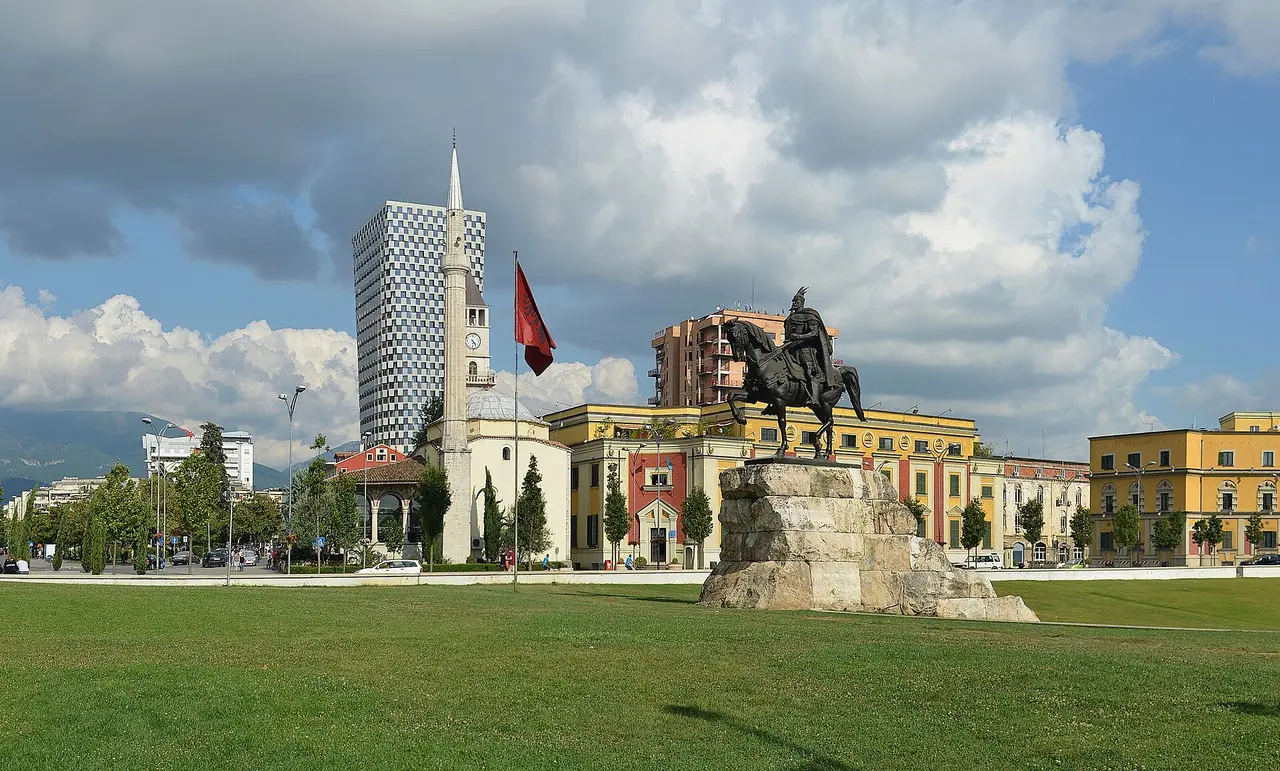
Skanderbeg Square

A huge pedestrian expanse framed by the opera, the National History Museum and the mosque, it is the city's meeting point and the stage for major gatherings.

Et'hem Bey Mosque

A small mosque completed in the early 19th century, spared by the regime's anti-religious campaign, decorated with landscape frescoes rarely seen in Islamic art.

Bunk'Art 2

The Interior Ministry's nuclear shelter right in the centre, turned into a museum about the Sigurimi secret police and repression under the dictatorship.

Bunk'Art 1

A vast underground bunker built for the leadership near the foot of Mount Dajti, telling the military and political history of communist Albania over several levels.

House of Leaves

A former clinic that became the headquarters of state surveillance, this museum displays microphones, bugging devices and files revealing how widely citizens were spied on.

Pyramid of Tirana

Built as a mausoleum glorifying Enver Hoxha, it reopened in 2023 as a centre devoted to technology, with outdoor steps you can climb to the top.

National History Museum

Recognisable by its large facade mosaic, it covers the country's history from Illyrian antiquity to the communist period across several floors.

What to discover in Tirana, district by district?

The centre and the Boulevard of the Martyrs of the Nation

Tirana's heart is organised around a vast pedestrian space redesigned in 2017, from which runs the Boulevard of the Martyrs of the Nation, laid out by Italian planners in the 1930s. Ochre ministries, the university and recent glass towers line it for about two kilometres down to the Grand Park. Allow half a day to walk the axis and step into one or two museums. It is the best starting point to grasp how the capital of Albania stacked up its eras in less than a century.

Blloku, the former forbidden district

Until 1991, Blloku was reserved for the leaders of the Party of Labour and closed to the rest of the population. Enver Hoxha's villa still stands there, on a street corner now lined with cocktail bars, speciality coffee shops and restaurants. It is the liveliest district at night, especially from Thursday to Saturday, when terraces spill onto the pavements until after midnight. It is a ten-minute walk from the centre and a practical base to stay, provided you accept some noise at the weekend.

The New Bazaar and Ottoman old Tirana

East of the centre, Pazari i Ri, renovated in 2017, gathers a covered hall of fruit, cheese and raki surrounded by restaurants serving traditional Albanian food. It is the easiest place to taste tavë kosi, lamb baked with yoghurt, at a moderate price. Only a few fragments of the Ottoman town survive: the Tanners' Bridge, a small 18th-century stone structure, and the Clock Tower, completed around 1822. Allow two hours, ideally in the morning when the stalls are full.

The Grand Park and the southern hills

At the end of the boulevard, the Grand Park surrounds an artificial lake dug in the 1950s. A path of about five kilometres loops around it under the pines, and this is where locals come to jog or stroll in the late afternoon. You pass a small amphitheatre, the graves of a few national figures and several lakeside cafés. In spring and autumn the loop takes an easy hour and a half; in July and August, when temperatures often exceed 35 °C, set off before 10 am.

Mount Dajti and day trips to Krujë and Durrës

Mount Dajti, rising above 1,600 m, overlooks the city to the east. The Dajti Ekspres cable car climbs it in about fifteen minutes from the outskirts, revealing the plain all the way to the sea on clear days. For a full day, two outings stand out: Krujë, Skanderbeg's citadel and covered bazaar, about an hour north, and Durrës, with its Roman amphitheatre and beaches, less than an hour west. Both are reached by bus from the bus stations on the city's edge.

Getting there

Airports serving Tirana, from main hubs to secondary ones.
  • TIATirana International Airport Mother TeresaRinasMain
  • VLO(Duplicate)Vlora International AirportVlorëMain
  • KFZKukës International AirportKukësSecondary

Practical information for Tirana

Entering Albania

EU and Swiss citizens enter with a valid ID card or passport, visa-free, for tourist stays of up to 90 days; other nationalities should check current rules before booking.

Lek and cash

The currency is the lek. Euros are often accepted in hotels and some restaurants, but change is given in lek: keep small notes for buses, markets and cafés.

Rinas airport

Tirana International Airport Nënë Tereza lies about 17 km north-west. A shuttle bus reaches the centre in 30 to 40 minutes depending on traffic.

Tap water

Stick to bottled water for drinking, which is cheap and sold everywhere; tap water is fine for brushing your teeth.

Power sockets

Type C and F sockets at 230 V, the same as in most of continental Europe.

Yes and no gestures

Many Albanians, especially older people, shake the head sideways to mean yes and nod to mean no: confirm out loud if in doubt.

Tipping

Not compulsory but appreciated: rounding up the bill or leaving around 10% in restaurants is customary.

Demonstrations

Political rallies turned violent in autumn 2026 around Skanderbeg Square and government buildings: avoid crowds and check official travel advice before leaving.

Tirana in pictures

Photo credits : Pudelek, CC BY-SA 4.0, Wikimedia Commons ; Ravi Dwivedi, CC BY-SA 4.0, Wikimedia Commons ; quinn.anya, CC BY-SA 2.0, Wikimedia Commons ; Redon Skikuli, CC BY-SA 4.0, Wikimedia Commons

Frequently asked questions about Tirana

Bunk'Art 1 or Bunk'Art 2: which one if time is short?
Bunk'Art 2, in the centre, takes an hour and focuses on the secret police. Bunk'Art 1, larger and more striking, needs two hours plus a bus or taxi ride to the foot of Dajti, which combines well with the cable car.
Can you pay in euros everywhere in Tirana?
No. Hotels, agencies and some restaurants take euros, often at a poor rate, and give change in lek. ATMs are plentiful in the centre and cards are accepted in most places in Blloku.
How much time should you allow for the Mount Dajti cable car?
Allow half a day: about fifteen minutes up, one or two hours at the top for the view and a short forest walk, plus the ride from the centre. Service may stop in strong wind, so check the weather before setting off.
Can you climb the Pyramid of Tirana?
Yes. Since its renovation was completed in 2023, staircases built onto the outer faces let you climb to the summit, with views over the boulevard and Blloku. The interior hosts spaces devoted to technology and young people.
How do you get to Krujë or Durrës from Tirana without a car?
Buses and minibuses leave regularly from the bus stations on the outskirts, with frequent daytime departures to Durrës. For Krujë, allow about an hour. A taxi for the day remains a comfortable option if you want to combine both.
Is Blloku a good area to stay in Tirana?
Yes if you want to go out at night: restaurants, bars and cafés are right outside and the centre is a ten-minute walk away. Light sleepers should rather choose the streets around the New Bazaar or near the Grand Park.

Plan your trip to Tirana

Build your day-by-day itinerary and manage budget, bookings and packing in PlanTripNow.
Aperçu de l'application PlanTripNow