Skip to content

Visit Varanasi : ghats, the Ganges and the old city in 3 days

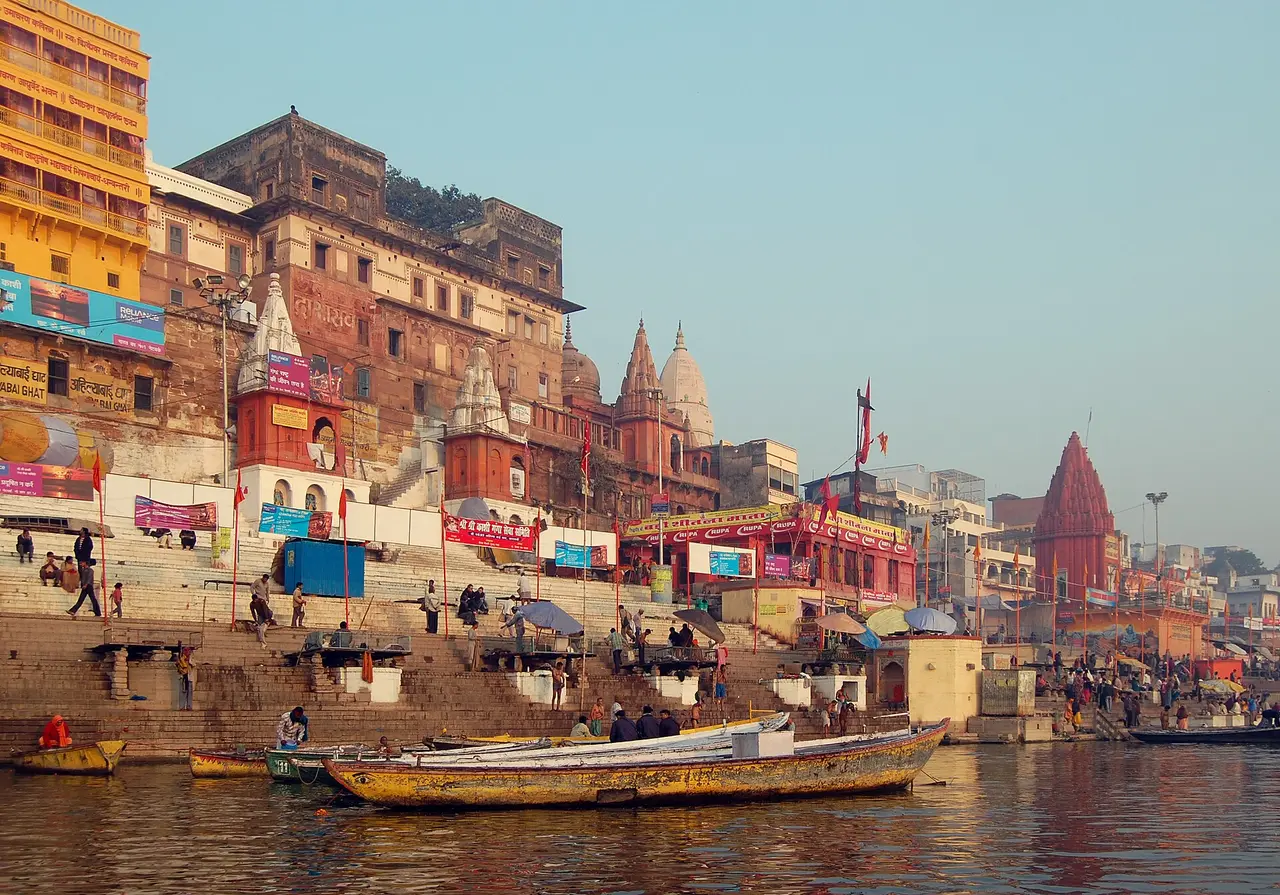
On the west bank of the Ganges in Uttar Pradesh, Varanasi lines up dozens of ghats where people have bathed, prayed and cremated their dead for centuries. Behind the steps, a maze of lanes leads to Shiva's temple, while nearby Sarnath keeps the memory of the Buddha's first sermon.

At a glance

Visa
Required
Tourist stay of up to 90 days
7-day budget
€315
Per person, comfort profile, excluding international flights.

Why is Varanasi so captivating?

Varanasi, also called Benares or Kashi, is the holiest city in Hinduism, on the Ganges in Uttar Pradesh. Pilgrims come to purify themselves in the river and families to cremate their dead, freeing them from the cycle of rebirth. Three nights let you see the ghats at dawn and at sunset, then Sarnath.

When to visit Varanasi

Temperatures, rainfall and crowds month by month, to pick your window.
When to visit Varanasi
MonthTemperaturesRainCrowdsVerdict
January9 to 23 °C2 dBusyMild 23 °C days but 9 °C dawns and fog that delays trains and flights: pack a fleece for the boat.
February12 to 27 °C2 dBusyThe ideal month: the mist has lifted, 27 °C in the afternoon and crisp light on the ghats at dawn.
March17 to 33 °C1 dModerateHoli bursts into colour in the lanes, but the thermometer passes 33 °C by the end of the month.
April22 to 39 °C1 dQuietClose to 39 °C: a dawn boat and the evening aarti, nothing in between except an air-conditioned room.
May26 to 41 °C2 dVery quietThe hottest month, over 40 °C: the stone steps are scorching by 9 am.
June28 to 39 °C5 dVery quietSticky pre-monsoon heat with 27 °C nights: only the hotel rates are tempting.
July27 to 34 °C13 dQuietMonsoon and the Ganges in flood: lower steps under water, boats sometimes moored; Sawan pilgrims crowd Kashi Vishwanath.
August26 to 33 °C13 dQuietThe wettest month, close to 290 mm: the walk along the ghats is often cut off.
September25 to 34 °C9 dQuietThe rains ease off but the river stays high; the aarti is held further up the steps.
October21 to 33 °C2 dModerateThe Ganges recedes, the skies clear and the season restarts; Ramlila at Ramnagar and Navratri at the Durga temple.
November15 to 30 °C0 dPackedDry skies, highs of 30 °C and Dev Deepawali at the full moon: the finest month, so book very early.
December10 to 25 °C0 dPackedPleasant 24 °C afternoons, cool and misty mornings; peak crowds between Christmas and New Year.
Source: Moyennes climatiques 1991-2020 de climatestotravel.com recoupées avec weather2travel.com, moyenne des deux sources par mois arrondie au dixième (température moyenne = moyenne des minimales et maximales), relevé du 9 novembre 2026. Jours de pluie : jours avec au moins 1 mm de précipitations. Ville fluviale de l'intérieur, sans température de mer. Mousson de fin juin à septembre (plus de 250 mm en juillet et en août) avec crue du Gange sur les marches basses des ghats ; brouillard fréquent les matins de décembre et janvier. Affluence et prix estimés d'après la haute saison d'octobre à mars et les fêtes locales (Holi, Maha Shivaratri, mois de Sawan, Dev Deepawali), sans source chiffrée.

Varanasi's must-sees

Eight experiences, from the river at dawn to the stupas of Sarnath, for three days at the pace of the holy city.

Evening Ganga aarti

A daily ceremony of lamps, bells and chanting at Dashashwamedh at sunset, watched every evening by thousands of pilgrims and onlookers.

Dawn boat ride

An hour of rowing along the ghats at sunrise, when the faithful perform their ablutions and washermen beat laundry against the stones.

Kashi Vishwanath Temple

Shiva's shrine with its golden roof, one of the most revered in India, now opened onto the Ganges by a vast sandstone corridor inaugurated in 2021.

Dhamek Stupa

A massive brick and stone stupa at Sarnath, raised where tradition places the Buddha's first sermon, surrounded by pilgrims from all over Asia.

Sarnath Museum

An archaeological museum displaying Ashoka's four-lion capital, now India's national emblem, along with fine Buddhist statues from the Gupta period.

Ramnagar Fort

Residence of the Maharajas of Benares on the east bank of the Ganges, with a museum of palanquins, weapons and vintage cars, brought to life by the Ramlila in autumn.

Bharat Mata Temple

A temple opened by Gandhi in 1936 and dedicated to Mother India, with no deity: it houses a large relief map of the subcontinent carved in marble.

Durga Temple

An eighteenth-century temple painted red ochre, beside a sacred tank in the south of the city, very busy during the Navratri festival in autumn.

What to discover in Varanasi?

From Assi to Kedar, the southern ghats

The southern ghats are the most relaxed part of Varanasi. Assi Ghat, where the Assi river meets the Ganges, hosts the Subah-e-Banaras ceremony every morning before dawn, with chanting and yoga on the steps. Walking north, you pass Tulsi Ghat and then Kedar Ghat, recognisable by its red and white striped steps. Allow an hour on foot along the water, ideally around 6 am.

Dashashwamedh, the ceremonial heart

Dashashwamedh is the busiest ghat, at the end of the main Godowlia road. Every evening at sunset, a row of priests swing heavy oil lamps during the Ganga aarti, which lasts around 45 minutes. Arrive an hour early to find a spot on the steps, or watch the ceremony from a boat moored in front of the ghat. Neighbouring Rajendra Prasad Ghat offers a clearer angle.

Manikarnika and Harishchandra, the burning ghats

For Hindus, being cremated in Varanasi brings release from the cycle of rebirth. Manikarnika, north of Dashashwamedh, burns pyres day and night; Harishchandra, further south, is the other cremation ghat. You can stand back and watch, but photographing the pyres is forbidden out of respect for the families. Beware of self-appointed guides who then demand a donation 'for the wood': decline before following them.

The galis of the old city

Behind the ghats, the old city is a maze of lanes sometimes only a metre wide, the galis, shared with cows, scooters and funeral processions. The Kashi Vishwanath temple, dedicated to Shiva, is linked to the river by a corridor opened in 2021; phones and bags must be left in lockers. Allow half a day and an offline map, and try a morning kachori at the stalls of Kachori Gali.

Sarnath, 10 km from the bustle

About ten kilometres north-east, Sarnath is where the Buddha is said to have given his first sermon. The Dhamek Stupa, the monastery ruins and the temples built by Thai, Japanese and Tibetan communities take half a day, by rickshaw or taxi from the old city. The archaeological museum, home to Ashoka's Lion Capital, now the emblem of India, is closed on Fridays.

Getting in and out: Agra, Nepal, Delhi

Varanasi airport is at Babatpur, about 25 km north-west, with links to India's main cities. From the city of the Taj Mahal, allow a full overnight train journey. Three nights are enough to see the ghats at dawn and at sunset, then Sarnath. Many travellers then continue to Nepal through the Sunauli land border before reaching Kathmandu and its valley.

How much it costs

Per person per day, excluding international travel.
Budget
19 €/ day
1 926 € for 2 people, 7 days, return flights included
Accommodation
5 €
Food
7 €
Local transport
2 €
Sights and activities
5 €
Comfort
45 €/ day
2 290 € for 2 people, 7 days, return flights included
Accommodation
18 €
Food
12 €
Local transport
5 €
Sights and activities
10 €
Premium
160 €/ day
3 900 € for 2 people, 7 days, return flights included
Accommodation
80 €
Food
30 €
Local transport
20 €
Sights and activities
30 €
Prices checked: Relevé du 9 novembre 2026. Taux de référence BCE du 9 novembre 2026 : 1 € = 105,14 INR et 1 € = 1,1193 USD. Numbeo Varanasi écarté (20 contributeurs en 18 mois, données en partie estimées) : repas et transports d'après la moyenne nationale Numbeo Inde, mise à jour du 9 novembre 2026, 2 708 contributeurs (repas bon marché 1,90 €, dîner de milieu de gamme pour deux 9,52 €, ticket de transport local 0,23 €, taxi 0,90 € de prise en charge puis 0,24 €/km), donc non spécifique à Varanasi. Hébergement : lits en dortoir à 4,81 € en moyenne sur 26 auberges (Hostelworld, relevé du 9 novembre 2026) ; hôtels 3 étoiles autour de 22 $ la nuit (momondo, non daté) et de 14 à 59 $ (HotelsCombined, mise à jour du 7 novembre 2026), hôtels haut de gamme sur les ghats de 105 à plus de 700 $, Taj Ganges autour de 185 $ (HotelsCombined) : comparateurs, pas des sources officielles. Barque : aucun tarif officiel, prix négociés ; environ 500 à 800 INR la place en barque partagée et 1 200 à 1 800 INR la barque à rames privée pour une heure selon des guides et opérateurs privés non officiels (gowithguide, varanasiguru, relevé du 9 novembre 2026). Activités premium (guide privé, barque privée matin et soir) et transport premium (voiture avec chauffeur à la journée) : estimations calculées à partir de ces tarifs, sans source directe. Vol A/R Paris-Varanasi avec au moins une escale (aucun vol direct) estimé à 830 € par personne : moyenne de 826 € sur 12 mois, fourchette habituelle 724 à 922 € (KAYAK, CDG-VNS, consulté le 9 novembre 2026). Hébergement par nuit et par personne : lit en dortoir pour backpacker, chambre double partagée à deux pour comfort et premium. weekTwoPax = 7 jours x 2 personnes + 2 vols.

Getting there

Airports serving Varanasi, from main hubs to secondary ones.
  • AGRAgra Airport / Agra Air Force StationAgraSecondary
  • AGXAgatti AirportAgattiSecondary
  • AHAMaa Mahamaya AirportAmbikapurSecondary
  • AJLLengpui AirportAizawlSecondary
  • AKDAkola AirportAkolaSecondary
  • AYJMaharshi Valmiki International AirportFaizabadSecondary

Entry, health and safety

For FR travellers

Entry requirements

Visa required

Visa obligatoire pour l'Inde, y compris pour un séjour touristique à Varanasi. Les Français demandent un e-visa touristique sur indianvisaonline.gov.in, entre 4 et 120 jours avant le départ (4 à 30 jours pour le visa de 30 jours). Tarif officiel pour la France : 10 $ pour 30 jours d'avril à juin, 25 $ de juillet à mars, 40 $ pour 1 an et 200 $ pour 5 ans, plus 3 % de frais bancaires (grille du 8 septembre 2026, consultée le 9 novembre 2026). Les visas de 1 et 5 ans sont limités à 90 jours par séjour et 180 jours par année civile. L'e-Arrival Card se remplit en ligne dans les 72 heures avant le vol.

Stay allowed for up to 90 days.

Passport valid for 6 months beyond your return date.

Health

Required: Aucun vaccin obligatoire en provenance directe de France. Fièvre jaune exigée pour les voyageurs arrivant d'une zone d'endémie amarile.

Advised: Calendrier vaccinal à jour (diphtérie, tétanos, poliomyélite, coqueluche, rougeole) ; selon la durée et les conditions du séjour : hépatites A et B, fièvre typhoïde, méningite ACWY, rage, encéphalite japonaise, chikungunya et dengue.

Rage très présente en Inde : consulter immédiatement après toute morsure ou griffure, nombreux chiens et singes autour des ghats. Dengue sans traitement curatif et paludisme jamais nul pendant la mousson (juin à septembre) : protection contre les moustiques indispensable. Ne boire que de l'eau en bouteille ou des boissons capsulées ; l'eau du Gange est fortement polluée. Pollution de l'air élevée dans les grandes villes du nord de l'Inde en hiver et autour de Diwali : masque FFP2 lors des pics. France Diplomatie appelle à la vigilance lors des rassemblements religieux (risque terroriste) et signale des vols dans les trains, notamment sur les lignes Varanasi-Delhi et Calcutta-Varanasi. Varanasi n'est pas située dans une zone déconseillée. Passeport valable au moins 6 mois après la fin du visa, avec deux pages vierges. Numéro d'urgence 112 depuis un mobile (cité par le gouvernement du Canada).

Safety

Increased caution

Emergency

112

Checked in novembre 2026 against the official source. Entry rules change: check the official source before you travel, it alone is authoritative.

Practical information for Varanasi

Cremation photos

Forbidden at Manikarnika and Harishchandra. Put your camera away when passing the pyres, including from a boat.

Kashi Vishwanath

Phones, bags, cameras and leather items are refused: lockers are available at the entrances. Long waits on Mondays, Shiva's day, and during festivals.

Boats

Agree the price and duration before boarding. At dawn, choose a rowing boat, quieter than a motorboat.

Monsoon floods

From July to September the Ganges rises over the lower steps: the riverside walk is cut, boat trips are sometimes suspended and the aarti moves higher up.

Dev Deepawali

On the full moon of the month of Kartik, usually in November, the ghats are lit with oil lamps. Accommodation is fully booked: reserve months ahead.

Ganges water

Heavily polluted along the city: avoid bathing and never drink it, even during a ritual.

Winter mornings

In December and January fog often delays trains and flights, and the air is cool at dawn: bring a fleece for the boat.

Babatpur airport

Lal Bahadur Shastri airport, about 25 km from the centre; allow an hour by road to the ghats at busy times. Cars cannot drive down to the river.

Sarnath Museum

Closed on Fridays; the ruins and the Dhamek Stupa are open every day.

Varanasi in pictures

Photo credits : Marcin Białek, CC BY-SA 3.0, Wikimedia Commons ; Ilya Mauter, CC BY 3.0, Wikimedia Commons ; Ishubhamahlawat, CC BY-SA 4.0, Wikimedia Commons ; R. M. Calamar from Brooklyn, New York, USA, CC BY 2.0, Wikimedia Commons

Frequently asked questions about Varanasi

Where should you stand for the Ganga aarti at Dashashwamedh?
On the steps facing the priests' platforms, arriving an hour before sunset, or from a boat moored on the river, which gives a head-on view. Rajendra Prasad Ghat, right next door, lets you see the ceremony side-on with slightly smaller crowds.
Can you watch the cremations at Manikarnika?
Yes, from a distance and in silence: families accept discreet visitors. Photography is forbidden. Turn down men who offer a guided tour of the pyres and then demand a donation for the wood, a well-known hustle on this ghat.
Can non-Hindu visitors enter the Kashi Vishwanath temple?
Foreign visitors are generally admitted after a queue and strict checks, although some guidebooks still mention restrictions for non-Hindus. Leave your phone, bag and leather items in a locker, remove your shoes and cover shoulders and knees. Touching the lingam is often suspended on crowded days.
What time should you take a boat ride on the Ganges?
Board before sunrise, near Dashashwamedh or Assi, for an hour along the ghats: the light is low, the faithful are bathing and the pyres of Manikarnika are smoking. A second trip at dusk lets you watch the aarti from the water.
Varanasi, Benares, Kashi: why three names?
Kashi, the city of light, is the ancient religious name. Benares, or Banaras, is the everyday form that long prevailed, especially under British rule. Varanasi, taken from the Varuna and Assi rivers that frame the city, became the official name after independence.
What can you see during Dev Deepawali in Varanasi?
On the full moon of Kartik, usually in November, hundreds of thousands of oil lamps line the steps of every ghat, a fortnight after Diwali. The spectacle is best seen from a boat, which you should book early as prices and crowds soar that evening.
Should you stay near Assi Ghat or Dashashwamedh?
Assi suits a calmer stay, with cafés, yoga classes and the morning aarti. Dashashwamedh and the old city put you at the heart of the action, minutes from Kashi Vishwanath and the evening aarti, at the cost of noisy lanes that cars cannot reach.
How do you get from Varanasi to Nepal?
The most common route is through the Sunauli land border, reached by bus or car after a long day on the road. On the Nepalese side you can stop at Lumbini, the Buddha's birthplace, before continuing to Pokhara or the capital.
Can you combine Sarnath and the ghats on the same day?
Yes: a dawn boat ride, Sarnath in the late morning, about half an hour away by rickshaw or taxi, then back for the evening aarti. If it is a Friday the archaeological museum will be closed; move Sarnath to the next day if Ashoka's capital interests you.
What to eat in Varanasi besides lassi and paan?
Thick lassi served in a clay cup, kachori sabzi for breakfast and Benarasi paan, a filled betel leaf, are the classics. In winter, look for malaiyo, a saffron-scented milk foam sold only in the early hours of the day.
Where can you buy an authentic Banarasi sari?
Banarasi silk brocade has a geographical indication. Favour cooperatives and weavers' workshops in the Madanpura quarter, and ask for the Silk Mark label, which certifies natural silk. Be wary of shops a rickshaw driver takes you to on commission.
Is Ramnagar Fort worth crossing the Ganges for?
For an extra half day, yes, especially in autumn: the Ramnagar Ramlila, an open-air staging of the Ramayana performed over a month, draws large crowds. The rest of the year, the museum of palanquins and vintage cars is more of a curiosity.

Plan your trip to Varanasi

Build your day-by-day itinerary and manage budget, bookings and packing in PlanTripNow.
Aperçu de l'application PlanTripNow