Albania

Tucked between the Adriatic and the Balkans, Albania blends unspoiled beaches, rugged mountains and stone-roofed villages. Long off the mass-tourism radar, it offers a rare mix of wild nature, ancient history and warm hospitality, far from Europe's crowded summer destinations.

Why visit Albania?

Albania stands out for its unspoiled coastline along the Albanian Riviera, the UNESCO-listed museum towns of Berat and Gjirokastër, and mountains within easy reach of hikers. The country remains one of Europe's most affordable destinations for a genuine change of scenery.

What to discover in Albania?

The Albanian Riviera unfurls pebble beaches and turquoise coves between Vlorë and Saranda, while the Llogara Pass offers sweeping panoramic views over the Ionian Sea below. Further north, the Albanian Alps invite hikers to explore Theth and the Valbona Valley, two remote mountain villages linked by one of the Balkans' most celebrated trekking routes. The archaeological site of Butrint, an ancient Greco-Roman city set against a peaceful lagoon, rounds out this blend of nature and heritage.
The country's historic towns tell another story: Berat, known as the 'town of a thousand windows', and Gjirokastër, built from stone across its steep hillsides, are both inscribed on the UNESCO World Heritage list. Tirana, the capital, contrasts with these ancient cities through its urban energy, colourful facades and thriving contemporary arts scene. Between rural tradition and urban renewal, Albania offers travellers a journey at several different speeds, still largely untouched by the mass tourism flows found elsewhere in southern Europe.

Cities to visit in Albania

Featured destinations appear first.
Coming soon.

Albania in pictures

Highlights

The must-sees of a trip to Albania.

Albanian Riviera

An unspoiled coastline between Vlorë and Saranda, with turquoise coves, pebble beaches and the spectacular Llogara mountain pass overlooking the Ionian Sea.
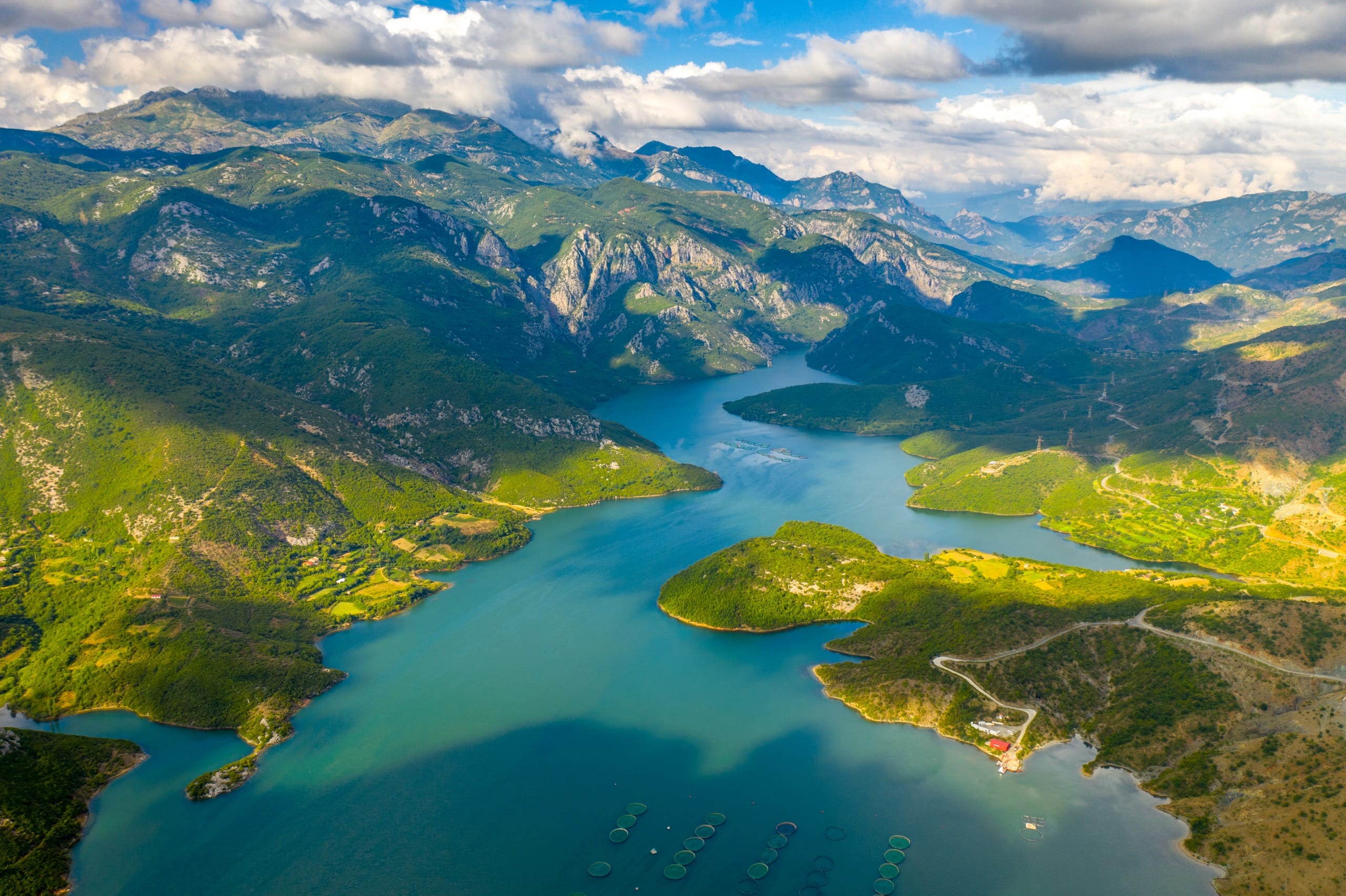
UNESCO Berat

The town of a thousand windows, with Ottoman houses stacked along the hillside and a fortress overlooking the Osum river valley.

Stone Gjirokastër

A fortified city built from grey stone, with its Ottoman bazaar, steep cobbled lanes and a castle towering above the whole town.

Albanian Alps

Theth and the Valbona Valley, two mountain villages linked by one of the most celebrated hiking trails in the Balkans region.

Ancient Butrint

A Greco-Roman city set beside a peaceful lagoon, with well-preserved remains of an amphitheatre, a basilica and Venetian-era fortified walls and towers.

Vibrant Tirana

The Albanian capital, with its colourful facades, the Bunk'Art museum and a thriving arts and culinary scene in constant renewal.

Practical information

Capital
Tirana
Area
28,748 km²
Population
Around 2.8 million
Language
Albanian
Currency
Albanian lek (ALL)
Time zone
UTC+1 (CET)
Climate
Mediterranean on the coast, continental inland
Best season
May to June and September

Frequently asked questions

Do I need a visa to visit Albania?
Citizens of the European Union and many other countries can enter Albania visa-free for short tourist stays. It is recommended to check current entry requirements with the relevant authorities before departure, as rules can vary depending on nationality.
What is the best time to visit Albania?
Spring, from May to June, and early autumn in September offer pleasant weather, lush green landscapes and fewer crowds than the summer months on the Albanian Riviera, which gets particularly busy in July and August.
Is Albania a safe destination for travellers?
Albania is generally considered a safe destination for tourists, with a population known for its hospitality. As anywhere, it is wise to stay alert to belongings in touristy areas and to follow current travel advisories before and during the trip.
Which currency should I use in Albania?
The official currency is the Albanian lek. Euros are sometimes accepted in tourist-oriented businesses, but it is best to carry leks for everyday purchases, local transport and smaller restaurants outside the main cities and resorts.
How do you get around in Albania?
Buses and shared minibuses known as 'furgon' connect the main towns and are the most common way to travel. Renting a car offers more freedom to explore the Riviera, the mountains and remote sites at your own pace and schedule.
What language is spoken in Albania?
Albanian is the official language and spoken by almost the entire population. English and Italian are fairly widespread in tourist areas and among younger generations, which generally makes communication with foreign visitors easier.

Plan your trip to Albania

Day-by-day itinerary, budget, bookings and packing in a single app.
Aperçu de l'application PlanTripNow