Colombia travel guide: when to go, budget and itineraries

Colombia packs the Andes, the Caribbean coast, the Coffee Region and the Amazon into a single country. Travellers come for colonial Cartagena, reinvented Medellin, the giant wax palms of the Cocora Valley, and a culture that has turned salsa and coffee into ways of life.
  • 1 city

Why visit Colombia?

Colombia offers very varied landscapes over short flying distances: Caribbean beaches, high-altitude Andean cities, coffee farms and Amazon rainforest. It is now one of the most affordable destinations in South America, with a dense domestic flight network linking Bogota, Medellin, Cartagena and Cali in under 90 minutes. The dry season runs from December to March, then again in July and August.

What to see in Colombia?

Bogota and the highlands

The capital sprawls at 2,600 metres on a high Andean plateau. The historic core of La Candelaria, the Gold Museum and the Botero collection can be seen on foot in a day, with the cable-car ride up Monserrate for the view. Allow three nights to acclimatise to the altitude before hiking elsewhere. An hour to the north, the Zipaquira salt cathedral is carved into a former mine. On Sundays the ciclovia closes the main avenues to cars and the city is best explored by bike. From Bogota, Peru is a three-hour flight away to continue toward Cusco.

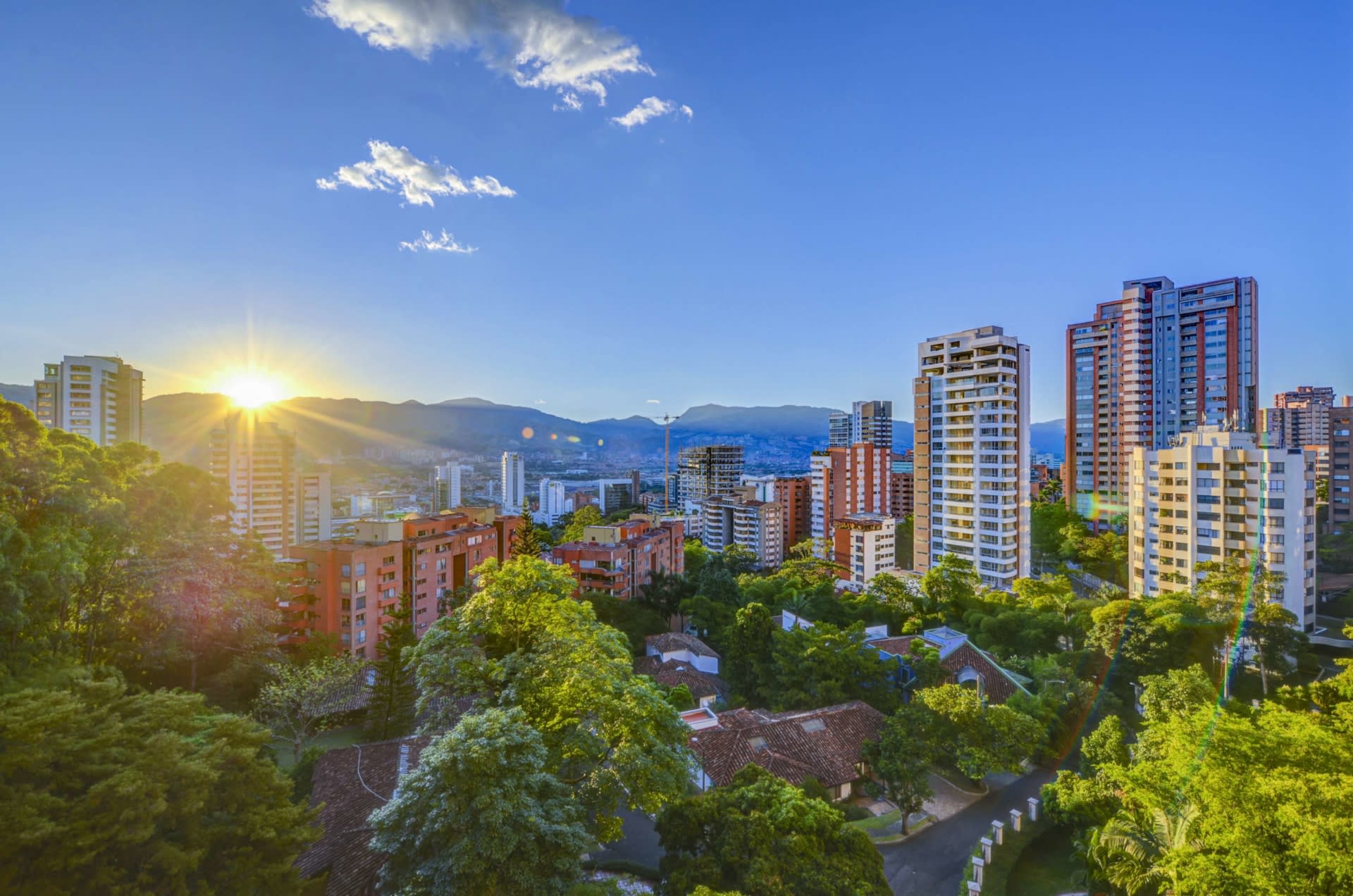
Medellin and Antioquia

Long avoided, Medellin is now a common stop thanks to its metro and metrocables serving the hillside neighbourhoods. Comuna 13, with its outdoor escalators and murals, is best visited on a morning guided tour. El Poblado concentrates restaurants and nightlife. Two hours away by road, the town of Guatape and the El Penol rock, climbed via 740 steps, make the classic day trip. The climate stays mild year-round, around 22 degrees, hence the nickname city of eternal spring.

The Coffee Region

The Armenia, Pereira and Manizales triangle, a UNESCO coffee cultural landscape, is reached by domestic flight from Bogota then shuttle. Salento is the base for the five-hour hike in the Cocora Valley, among wax palms taller than 50 metres. A farm visit with picking and tasting takes half a day. Filandia, less busy than Salento, has the same colourful colonial streets. Plan three nights here to avoid rushing.

Cartagena and the Caribbean coast

Cartagena de Indias lines up behind its 16th-century walls a colonial centre of balconied houses and the bohemian Getsemani district. Visit the Castillo San Felipe early before the heat. From the port, a day by boat reaches the Rosario Islands or the beaches of Baru. The city is the most expensive in the country for lodging, especially from December to March and during Holy Week. Barranquilla, two hours east, only really comes alive for its Carnival in February.

The Sierra Nevada and Tayrona

East of Santa Marta, the Sierra Nevada drops straight into the Caribbean. Tayrona National Park protects jungle-backed beaches such as Cabo San Juan, reached after a two-hour walk from the El Zaino entrance; the park closes several weeks a year for ecological recovery. The Lost City trek, a 9th-century Teyuna site, needs four to five days round trip with a compulsory guide. Minca, at 650 metres, has a cooler climate and good birdwatching.

Cali, the Pacific and the Amazon

Cali is the salsa capital: dance schools offer classes by the hour and the clubs of Juanchito stay open late. From Buenaventura or Nuqui, mostly reached by air, the Pacific coast of Choco offers humpback whale watching from July to October. To the south, Leticia is the gateway to the Colombian Amazon, on the river at the border with Brazil and Peru; it is only reachable by flight from Bogota.

Cities to visit in Colombia

Featured destinations appear first.

Colombia in pictures

Must-see sights

The places that shape most itineraries, from the Andes to the Caribbean coast.

Cartagena old town

Fortified colonial centre listed by UNESCO, with ramparts, shaded squares and the Getsemani district, now the festive heart of the city.

Cocora Valley

Hike among the world's tallest wax palms, starting from Salento by Willys jeep, a five-hour loop on foot.

Lost City

Teyuna ruins in the Sierra Nevada jungle, reachable only by a guided four to five day trek from Santa Marta.

Guatape and El Penol

Town with colourful bas-relief facades and a 200-metre monolith whose summit is reached by a 740-step staircase.

Comuna 13, Medellin

Once-stigmatised neighbourhood transformed by street art and open-air escalators, visited on a community tour.

Gold Museum, Bogota

The world's largest collection of pre-Columbian goldwork, about 34,000 pieces, in the capital's centre, closed on Mondays.

Cano Cristales

River in the Serrania de la Macarena stained red by an aquatic plant, visible mainly from June to November.

Tayrona Park

Caribbean beaches backed by forest and granite boulders, with an annual closure for ecological recovery to check before going.

Las Lajas Sanctuary

Neo-Gothic church built on a bridge over a gorge, near Ipiales and the Ecuadorian border.

Zipaquira salt cathedral

Nave and chapels carved into a salt mine 180 metres underground, a day trip from Bogota.

Similar destinations

Other countries you might like as much as Colombia.

Similar regions

Other regions you might like as much as Colombia.

Frequently asked questions about Colombia

Cartagena or Santa Marta for the beach?
Cartagena for the colonial atmosphere and trips to the Rosario Islands, though its urban beaches are average. Santa Marta mainly serves as a base for Tayrona park and Palomino, where beaches are better but swimming is sometimes dangerous.
How many days does the Lost City trek take?
The route takes four days, sometimes three for fit hikers or five at an easy pace. It starts from Santa Marta with a compulsory guide, and all operators charge a near-identical, collectively fixed price.
Is Medellin safe to visit?
Tourist areas such as El Poblado, Laureles and the metro circuit are fine by day. The main concern is scopolamine attacks at night: do not accept a drink from a stranger and avoid dating apps.
How do you get to Cano Cristales?
Fly from Bogota or Medellin to La Macarena, then join a compulsory guided tour. The river shows its colours roughly from June to November; outside that window the effect is limited.
Is altitude sickness a problem in Bogota?
At 2,600 m some people get headaches, breathlessness or insomnia for the first two days. It usually clears on its own with hydration and by avoiding alcohol and hard effort on arrival. Bogota is far lower than Cusco or La Paz.
Plane or bus between the main cities?
Almost always the plane. Bogota to Cartagena is a 1 h 20 flight versus about 20 h by bus, for a comparable price if booked ahead on Wingo or Avianca. Buses stay worthwhile on short, scenic routes.
When is the Barranquilla Carnival?
It runs over the four days before Ash Wednesday, in February or early March depending on the year. It is Latin America's second-largest carnival after Rio; lodging doubles and books out months ahead.

Plan your trip to Colombia

Day-by-day itinerary, budget, bookings and packing in a single app.
Aperçu de l'application PlanTripNow