Travel to Aruba: beaches, Arikok park and what to do

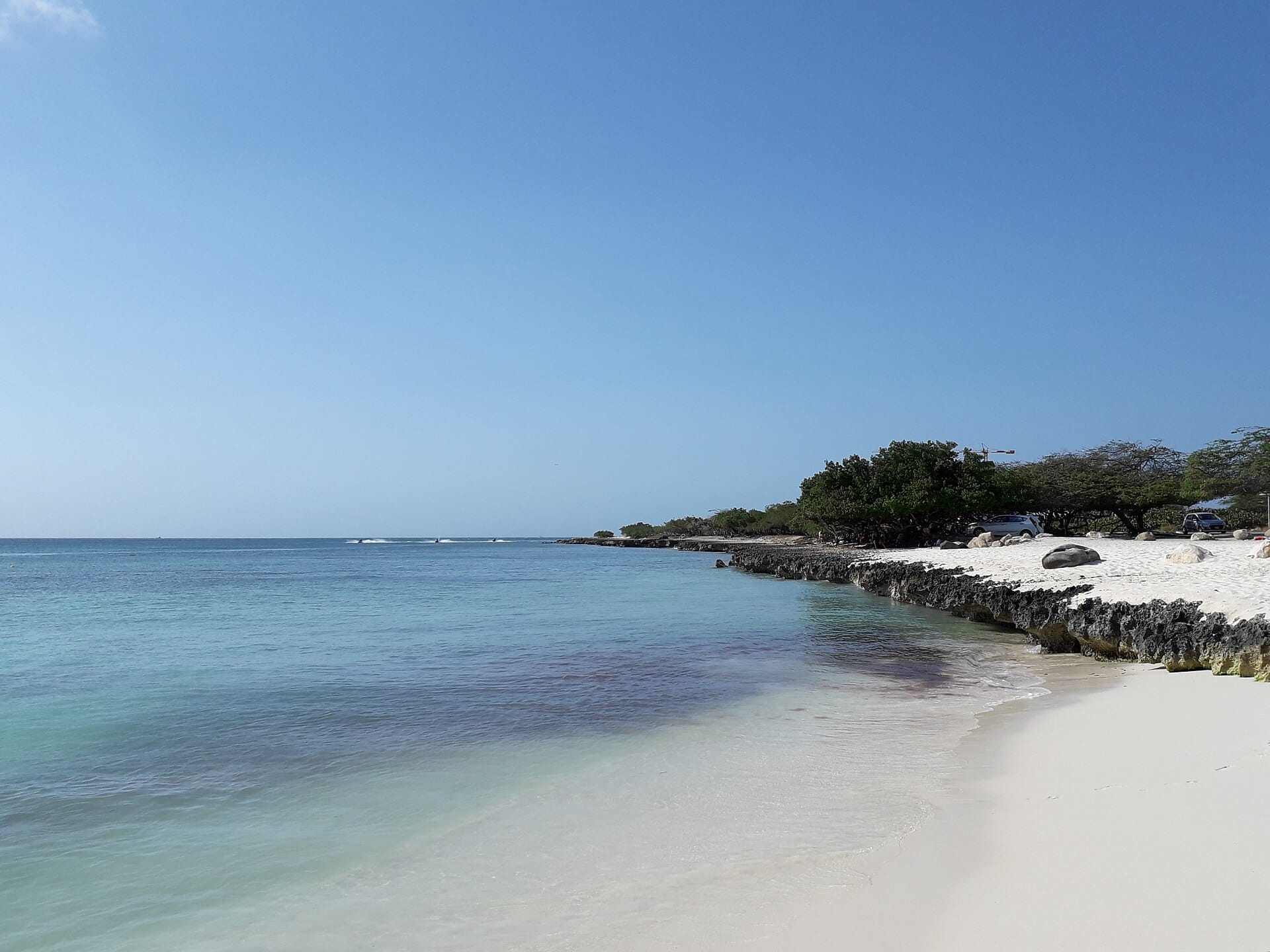
An island some thirty kilometres long, almost rainless and swept by trade winds: Aruba contrasts a west coast of white sand and calm water with a wave-battered east coast of cacti, diorite boulders and painted caves. A week is enough to loop the island, mixing beach time and exploring.

Why choose Aruba in the Caribbean?

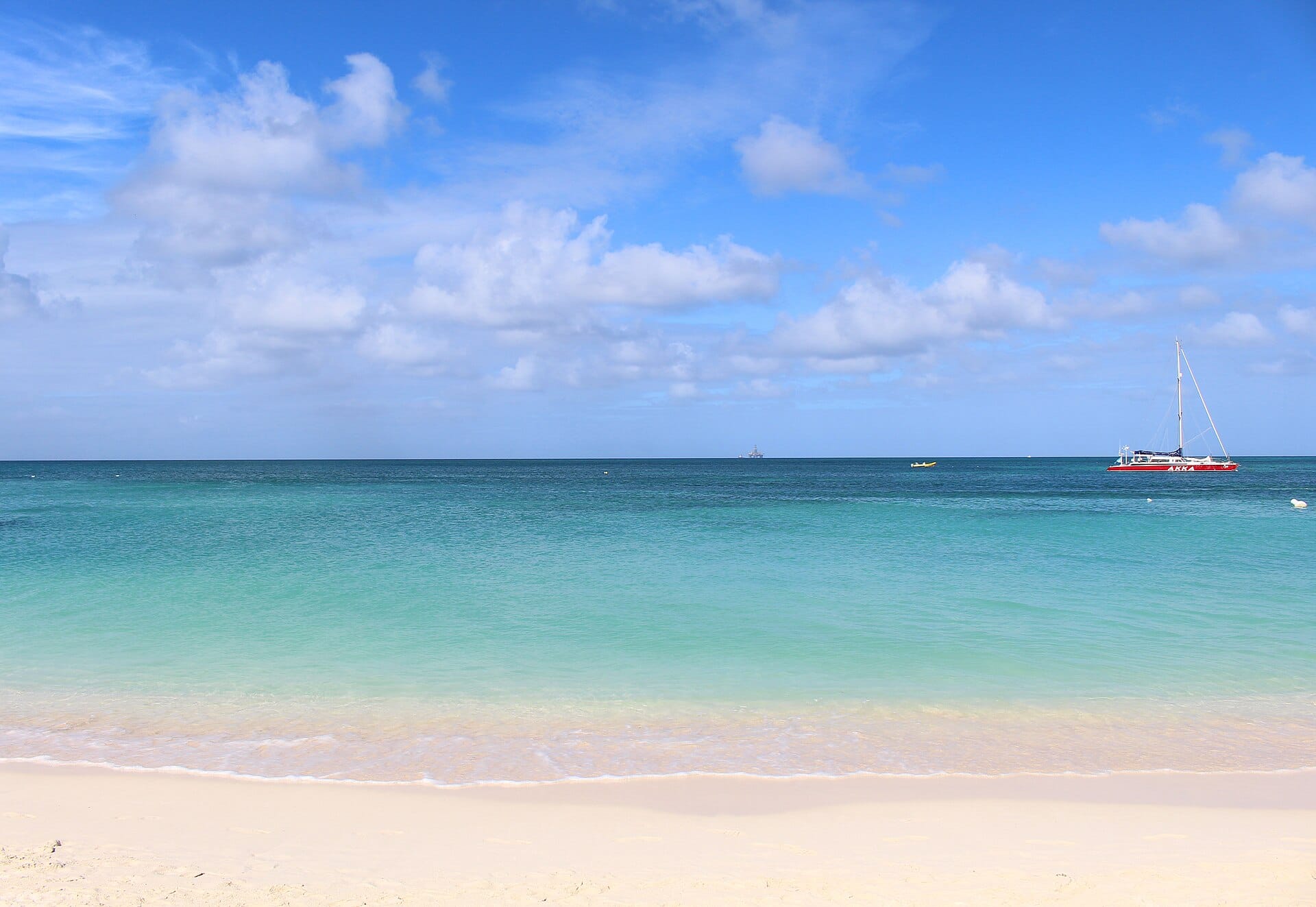
Aruba lies south of the main hurricane zone and gets very little rain, making it one of the most weather-reliable Caribbean destinations all year. Its west coast beaches are among the best known in the region, and Arikok National Park protects a large part of the east of the island.

What to discover in Aruba, area by area?

Oranjestad and the southwest coast

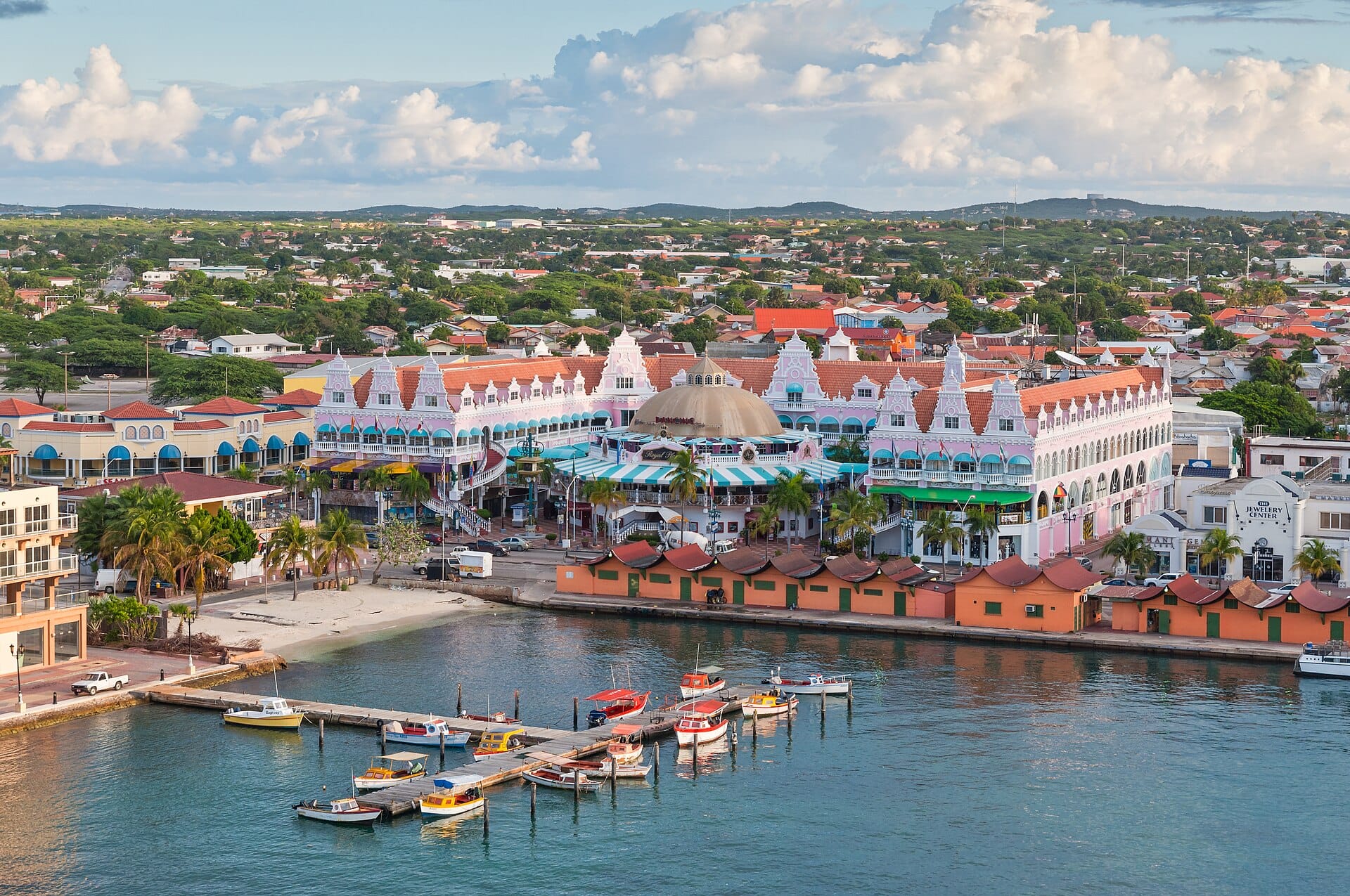
The capital, Oranjestad, takes half a day: colourful Dutch facades, a marina, and Fort Zoutman, the island's oldest building, raised in 1798 next to the Willem III Tower. It houses the Aruba Historical Museum. To the south, towards the airport, Renaissance Island and its flamingos draw visitors, but access is limited to hotel guests or a small number of day passes. Cruise ships dock right in the centre: avoid town on heavy cruise days.

The northwest hotel coast

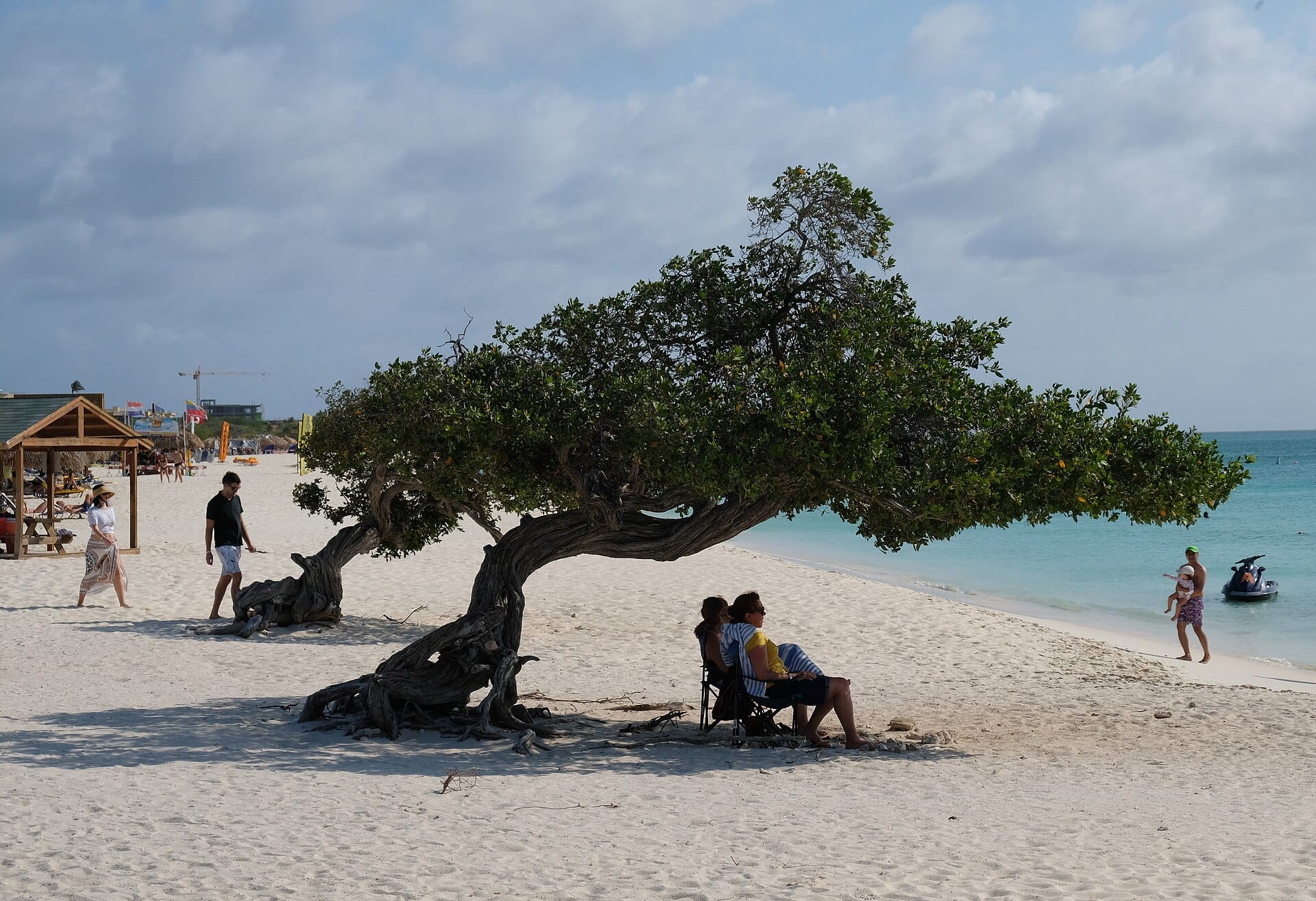
This is where most beach time happens. The low-rise hotels of Eagle Beach leave a wide, uncrowded beach, dotted with fofoti trees bent by the wind; further north, Palm Beach lines up large resorts, beach bars and water sports. Sea turtles nest here for part of the year: respect the marked areas. The Noord district, just inland, gathers restaurants and supermarkets. Steady wind makes Fisherman's Huts, in the north, a well-known windsurfing and kitesurfing spot.

The national park and windward coast

Arikok park protects the arid, rocky east coast: cactus hills, wild goats, the Boca Prins dunes and swell-battered coves where swimming is dangerous. The Fontein and Quadirikiri caves, the latter lit by natural skylights, hold drawings attributed to the Arawaks. The Conchi natural pool, a basin sheltered by rocks, can only be reached by 4x4, on horseback or by a demanding hike. An entrance fee is charged at the park visitor centre. Allow a full day, with plenty of water and an early start.

San Nicolas and the southeast tip

Long a refinery town, San Nicolas has reinvented itself as an open-air gallery: dozens of murals, many created during the Aruba Art Fair, cover its facades. An hour's stroll is enough before heading to Baby Beach, a shallow, sheltered lagoon at the end of the island, ideal with children; neighbouring Rodgers Beach is quieter. Further west, Savaneta, the island's first capital, and the Mangel Halto mangrove offer good shore snorkelling. Allow 30 to 40 minutes' drive from Palm Beach.

The interior and its boulder fields

In the centre of the island, the 165 m Hooiberg is climbed by a long staircase for a view reaching the Venezuelan coast on clear days. The Casibari and Ayo formations, heaps of diorite boulders polished by erosion, take half an hour each on paths and built steps; Ayo keeps petroglyphs. The nearby north coast leads to the Bushiribana gold smelter ruins and the Alto Vista chapel. This loop takes half a day by rental car from the west coast hotels.

Underwater: reefs and wrecks

The calm, clear water of the west coast is ideal for snorkelling straight from shore, at Boca Catalina, Arashi or Malmok. Several wrecks can be reached by diving, sometimes even with mask and snorkel, and visibility often exceeds twenty metres. Half-day catamaran trips usually combine two or three sites. From Europe, flights most often connect through Amsterdam, as Aruba is an autonomous country within the Kingdom of the Netherlands. Use mineral sunscreen to protect the corals.

Cities to visit in Aruba

Featured destinations appear first.
Coming soon.

Aruba in pictures

Aruba's must-sees

Beaches, natural sites and snorkelling spots to spread across a week.

Eagle Beach

Wide beach of white sand and turquoise water, lined with low-rise hotels and the famous fofoti trees shaped by the constant trade winds.

Conchi Natural Pool

Seawater basin sheltered by a ring of volcanic rocks on the east coast, reached after a bumpy 4x4 track.

California Lighthouse

Stone lighthouse at the northwest tip, surrounded by dunes and dry scrub, a popular viewpoint at sunset.

Baby Beach

Shallow, calm lagoon almost enclosed by a breakwater at the southeast end of the island, suited to children and beginner swimmers.

Antilla freighter

German freighter scuttled in 1940 off Malmok, one of the largest wrecks in the Caribbean, visible to snorkelers and divers alike.

Quadirikiri Cave

Cave in Arikok park whose chambers are lit by natural openings in the roof, home to a bat colony.

Casibari rocks

A pile of giant diorite boulders in the centre of the island, with stairs and narrow passages leading to a panoramic lookout.

San Nicolas murals

Dozens of colourful murals by local and international artists, explored on foot in the streets of the former oil town.

Frequently asked questions about Aruba

Eagle Beach or Palm Beach: where to stay in Aruba?
Eagle Beach for a wider, quieter beach lined with modest-sized hotels. Palm Beach for buzz, big resorts, restaurants and water sports. Both are a few minutes apart on the coastal road, and the bus serves them both.
Can you reach the Natural Pool without a 4x4?
Not in a regular car: the track is rough and often banned by rental companies. Options are a guided 4x4 or UTV tour, a horseback ride, or a long, hot hike from the park visitor centre. Go in the morning, when the sea is often calmer.
How do you get to Aruba from Europe?
Most routes connect through Amsterdam, which has direct flights, or through the United States. From France there is no direct flight. Plan a full day of travel and a valid passport.
What are Aruba's fofoti trees?
They are trees of the mangrove family, bent by trade winds that always blow from the same direction. The two most photographed stand on Eagle Beach. They are often confused with divi-divi trees, another bent tree on the island, more common inland.
Is the wind in Aruba a nuisance?
Trade winds blow almost constantly, cooling the days and keeping mosquitoes away, but they can lift sand on open beaches. They delight windsurfers and kitesurfers, especially at Fisherman's Huts, and make the sea rougher on the east coast.
How many days to explore all of Aruba?
A week allows you to mix beach and sightseeing: a day in Arikok park, half a day for San Nicolas and Baby Beach, one for the interior rocks and north coast, a catamaran snorkelling trip and Oranjestad. Four days cover the essentials with a lot of driving.
Do you clear US customs at Aruba airport?
Yes, for flights to the United States: Queen Beatrix airport has US customs preclearance. Formalities happen before boarding, which means more time at the airport, but arrival is then handled like a domestic flight.
Where can you see flamingos in Aruba?
On Flamingo Beach, the beach of Renaissance Island off Oranjestad. Access is reserved for Renaissance hotel guests or a limited number of day passes sold early, which must be booked well ahead in high season.
Which season to choose for Aruba?
The weather is dry and sunny all year. From mid-December to April, crowds and prices peak. From May to November, rates drop noticeably for similar weather, with only occasional showers from October to December.

Plan your trip to Aruba

Day-by-day itinerary, budget, bookings and packing in a single app.
Aperçu de l'application PlanTripNow