Skip to content

Bali travel guide: where to stay, when to go and which route to choose

Bali is 150 km long but changes every 30 minutes on the road: carved rice fields around Ubud, surf beaches and cafes in the south, volcanoes and lakes in the centre, diving coasts in the east. Everywhere, daily offerings and processions set the rhythm of the day.
  • 4 cities

At a glance

Currency
Indonesian Rupiah
Time difference
UTC+8
Visa
Required
Tourist stay of up to 30 days
7-day budget
€665
Per person, comfort profile, excluding international flights.

Why visit Bali?

Bali is a province apart within Indonesia: the only majority-Hindu one in a Muslim country, which has shaped its thousands of temples and its festival calendar. People come for the variety of landscapes in a small area, a low cost of living, a dense tourist infrastructure and a living culture that tourism has not erased.

When to visit Bali

Temperatures, rainfall and crowds month by month, to pick your window.
When to visit Bali
MonthTemperaturesRainCrowdsVerdict
January24 to 31 °C19 dModerateThe heart of the north-west monsoon, about 340 mm: violent late-day downpours and waterlogged rice terraces.
February24 to 31 °C16 dModerateStill very humid, with the southern beaches often littered by debris carried in on the currents.
March24 to 31 °C14 dModerateThe rain eases; Nyepi, the Hindu day of silence, shuts the whole island for 24 hours, airport included.
April24 to 32 °C8 dModerateThe switch to the dry season: still a few storms, but increasingly clear days.
May23 to 31 °C6 dBusyThe start of the best stretch: drier air, clean surf swell at Uluwatu, before the July influx.
June23 to 30 °C4 dBusyThe dry south-east monsoon cools the evenings; clear skies over the volcanoes at dawn, wind in the afternoon.
July22 to 29 °C3 dPackedPeak visitor numbers: European and Australian school holidays, the roads of Ubud and Canggu gridlocked.
August22 to 29 °C2 dPackedThe driest month, about 20 mm; cool nights at altitude and villa prices at their peak.
September22 to 30 °C3 dBusyStill dry and sunny, the crowd receding after the school term starts: arguably the best trade-off of the year.
October23 to 31 °C7 dModerateThe first showers return and humidity rises; rates drop back noticeably.
November24 to 31 °C11 dModerateThe rainy season settles in properly; near-daily late-afternoon storms, mornings still clear.
December24 to 31 °C16 dBusyVery wet, yet Christmas and New Year bring back strong Indonesian and Australian demand.
Source: Climates to Travel (climat de Bali, sud de l'ile / Denpasar) recoupe avec Weather Atlas ; temperatures de la mer d'apres Climates to Travel. Les hauteurs autour du Batur et de l'Agung sont plus fraiches et plus arrosees. Jours de pluie estimes. Releve septembre 2026.

What to discover in Bali?

Ubud and the cultural centre

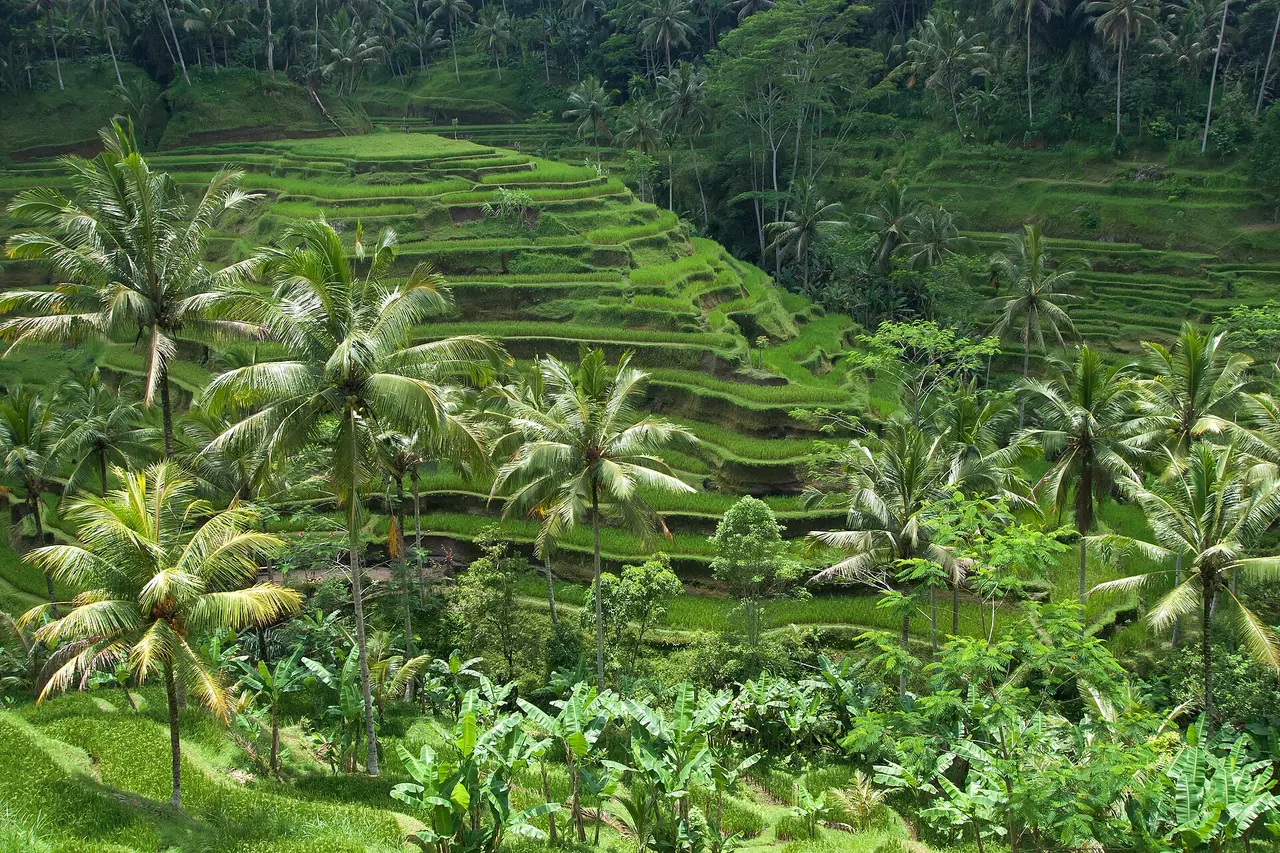
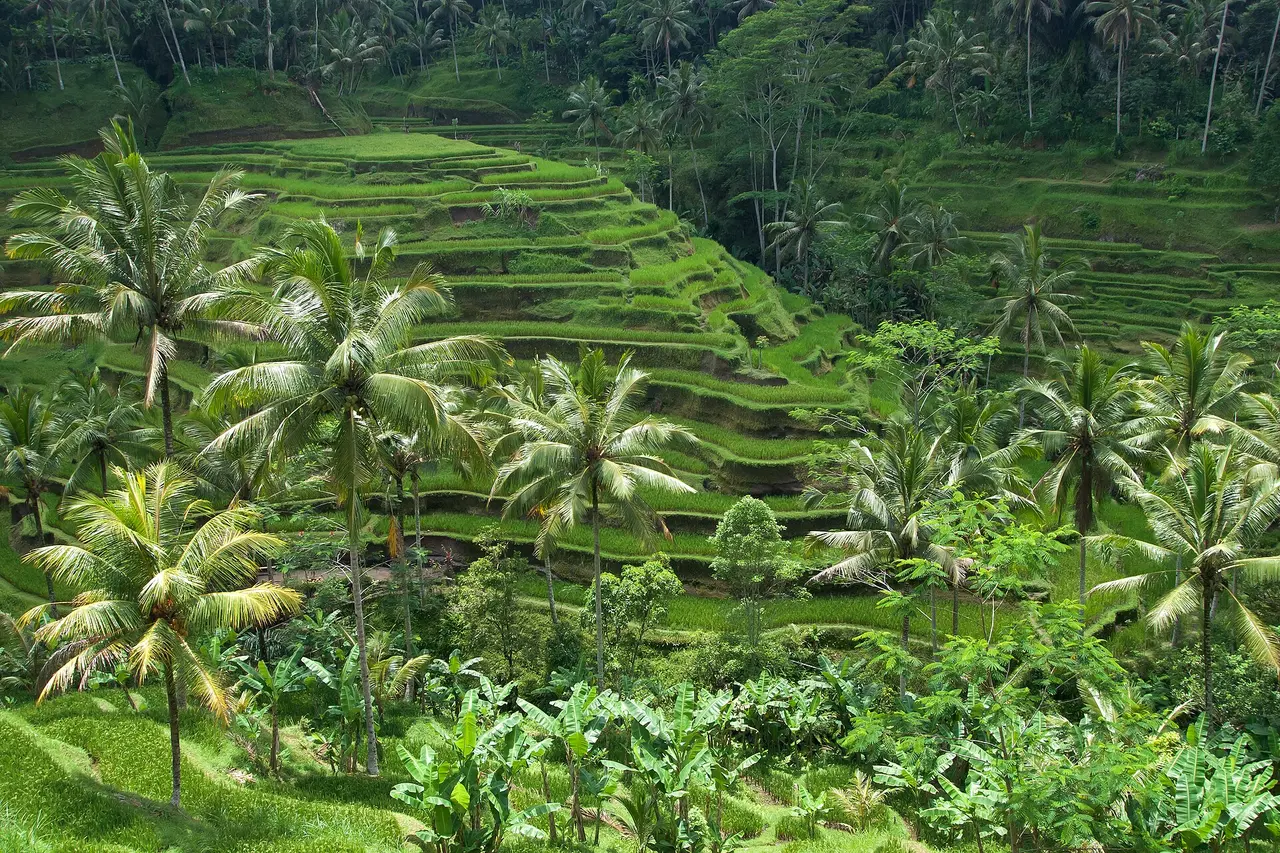
Ubud, inland an hour from the airport, is the artistic heart of the island. You see the Tegallalang rice terraces at daybreak, the monkey forest, a legong or kecak dance show at the palace in the evening. Around it: the Tirta Empul and Gunung Kawi temples, the Tegenungan waterfall, the craft villages of Mas and Celuk. Plan a day driver, about 40 euros, as traffic is slow and distances deceptive. Three nights minimum.
The south: Canggu, Seminyak, Uluwatu

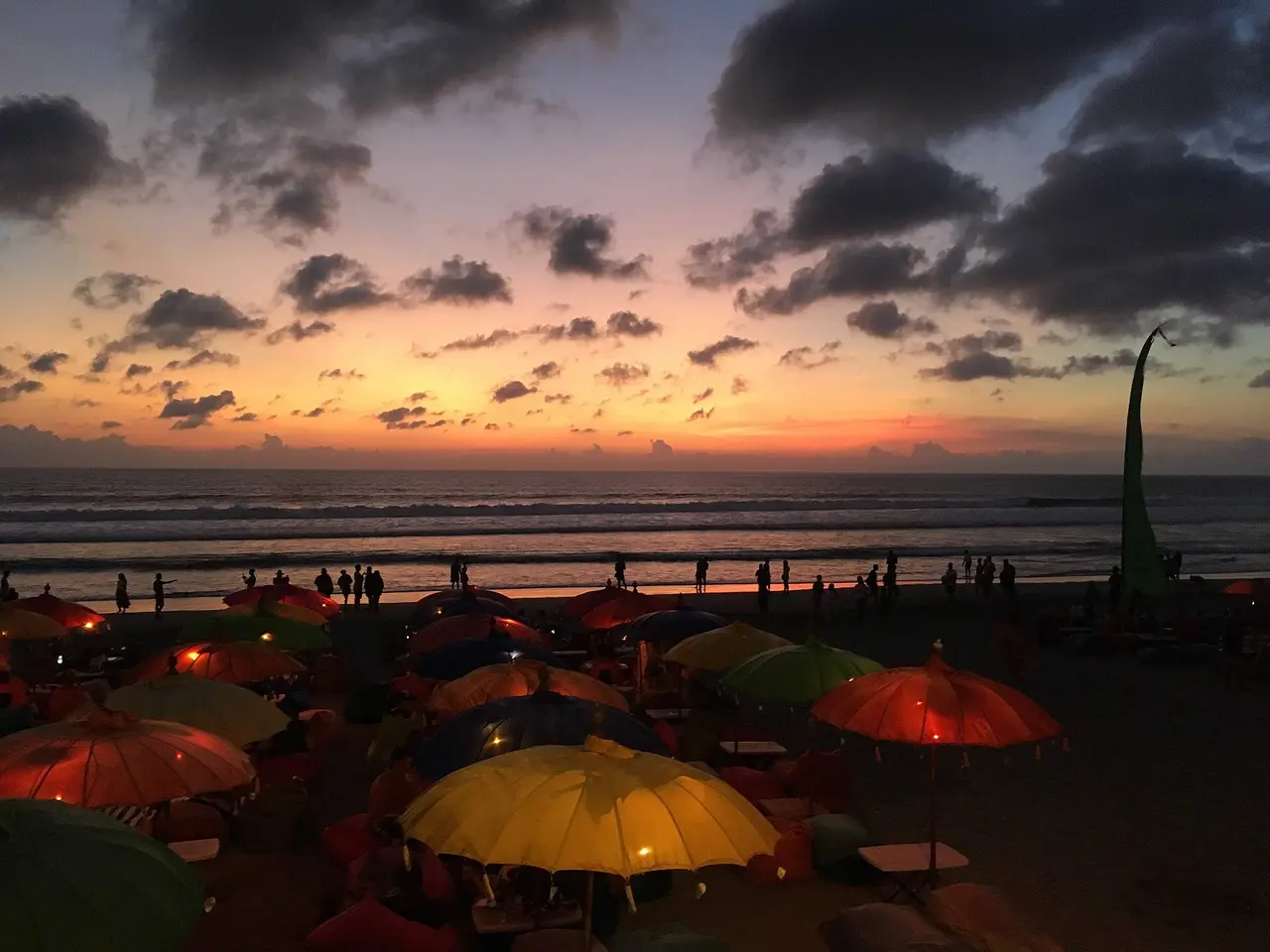
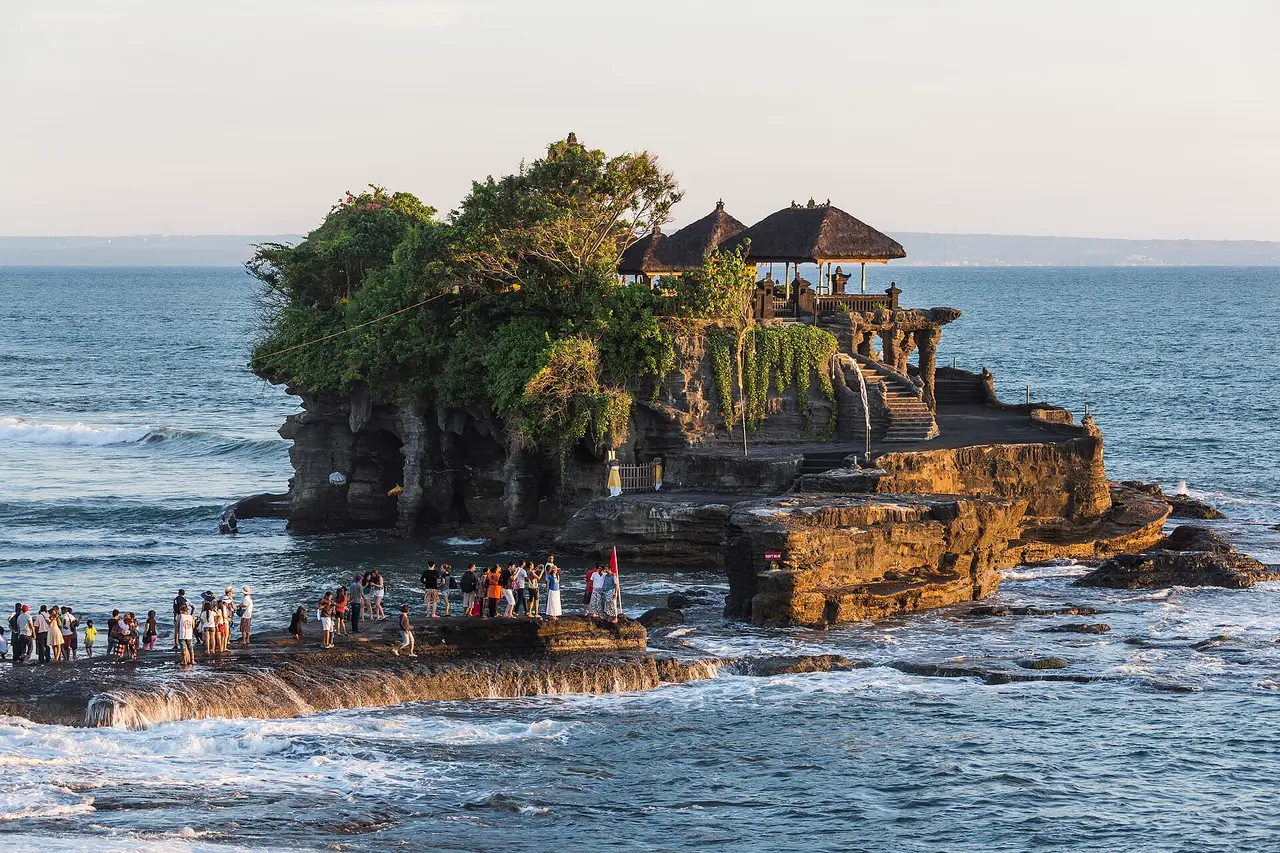
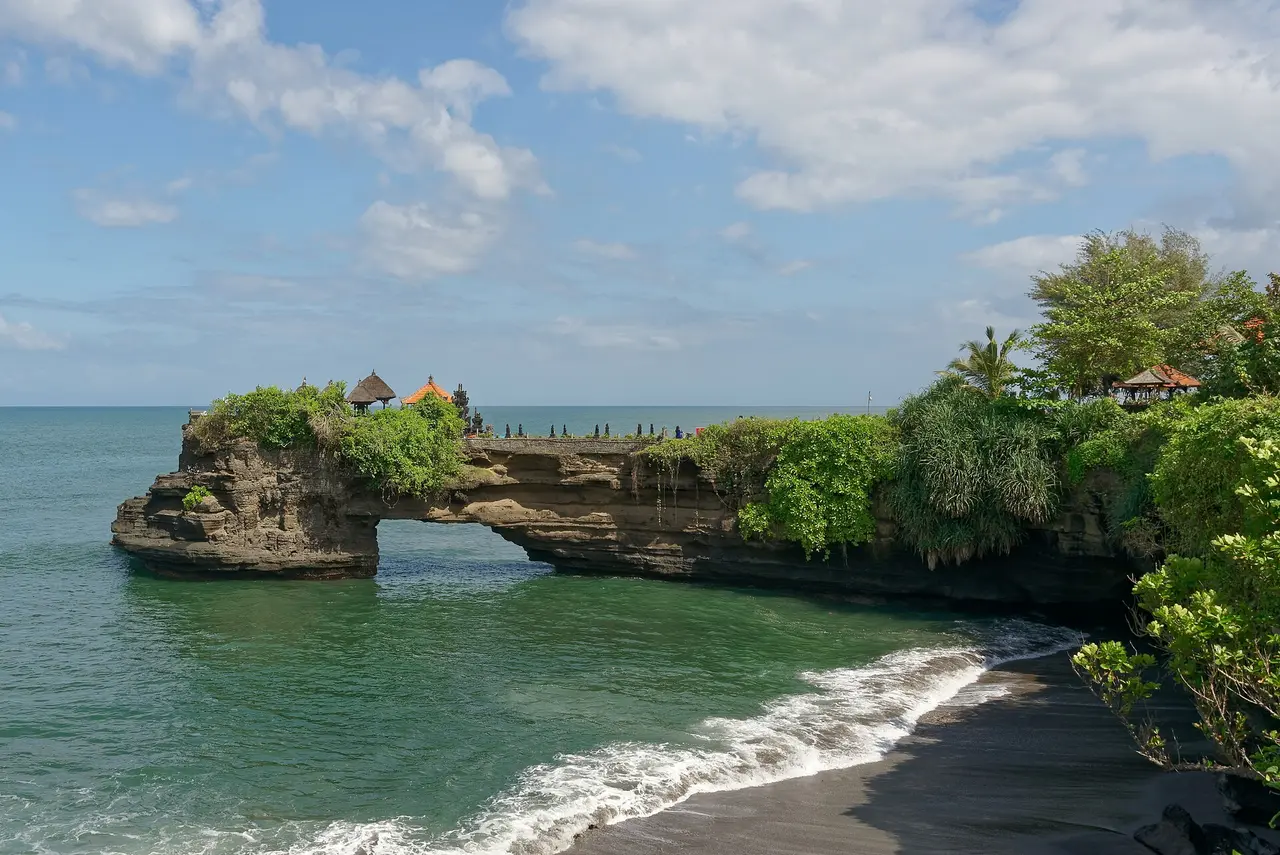
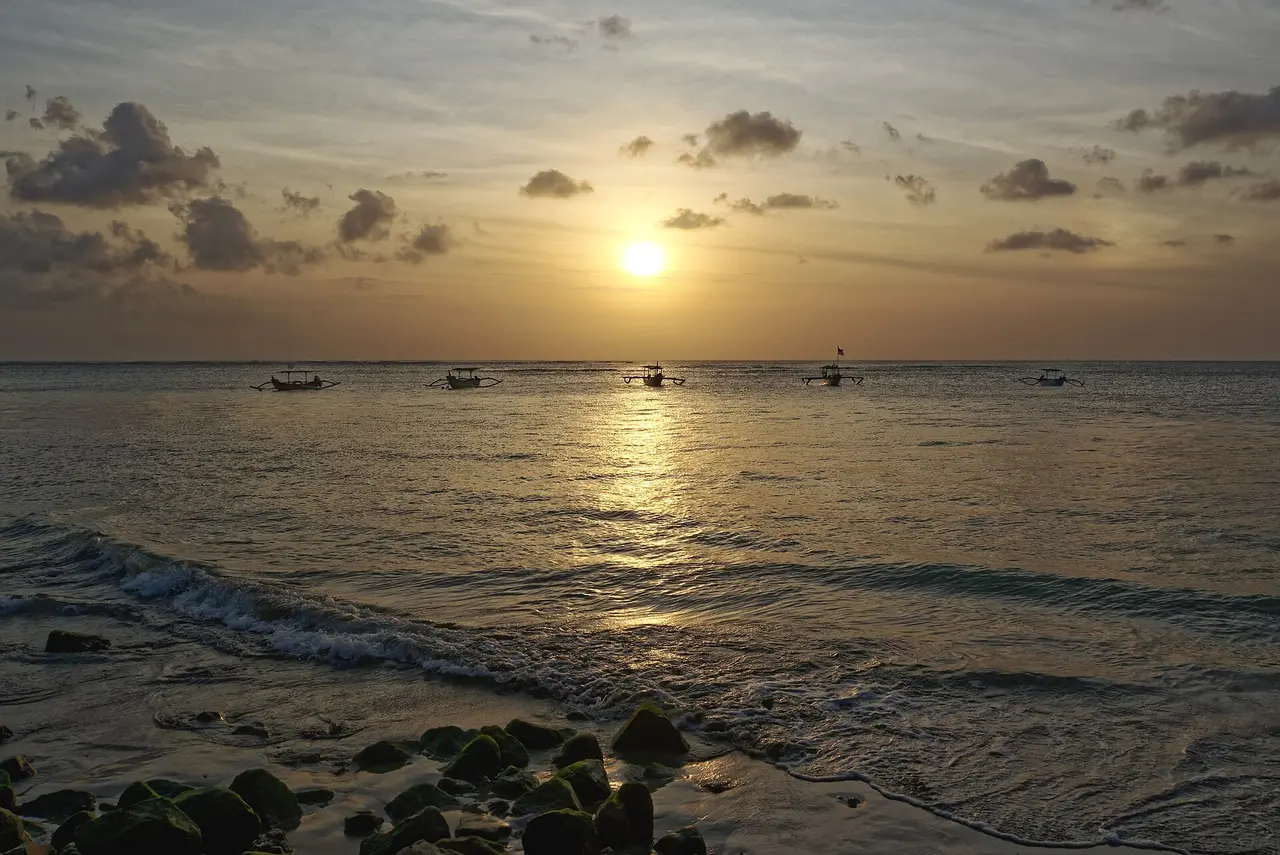
The south holds the beach and nightlife scene. Canggu and Seminyak line up cafes, shops and grey-sand beaches where you learn to surf, with sunsets at the Tanah Lot temple. The Bukit peninsula, further south, offers limestone cliffs and beaches below such as Padang Padang, plus the Uluwatu temple on the cliff edge, with its kecak dance at sunset. Traffic to the airport can take double the stated time.

The east: Sidemen, Amed and Tulamben

The east stays rural and calm. The Sidemen valley rolls out rice fields below the Agung volcano, with songket cloth weavers and walks between the crops. On the coast, Amed and its black volcanic sand beaches give access to the wreck of the USS Liberty, sunk in 1963, at Tulamben, reachable by snorkelling from the beach. The Tirta Gangga water temple and the Ujung floating palace round off the stop. Allow two to three nights.

The north and the mountains

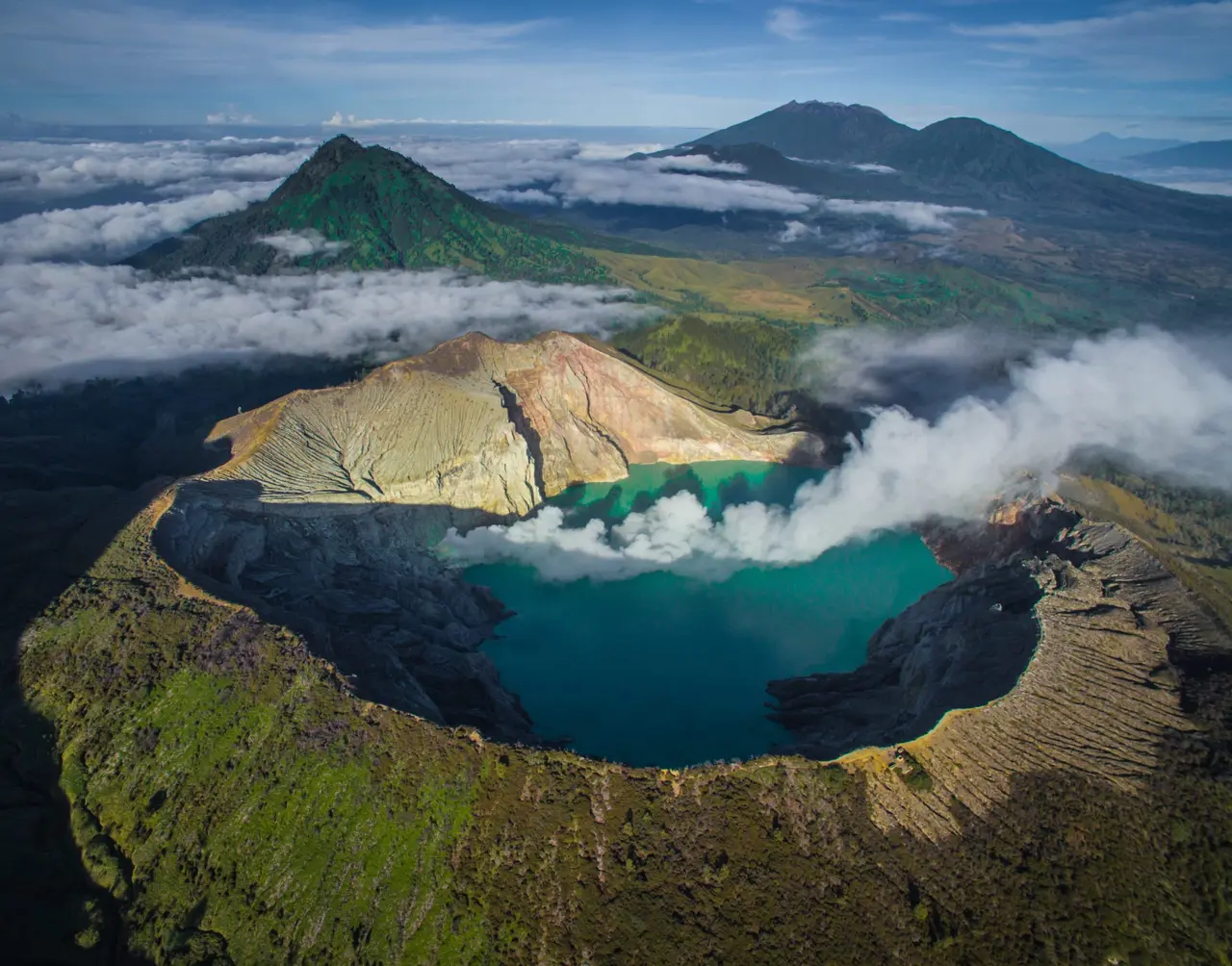
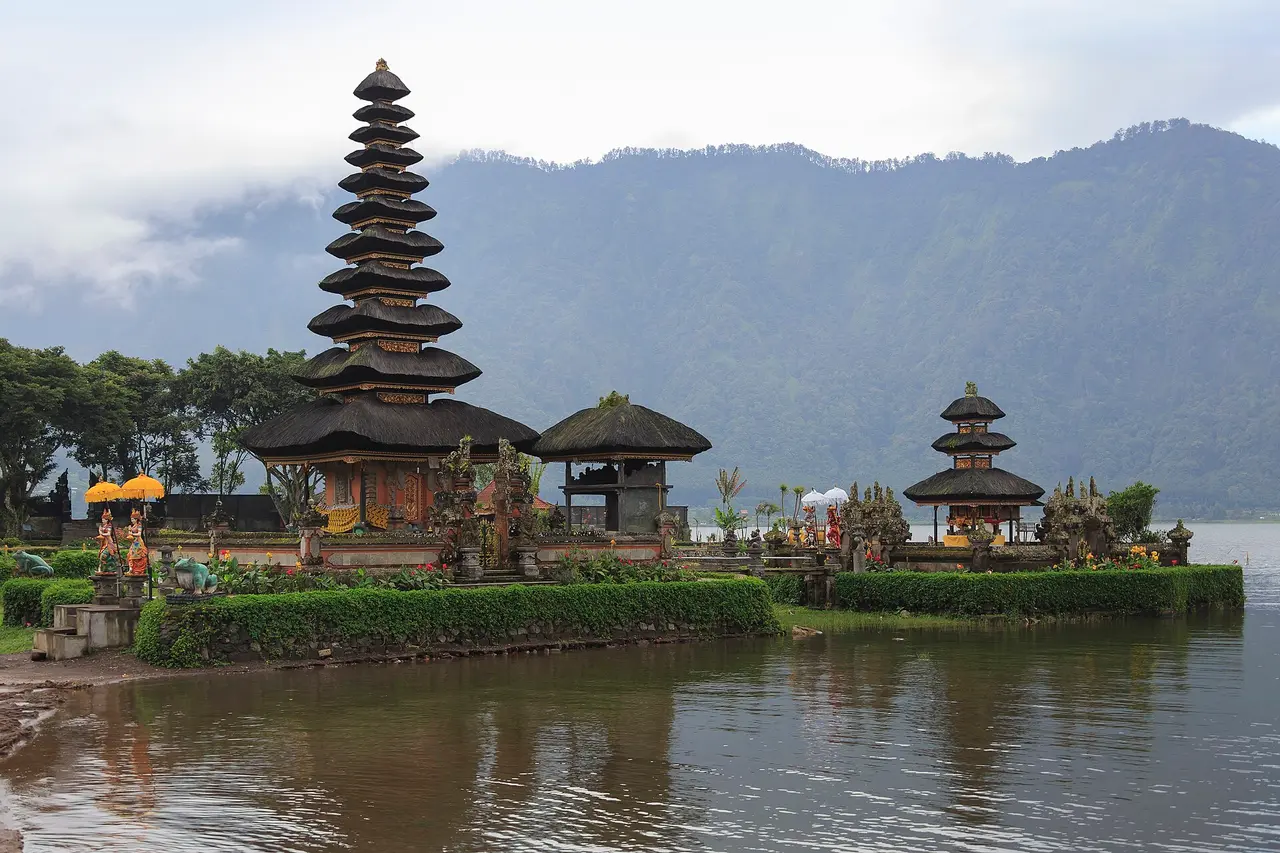
The mountainous centre is reached by roads climbing towards Kintamani and Lake Batur, in a caldera, where you set off before dawn to climb the Batur volcano, 1,717 m, for sunrise. Further west, Munduk and Bedugul, at 1,200 m, offer cool air, coffee and clove plantations, waterfalls and the Pura Ulun Danu Beratan temple by a lake. The north coast, around Lovina, allows you to see dolphins offshore. The volcanoes here are more modest than those of neighbouring Java.

Nusa Penida, Lembongan and Ceningan

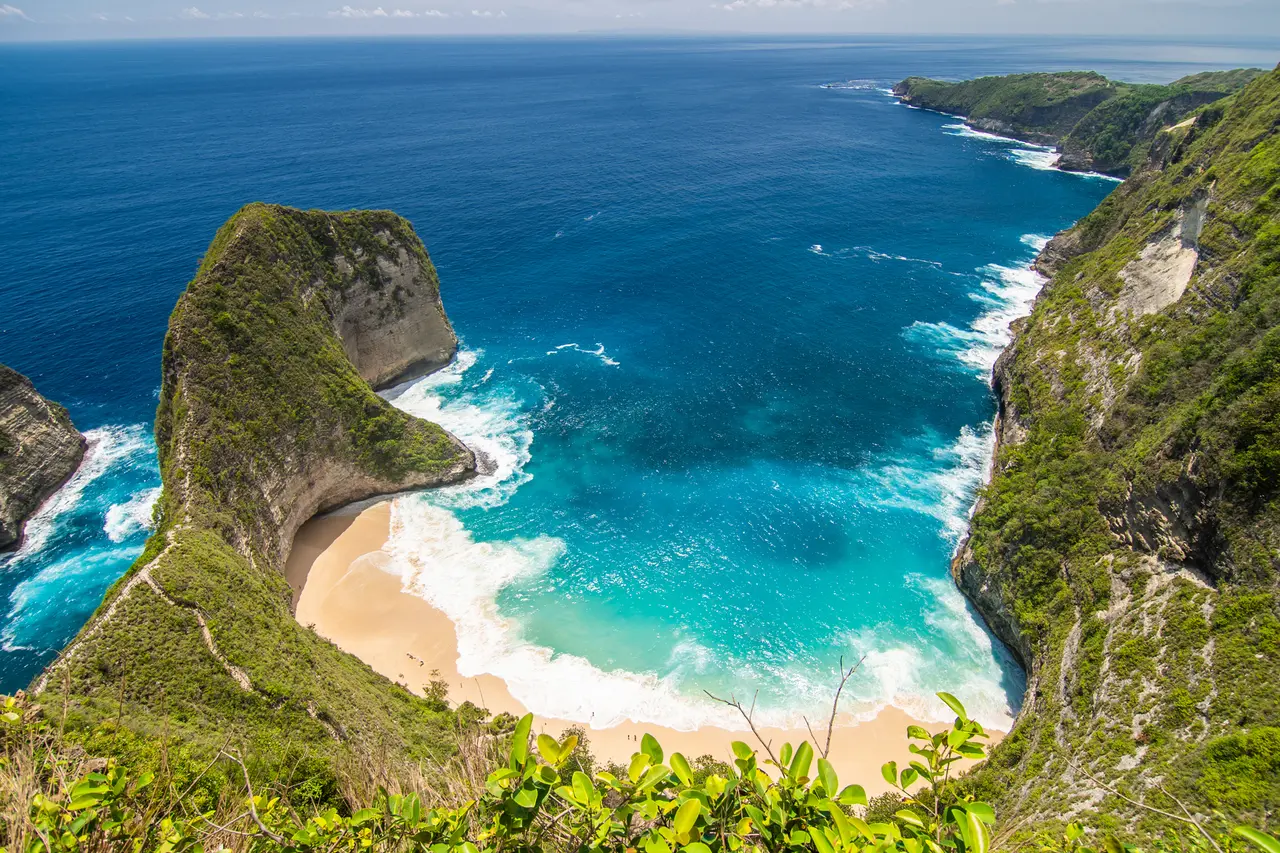
These three islands off the east coast are reached by speedboat from Sanur, a 45-minute crossing, sometimes cancelled in January and February when the sea is too rough. Nusa Penida, the largest and wildest, lines up the dinosaur-head Kelingking cliffs, the Angel's Billabong natural pool and a dive site with manta rays. Its roads are rough: hire a driver rather than a scooter. Two nights on Penida, one on quieter Lembongan.

Festivals, temples and Balinese life

The Balinese calendar has 210 days and multiplies ceremonies: Galungan and Kuningan every six months, when the streets bristle with bamboo penjor poles, and above all Nyepi, the Hindu day of silence, in March, when the whole island stops for 24 hours, airport included. To enter a temple, a sarong is compulsory, often lent at the entrance. The canang sari offerings, placed on the ground three times a day, are not to be stepped on.

Cities to visit in Bali

Featured destinations appear first.

How much it costs

Per person per day, excluding international travel.
Budget
34 €/ day
1 876 € for 2 people, 7 days, return flights included
Accommodation
12 €
Food
9 €
Local transport
5 €
Sights and activities
8 €
Comfort
95 €/ day
2 730 € for 2 people, 7 days, return flights included
Accommodation
38 €
Food
22 €
Local transport
15 €
Sights and activities
20 €
Premium
265 €/ day
5 710 € for 2 people, 7 days, return flights included
Accommodation
120 €
Food
60 €
Local transport
30 €
Sights and activities
55 €
Prices checked: Relevé septembre 2026. Sources : bali.com, baliholidaysecrets.com et kala.surf (Bali trip cost 2026), retours d'hebergeurs Ubud et Canggu. Prix hors haute saison (hors juillet-août et fin d'année). Backpacker = chambre en guesthouse ou dortoir ; comfort et premium = chambre ou villa partagée a deux, par personne ; transport local inclut un chauffeur à la journée pour comfort et premium. Vol A/R Paris-Denpasar estimé 700 EUR/personne en épaule, 1000 EUR/personne pour premium.

Entry, health and safety

For FR travellers

Entry requirements

Visa required

Visa à l'arrivée (VOA) obligatoire pour un séjour touristique, environ 500 000 IDR (autour de 30 EUR), valable 30 jours et prolongeable une fois de 30 jours. Un e-VOA peut être obtenu avant le départ. Billet retour ou de continuation exige. Passeport valable au moins 6 mois à la date d'entrée.

Stay allowed for up to 30 days.

Passport valid for 6 months beyond your return date.

Health

Required: Fièvre jaune uniquement en cas de provenance d'un pays a risque de transmission.

Advised: Être a jour du calendrier vaccinal français. Selon le séjour : hépatites A et B, typhoïde, rage et encéphalite japonaise.

Pas de risque de paludisme à Bali. Forte recrudescence de la dengue sur tout le territoire indonésien. Rage présente, des dizaines de cas signalés à Bali : éviter tout contact avec chiens et singes, consulter en urgence après morsure ou griffure. Eau du robinet non potable. Taxe touristique de 150 000 IDR par entrée à Bali. Île en vigilance normale, volcans Agung et Batur sous surveillance, zone sismique.

Safety

Increased caution

Emergency

112

Checked in septembre 2026 against the official source. Entry rules change: check the official source before you travel, it alone is authoritative.

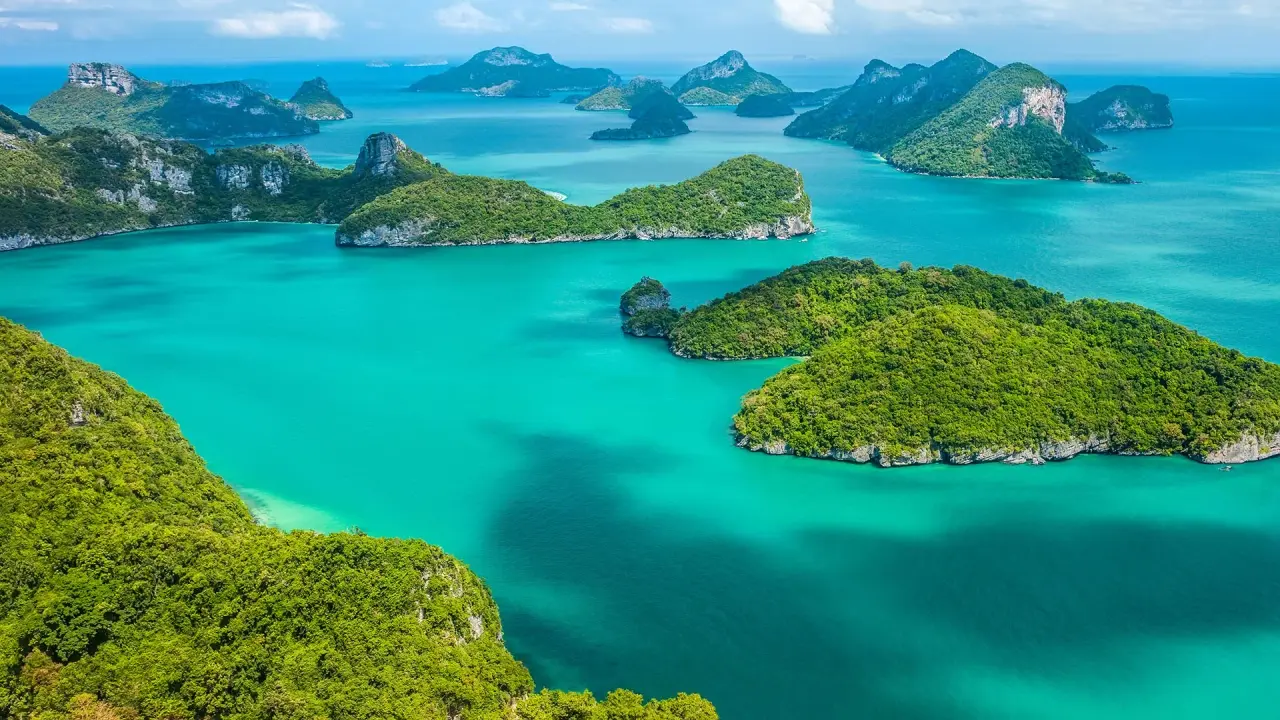
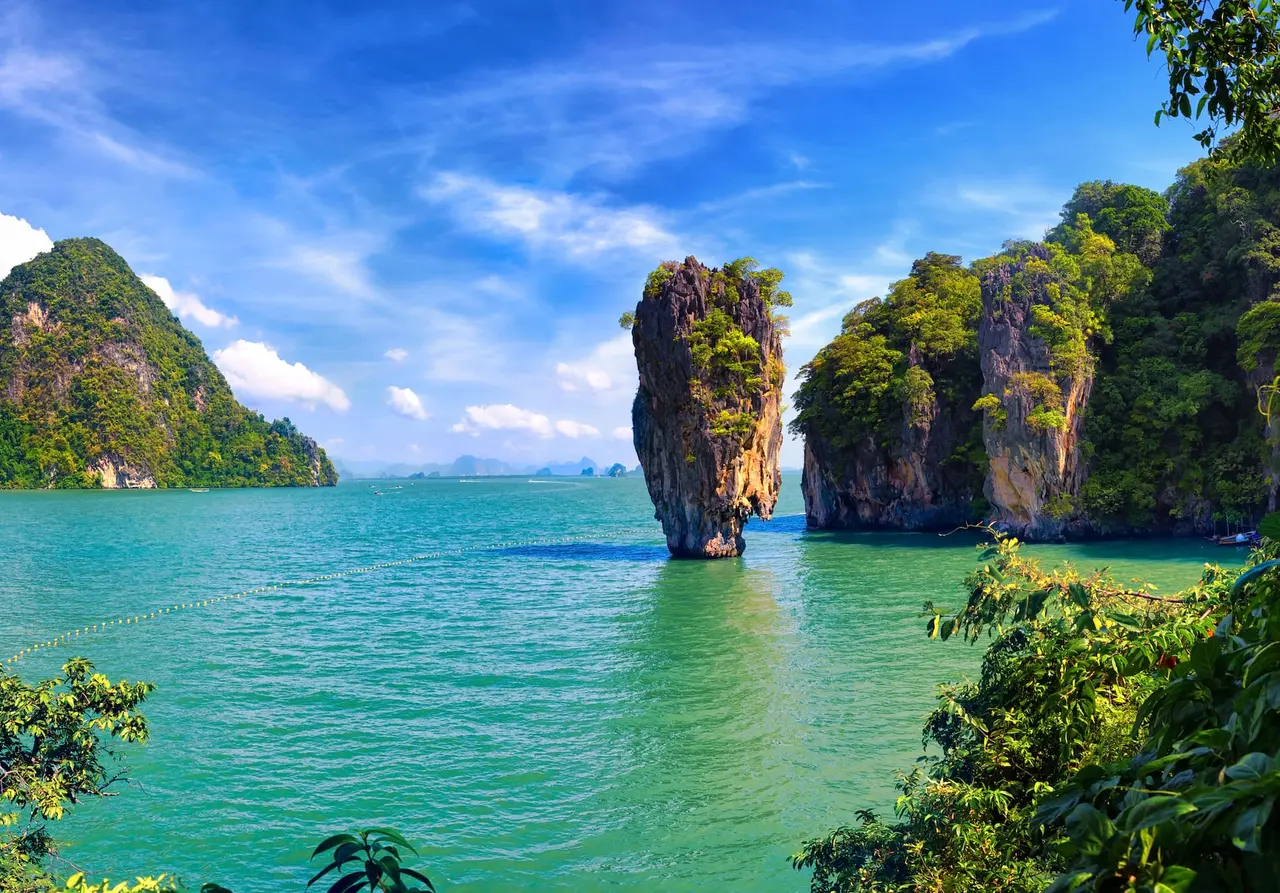
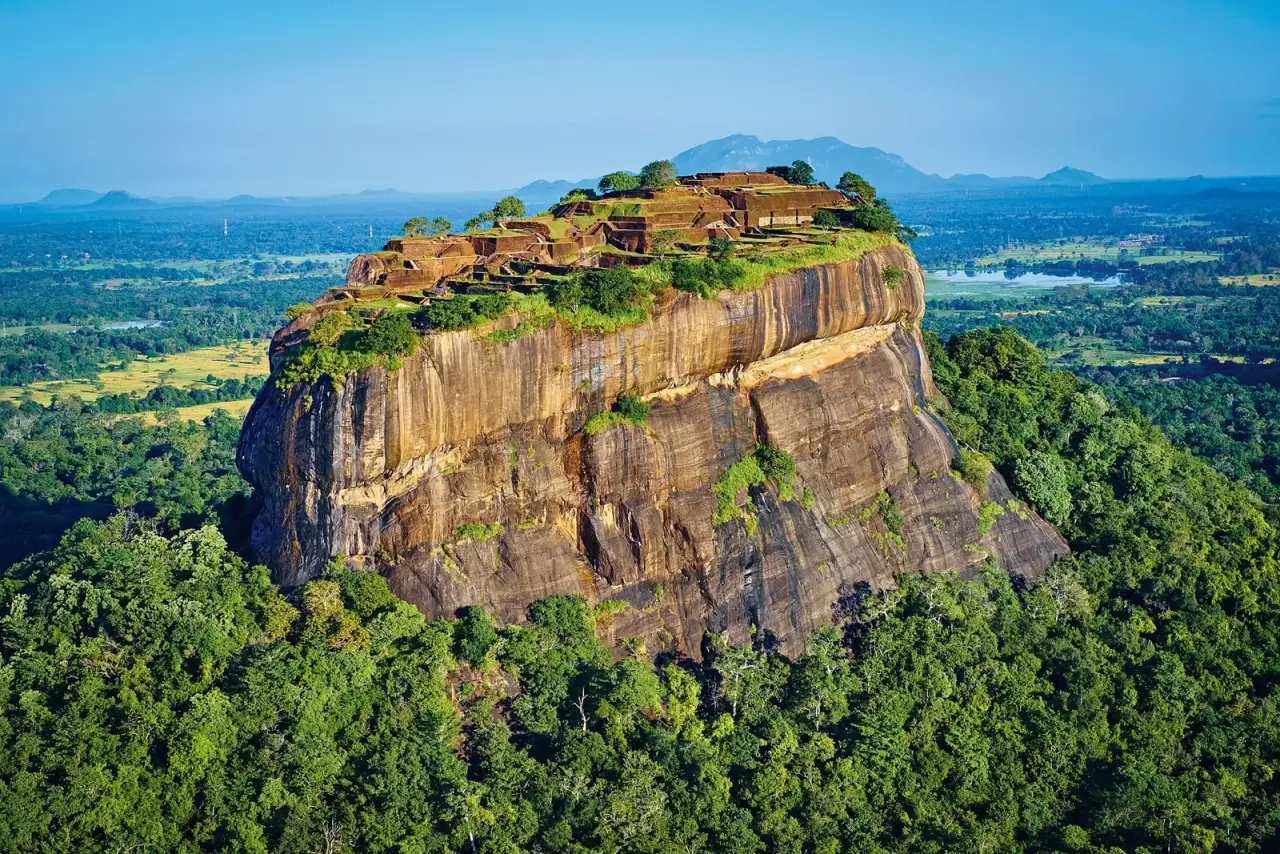
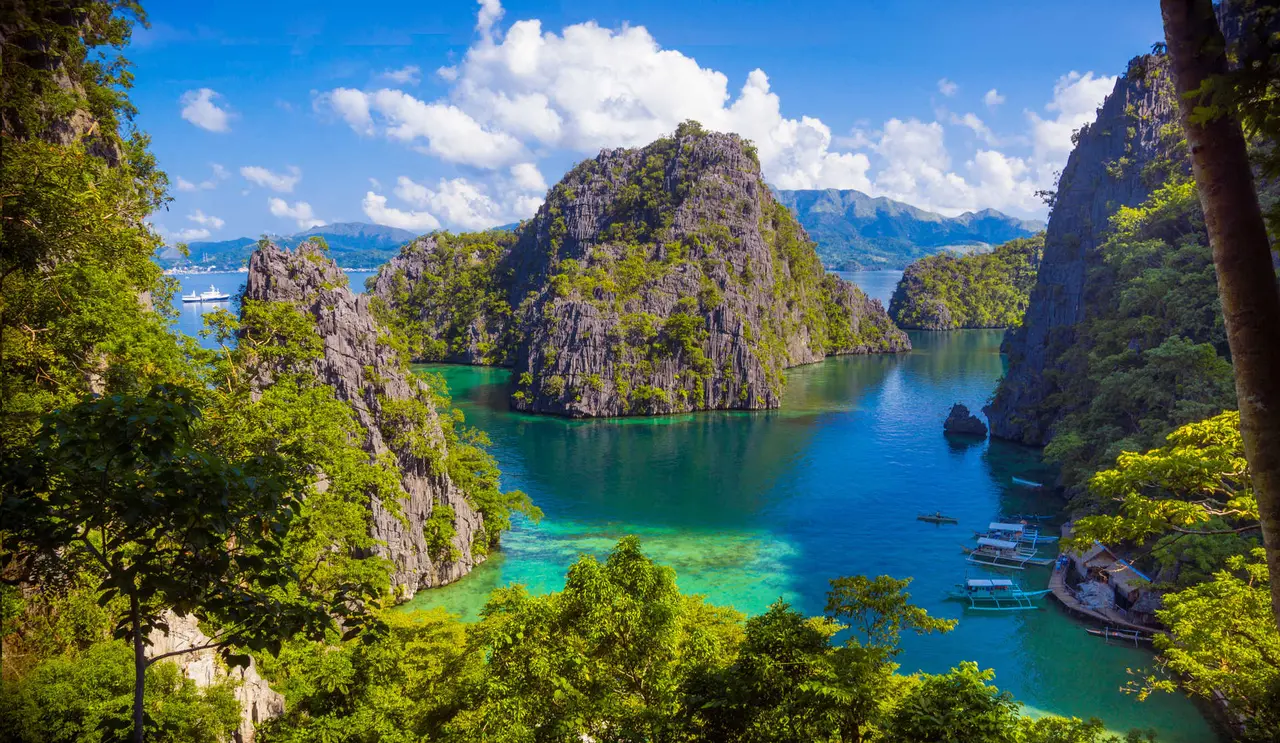
Bali in pictures

Photo credits : Vyacheslav Argenberg, CC BY 4.0, Wikimedia Commons ; CEphoto, Uwe Aranas, CC BY-SA 3.0, Wikimedia Commons ; Alexey Komarov, CC BY 3.0, Wikimedia Commons ; yeowatzup, CC BY 2.0, Wikimedia Commons

Bali's must-sees

Named sites to spread by the region or regions you choose, a temple, a rice field or a volcano.

Tegallalang rice terraces

Tiered terraces near Ubud, irrigated by the traditional subak system listed by UNESCO, best seen at daybreak.

Tirta Empul

A 10th-century water temple near Tampaksiring, where the faithful purify themselves in a series of spring-fed pools.

Uluwatu temple

A sanctuary on a 70 m cliff in the south of the island, with a kecak dance performed every evening at sunset.

Tanah Lot

A small temple on a rock reachable at low tide, one of the busiest sunset spots in Bali.

Mount Batur

A 1,717 m volcano in a caldera, climbed at night in two hours for sunrise above the clouds and Mount Agung.

Munduk waterfalls

Falls deep in the forest of the northern highlands, including twin waterfalls linked by an hour-long trail.

Kelingking, Nusa Penida

A white dinosaur-head cliff overlooking an isolated beach, reached by a very steep staircase.

Besakih temple

Bali's largest temple complex, on the slopes of Mount Agung, open except during periods of volcanic activity.

Ubud Monkey Forest

A wooded sanctuary sheltering three temples and hundreds of long-tailed macaques, skilled at snatching glasses and bottles.

Padang Padang beach

A small cove on the Bukit peninsula, reached through a narrow gap in the rock, known for its surf break.

Jatiluwih rice terraces

A vast UNESCO-listed terrace landscape in the centre-west, less visited than Tegallalang, with marked trails.

Bali travel basics

Visa
A visa on arrival (VOA) is required, about 30 euros, 30 days, extendable once; an e-VOA is possible before departure.
Tourist tax
A 150,000 IDR tax, about 7.50 euros, per entry to Bali, paid online before arrival or at the airport.
Getting around
A private day driver, about 40 to 50 euros; ride-hailing apps work but are restricted in some areas by local taxi groups.
Scooter
An international driving permit is required and increasingly checked; a helmet is mandatory, traffic is heavy and accidents frequent.
Tap water
Not drinkable; use refill stations to cut down on plastic bottles, poorly managed on the island.
Rabies
Present in Bali, several human cases a year; avoid all contact with stray dogs and monkeys, seek urgent care after a bite or scratch.
Nyepi
The Hindu day of silence in March: no going out, lights off, airport closed for 24 hours; check the date before booking.
Temple dress
A sarong and sash are compulsory, often lent or rented at the entrance; shoulders covered, women barred during menstruation.
Jellyfish and currents
Jellyfish possible late in the dry season on the south coast; strong currents at Nusa Penida and some Bukit beaches, swim in patrolled areas.
Cash
Cards work in tourist areas; carry cash for markets, warungs and the entrance fees of temples and waterfalls.
Agung
An active volcano whose activity can close Besakih and disrupt the airport; the 2017-2019 eruption caused several closures.

Similar regions

Other regions you might like as much as Bali.

Similar destinations

Other countries you might like as much as Bali.

Bali FAQ

How many days for Bali?
A week for a first look, combining two regions, for example Ubud and the south, or the east and the north. Ten to fourteen days to add Nusa Penida and the mountains without spending your days on the road.
Where to stay: Ubud, Canggu or Seminyak?
Ubud for culture, rice fields and a slower pace. Canggu for surf, cafes and a young crowd. Seminyak for beaches, restaurants and upmarket hotels. Many split their stay between two of these bases.
Do you need a visa for Bali?
Yes: the visa on arrival is required for a tourist stay, about 30 euros, valid for 30 days and extendable once. An onward ticket and a passport valid for six months are required.
Can you ride a scooter in Bali without a motorbike licence?
In principle, no: you need an international driving permit showing the two-wheel category, increasingly checked at police stops and required by insurers. Scooter accidents are the leading cause of injury among travellers on the island.
Nusa Penida as a day trip or an overnight?
As an overnight: the crossing, the rough roads and the distance between sites make a day trip exhausting and frustrating. Two nights on the spot let you see Kelingking, Angel's Billabong and the mantas without rushing.
When should you go to Bali to avoid rain and crowds?
The dry season runs from April to October. July and August are dry but packed and expensive. The best trade-offs are May, June and September: stable weather, reasonable prices, thinner crowds.
What actually happens during Nyepi?
For 24 hours, no one goes out, shops and the airport close, lights stay off in the evening, mobile television and internet are sometimes cut. Tourists must stay within their accommodation, where service runs at a minimum.
Should you worry about the Agung volcano?
Agung is intermittently active; its last eruptive phase, between 2017 and 2019, closed the Besakih temple and the airport several times. Follow the alert level from the Indonesian volcanology centre before and during the trip.
Is Bali a safe destination?
Yes overall, at normal vigilance, and Bali is not classified differently from the rest of the country. The most real risks are scooter accidents, petty theft in tourist areas, strong sea currents and, more rarely, volcanic and seismic activity.

Plan your trip to Bali

Day-by-day itinerary, budget, bookings and packing in a single app.
Aperçu de l'application PlanTripNow