Skip to content

Indonesia travel guide: when to go, budget and itineraries

From Bali to the Komodo dragons, Indonesia stretches across 17,000 islands, some forty active volcanoes and cultures that shift from one coast to the next. Travellers come for the rice fields, the diving and the temples, knowing the distances force you to pick a region rather than chase everything.
  • 7 cities · 7 regions

At a glance

Currency
Indonesian Rupiah
Time difference
UTC+7 à UTC+9
Visa
Required
Tourist stay of up to 30 days
7-day budget
€504
Per person, comfort profile, excluding international flights.

Why visit Indonesia?

Indonesia packs pre-dawn volcano climbs, the world's largest Buddhist temple at Borobudur and some of the planet's best diving around Komodo and Raja Ampat into a single trip. The cost of living stays low, the dry season runs from April to October across Bali and Java, and a one to two-hour domestic flight is enough to hop between islands.

When to visit Indonesia

Temperatures, rainfall and crowds month by month, to pick your window.
When to visit Indonesia
MonthTemperaturesRainCrowdsVerdict
January25 to 31 °C19 dQuietPeak of the wet season: daily late-afternoon downpours, vivid green rice fields and rock-bottom rates once the New Year week is over.
February25 to 31 °C18 dQuietThe wettest month on the south coast, with choppy seas and a heavy swell for surfers around Nusa Dua.
March25 to 31 °C20 dQuietRain lingers and, around Nyepi, the whole island shuts down for twenty-four hours: no flights, no outings, no lights.
April25 to 31 °C12 dModerateThe turn toward the dry season: showers thin out, the landscape stays green, and it is the smart window before the June price rise.
May25 to 31 °C8 dModerateDrier air, superb underwater visibility off Amed and Menjangan, and prices have not yet taken off.
June24 to 30 °C7 dBusyHigh season opens with the Bali Arts Festival in Denpasar; book early for the Gilis and Komodo.
July24 to 29 °C4 dPackedPeak crowds, trade winds that cool the evenings, and queues at the most photographed temples.
August24 to 29 °C3 dPackedThe driest, windiest month; Independence Day on 17 August livens up every village but clogs roads and ferries.
September24 to 30 °C3 dBusyThe year's best compromise: clear skies, calm seas for the Nusa Penida manta rays, and thinning crowds.
October24 to 31 °C6 dModerateThe first transitional showers, rising heat and rates that ease back from mid-month.
November25 to 32 °C10 dModerateThe monsoon returns on the hottest daytime month; the Munduk and Sekumpul waterfalls regain their flow.
December25 to 31 °C16 dBusySteady rain, yet a heavy influx and top prices from the 20th onward for the year-end holidays.
Source: Cadrage sur l'axe touristique Bali / Nusa Tenggara / sud de Java (plaine littorale) : une moyenne nationale n'a pas de sens sur un archipel de 5000 km. Normales 1991-2020 station de Denpasar, climatestotravel.com recoupé avec climate-data.org et weather2travel.com, relevé septembre 2026. Sumatra, Kalimantan et la Papouasie suivent d'autres régimes de pluie.

What to see in Indonesia

Bali, the gateway to the trip

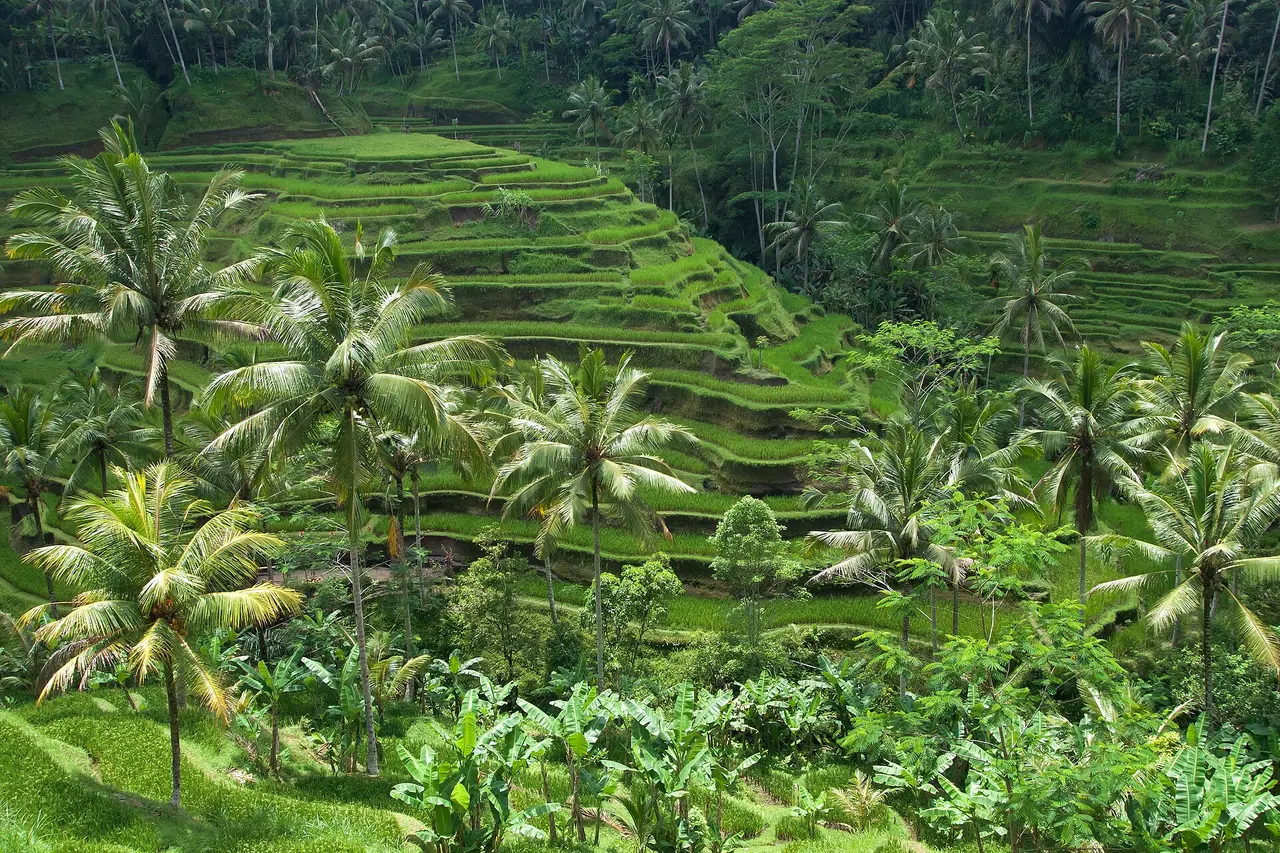
A small island of 5,600 km2, Bali holds most of the country's tourist infrastructure. The south (Canggu, Seminyak, Uluwatu) revolves around beaches and restaurants; Ubud, an hour inland, works as a cultural base with its rice fields and temples. Plan at least four nights so you are not stuck on the road, and avoid south-north transfers at rush hour, when 40 km can take two hours.

Java, volcanoes and the great temples

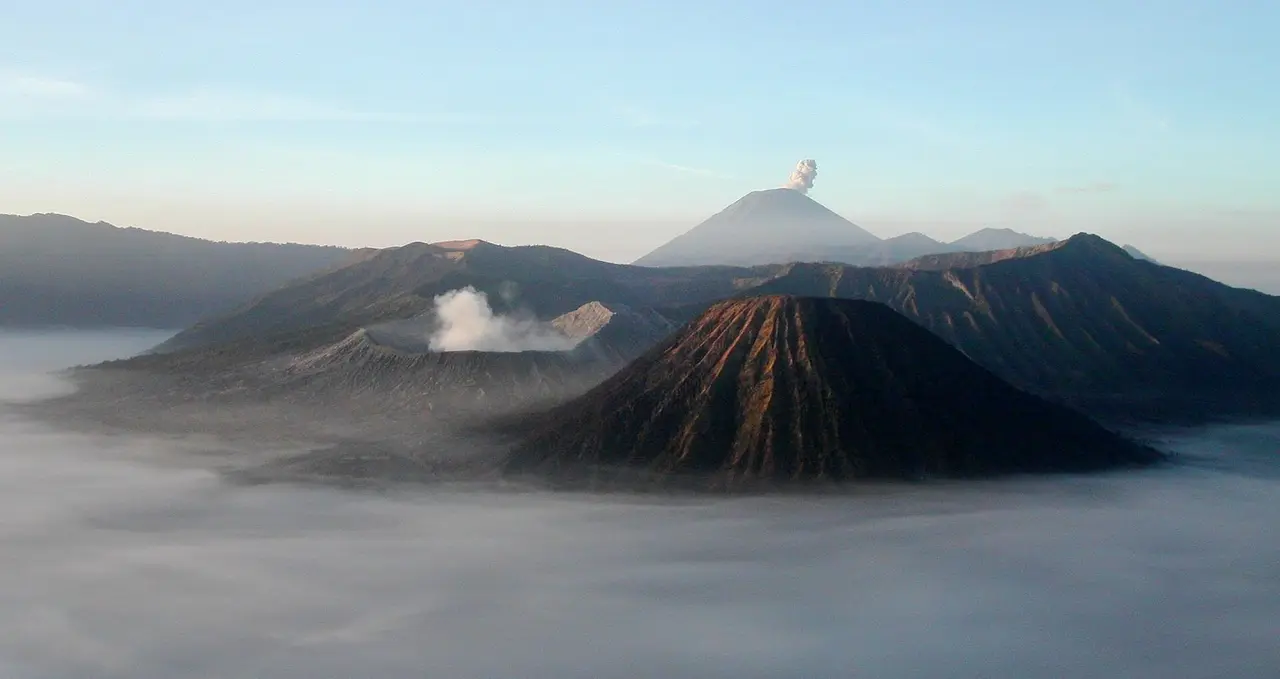
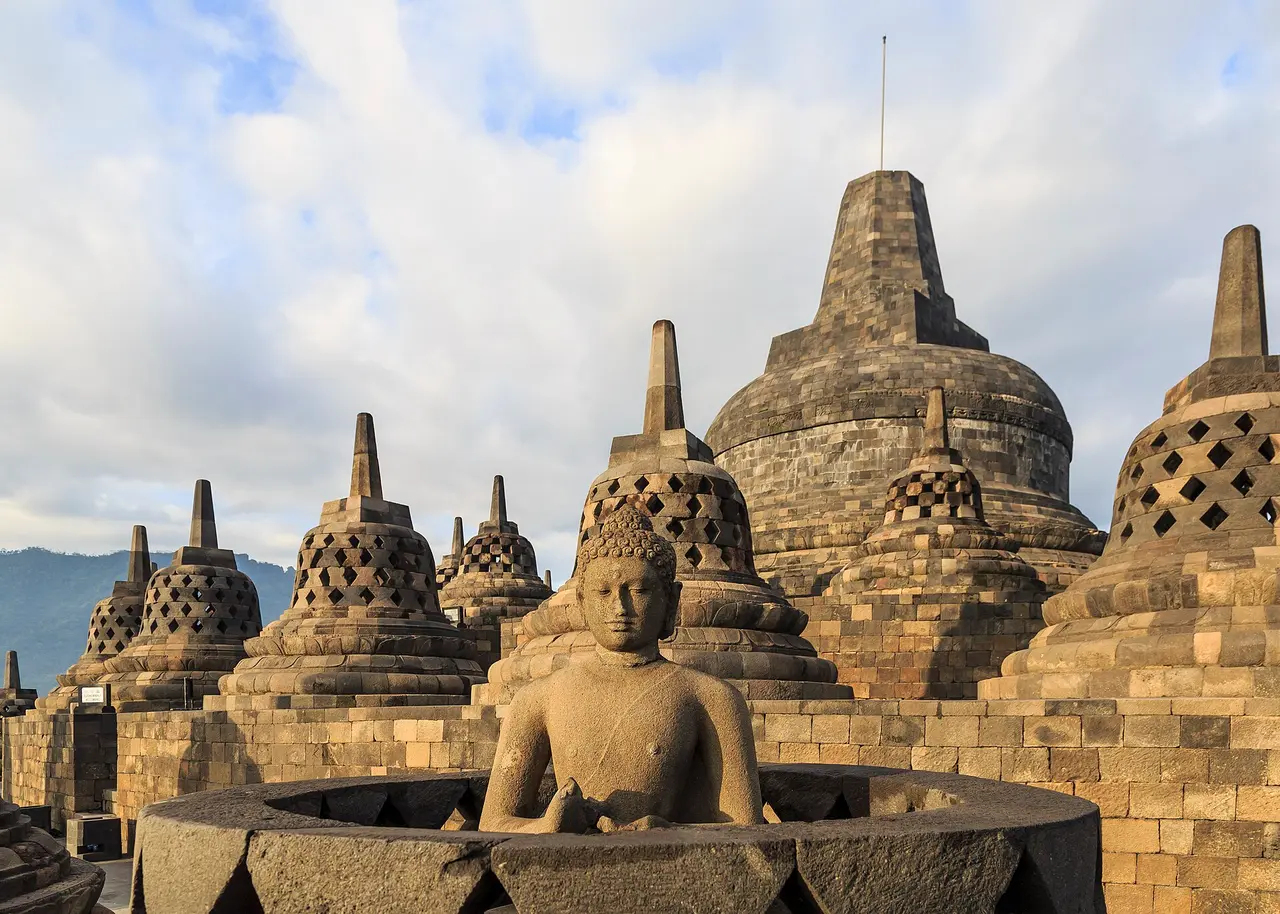
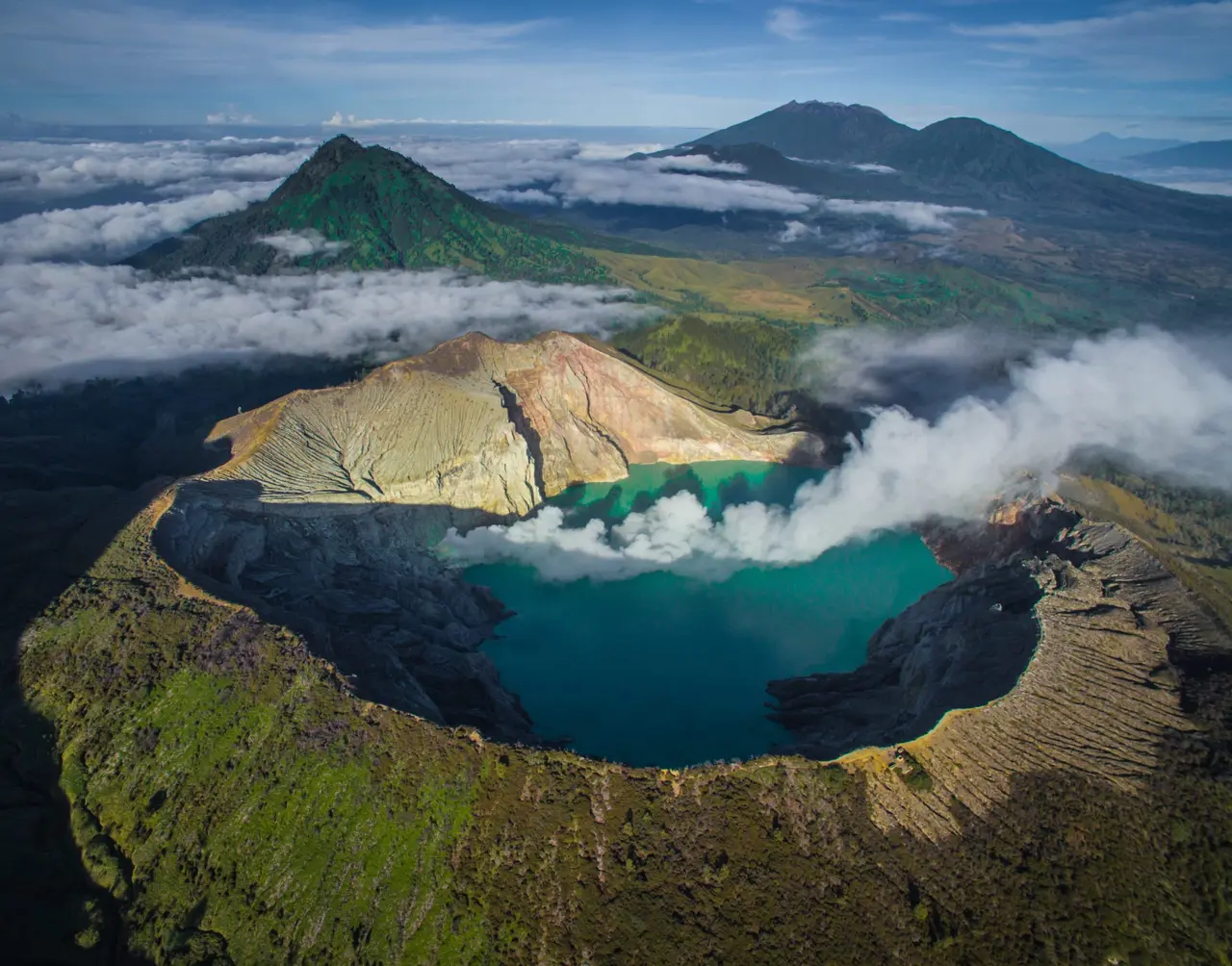
The most populated island on Earth, Java is crossed west to east in a week. Yogyakarta opens access to Borobudur and Prambanan, both UNESCO-listed; further east, the Bromo and Kawah Ijen calderas are visited on night hikes, starting around 1 to 3 a.m. to reach the rim at sunrise. The train links Jakarta to Surabaya in comfort at a moderate fare.

Lombok and the Gili Islands

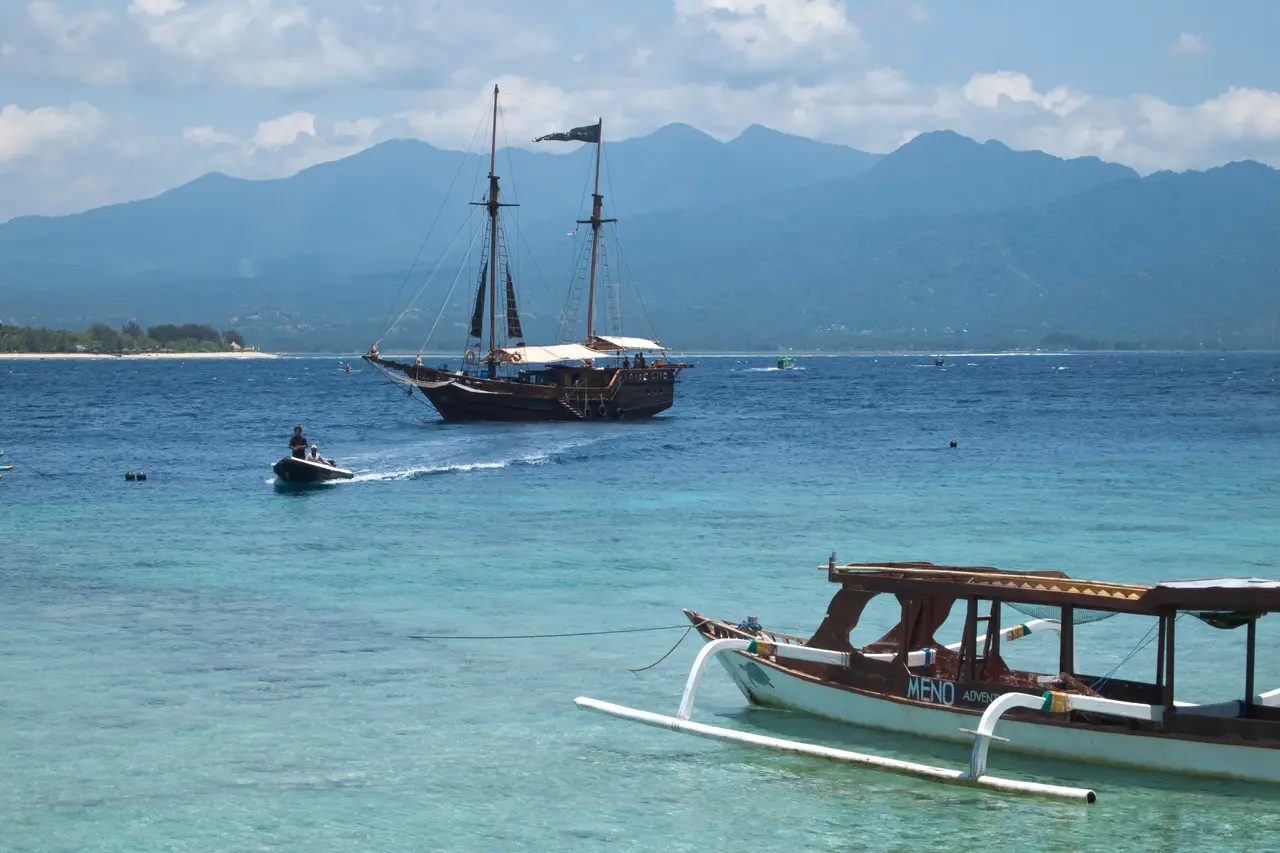
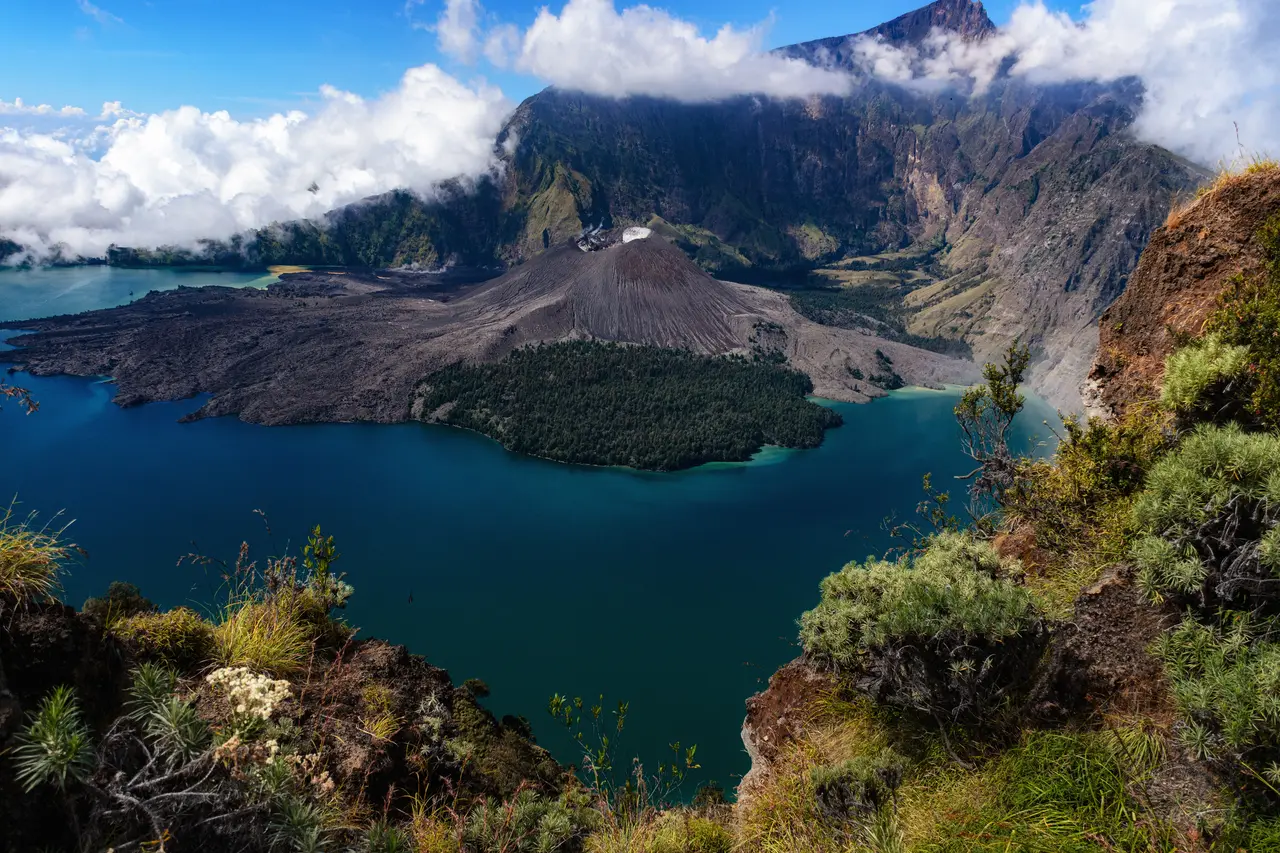
Bali's neighbour, Lombok has wilder beaches in the south (Kuta, Selong Belanak) and Mount Rinjani, whose climb takes two to three days with a guide. Offshore, the three Gilis are reached by fast boat from Bali in one to two hours: Gili Trawangan for nightlife, Gili Air for balance, Gili Meno for quiet. No cars run there, you get around on foot or by bike.

Flores and Komodo National Park

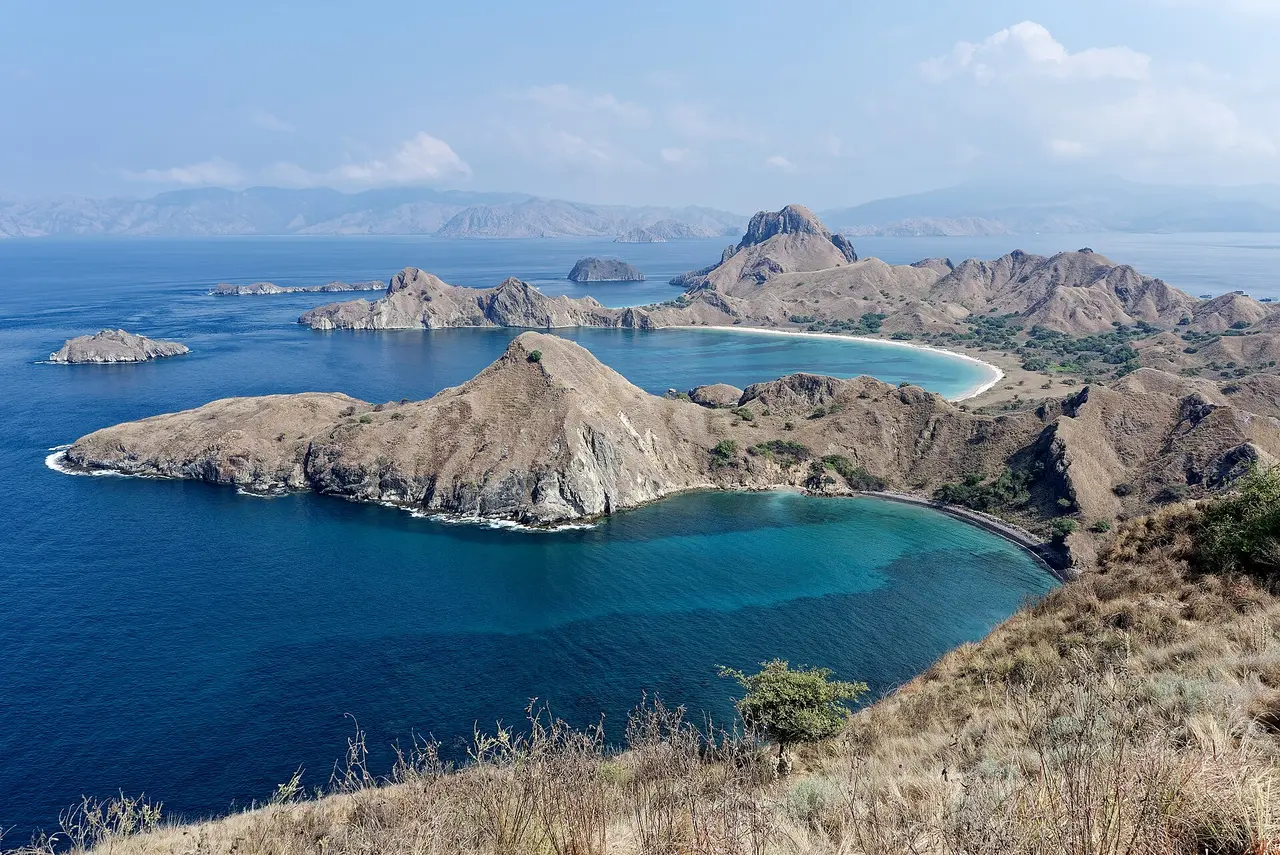
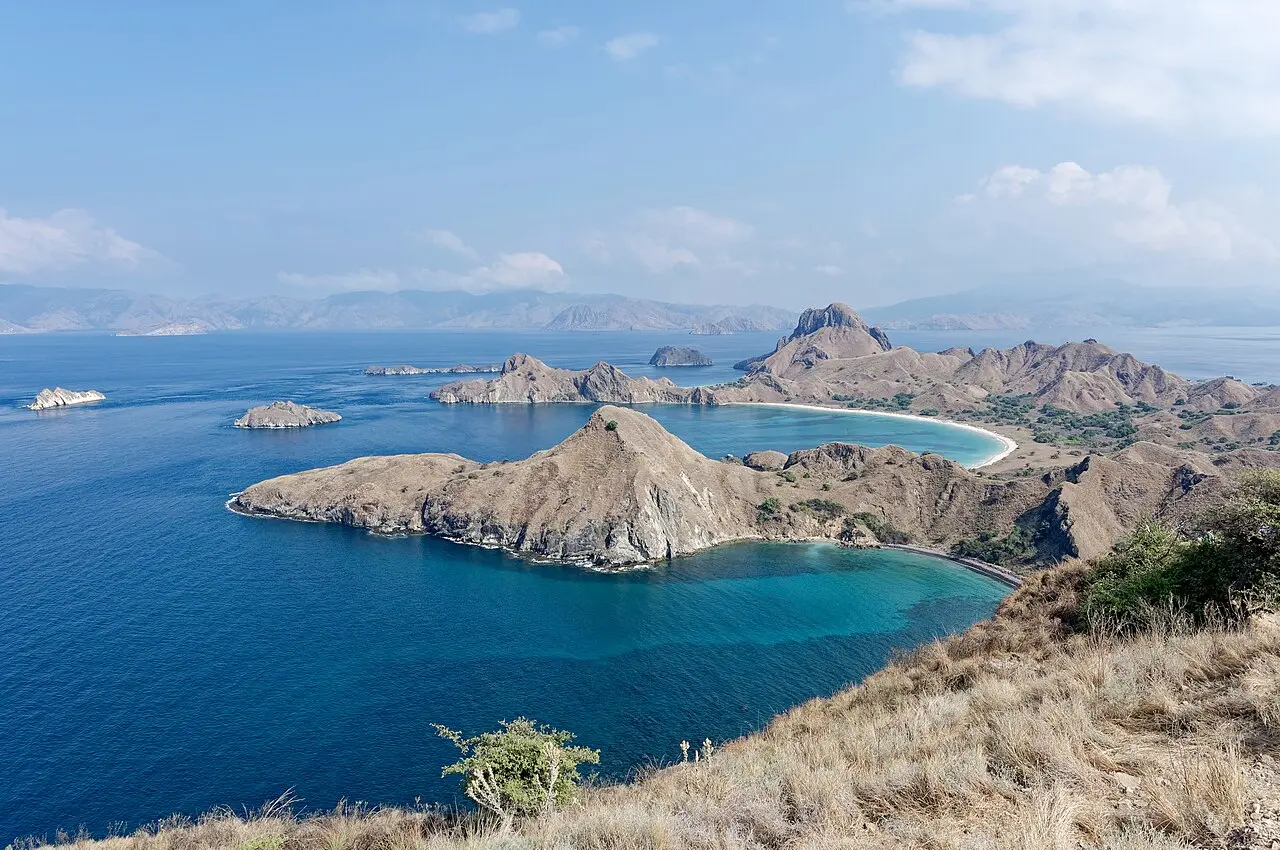
From Labuan Bajo, in western Flores, one to three-day cruises reach Rinca and Komodo islands, the only places on Earth to see the giant monitor lizards in the wild. The same loop takes in the Padar hill, the pink beach and the manta rays of Manta Point. The park permit is bought the day before; the sea is calmer from April to October.

Sulawesi and Tana Toraja

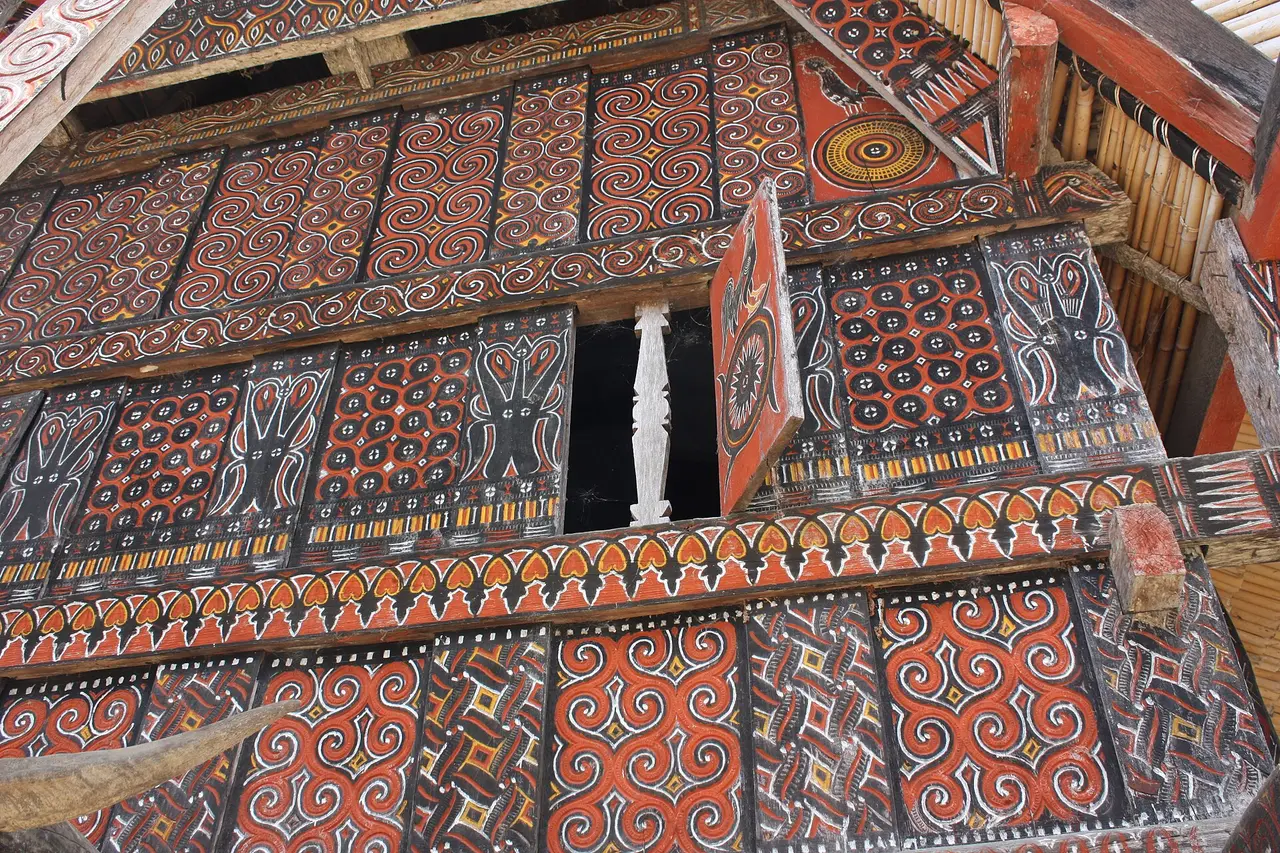
Less visited, Sulawesi stands out for the Toraja culture in the central mountains: tongkonan houses with boat-prow roofs, cliff-carved graves guarded by wooden effigies, and funeral ceremonies lasting several days, mainly from July to September. From Makassar, allow eight hours by road to Rantepao, the regional hub, then two to three days of walks between villages. The north of the island, around Bunaken and the Lembeh Strait, adds some of the best wall and muck diving in the country, best from March to November.

Sumatra, the jungle and the orangutans

The sixth-largest island on Earth, Sumatra draws travellers to Bukit Lawang, three hours from Medan, where one to three-day treks cross paths with wild orangutans on the edge of Gunung Leuser park. Lake Toba, further south, fills a volcanic caldera 100 km long, with the Batak island of Samosir in its middle. Distances are long and the roads slow, often 40 km/h on mountain sections: Sumatra sits badly with a short trip and is best kept for a second visit of two weeks or more.

Getting around between the islands

The country spans 5,000 km east to west: domestic flights are unavoidable and stay cheap, often 30 to 70 EUR a leg, as across the rest of Southeast Asia. Ferries and fast boats link Bali, Lombok and the Gilis. For a first two-week trip, it is better to stick to two islands; anyone comparing with a circuit in Thailand will find transport times noticeably longer here.

Cities to visit in Indonesia

Featured destinations appear first.

Regions to explore in Indonesia

Featured destinations appear first.

How much it costs

Per person per day, excluding international travel.
Budget
29 €/ day
1 700 € for 2 people, 7 days, return flights included
Accommodation
7 €
Food
10 €
Local transport
5 €
Sights and activities
7 €
Comfort
72 €/ day
2 310 € for 2 people, 7 days, return flights included
Accommodation
20 €
Food
25 €
Local transport
9 €
Sights and activities
18 €
Premium
220 €/ day
4 380 € for 2 people, 7 days, return flights included
Accommodation
95 €
Food
55 €
Local transport
25 €
Sights and activities
45 €
Prices checked: Relevé septembre 2026. Cadrage sur l'itinéraire touristique classique Bali / Lombok / Nusa Penida, hors haute saison (juillet-août et fêtes de fin d'année exclus) ; les zones rurales de Sumatra ou Sulawesi coûtent moins, Jakarta un peu plus. Sources agrégées : blog.wego.com, baliholidaysecrets.com, machupicchu.org (guides coût 2026) recoupées entre elles. Occupation : lit en dortoir pour backpacker, chambre double partagée à deux pour comfort et premium. Vol A/R Paris-Denpasar estimé 650 € par personne hors vacances scolaires (algofly.fr, bourse-des-vols.com, novembre-mars 550-760 €). La taxe touristique de Bali (IDR 150 000, environ 9 € une fois) et les entrées de temples sont incluses dans le poste activités. Monnaie IDR volatile : budget à revérifier tous les 3-4 mois.

Getting there

Airports serving Indonesia, from main hubs to secondary ones.
  • AAPAji Pangeran Tumenggung Pranoto International AirportSamarindaSecondary
  • AEGAek Godang AirportPadang SidempuanSecondary
  • BDOHusein Sastranegara International AirportBandungSecondary
  • BEJKalimarau AirportTanjung Redeb - Borneo IslandSecondary
  • BIKFrans Kaisiepo AirportBiakSecondary
  • BKSFatmawati Soekarno AirportBengkuluSecondary

Entry, health and safety

For FR travellers

Entry requirements

Visa required

Pas d'exemption pour les Français : e-VOA à demander en ligne avant le départ, ou visa à l'arrivée (VOA) payant de 500 000 IDR (environ 35 €), pour un séjour touristique de 30 jours prolongeable une fois pour 30 jours. Passeport valable 6 mois, billet de sortie du territoire et formulaire douanier électronique All Indonesia exigés.

Stay allowed for up to 30 days.

Passport valid for 6 months beyond your return date.

Health

Required: Fièvre jaune exigée uniquement pour les voyageurs en provenance d'un pays où le risque de transmission existe.

Advised: Mise à jour diphtérie-tétanos-poliomyélite-coqueluche et rougeole ; hépatites A et B, typhoïde, rage (séjours ruraux, jeunes enfants), encéphalite japonaise selon la durée et les régions ; chikungunya et dengue en cas d'épidémie active.

Très forte recrudescence de la dengue sur tout le territoire en 2026. Paludisme présent toute l'année en Papouasie, dans les Petites îles de la Sonde orientales et aux Moluques, ainsi qu'en zone rurale à Sumatra, Java, Lombok, Sulawesi et Kalimantan ; pas de risque à Bali ni à Jakarta. Rage active, notamment à Bali. Épidémie de rougeole en cours. Aléa sismique et volcanique élevé, risque de tsunami sur les côtes de Bali, Lombok et Florès. La Papouasie et la Papouasie centrale sont déconseillées sauf raison impérative.
Safety

Increased caution

Emergency

112

Checked in septembre 2026 against the official source. Entry rules change: check the official source before you travel, it alone is authoritative.

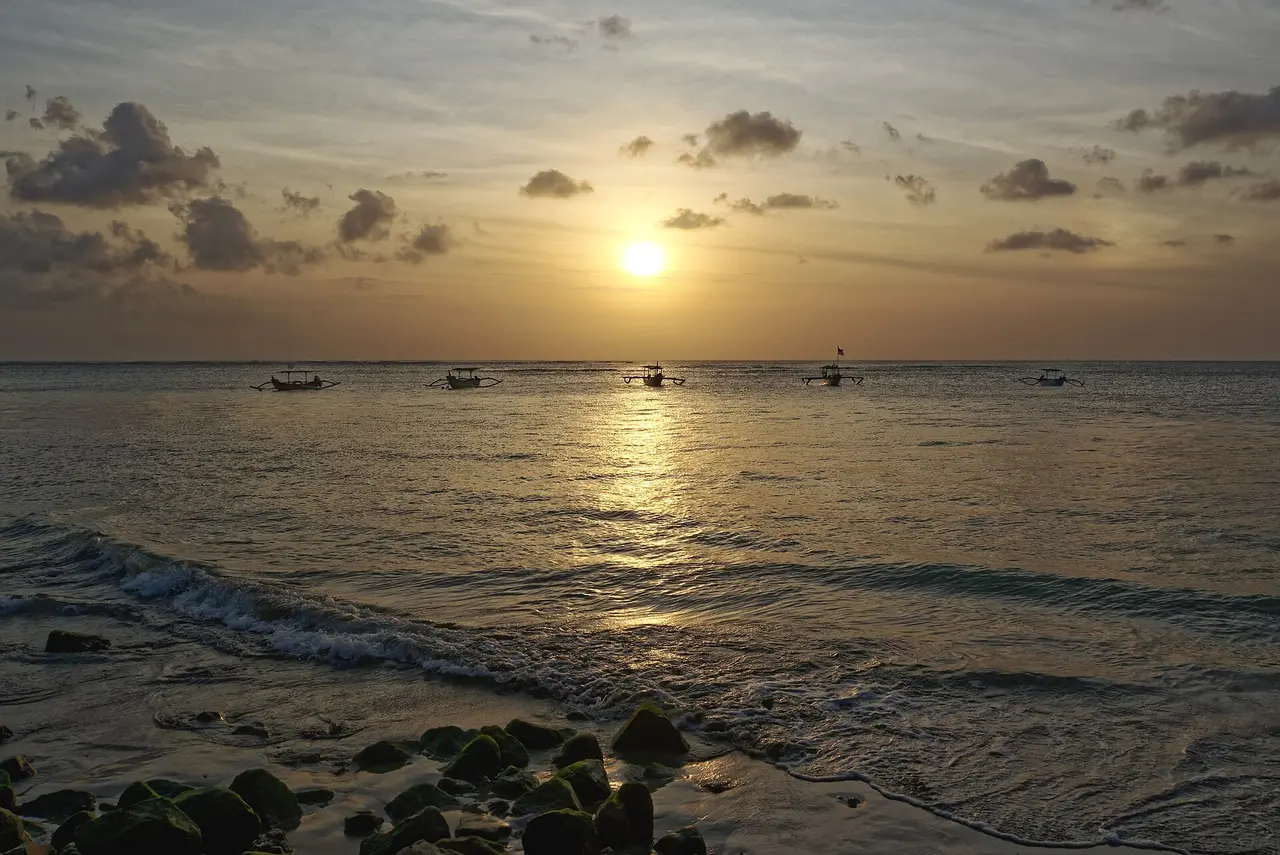
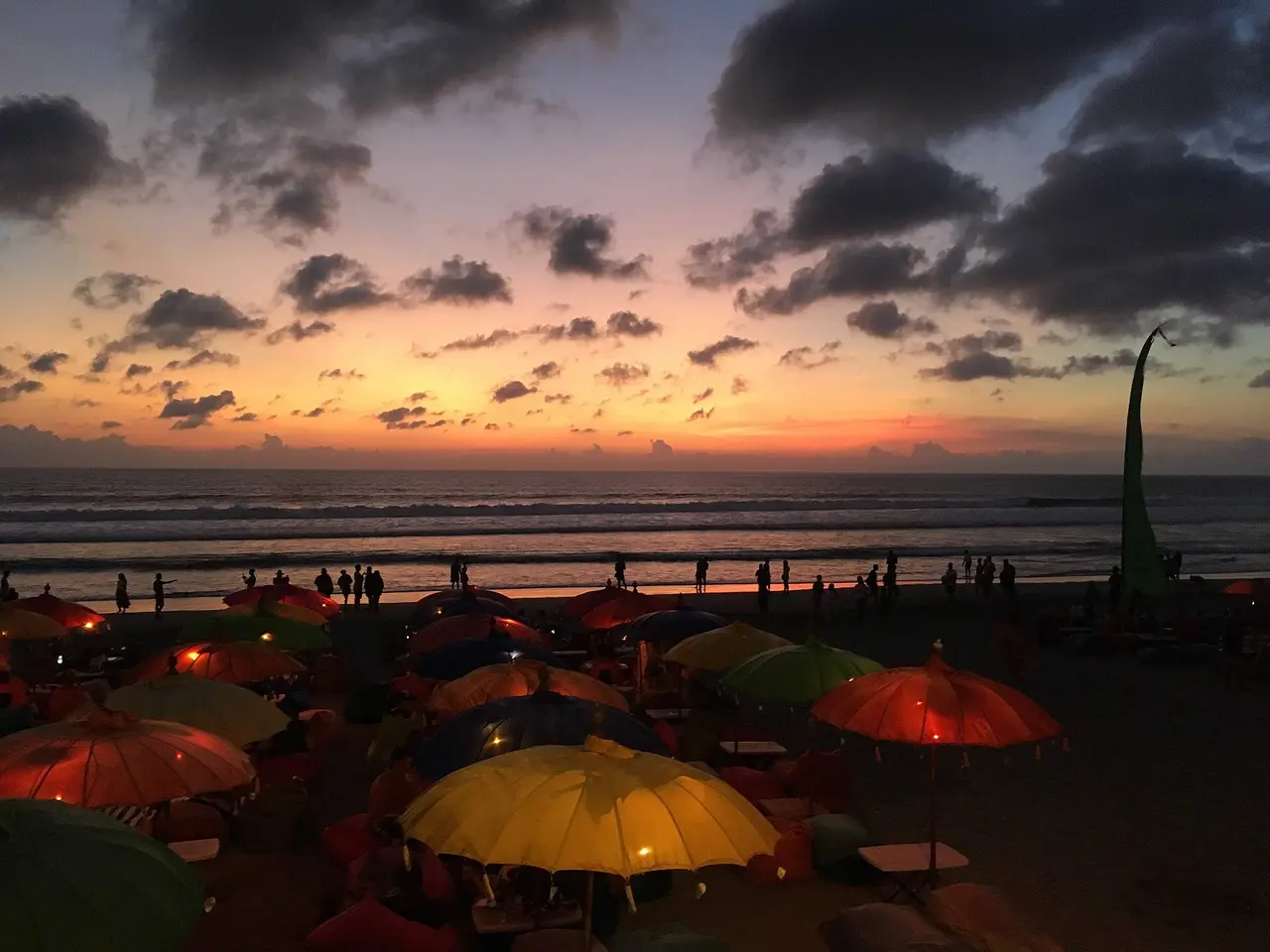
Indonesia in pictures

Photo credits : CEphoto, Uwe Aranas, CC BY-SA 3.0, Wikimedia Commons ; Thomas Hirsch (= user Ravn ), CC BY-SA 3.0, Wikimedia Commons ; Vyacheslav Argenberg, CC BY 4.0, Wikimedia Commons ; Jakub Hałun, CC BY 4.0, Wikimedia Commons ; Abdulahdwi, CC BY-SA 4.0, Wikimedia Commons ; Arian Zwegers, CC BY 2.0, Wikimedia Commons

Must-sees in Indonesia

Eleven sites that justify the trip on their own, from the giant Buddhist temple to the sulphur craters.

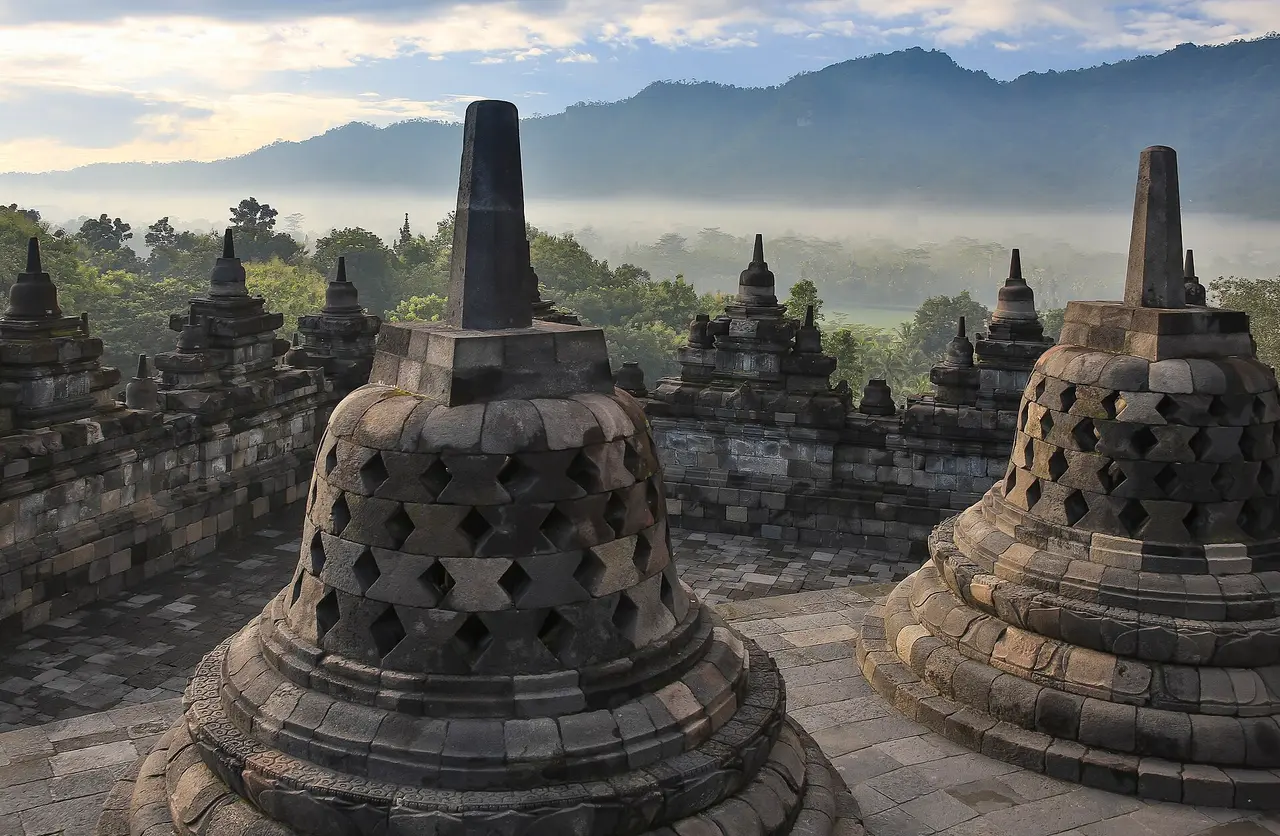
Borobudur temple

The world's largest Buddhist monument, on Java. Timed ticket and a climb capped at 1,200 visitors a day; the sunrise visit is highly sought after.

Prambanan temple

A 9th-century Hindu complex near Yogyakarta with slender towers over 45 m tall. Ramayana dance performances on some evenings.

Mount Bromo

A smoking cone in the middle of a sea of sand, within the Tengger massif. Up around 3.30 a.m. for the Penanjakan viewpoint.

Kawah Ijen

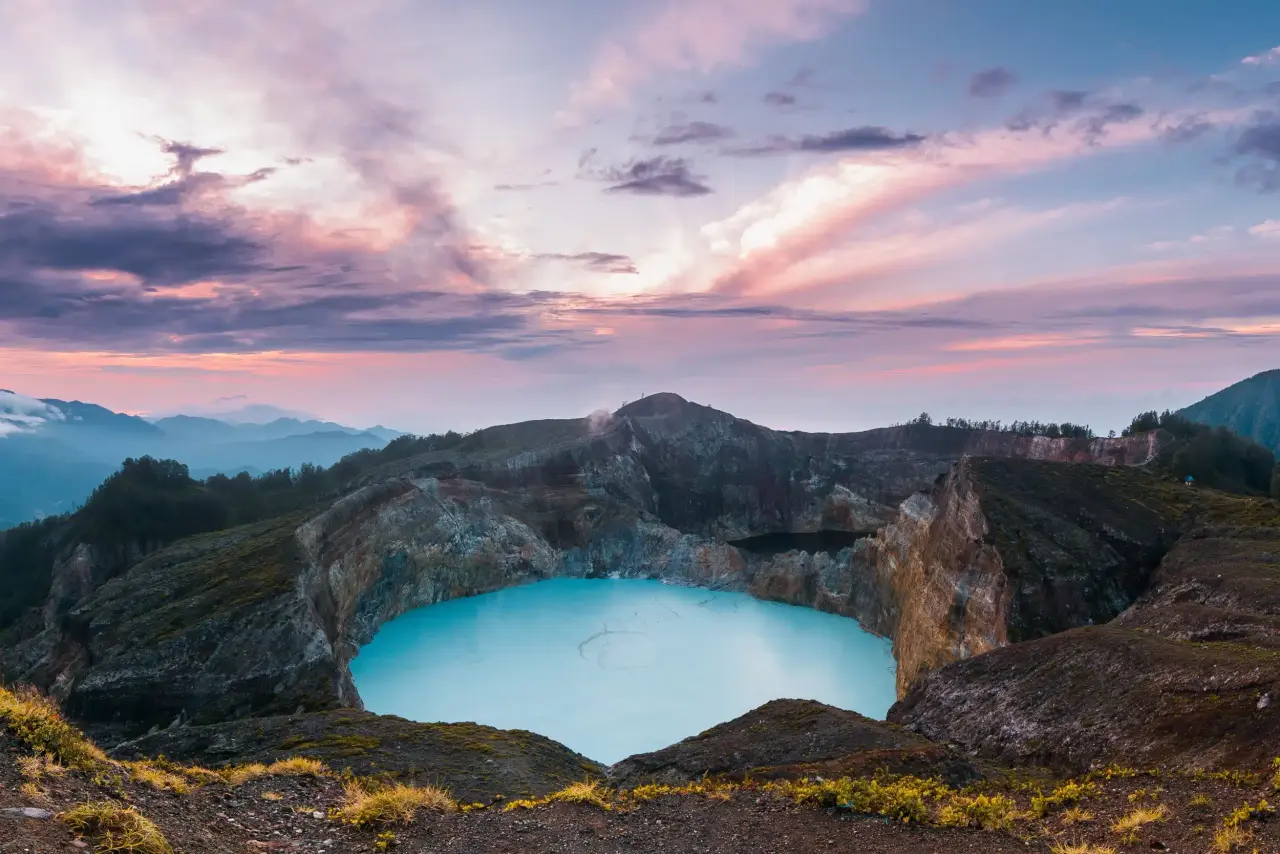
A crater in eastern Java famous for its blue sulphur flames, seen at night, and its turquoise acid lake. Gas mask provided.

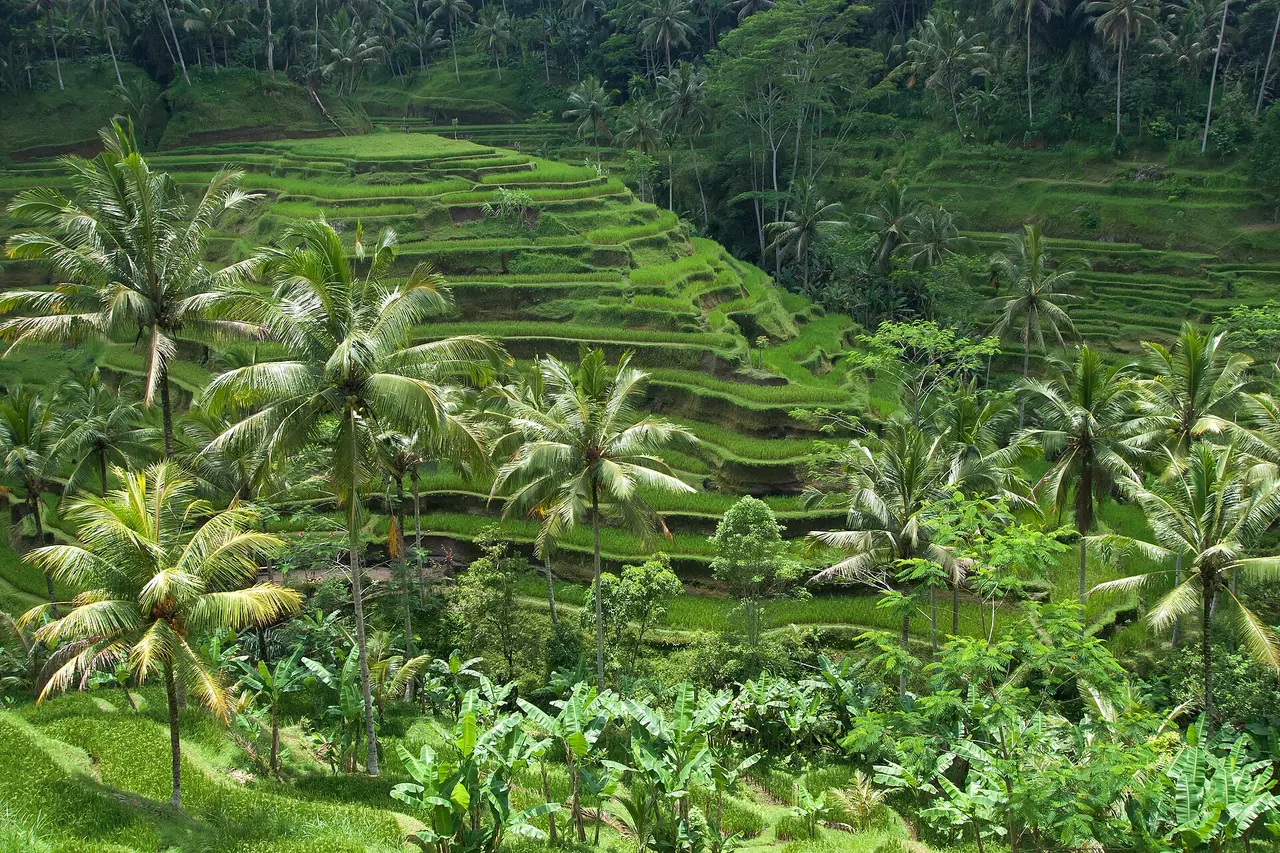
Jatiluwih rice fields

UNESCO-listed terraces in central Bali, quieter than Tegalalang. Marked trails from 1.5 to 6 km.

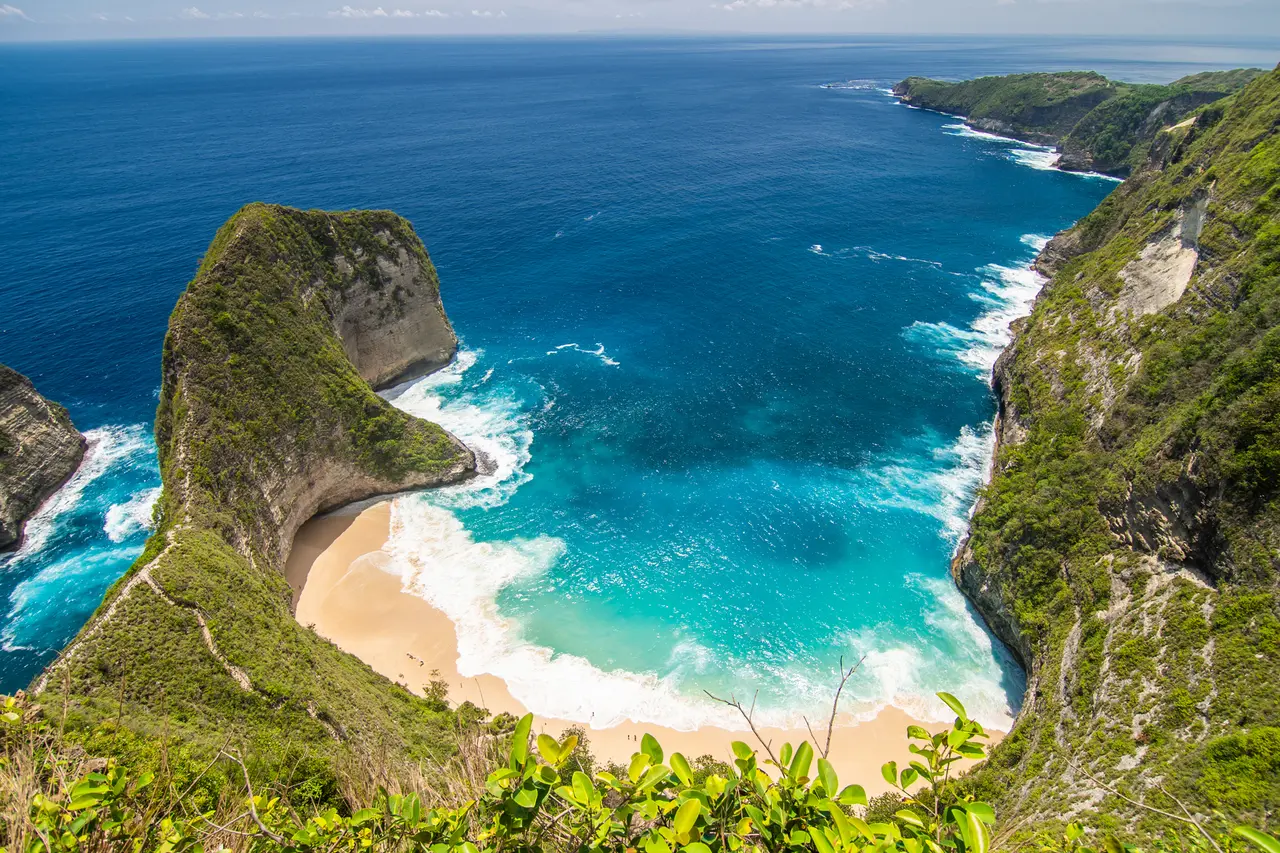
Kelingking Beach

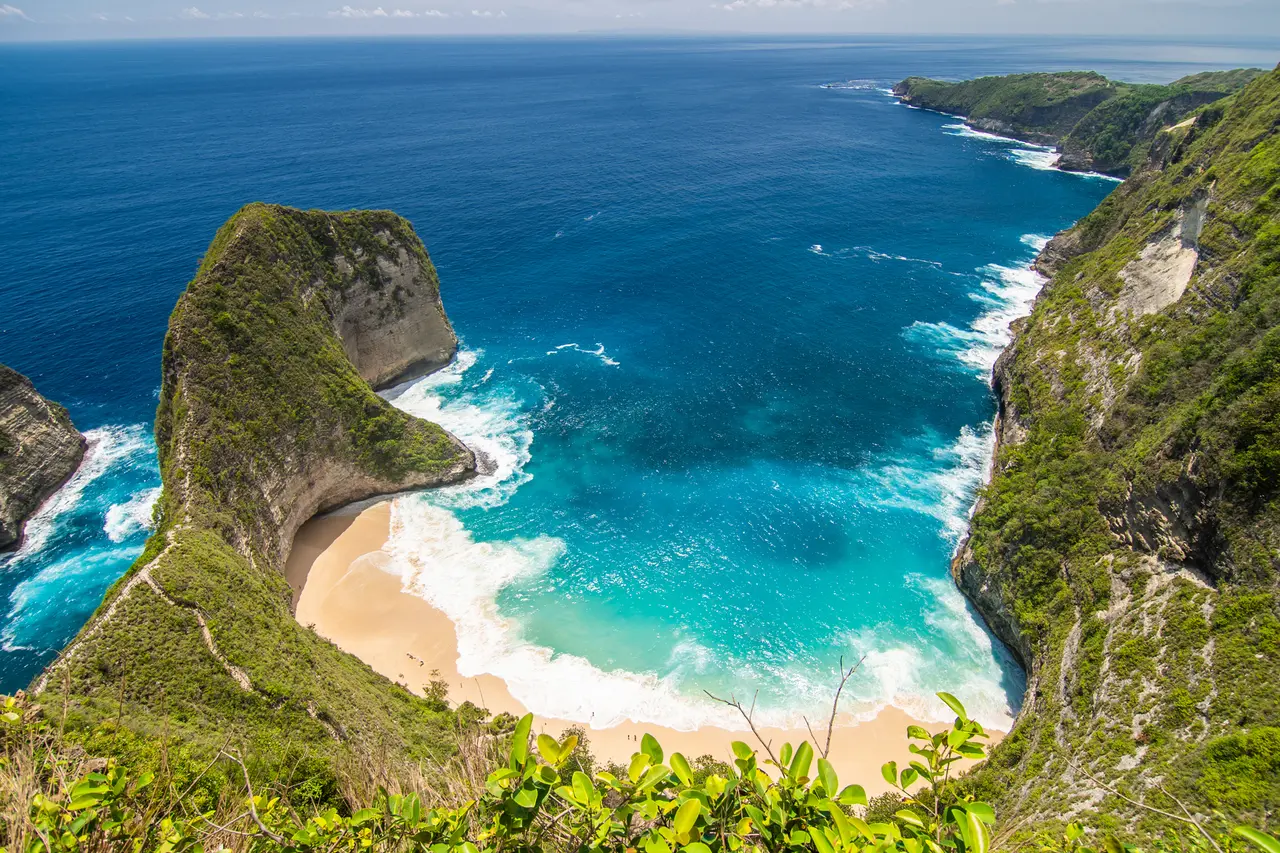
A dinosaur-head cliff on Nusa Penida. The viewpoint is free; the descent to the sand takes 45 minutes each way.

Padar Island

A panoramic ridge over three bays with different-coloured beaches, in Komodo park. A 20-minute climb from the anchorage.

Tana Toraja

Valleys of central Sulawesi known for tongkonan houses and funeral rites, mainly between July and September.

Bukit Lawang

The gateway village to Gunung Leuser park in Sumatra, base for treks to see wild orangutans, from one to three days.

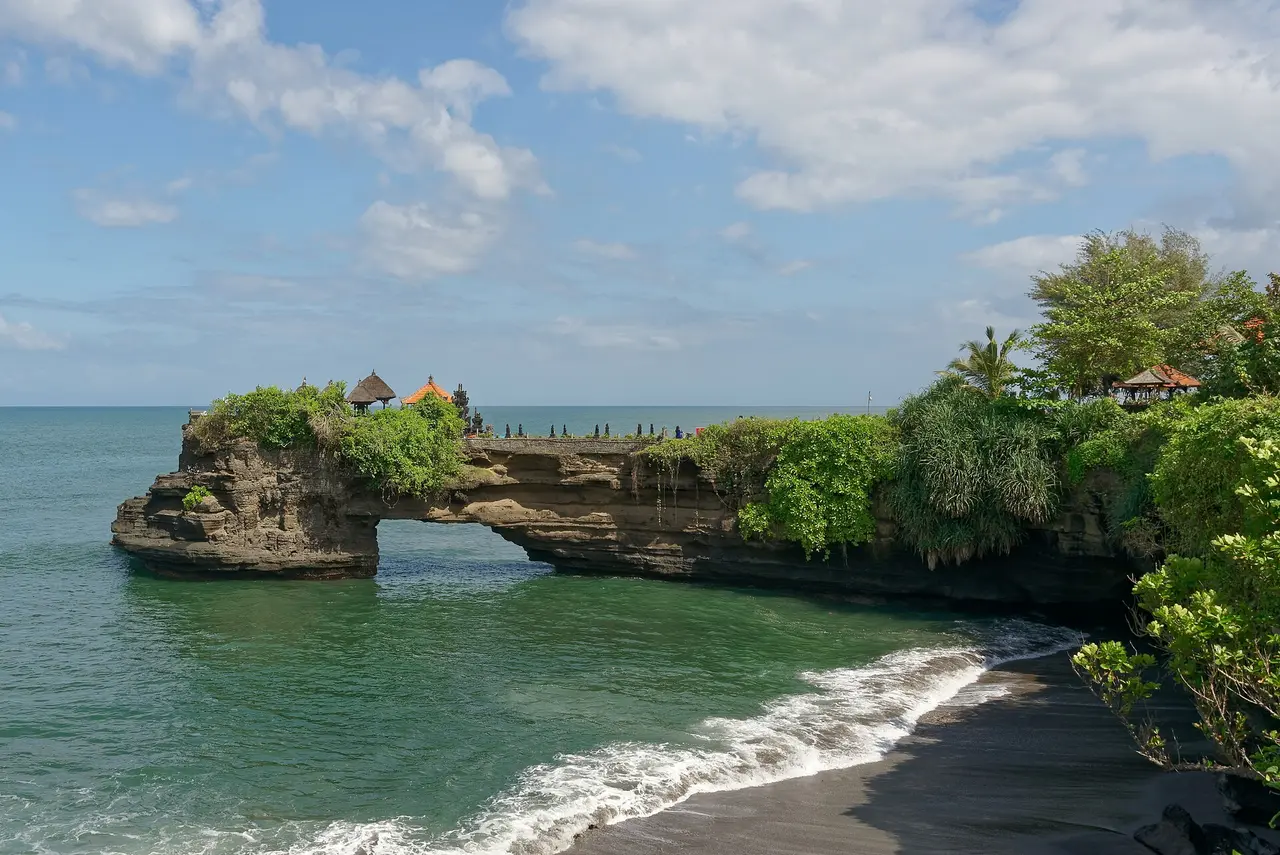
Tanah Lot temple

A shrine set on a wave-battered rock on Bali's west coast. Much photographed at sunset, reached at low tide.

Practical information

Capital
Jakarta (government gradually moving to Nusantara, in Kalimantan)
Currency
Indonesian rupiah (IDR); contactless payment rare outside big cities
Language
Indonesian (bahasa Indonesia); English widely spoken in tourist areas
Visa
e-VOA or visa on arrival, 500,000 IDR (about 35 EUR), 30-day stay extendable once
Bali tourist levy
150,000 IDR (about 9 EUR), paid online before arriving on the island
Tap water
Not drinkable anywhere; bring a filter bottle or use refill dispensers
Power sockets
Types C and F, 230 V: same plugs as continental Europe, no adapter needed
Temple dress code
Sarong and sash required, usually lent at the entrance; shoulders covered
Scooter
International Driving Permit required, frequent police checks on Bali and Lombok
Alcohol
Heavily taxed and expensive; sales suspended during some religious festivals
Nyepi
Bali's Day of Silence (March): airport closed for 24 h, no going out and no lights

Similar destinations

Other countries you might like as much as Indonesia.

Similar regions

Other regions you might like as much as Indonesia.

Frequently asked questions about Indonesia

Do I have to choose between Bali and the Gili Islands for a first trip?
No, the two combine easily: a fast boat links southern or eastern Bali to Gili Trawangan or Gili Air in one to two hours. Still, plan at least three nights on the Gilis to make the crossing worthwhile.
How many days to see Java and Bali together?
Allow ten days minimum: three in Yogyakarta for Borobudur and Prambanan, two for Bromo, one for Ijen, then three to four nights on Bali. Below that, Java's long night drives crowd out the sightseeing.
Can you see the Komodo dragons from Bali in a day?
No. You need to reach Labuan Bajo in western Flores by a roughly 90-minute flight from Denpasar, then board a cruise of at least one full day. Plan three nights there for Rinca, Padar and Manta Point.
Does the rainy season make Bali impossible?
No: from November to March, showers mostly fall in late afternoon and last one to two hours. The rice fields are at their greenest and prices are low. Only the crossings to Nusa Penida and the Gilis are sometimes cancelled because of swell.
Is climbing Mount Bromo difficult?
No, it suits any walker: a 4x4 drives up to the viewpoint, then 30 to 45 minutes of flat walking across the sea of sand lead to the crater base, followed by 250 steps. The nighttime cold, around 5 C, surprises more than the effort.
Does Nyepi really shut down the whole island of Bali?
Yes. For 24 hours in March, Denpasar airport closes, the streets empty, mobile internet is cut and hotels ask guests to stay inside with lights off in the evening. The other islands are not affected.
Is Nusa Penida a day trip or should you stay overnight?
Both work. On a day trip from Sanur you see Kelingking and Broken Beach, but the sites are packed by midday. Staying one to two nights on the island lets you photograph Kelingking alone at first light.
Is malaria a concern on Bali and Java?
No, there is no malaria risk on Bali, in Jakarta or in the major cities. The risk exists year-round in Papua, the Moluccas and East Nusa Tenggara, and in rural areas of Sumatra and Sulawesi.

Plan your trip to Indonesia

Day-by-day itinerary, budget, bookings and packing in a single app.
Aperçu de l'application PlanTripNow