Skip to content

Visit the Faroe Islands: Puffins, Cliffs, Budget and When to Go

The Faroe Islands are eighteen islands of cliffs, grass-roofed villages and waterfalls that fall into the Atlantic. Neither in the European Union nor in Schengen, but an easy trip for anyone who accepts wind, fog and weather that changes every hour.

At a glance

Currency
Danish Krone
Time difference
UTC+0
Visa
None
7-day budget
€1,260
Per person, comfort profile, excluding international flights.
Recommended length
5 days
For a first trip, without rushing.

Why visit the Faroe Islands?

The Faroe Islands are an autonomous archipelago of the kingdom of Denmark, in the middle of the North Atlantic. People come for the cliffs, grass-roofed villages, waterfalls such as Gasadalur and the Mykines puffins, in a landscape close to that of Iceland, only calmer.

When to visit Faroe Islands

Temperatures, rainfall and crowds month by month, to pick your window.
When to visit Faroe Islands
MonthTemperaturesRainCrowdsVerdict
January1 to 5 °C25 dVery quiet5 C and 25 rainy days: a dark winter, ferries and flights disrupted, very few visitors, northern lights possible on clear nights.
February1 to 5 °C20 dVery quiet5 C and 119 mm, a slightly drier month: still very dark, muddy trails, snow on the summits, lodging often closed.
March1 to 5 °C24 dVery quiet5 C and 24 rainy days: winter drags on, days lengthening, most tourist services not yet reopened.
April2 to 7 °C19 dQuiet7 C and 98 mm: spring arrives, the first lambs, some lodging reopens, still few tourists.
May4 to 9 °C17 dModerate9 C and 75 mm: the start of puffin season, very long days, hiking possible, ferries to Mykines back in service.
June7 to 11 °C17 dBusy11 C and nights almost without darkness: an excellent month for walking, sea at 8 C, lodging filling up.
July8 to 12 °C19 dPacked12 C and 19 rainy days: high season, puffins on Mykines, busy trails, book a vehicle and lodging months ahead.
August8 to 12 °C20 dPacked12 C and 93 mm: the warmest month, puffins still present until mid-August, maximum crowds at photographic spots.
September7 to 11 °C23 dModerate11 C and 153 mm: the rain returns, frequent fog, fewer people, a good time for landscapes without crowds.
October5 to 9 °C25 dQuietThe wettest with 187 mm and 25 rainy days: strong wind, cancelled ferries, lodging closing, avoid without slack.
November2 to 6 °C25 dVery quiet6 C and 25 rainy days: very short days, storms, almost no tourist services, rates at their lowest.
December1 to 5 °C26 dVery quiet5 C and 26 rainy days: long nights, a year-end holiday mood, some travellers for the winter light.
Source: Normales de Torshavn (weather2travel.com), temperatures, mer, pluie et jours de pluie ; moyenne = moyenne de max et min. Meteo tres changeante : le brouillard et le vent peuvent annuler vols et ferries (consignes de weather2travel.com). Releve novembre 2026.

What to discover in the Faroe Islands?

Vagar, Gasadalur and the west

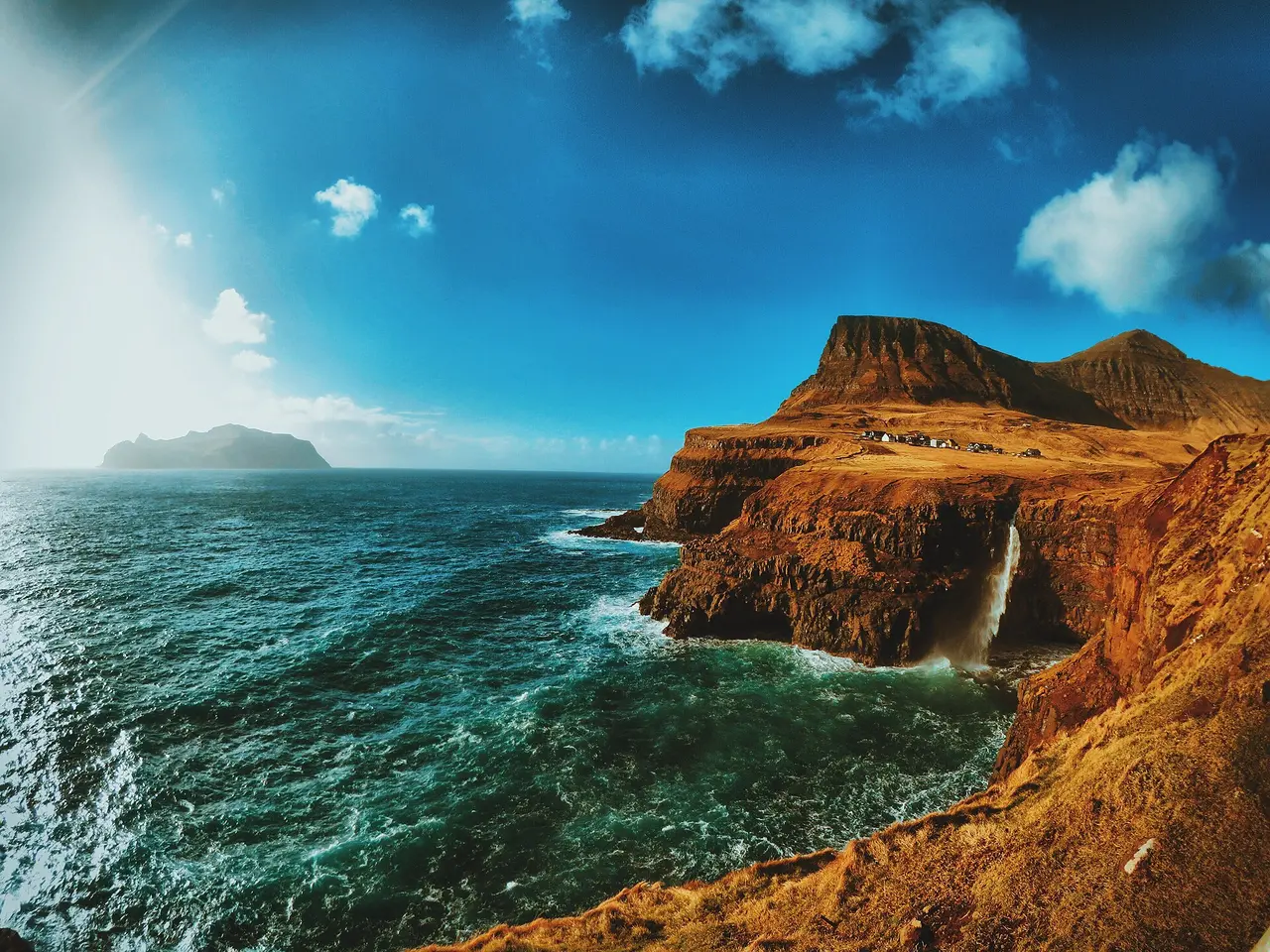
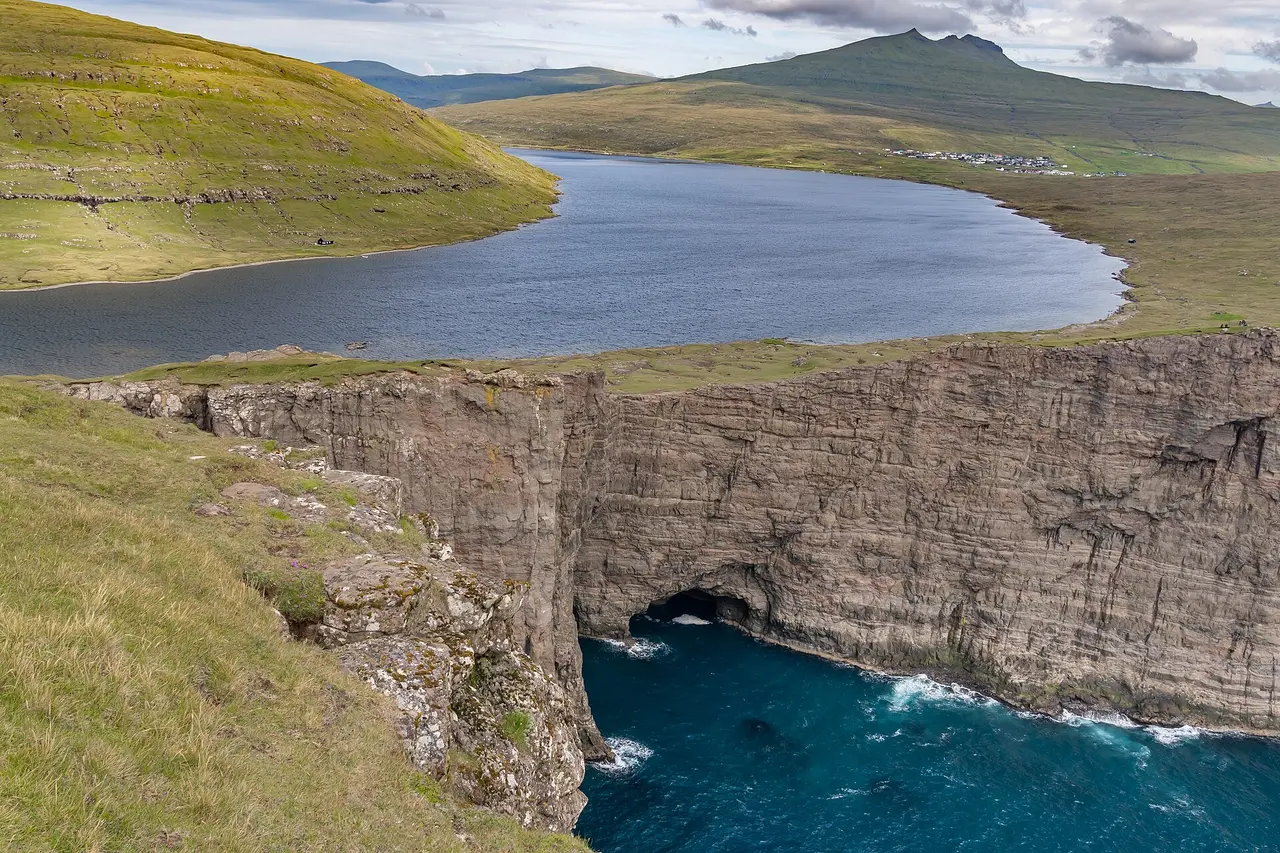
Vagar airport gives access to the west, with the village of Gasadalur and its waterfall falling into the sea, reached through a tunnel. Near Sorvagur, Lake Sorvagsvatn seems to float above the ocean. Allow a day for this area, and keep some slack: fog can hide every view, and visibility changes within minutes. Be ready to turn back if it closes in.

Torshavn and Streymoy

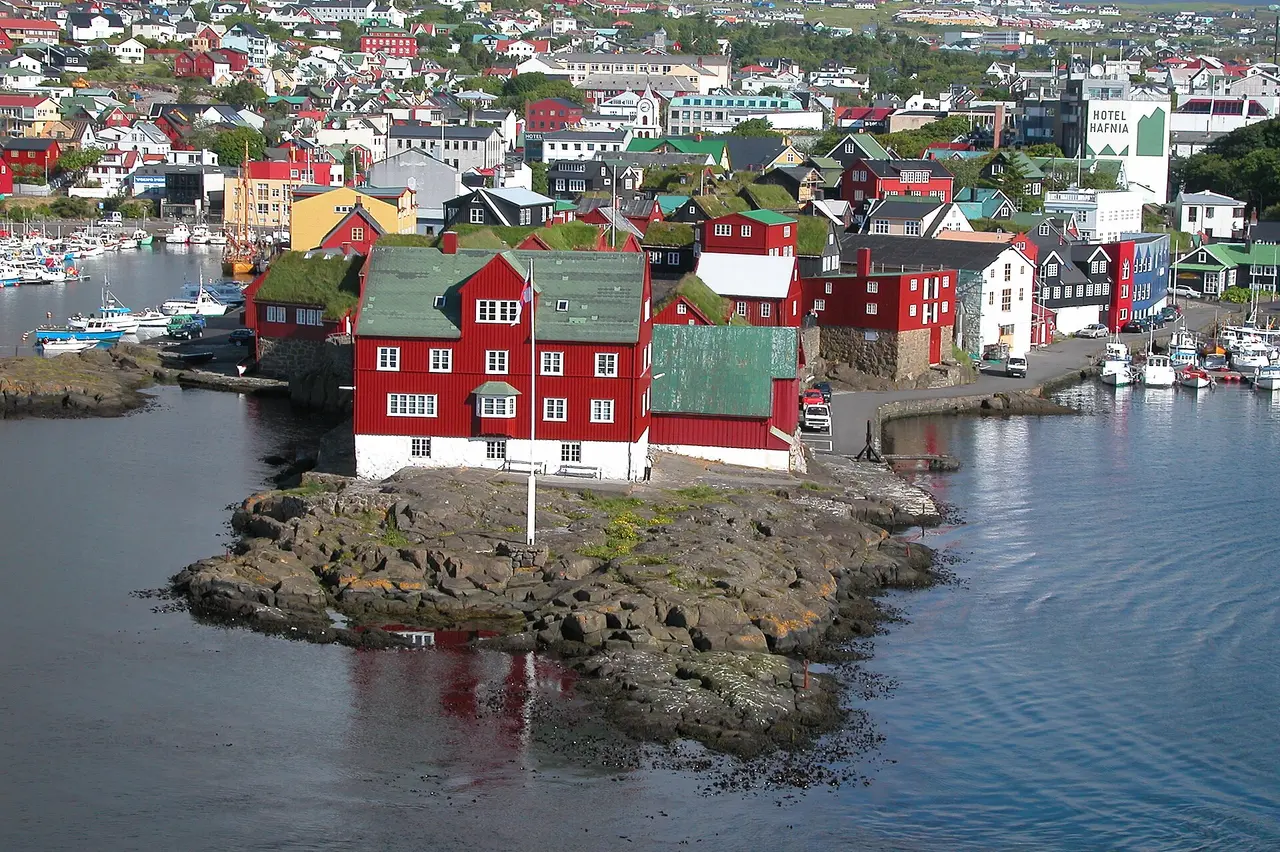
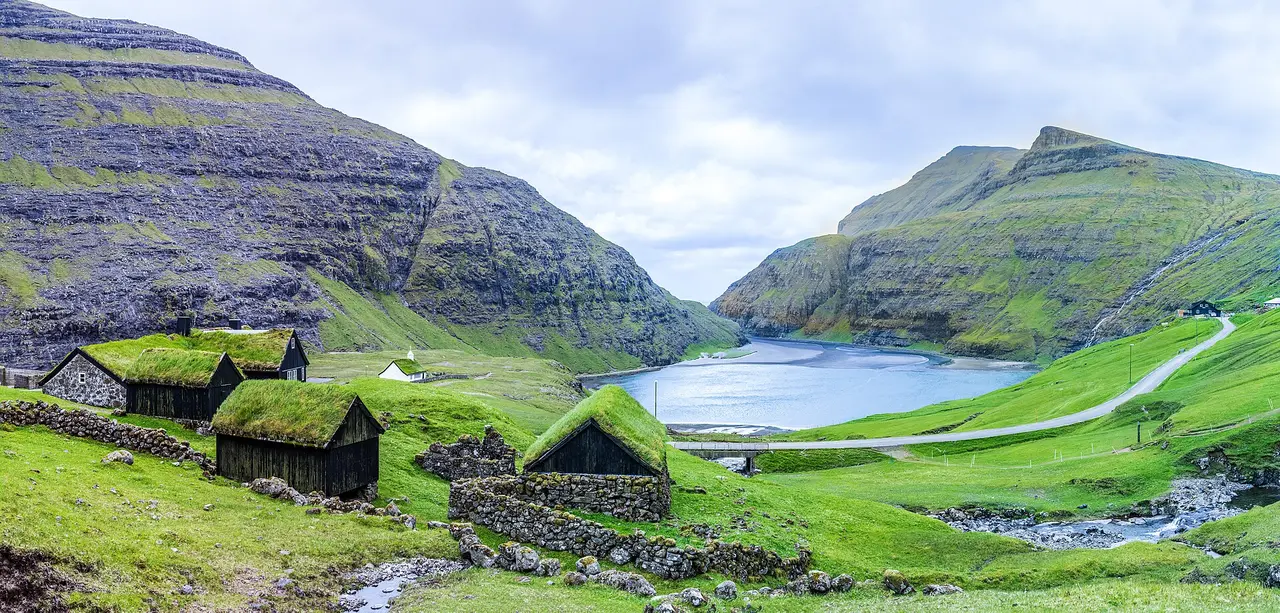
Torshavn is a small capital, with the old town of Tinganes and its grass roofs. The undersea tunnels are tolled, about 10 to 15 USD a day, billed by the car rental company. Further north, Saksun and Tjornuvik offer a lagoon and sea stacks, along narrow roads best avoided in fog. Allow a day for the capital and another for the northern road.

Eysturoy and Gjogv

Eysturoy is the second large island, with the small harbour of Gjogv, sheltered in a cleft of the cliff. Many trails start from the villages; the weather changes quickly, plan waterproof layers and a windproof jacket. Lodging supply is limited: book rooms months ahead in summer, from June to August. Allow at least two nights on site so you can walk without rushing.

Klaksvik, Kalsoy and the north

In the north, Klaksvik is the second town, from where ferries leave for Kalsoy and its trail to the Kallur lighthouse, short but exposed to wind. Ferry timetables depend on the weather: check the day before. Allow three nights for this area, and accept that the plan may change along the way. Winds can be violent on the ridges: stay back from the cliff edges.

Suduroy and Mykines

Suduroy is the southern island, reached by ferry from Torshavn, quiet and little visited. In the west, Mykines is known for its puffins, present from May to mid-August. Book ferries ahead in summer. Always keep a night of slack before the return flight, as cancellations in bad weather are frequent. Allow two nights on Suduroy and a day for Mykines.

Cities to visit in Faroe Islands

Featured destinations appear first.
Coming soon.

Sample itineraries

Three routes built around the time you actually have.
5daysRecommended

Faroe Islands in 5 days: Eysturoy, Saksun and Gjogv

  1. Saksun and Tjornuvik · 2 nights
  2. Gjogv and Eysturoy · 3 nights

Best for: The north of Streymoy and the island of Eysturoy: the village of Saksun and its lagoon, the small harbour of Gjogv and its cliffs, with days devoted to hiking.

How much it costs

Per person per day, excluding international travel.
Budget
80 €/ day
1 880 € for 2 people, 7 days, return flights included
Accommodation
35 €
Food
25 €
Local transport
15 €
Sights and activities
5 €
Comfort
180 €/ day
3 280 € for 2 people, 7 days, return flights included
Accommodation
75 €
Food
45 €
Local transport
40 €
Sights and activities
20 €
Premium
400 €/ day
6 360 € for 2 people, 7 days, return flights included
Accommodation
180 €
Food
90 €
Local transport
70 €
Sights and activities
60 €
Prices checked: Relevé novembre 2026. Budget quotidien de 75 à 226 USD (travelwithhello.com), 79 à 239 USD (travelcostcalculator.org) ; hébergement moyen de 56 à 64 USD la nuit, 120 à 220 USD en haute saison (travelcostcalculator.org, jetsetteralerts.com) ; déjeuner de cafe de port de 18 à 25 USD, plat et boisson de milieu de gamme de 40 à 60 USD ; 600 à 800 DKK par jour en auberge avec bus, 1 100 à 1 400 DKK en confort avec voiture (guide voyageuse solo, hertripguide) ; péages de tunnels sous-marins de 10 à 15 USD par jour par voiture, facturés par le loueur. Aucun tarif de location de voiture verifie. Vol : A/R Paris-Vagar de 300 à 420 EUR, Atlantic Airways à partir de 312 EUR, moyenne liligo.fr 321 EUR direct et 424 EUR toutes escales, octobre le moins cher (kayak.fr, ou-et-quand.net, air-journal.fr), estimation 380 EUR. Conversion approximative : 1 DKK = 0,134 EUR, 1 USD = 0,92 EUR. Hébergement : dortoir pour backpacker, chambre double partagée a deux pour comfort et premium. Beaucoup d'hébergements ferment de novembre a mars.

Getting there

Airports serving Faroe Islands, from main hubs to secondary ones.
  • FAEVágar AirportVágarMain

Entry, health and safety

For FR travellers

Entry requirements

No visa for a tourist stay

Les îles Feroe ne font ni partie de l'Union européenne ni de l'espace Schengen. Les citoyens de l'UE et de Schengen n'ont pas besoin de visa : ils entrent avec un passeport ou, pour une visite, une carte nationale d'identité avec photo, sous reserve d'être citoyen et non simple résident. Un passeport reste le choix le plus sur. La durée de séjour autorisée n'à pas pu être confirmée par une source officielle : a vérifier auprès du service danois de l'immigration. Le système d'entrée et de sortie européen ne s'applique que si vous transitez par un pays Schengen.

Health

Météo très changeante, brouillard et vent fréquents : vols et ferries peuvent être annulés. Péages de tunnels sous-marins facturés par le loueur de voiture. Alerte rougeole en cours sur le site France Diplomatie.

Safety

Normal precautions

Emergency

112

Checked in novembre 2026 against the official source. Entry rules change: check the official source before you travel, it alone is authoritative.

Faroe Islands in pictures

Photo credits : Felipe Tofani, CC BY-SA 2.0, Wikimedia Commons ; Ekrem Canli, CC BY-SA 4.0, Wikimedia Commons ; Erik Christensen, CC BY-SA 3.0, Wikimedia Commons ; MiroRosa, CC BY-SA 4.0, Wikimedia Commons

What to see and do in the Faroe Islands

The archipelago's essentials, from waterfalls to puffin colonies.

Gasadalur waterfall

A waterfall falling straight into the ocean beside an isolated village, reached by a tunnel since 2004.

Lake Sorvagsvatn

A lake above the cliff that seems to float in the void, reached by a walking trail of about an hour.

Tinganes

The old district of Torshavn with wooden houses and grass roofs, on a small peninsula of the harbour.

Saksun

An isolated village on a lagoon, facing a black-sand beach, reached by a narrow road.

Gjogv

A small natural harbour sheltered in a cleft of the cliff, the starting point for many trails.

Kallur lighthouse

A short trail on the coast of Kalsoy, facing the sea, for one of the archipelago's best-known views.

Mykines

An island with puffin colonies, from May to mid-August, reached by boat or by flight depending on the weather.

Risin and Kellingin

Two sea stacks rising from the sea, visible from the village of Tjornuvik.

Practical information for the Faroe Islands

Papers
Passport or photo ID card, outside Schengen, outside the EU
Weather
Frequent fog and wind, 17 to 26 rainy days a month all year
Undersea tunnels
10 to 15 USD a day per car, billed by the rental company
Puffin season
May to mid-August, especially on Mykines, ferry to book
Lodging
Many close from November to March, book months ahead in summer
Ferries
Timetables depend on the weather, check the day before
Clothing
Waterproof and windproof layers, even in midsummer at 12 C
Currency
Faroese krona at par with the Danish krone
Sockets
Types C and F, as in France
Time zone
UTC+0, which is 1 hour behind Paris in winter

Frequently asked questions about the Faroe Islands

What is the best month to see the Mykines puffins?
May to mid-August. Ferries to Mykines depend on the weather: book and keep a spare day, as timetables change from season to season and some days are cancelled. After mid-August, the birds head back out to sea.
Do you need a passport for the Faroe Islands?
EU citizens enter with a passport or a photo ID card, with no visa. A passport remains the safest choice. The archipelago is outside Schengen, but the EU entry system applies if you transit.
Why are flights and ferries often cancelled in the Faroes?
Fog, wind and rain change within minutes, which disrupts flights and ferries, especially to Mykines and Suduroy. Keep a night of slack before the return flight and follow local announcements.
Are the Faroese undersea tunnels tolled?
Yes, about 10 to 15 USD a day per car, billed by the rental company after your stay. The exact amount depends on the tunnels used: ask for the details when renting.
Are the Faroe Islands as expensive as Iceland?
They are expensive too: 75 to 226 USD a day depending on guides, with an average room around 56 to 64 USD and a harbour meal at 18 to 25 USD. A Paris-Vagar flight runs 300 to 420 EUR.
Can you visit the Faroe Islands without a car?
Yes, with buses and ferries, but timetables are limited outside Torshavn. A car lets you see Gasadalur, Saksun and Gjogv in a week. Without one, allow more days and more bookings.
When can you see the northern lights in the Faroe Islands?
From September to March, on clear nights away from lights, but cloud cover is frequent. Days are very short in winter and many lodgings are closed: book well ahead, and bring a warm layer for night outings.

Plan your trip to Faroe Islands

Day-by-day itinerary, budget, bookings and packing in a single app.
Aperçu de l'application PlanTripNow