Skip to content

Visit Menorca: where to stay by coast, when to go and what it costs

Two towns facing away from each other, Maó in the east and Ciutadella in the west, a south coast of white limestone, a north coast of dark rock, and stone monuments everywhere. On this island, choosing your base shapes the whole trip.

At a glance

Currency
Euro (€)
Time difference
UTC+1 (UTC+2 en été)
Visa
None
7-day budget
€973
Per person, comfort profile, excluding international flights.

Why choose Menorca in the Balearics?

Menorca is a Spanish island in the western Mediterranean, a UNESCO biosphere reserve since 1993 and listed as World Heritage since 2023 for its Talayotic culture. It suits people who prefer coves, walking and archaeology to nightlife. As part of Spain, it sets no special entry rules for French travellers holding a valid document.

When to visit Menorca

Temperatures, rainfall and crowds month by month, to pick your window.
When to visit Menorca
MonthTemperaturesRainCrowdsVerdict
January8 to 14 °C7 dVery quietFrequent tramontana and a 15 °C sea: come for Maó and the Talayotic sites, not the coves.
February7 to 14 °C7 dVery quietThe island's coolest month, with 7 °C at dawn and a steady wind on the north coast.
March9 to 16 °C5 dVery quietOnly five rainy days and 16 °C in the afternoon: the Camí de Cavalls suits well-wrapped walkers.
April11 to 19 °C6 dQuietExcellent for exploring Ciutadella on foot, though the tramontana can still sweep the north coast.
May14 to 22 °C4 dModerateOur favourite month for walking: 22 °C, little rain, and Macarella is still open to cars.
June18 to 27 °C2 dBusySant Joan fills Ciutadella on 23 and 24 June; book early or pick the first fortnight.
July21 to 29 °C1 dPackedHardly any rain and a 24 °C sea, but walking turns hard by late morning.
August22 to 30 °C2 dPackedPeak heat and peak crowds: aim for the coves at dawn or take the Macarella bus.
September19 to 27 °C5 dBusyThe sea holds at 24 °C; favour the first fortnight, as bad weather can follow.
October16 to 23 °C7 dQuietSwimming is still possible at 22 °C, with rainy spells to check on AEMET.
November12 to 18 °C9 dVery quietThe wettest month, with nine rainy days: best kept for low-priced town breaks.
December9 to 16 °C8 dVery quietFlights run dear around the holidays according to Kayak, while the island stays quiet and windy.
Source: Normales 1991-2020 de la station Aéroport de Minorque (91 m, près de Maó) reprises par Wikipédia (es), recoupées avec les normales 1981-2010 publiées par AEMET pour la station B893 (écart de 0,4 °C au plus sur la moyenne mensuelle), relevé octobre 2026. Jours de pluie (au moins 1 mm) arrondis depuis ces normales, cohérents avec Climates to Travel. Température de la mer : Climates to Travel, moyenne 1991-2020. Affluence et prix : estimations éditoriales d'après les vacances scolaires européennes, Sant Joan à Ciutadella (23-24 juin) et les prix de vol Kayak.

Which part of Menorca should you choose?

Maó and the Llevant, the base for short stays

Maó brings together the airport, the bus station and the port, which makes it the right choice for three or four days, as the direct flight from Paris takes about 1h50. The old centre and the Es Castell shore fill a day, and Binibèquer Vell a morning, provided you arrive ahead of the groups. Ferries to Barcelona leave from here, usually overnight. To cross the island without a car, line L01 reaches Ciutadella in 60 minutes for 5.75 € (TMSA fare checked in October 2026).

Ciutadella and the Ponent, the former capital

45 km from Maó by road, Ciutadella offers a narrow harbour, a compact old town and the island's liveliest evenings. Stay three nights if the southern coves are your goal: the Macarella bus leaves from here. Avoid 23 and 24 June without a booking, when the Sant Joan festivities send horses through the streets and fill the town. From this port a ferry reaches Alcúdia in one to just over two hours depending on the operator, so you can pair the stay with Palma de Mallorca.

The Migjorn, white limestone and regulated coves

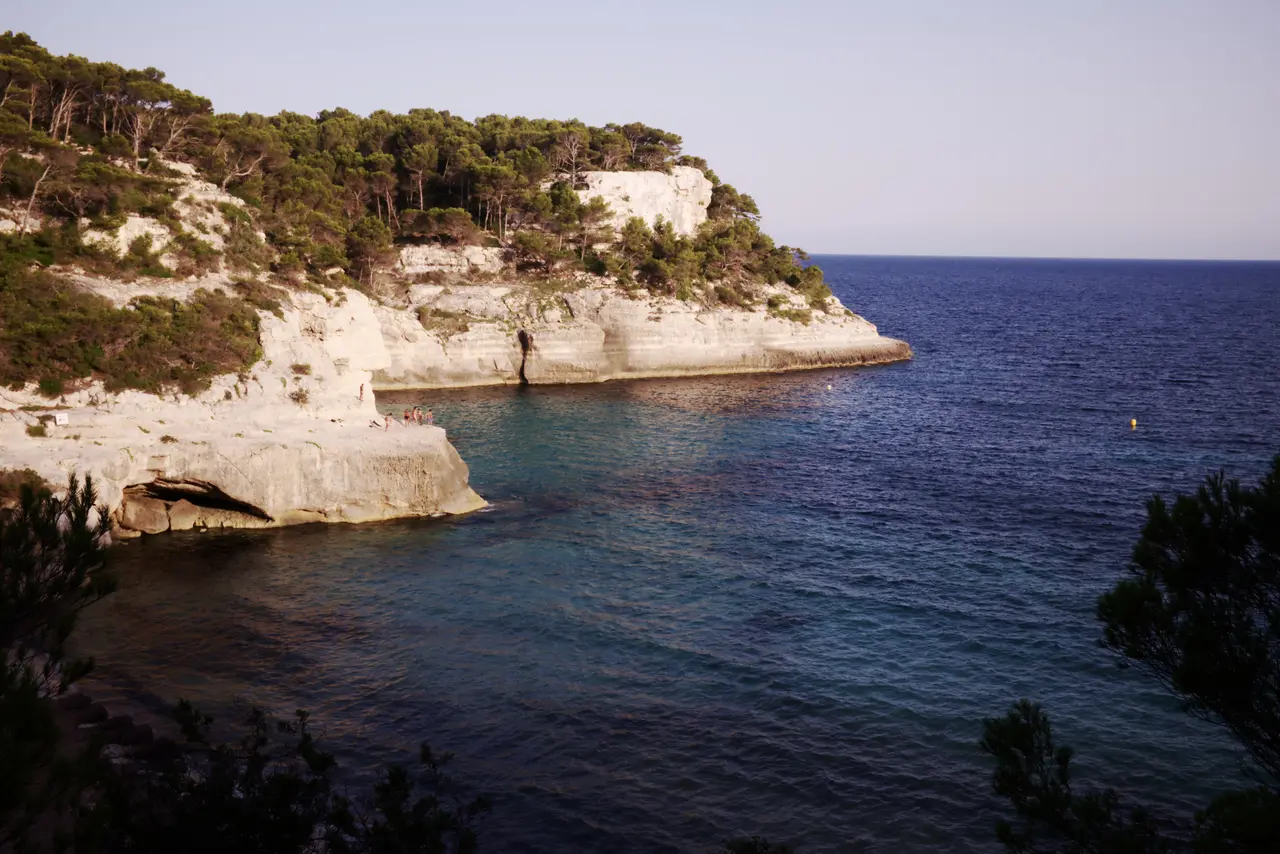
The south coast holds the turquoise coves, and getting to them takes planning. The Macarella car park closes in summer (from 1 June in 2026) and only the bus from Ciutadella goes there, between 8.25am and 8.20pm according to Es Diari. Turqueta and Son Saura keep their car parks, but capacity is limited: aim to arrive before 8am in high season. Cala Galdana makes a practical base, 35 minutes by bus from Ciutadella (line L52) and 50 minutes from Maó (line L51), both seasonal lines.

The Tramuntana, a wilder north coast

The north surprises after the southern coves: dark rock, windy capes and rarer beaches such as Pregonda. Fornells is the base here, with a sheltered bay for kayaking and its lobster caldereta, which runs from 50 to 80 € per person depending on the restaurant (checked in March 2026). The Favàritx lighthouse is reached by bus from Maó in summer, with twelve departures a day between 9.45am and 7.45pm in June 2026. Pack a jacket from October to April: the tramontana leaves this coast very exposed.

Walking the Camí de Cavalls without doing the full loop

This coastal path, waymarked GR 223, circles the island, but nothing obliges you to walk it all. The simplest approach is to pick a morning stretch between two coves, such as Cala Galdana to Cala Mitjana. Check the wind first: choose the north when it blows from the south, and the reverse. Walking east to west keeps the sun at your back. Keep these walks for April, May or October, as July and August, with close to 30 °C in the afternoon, are often too hot.

The interior and Talayotic Menorca

Listed as World Heritage on 18 September 2023, Talayotic Menorca groups nine areas spread between the north and south of the island. Half a day is enough to grasp the essentials: a village, a naveta, a taula. The Torre d'en Galmés site lies near Alaior, on the way to Monte Toro, the island's highest point. Its opening hours change with the seasons and sources disagree, so check them the day before. To compare with Mallorca or Ibiza, our page on the Balearic archipelago helps you choose.

Cities to visit in Menorca

Featured destinations appear first.
Coming soon.

How much it costs

Per person per day, excluding international travel.
Budget
78 €/ day
1 420 € for 2 people, 7 days, return flights included
Accommodation
44 €
Food
20 €
Local transport
8 €
Sights and activities
6 €
Comfort
139 €/ day
2 274 € for 2 people, 7 days, return flights included
Accommodation
55 €
Food
40 €
Local transport
14 €
Sights and activities
30 €
Premium
257 €/ day
3 926 € for 2 people, 7 days, return flights included
Accommodation
100 €
Food
65 €
Local transport
22 €
Sights and activities
70 €
Prices checked: Relevé octobre 2026, conversions au taux BCE du 30/10/2026 (1 EUR = 1,1172 USD). Valeurs hors juillet-août ; compter nettement plus en plein été. Hébergement : lit en dortoir pour backpacker (moyenne Hostelz 49 USD, non datée, deux auberges seulement sur l'île), chambre double partagée à deux pour comfort (fourchette 80-120 EUR d'un guide 2026 non officiel, machupicchu.org) et premium (moyenne Momondo juin 2026 : 194 EUR, à prendre comme plancher pour un 4 ou 5 étoiles). Repas : CityCost juillet 2026 (repas simple 13 EUR, dîner pour deux 53 EUR) et guides non officiels ; pas de page Numbeo pour Minorque. Transport : tarifs TMSA octobre 2026 pour backpacker ; voiture partagée à deux pour comfort (Kayak, 27 EUR/jour, moyenne sur 12 mois) et premium (Momondo, 44 EUR/jour), carburant non inclus. Activités : agrégateurs non datés (Expedia, Yumping : sortie sous-marine 15 EUR, kayak 40-45 EUR, catamaran 65-70 EUR), taxe touristique baléare incluse (barème 2026 relayé par mallorca.com, non officiel). Vol Paris-Maó A/R : 164 EUR par personne, moyenne Kayak sur 12 mois (relevé octobre 2026) ; médiane de 117 EUR en juin, le mois le moins cher.

Entry, health and safety

For FR travellers

Entry requirements

No visa for a tourist stay

Les ressortissants français entrent librement en Espagne avec un passeport ou une carte nationale d'identité en cours de validité. Le passeport valide est recommandé pour les CNI délivrées à des majeurs entre 2004 et 2013.

Health

Advised: Vaccins du calendrier français à jour, notamment diphtérie, tétanos, poliomyélite, coqueluche et rougeole.

Ensemble de l'Espagne en vigilance normale. Carte européenne d'assurance maladie à demander au moins 20 jours avant le départ et assurance couvrant le rapatriement conseillée. Virus du Nil occidental : risque jugé mineur hors provinces de Cadix et Séville, protection contre les moustiques. France Diplomatie signale aux Baléares une hausse des vols, parfois avec violence, des risques d'intempéries et d'inondations, ainsi que des noyades et hydrocutions.

Safety

Normal precautions

Emergency

112

Checked in octobre 2026 against the official source. Entry rules change: check the official source before you travel, it alone is authoritative.

Menorca in pictures

Photo credits : Paul Stephenson, CC BY 2.0, Wikimedia Commons ; Nicolas Vigier, CC0, Wikimedia Commons ; Américo Toledano, CC BY-SA 4.0, Wikimedia Commons ; Markus Trienke, CC BY-SA 2.0, Wikimedia Commons ; Daniel Lobo, CC BY 2.0, Wikimedia Commons ; Martin JW, CC BY-SA 4.0, Wikimedia Commons ; Jeuwre, CC BY-SA 4.0, Wikimedia Commons ; Slastic, Public domain, Wikimedia Commons

Six places that sum up Menorca

A cove, two stone monuments, a lighthouse, a summit and a white village.

Cala Macarella

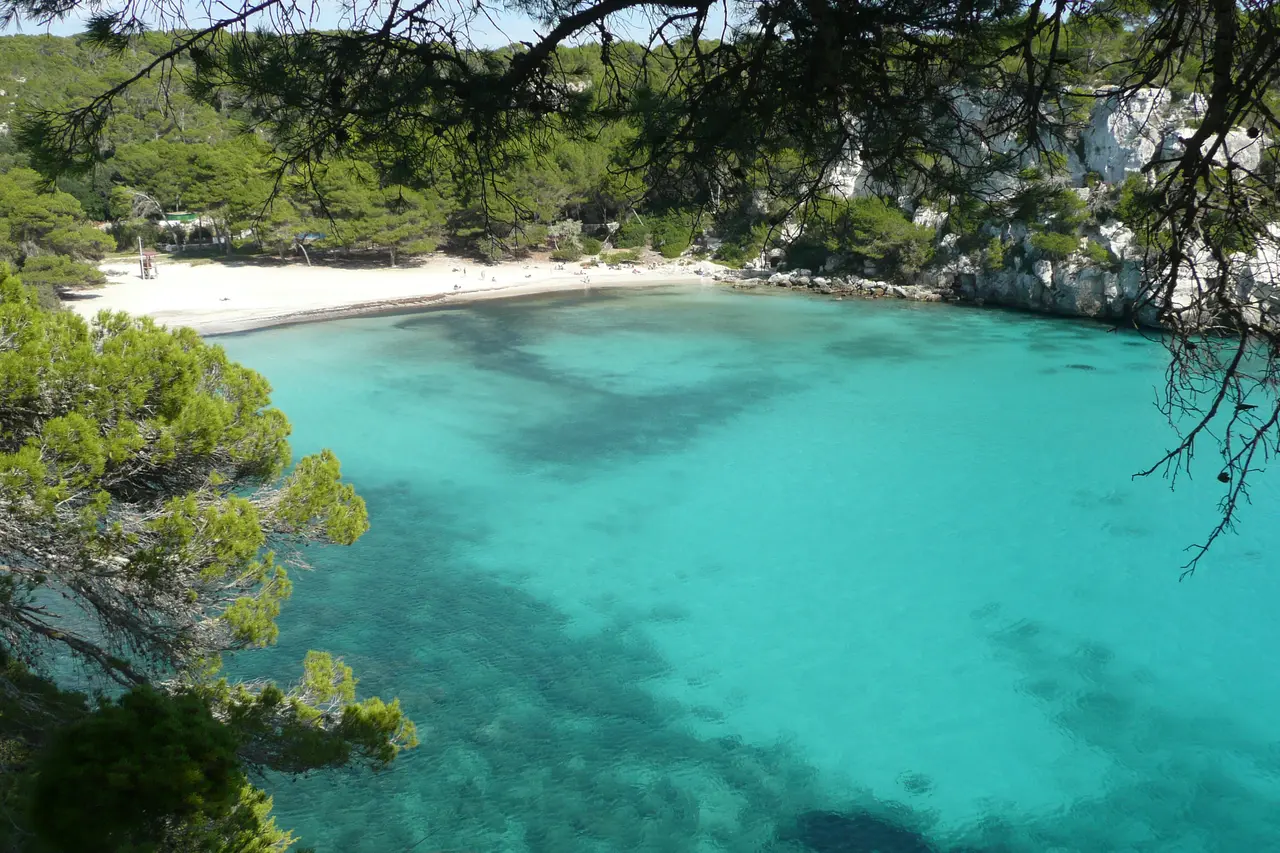
A cove of pale sand and turquoise water among the pines of the south coast, linked to its small neighbour Macarelleta by a coastal path.

Naveta des Tudons

A burial monument shaped like an upturned hull, east of Ciutadella, the best known of the island's prehistoric monuments and easy to fit into a day.

Torre d'en Galmés

A large inland Talayotic settlement near Alaior, where dry-stone houses, enclosures and halls can be explored among the wild olive trees.

Favàritx Lighthouse

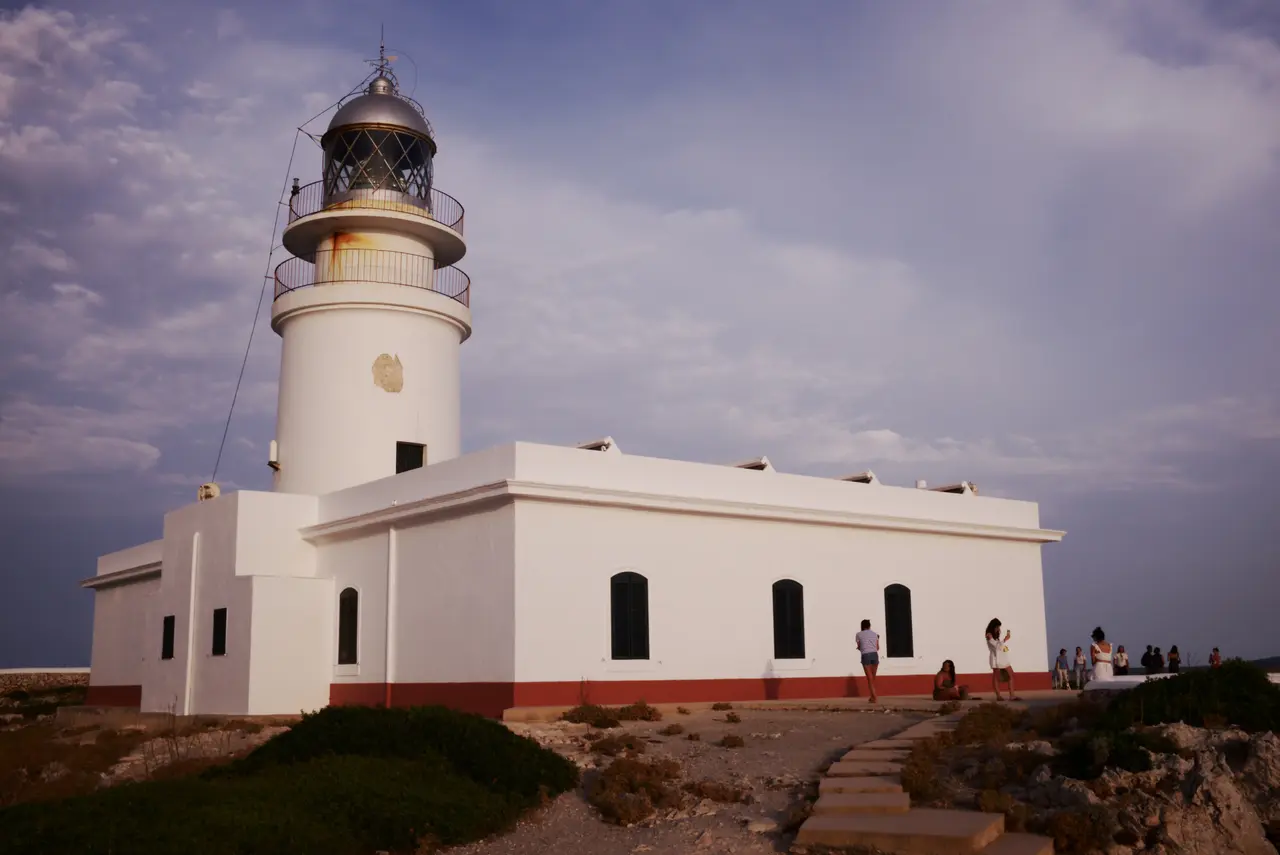
A black-and-white striped tower on a cape of dark rock, north of the S'Albufera des Grau nature park, served by bus in summer.

Monte Toro

The island's highest point, above Es Mercadal, with a sanctuary at the top and a panorama that takes in both coasts at a glance.

Binibèquer Vell

A recreated fishing village of whitewashed lanes on the south-east coast, best visited early in the morning as people live in these houses.

Good to know before you go to Menorca

Buses: bring change
On board you pay in cash, with notes of 20 € at most, according to a March 2026 guide; check with TMSA.
Macarella ticket
The bus from Ciutadella has limited seats in summer: buy your ticket online in advance and check the fare on the operator's site.
Tourist tax
A Balearic tax charged per night and per person, varying with season and lodging category, payable locally.
Car park signs
Signs on the main roads show when the cove car parks are full: check them before heading for the coast.
Health
Apply for the European Health Insurance Card at least 20 days before leaving; private doctors are very expensive (France Diplomatie, October 2026).
Theft in tourist areas
France Diplomatie reports a rise in theft in the Balearics: leave nothing visible in the car at beach car parks.
Swimming
France Diplomatie mentions drownings and hydrocution in the Balearics: enter the water gradually, especially after a walk in the sun.
ID documents
Some airlines, including Ryanair, refuse the Spanish police loss report; a French consular pass costs 50 €.
Weather alerts
Storms and flooding can occur in the Balearics: check AEMET before an autumn hike, the rainiest season.
Emergencies
112 reaches the Spanish emergency services. The AlertCops app lets you contact the police in your own language.

Your questions about Menorca

Is it better to stay in Maó or Ciutadella?
Maó suits short stays, with the airport and the best bus network. Ciutadella suits cove lovers, as the Macarella bus leaves from there, and its evenings are livelier. For a week, split your stay: line L01 links the two in 60 minutes.
Can you visit Menorca without a car?
Yes, from June to September, if you stay on the served routes: Maó, Ciutadella, Cala Galdana, Macarella, Es Grau and Favàritx. Fornells and the northern beaches take more planning. A car becomes useful once you target several coasts in one week, with a small model averaging about 18 € a day according to Kayak.
How do you get to Cala Macarella in summer?
By bus from Ciutadella, on foot or by bike, as the car park closes for the summer season: in 2026 the closure began on 1 June. Take an early departure, since the service runs from 8.25am to 8.20pm, and buy your ticket in advance on the operator's site.
What does a week for two in Menorca cost?
Allow about 2,270 € for two at comfort level, flights from Paris included, outside July and August, and about 1,420 € on a tight budget. Our October 2026 survey puts comfort at 139 € per person per day. Prices rise sharply in high summer, especially for lodging.
Can you combine Menorca and Mallorca in a week?
Yes, using the Ciutadella-Alcúdia ferry, which takes one to just over two hours depending on the operator. Stay in Ciutadella on the Menorca side, otherwise the transfer from Maó adds 60 minutes by bus. Plan a return flight from Palma rather than a round trip to Maó.
Does the wind affect a stay in Menorca?
It matters mostly from October to April, when the tramontana blows from the north over the windiest of the Balearics. Summer is calmer. When it picks up, choose the opposite coast: the southern coves stay sheltered in a tramontana, and the north is more pleasant in a southerly.

Plan your trip to Menorca

Day-by-day itinerary, budget, bookings and packing in a single app.
Aperçu de l'application PlanTripNow