Skip to content

Sardinia: when to go, what to see and how to plan

People come to Sardinia for its white sand beaches and turquoise coves, but the island offers far more: 3,500-year-old nuraghe fortresses, mountain villages with masked carnivals, deep gorges and Catalan towns. A car and a week are enough to grasp its diversity.

At a glance

Currency
Euro (€)
Time difference
UTC+1 (UTC+2 en été)
Visa
None
Tourist stay of up to 90 days
7-day budget
€1,120
Per person, comfort profile, excluding international flights.

Which Sardinian coast should you choose?

The north-east, around Olbia, brings together the Costa Smeralda and the La Maddalena archipelago, with the clearest water but also the highest prices. The east has the cliffs and coves of the Gulf of Orosei. The west, from Alghero to Oristano, is wilder and cheaper; the south combines Cagliari and the beaches of Chia. September remains the best month for swimming, with the sea at 23 °C.

When to visit Sardinia

Temperatures, rainfall and crowds month by month, to pick your window.
When to visit Sardinia
MonthTemperaturesRainCrowdsVerdict
January5 to 14 °C8 dVery quietMild but windy, 14 °C, coastal hotels largely closed: a season for towns and nuraghi.
February5 to 15 °C8 dVery quietMamoiada carnival and Oristano's Sartiglia, green countryside and few visitors.
March6 to 17 °C7 dVery quietAlmond blossom and 17 °C, ideal for hiking in the Supramonte.
April8 to 19 °C7 dQuietMild spring, sea still cool at 15 °C, Easter festivities in the villages.
May12 to 24 °C4 dModerateSant'Efisio festival in Cagliari on 1 May, 24 °C and first swims.
June15 to 28 °C2 dBusySea at 21 °C and maquis in bloom, beaches still affordable before summer.
July18 to 31 °C1 dPackedHigh summer, 31 °C, a cooling mistral, but very busy ferries and famous beaches.
August18 to 32 °C2 dPackedThe hottest and priciest month, Italian holidays around 15 August, wildfire risk.
September16 to 27 °C4 dBusySea at 23.5 °C, crowds thinning: arguably the best month for the beach.
October13 to 24 °C7 dQuietStill 24 °C, grape harvest and chestnut festivals, first rains.
November9 to 19 °C8 dVery quietMore frequent rain, many beach establishments closed.
December6 to 15 °C7 dVery quietQuiet and cool, nativity scenes and Christmas markets in the towns.
Source: Normales 1991-2020 d'Alghero (côte nord-ouest) via climatestotravel.com, représentatives des côtes de l'île ; températures de la mer relevées à Porto Cervo (même source), relevé novembre 2026. L'intérieur (Barbagia, Gennargentu) est nettement plus frais en hiver et plus chaud en été, jusqu'à 33 °C de moyenne maximale près de Cagliari.

What to discover in Sardinia?

Costa Smeralda and La Maddalena

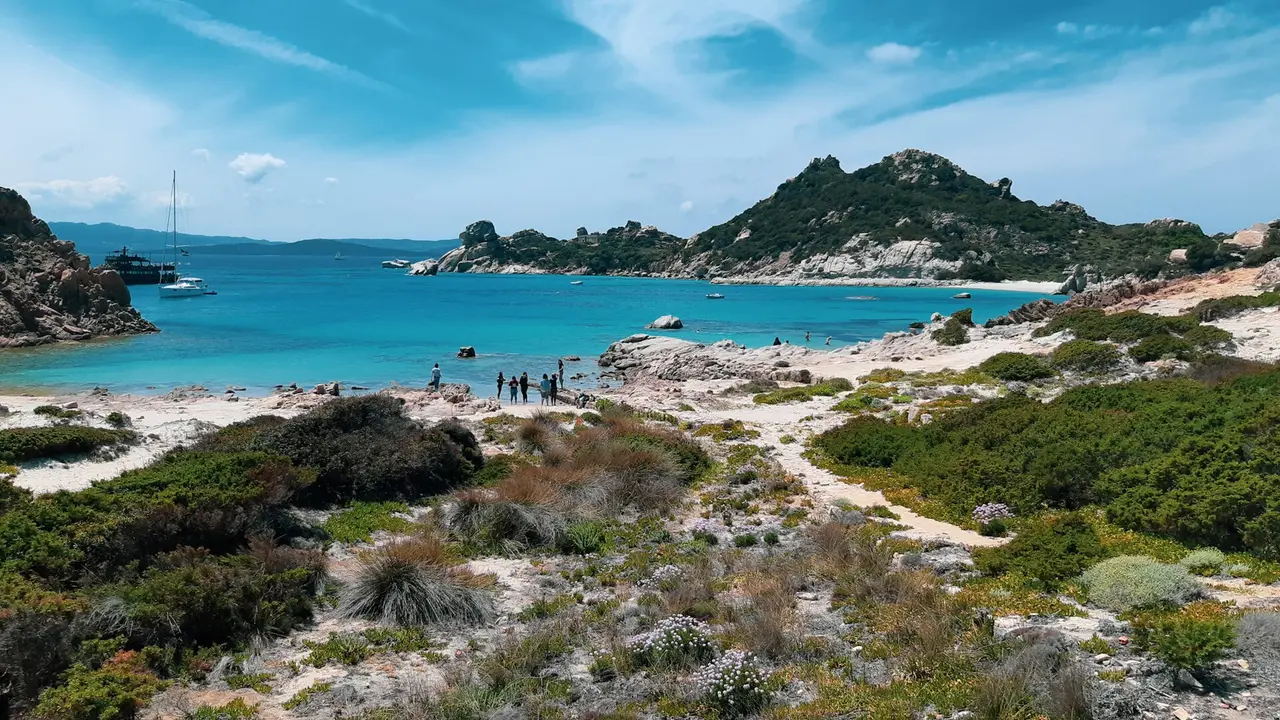
Developed from 1962 by the Aga Khan, the Costa Smeralda stretches over some twenty kilometres of granite coves around Porto Cervo, with its yachts and luxury boutiques. Just to the north, the La Maddalena archipelago, a national park, has more than 60 islands and islets. Boats from Palau or Cannigione tour Spargi, Budelli and Santa Maria in a day. Budelli's famous pink beach has been closed to the public since 1994 and can only be seen from the sea. Outside July and August, coastal hotel prices often drop by half, and the coves regain their calm from mid-September.

The Gulf of Orosei and the Supramonte

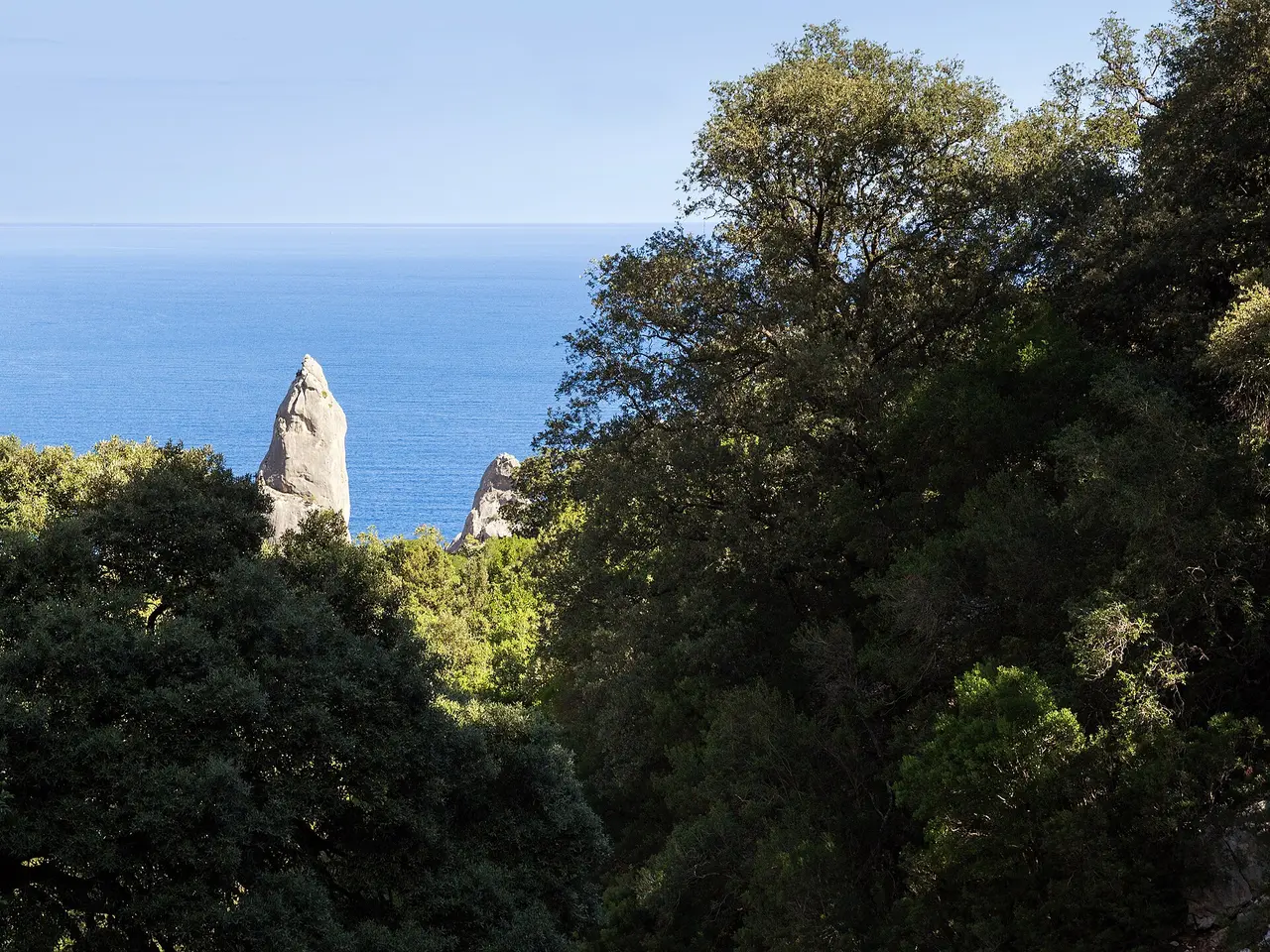
On the east coast, limestone cliffs several hundred metres high plunge into an intensely blue sea. From Cala Gonone, boats serve Cala Luna, Cala Mariolu and Cala Biriola, unreachable by road. Cala Goloritzé, with its 143 m spire, is reached on foot in an hour's descent, with limited, paid access in summer. Inland, the Gorropu gorge, among the deepest in Europe, is explored with a guide in a day. Bring hiking shoes, water and a picnic: most of these coves have no services, and the sea can force boats back early.

The nuraghi, a Bronze Age mystery

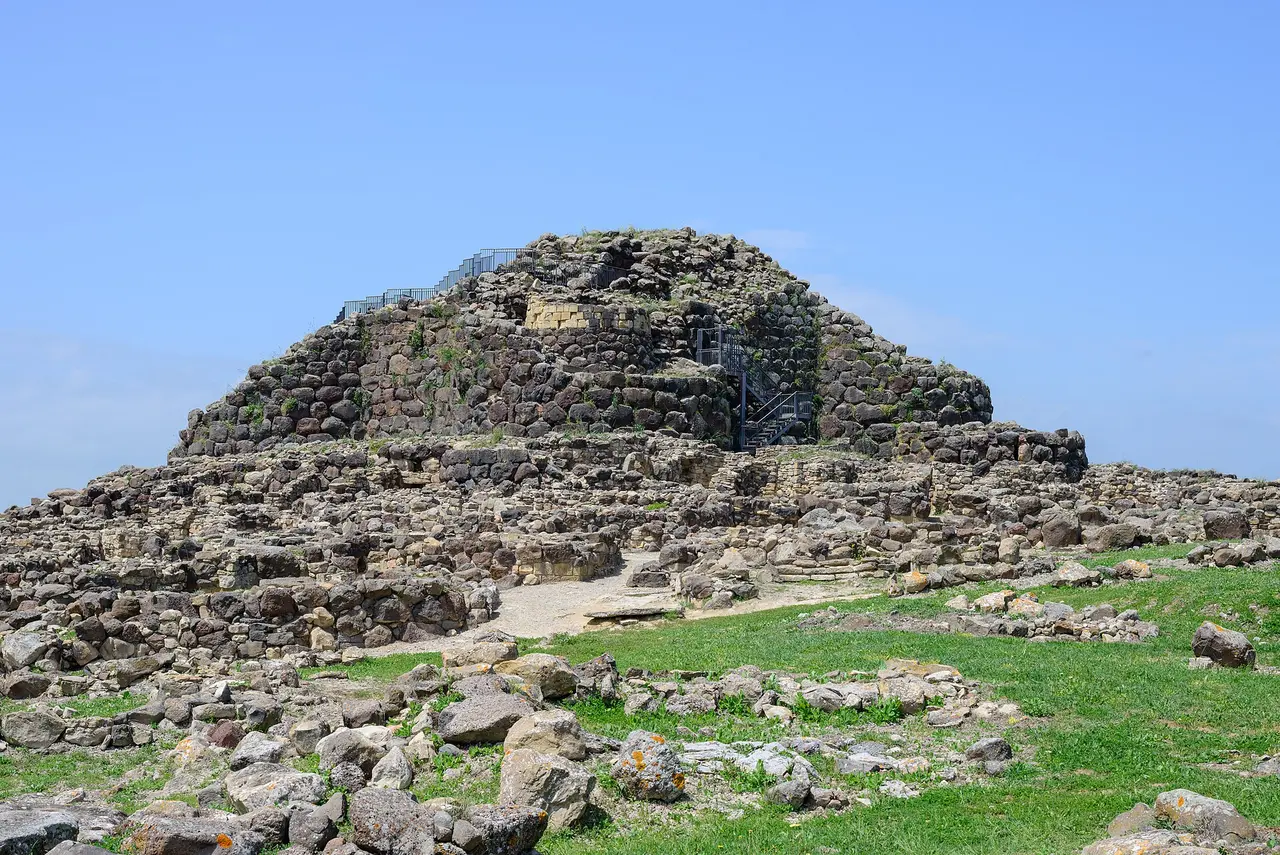
The island has more than 7,000 nuraghi, dry-stone towers built between 1800 and 500 BC by a civilisation without writing. The most spectacular, Su Nuraxi at Barumini, UNESCO-listed in 1997, can only be visited with a guide, every half hour. Santu Antine, near Torralba, and the sacred village of Serra Orrios complete the picture. Cagliari's archaeological museum displays the bronze statuettes and the Giants of Mont'e Prama, found in 1974. Tours last about an hour; come early in summer, as the sun beats down on the shadeless site, and book in high season.

Cagliari, a capital of lagoons and bastions

Set on a hill, the old Castello district overlooks the port behind its Pisan walls, with St Mary's Cathedral and St Remy Bastion for the sunset view. Below the city, Molentargius lagoon hosts flamingo colonies all year, close to Poetto beach, 8 km long. Allow two days, with a trip to the Phoenician ruins of Nora and the dunes of Chia, an hour to the south-west. In the evening, Via Garibaldi and the Marina district come alive around the terraces; flights and ferries arrive minutes from the centre.

Alghero and the west coast

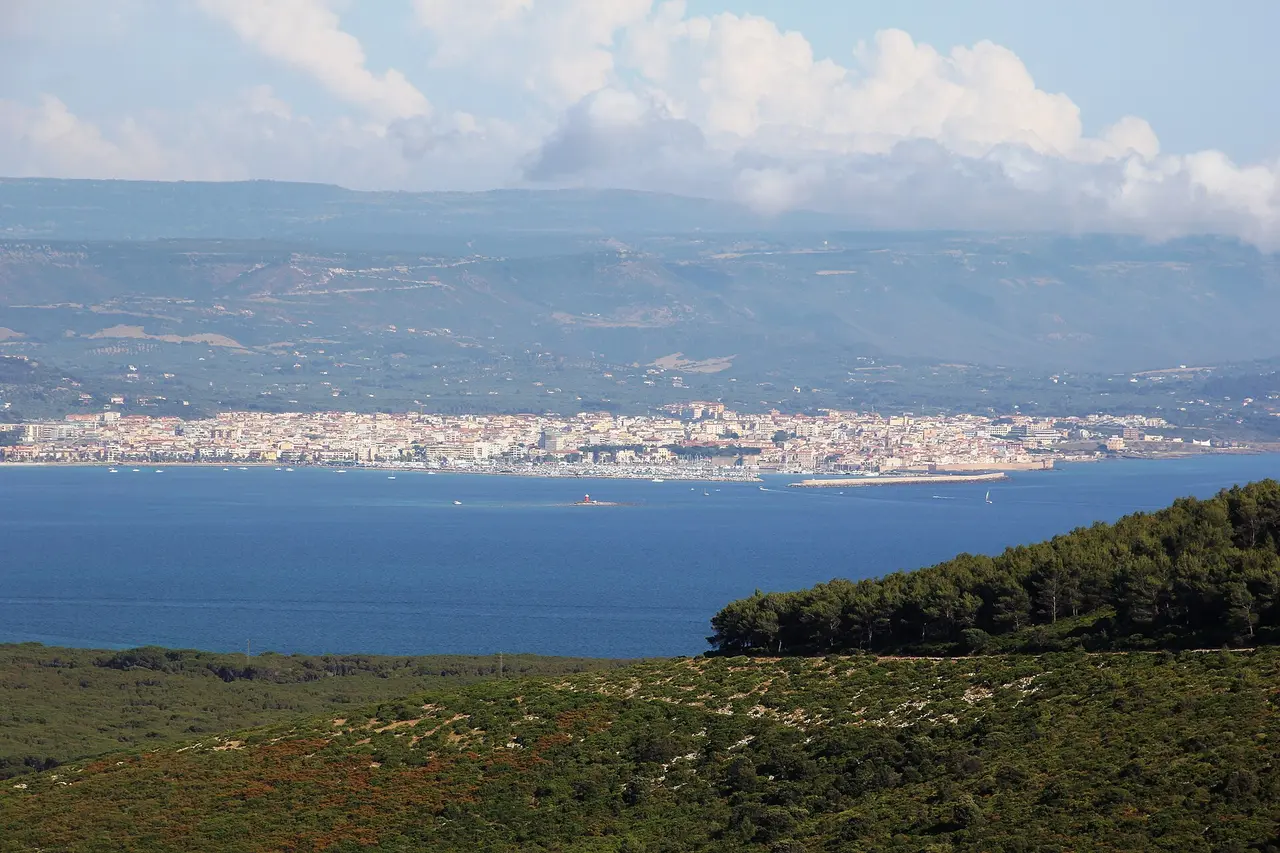
Founded by the Catalans in the 14th century, Alghero keeps its ramparts, lanes and a Catalan dialect still spoken today. 24 km away, Neptune's Grotto opens at the foot of Capo Caccia: it is reached by a 654-step staircase or by boat from the port. Further north, La Pelosa, near Stintino, offers shallow lagoon water, with booking and limited access in summer. To the south, Bosa and its colourful houses, then the Sinis peninsula and the ruins of Tharros, close the loop. The historic centre is explored on foot in half a day, and sunsets over the ramparts are among the finest on the island.

Barbagia and the traditions of the interior

In the heart of the island, Barbagia and the Gennargentu massif, rising to 1,834 m, shelter villages that have kept their traditions. In Mamoiada, the Mamuthones, in black wooden masks and laden with bells, parade on St Anthony's Day in January and during carnival. Orgosolo is covered in political murals. The area is one of the places in the world with the highest proportion of centenarians. Try carasau bread, porceddu and Cannonau wine. Mountain roads are narrow and winding: allow plenty of time for drives, and choose agriturismi to taste the local cuisine.
Cities to visit in Sardinia

Featured destinations appear first.
Coming soon.

How much it costs

Per person per day, excluding international travel.
Budget
85 €/ day
1 490 € for 2 people, 7 days, return flights included
Accommodation
35 €
Food
25 €
Local transport
15 €
Sights and activities
10 €
Comfort
160 €/ day
2 540 € for 2 people, 7 days, return flights included
Accommodation
60 €
Food
45 €
Local transport
30 €
Sights and activities
25 €
Premium
325 €/ day
4 850 € for 2 people, 7 days, return flights included
Accommodation
140 €
Food
80 €
Local transport
45 €
Sights and activities
60 €
Prices checked: Relevé novembre 2026, hors juillet-août. Hébergement : Momondo (Olbia, ville la moins chère, env. 68 dollars la nuit en moyenne ; hôtel de Cagliari env. 159 dollars), Jetsetter Alerts (mai 2026 : 90 à 170 dollars en budget et 200 à 360 dollars en milieu de gamme en intersaison). Profil backpacker en B&B ou chambre simple partagée à deux, peu d'auberges sur l'île ; chambre double partagée à deux pour comfort et premium. Voiture de location quasi indispensable, partagée à deux ; bus ARST pour le profil backpacker. Activités : excursion en bateau dans le golfe d'Orosei ou à La Maddalena, sites nuragiques. Vol A/R Paris-Cagliari ou Olbia retenu à 150 € par personne : Liligo env. 180 € (Cagliari) et 146 € (Olbia) sur 3 mois, ou-et-quand.net 123 € (Cagliari, novembre 2026), Air France env. 139 €. En août, compter le double pour l'hébergement et la voiture.

Entry, health and safety

For FR travellers

Entry requirements

No visa for a tourist stay

Aucun visa pour un séjour touristique. Une carte nationale d'identité ou un passeport français en cours de validité suffit, à l'exclusion de tout autre document. Séjour sans visa limité à trois mois.

Stay allowed for up to 90 days.

Health

Advised: Être à jour du calendrier vaccinal français, notamment diphtérie, tétanos, poliomyélite, coqueluche et rougeole. Aucun vaccin obligatoire mentionné par la source.

Italie en vigilance normale (France Diplomatie, fiche du 15 septembre 2026). Feux de forêt fréquents en été : respecter les interdictions d'accès et de barbecue. Chaleur jusqu'à 33 °C de moyenne maximale dans les plaines en juillet-août. Emporter du sable, des galets ou des coquillages des plages est interdit et sanctionné par de fortes amendes. Courants et mistral parfois violents : respecter les drapeaux de baignade. Tiques en zone rurale. Eau du robinet généralement potable.

Safety

Normal precautions

Emergency

112

Checked in novembre 2026 against the official source. Entry rules change: check the official source before you travel, it alone is authoritative.

Sardinia in pictures

Photo credits : Daniela Porta, CC BY-SA 4.0, Wikimedia Commons ; Unukorno, CC BY 4.0, Wikimedia Commons ; Norbert Nagel, CC BY-SA 3.0, Wikimedia Commons ; Gianni Careddu, CC BY-SA 4.0, Wikimedia Commons ; goldpicasa, CC BY 3.0, Wikimedia Commons ; Gianni Careddu, CC BY-SA 3.0, Wikimedia Commons

Sardinia's must-sees

Beaches, nuraghe sites and towns not to miss.

La Maddalena archipelago

A national park of more than 60 islands with turquoise water.

Cala Goloritzé

A white pebble cove and a 143 m limestone spire.

Su Nuraxi

The UNESCO-listed nuraghe fortress of Barumini.

Neptune's Grotto

A sea cave at the foot of the Capo Caccia cliffs.

La Pelosa

A beach with lagoon-like water near Stintino.

Cagliari's Castello

A hilltop old town and St Remy Bastion.

Gorropu gorge

A limestone canyon among the deepest in Europe.

Practical information for Sardinia

Getting there
Direct flights from Paris to Cagliari, Olbia or Alghero, around 150 euros return outside summer; ferries from Marseille, Toulon or Genoa, and from Bonifacio in Corsica.
Getting around
A car is essential: ARST buses serve beaches poorly, and Cagliari to Olbia takes 4 hours by road.
Regulated beaches
La Pelosa, Cala Goloritzé and some coves limit entries in summer, with booking and an access fee.
Sand and shells
Taking sand, pebbles or shells is forbidden, checked at airports and liable to heavy fines.
Wildfires
High risk in summer: respect bans on entering woodland and lighting fires.
Documents
EU citizens need a valid ID card or passport; other nationalities follow Schengen rules.

Frequently asked questions about Sardinia

What is the best time for Sardinia?
June and September combine warm sea, between 21 and 23.5 °C, with reasonable crowds. July and August are the hottest and priciest, with packed ferries and beaches. Spring suits hiking in the Supramonte and discovering the nuraghe sites.
How many days do you need to visit Sardinia?
A week lets you see half the island, for example the north-east and the Gulf of Orosei, or the west down to Cagliari. You need two weeks for a full tour, as the island is large and mountain roads are slow.
Flight or ferry to Sardinia?
Flying is fastest, with direct flights from Paris in under two hours. The overnight ferry from Marseille or Toulon lets you bring your car. From Corsica, the Bonifacio to Santa Teresa Gallura crossing takes about an hour.
Where to stay in Sardinia?
Change base by area: Palau or San Teodoro for the north-east, Cala Gonone for the Gulf of Orosei, Alghero for the west and Cagliari for the south. The Costa Smeralda is very expensive in summer, while the interior and the west are more affordable.
Is Sardinia expensive?
Allow about 85 euros per person per day in a B&B with buses, and 160 euros in a hotel with a rental car, excluding flights. Prices double in August on the north and east coasts, while the interior stays much cheaper all year.

Plan your trip to Sardinia

Day-by-day itinerary, budget, bookings and packing in a single app.
Aperçu de l'application PlanTripNow