Skip to content

Serengeti: when to go, what to see and how to plan

The Serengeti owes its fame to the great migration, but its plains offer exceptional safaris all year. The key is choosing the right area for the month: the south early in the year for the calving, the north in summer for the river crossings.

At a glance

Currency
Tanzanian Shilling
Time difference
UTC+3
Visa
Required
7-day budget
€3,220
Per person, comfort profile, excluding international flights.

Where is the migration in the Serengeti each month?

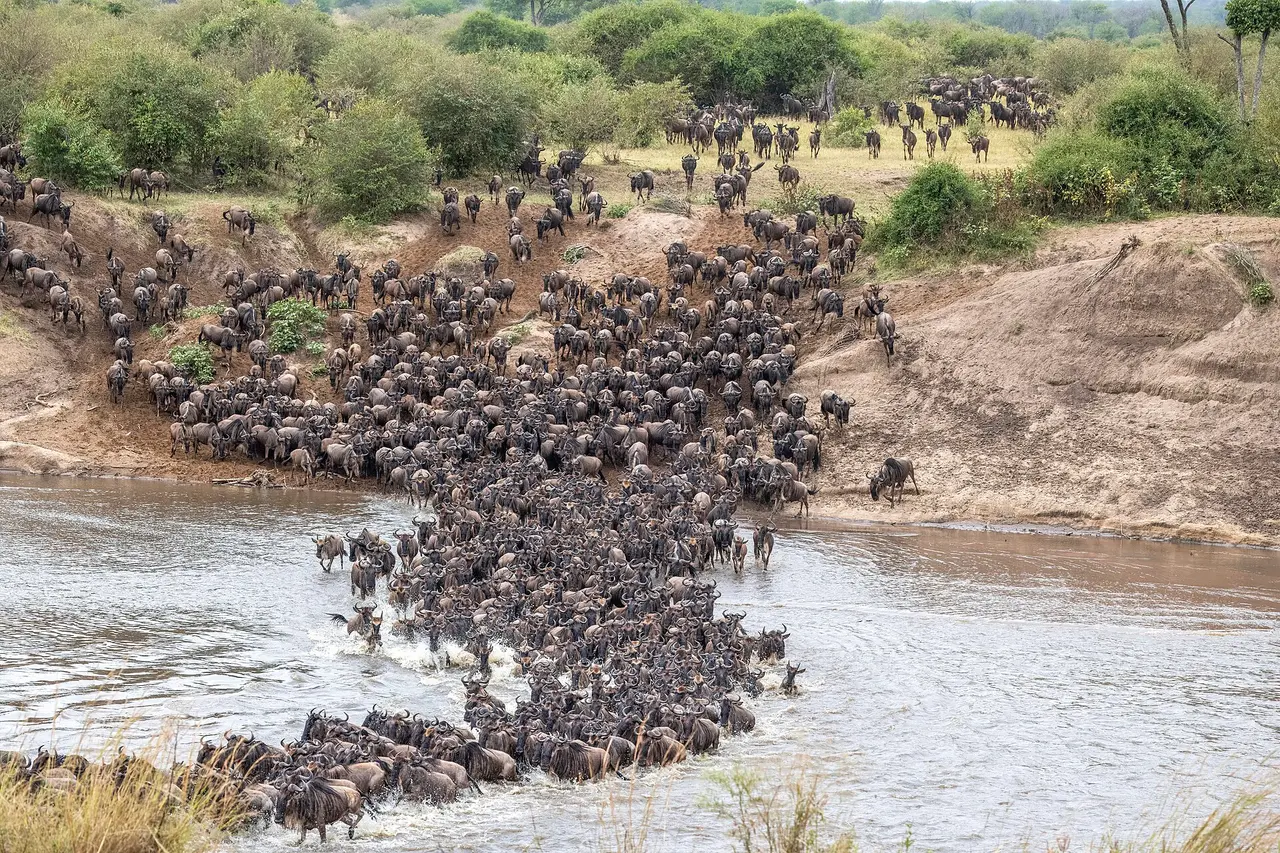
From December to March, the herds occupy the southern plains around Ndutu, where wildebeest calve in February. From April to June, they move up through the centre and the western corridor, then from July to October they cross the Mara River in the north, towards Kenya. The park entrance fee is 70.80 dollars per non-resident adult per day.

When to visit Serengeti

Temperatures, rainfall and crowds month by month, to pick your window.
When to visit Serengeti
MonthTemperaturesRainCrowdsVerdict
January16 to 29 °C14 dBusyShort dry season, wildebeest herds on the southern plains around Ndutu.
February16 to 29 °C14 dBusyWildebeest calving season at Ndutu, very active predators: a highlight.
March16 to 29 °C18 dQuietStart of the long rains, green landscapes, falling rates.
April16 to 28 °C22 dVery quietThe wettest month, sometimes muddy tracks, some camps closed.
May16 to 27 °C18 dVery quietEnd of the rains, the migration moving to the centre and west, few visitors.
June15 to 27 °C8 dModerateStart of the dry season, the migration in the western corridor and the Grumeti River.
July14 to 26 °C6 dPackedDry season, first Mara River crossings in the north, peak season.
August15 to 27 °C7 dPackedPeak of the Mara River crossings, northern camps full.
September15 to 28 °C7 dBusyStill dry, crossings in the north and easy viewing, thinning crowds.
October16 to 29 °C10 dModerateThe migration heading back south, first showers at month's end.
November16 to 28 °C17 dQuietShort rains, grass regrowing and herds returning to the centre.
December16 to 28 °C16 dBusySouthern plains turning green, very popular year-end holidays.
Source: Normales du Serengeti (1 400 m) via climatestotravel.com, page Tanzanie (minimales, maximales et jours de pluie, période non précisée), moyennes calculées comme la demi-somme, relevé novembre 2026. Proche de l'équateur : températures stables toute l'année, grandes pluies de mars à mai, petites pluies en novembre-décembre. Parc intérieur, sans température de mer.

What to discover in the Serengeti?

Seronera, the heart of the park

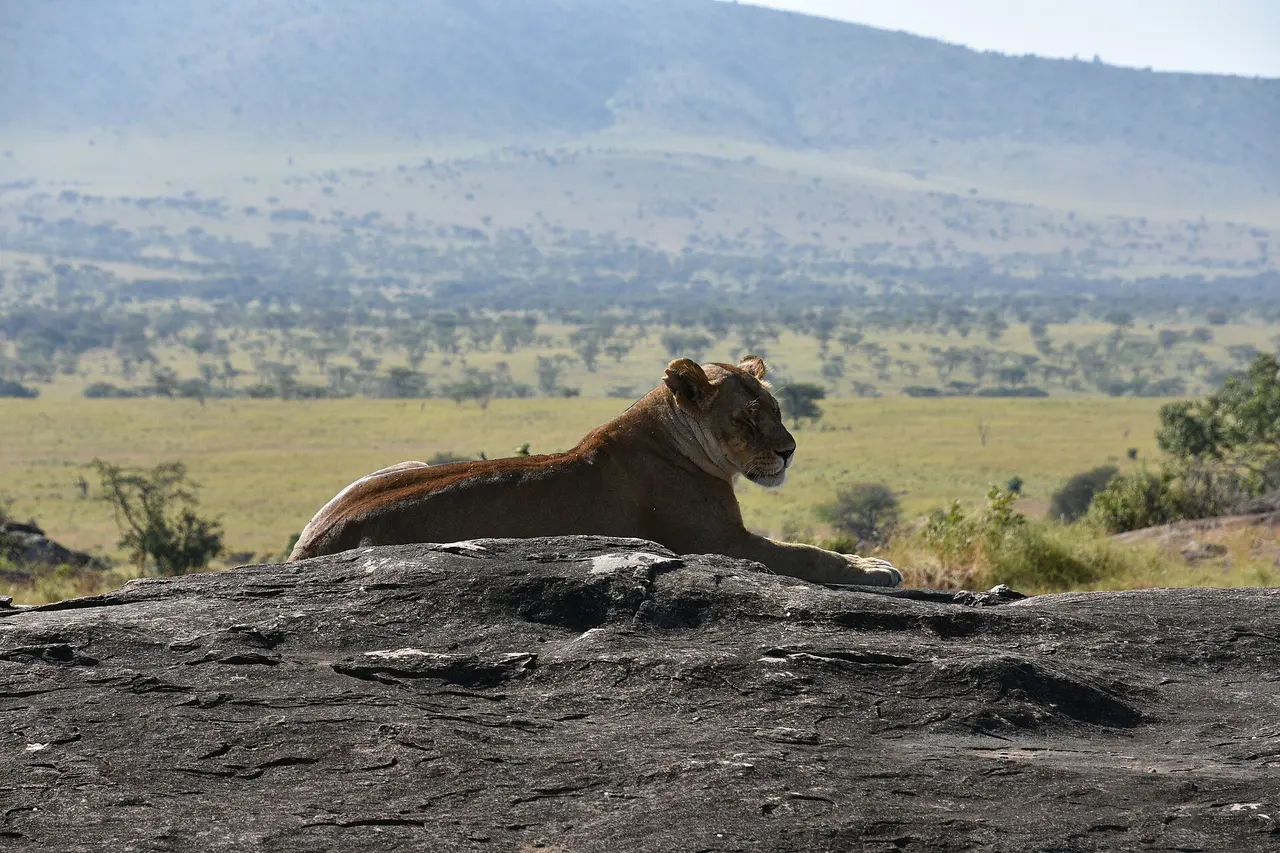
The Seronera valley, in the centre, has resident wildlife all year thanks to its permanent river. It is one of the best places in Africa to see leopards, often lying in acacias, and lions around the kopjes, granite outcrops rising from the plains. An airstrip links Seronera to Arusha in an hour's flight. Allow at least two nights there, ideally three.

Ndutu and the calving season

In the south, on the edge of the Ngorongoro Conservation Area, the Ndutu plains host the herds from December to March. In February, hundreds of thousands of wildebeest calves are born within a few weeks, drawing lions, cheetahs and hyenas. Mobile camps set up in the area during this period and are booked far ahead. Predators are then very active, and cheetahs are easy to spot.

The north and the Mara crossings

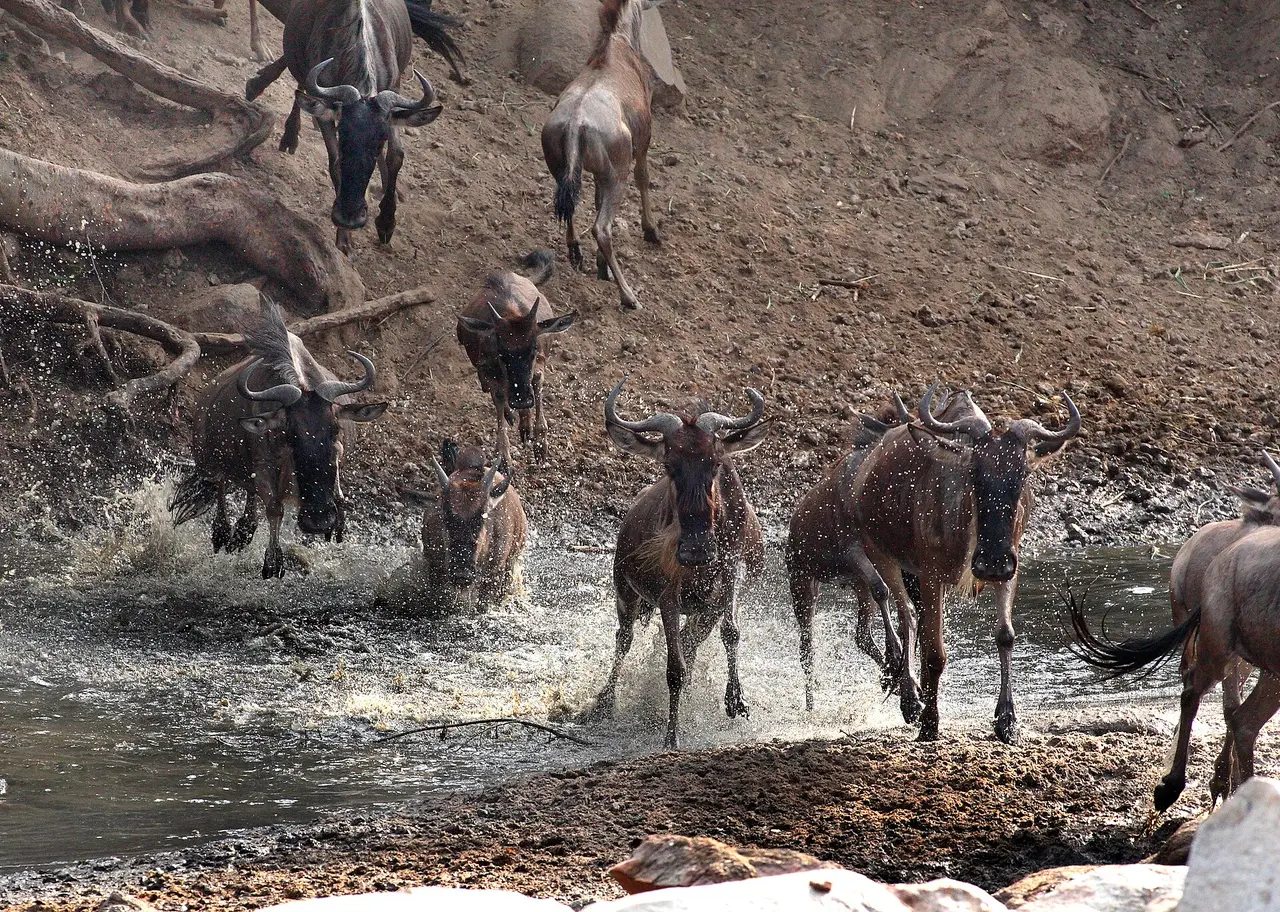
From July to October, wildebeest cross the Mara River around Kogatende, under threat from crocodiles. Crossings are unpredictable: you sometimes wait hours by the water. The remote area is mostly reached by bush flight. Dawn balloon flights, from Seronera or the north, offer a unique view of the herds. Northern camps should be booked several months ahead for the peak of the crossings, in August and September.

Ngorongoro and the northern circuit

Most safaris combine the Serengeti with the Ngorongoro Crater, a caldera nearly 20 km across home to black rhinos and lions, with Tarangire and its baobabs, and with Lake Manyara. Between the crater and the Serengeti, Olduvai Gorge has yielded some of the oldest known human fossils. Arusha is the gateway to this circuit. Allow at least five days for the full circuit.

Cities to visit in Serengeti

Featured destinations appear first.
Coming soon.

How much it costs

Per person per day, excluding international travel.
Budget
195 €/ day
4 330 € for 2 people, 7 days, return flights included
Accommodation
30 €
Food
15 €
Local transport
60 €
Sights and activities
90 €
Comfort
460 €/ day
8 040 € for 2 people, 7 days, return flights included
Accommodation
180 €
Food
20 €
Local transport
140 €
Sights and activities
120 €
Premium
850 €/ day
13 500 € for 2 people, 7 days, return flights included
Accommodation
480 €
Food
30 €
Local transport
180 €
Sights and activities
160 €
Prices checked: Relevé novembre 2026, conversion 1 USD = 0,86 € (budget pays Tanzanie, septembre 2026). Safaris : tarifs 2026 publiés par Duma Explorer et African Safari Mag (juin 2026) repris dans le budget Tanzanie : camping en groupe 180 à 250 dollars par jour, lodges en privé 400 à 700 dollars, camps de luxe 900 dollars et plus ; droit d'entrée du Serengeti 70,80 dollars par jour TVA incluse, pourboires inclus dans les activités. Hébergement par personne, chambre ou tente partagée à deux. Transport : véhicule 4x4 avec chauffeur-guide, vols de brousse pour premium. Vol A/R Paris-Kilimandjaro avec escale 800 € par personne (budget pays Tanzanie : Air France, Lufthansa et Discover, septembre à décembre 2026). Hors juillet-août et Noël, plus chers.

Entry, health and safety

For FR travellers

Entry requirements

Visa required

Visa touristique obligatoire (50 USD ou 50 EUR), à demander en ligne sur visa.immigration.go.tz ou à l'arrivée dans les principaux aéroports et ports ; seuls les dollars émis après 2006 sont acceptés. Assurance voyage obligatoire pour Zanzibar (44 USD, valable 90 jours).

Passport valid for 6 months beyond your return date.

Health

Required: Fièvre jaune : obligatoire pour les voyageurs venant d'un pays endémique ou y ayant transité plus de 12 heures ; la preuve est souvent exigée indistinctement à l'arrivée.

Advised: Hépatite A et typhoïde selon les conditions de séjour, hépatite B et tuberculose pour les séjours longs, méningite ACWY, rage, dengue et chikungunya en cas d'épidémie.

Traitement préventif du paludisme recommandé ; mouches tsé-tsé présentes dans le centre et l'ouest du parc : vêtements clairs et répulsif. Tanzanie en vigilance renforcée hors zones déconseillées du sud et de l'ouest (France Diplomatie, sécurité mise à jour le 21 octobre 2026) : le nord (Arusha, Serengeti, Ngorongoro) est en jaune, suivre les consignes des opérateurs de safari. Rester dans le véhicule sauf zones autorisées, ne pas circuler de nuit hors des villes. Les compagnies aériennes tanzaniennes sont interdites dans l'espace aérien européen : choisir des opérateurs de vols de brousse reconnus.
Safety

Increased caution

Checked in novembre 2026 against the official source. Entry rules change: check the official source before you travel, it alone is authoritative.

Serengeti in pictures

Photo credits : Charles J. Sharp, CC BY-SA 4.0, Wikimedia Commons ; Wolves201, CC BY-SA 4.0, Wikimedia Commons ; Richard Mortel from Riyadh, Saudi Arabia, CC BY 2.0, Wikimedia Commons ; Giles Laurent, CC BY-SA 4.0, Wikimedia Commons ; Eric Kilby, CC BY-SA 2.0, Wikimedia Commons

Serengeti must-sees

Areas and natural spectacles not to miss.

The great migration

More than a million wildebeest and zebras constantly on the move.

Seronera valley

Leopards in the acacias and lions on the kopjes.

Ndutu plains

Wildebeest calving in February.

Mara River

Spectacular crossings from July to October.

Moru kopjes

Granite boulders and a black rhino refuge.

Dawn balloon flight

Floating over the plains at sunrise.

Practical information for the Serengeti

Visa
Tourist visa required for French and many EU citizens, 50 dollars or 50 euros, online on the official site or on arrival; passport valid six months.
Getting there
Flight to Kilimanjaro, around 800 euros return from Paris, then road or bush flight from Arusha.
Entrance fee
70.80 dollars per non-resident adult per day, often included in the safari price.
Health
Malaria and tsetse flies: preventive treatment, repellent and light-coloured clothing.
Safety
Northern Tanzania under heightened vigilance; stay in the vehicle and follow your guide.
Organisation
Safari with a licensed operator and driver-guide: self-driving is rare and not advised.

Frequently asked questions about the Serengeti

When to see the great migration in the Serengeti?
All year, provided you go to the right place: southern plains from December to March, with calving in February; centre and west from April to June; north and the Mara River from July to October. April and May, very rainy, are the quietest months.
How many days do you need in the Serengeti?
Two nights in the park are a minimum, three to four to follow the migration. Most travellers do a five to seven-day circuit combining Tarangire, Ngorongoro and the Serengeti. Add a day if you want to visit Ndutu or the north.
What budget for a Serengeti safari?
Allow about 195 euros per person per day on a group camping safari, and 460 euros in a lodge with a private vehicle, park fees included and excluding flights. Luxury camps in the north often exceed 800 euros a day.
Serengeti or Masai Mara?
Both form a single ecosystem. The much larger Serengeti offers the migration all year depending on the area; the smaller Masai Mara, closer to Nairobi, concentrates the herds from July to October.
Do you need a yellow fever vaccine?
It is compulsory if you arrive from a country where the disease is present or have transited there for more than 12 hours, and proof is sometimes requested from everyone. Malaria prevention is recommended.
Can you combine it with Zanzibar?
Yes, it is the most common combination: a domestic flight links Arusha or the Serengeti to Zanzibar in one to two hours for a few beach days after the safari.

Plan your trip to Serengeti

Day-by-day itinerary, budget, bookings and packing in a single app.
Aperçu de l'application PlanTripNow