Skip to content

Utah road trip: visiting the five national parks and picking your season

Southern Utah lines up five national parks within a few hundred kilometres: the arches of Moab, the canyons of Canyonlands, the folded cliffs of Capitol Reef, the hoodoos of Bryce and the walls of Zion. Up north, Salt Lake City, the Great Salt Lake and the Wasatch ski resorts are another world entirely.
  • 1 city

At a glance

Currency
US Dollar ($)
Time difference
UTC-7 (UTC-6 en été)
Visa
None
Tourist stay of up to 90 days
7-day budget
€1,771
Per person, comfort profile, excluding international flights.

Why take a trip to Utah?

Utah is home to five national parks, the Mighty 5: Arches, Canyonlands, Capitol Reef, Bryce Canyon and Zion, linked by scenic roads such as Scenic Byway 12. Spring and mid-September to October are the mildest seasons, while summer often tops 38 °C in the Moab desert.

When to visit Utah

Temperatures, rainfall and crowds month by month, to pick your window.
When to visit Utah
MonthTemperaturesRainCrowdsVerdict
January-6 to 6 °C5 dQuietNear-empty canyons and arches sometimes dusted with snow, but 6 °C at best in Moab and freezing nights.
February-3 to 11 °C6 dQuietStill too cold to camp: February mostly suits Wasatch skiers, and the canyons are yours.
March2 to 18 °C6 dModerateThe desert wakes up with 18 °C afternoons in Moab, while Bryce can still get heavy snow.
April6 to 22 °C5 dBusyIdeal mildness in Arches and Canyonlands, but April is when Moab hotel rates peak.
May10 to 28 °C5 dPackedMay brings 28 °C in Moab and cool evenings: book your motel and car several weeks ahead.
June15 to 34 °C3 dBusyThe driest month, only three days of rain, but already 34 °C: hike from dawn.
July19 to 37 °C5 dBusyAvoid the desert at 37 °C in Moab; head up to the Bryce plateau instead, around 27 °C.
August18 to 36 °C6 dBusyThunderstorm season: flash floods in the Narrows and slot canyons, check the warnings every morning.
September13 to 31 °C5 dPackedAfter mid-September the heat eases to 31 °C, and the spring crowds return at once.
October5 to 23 °C5 dBusyOur favourite month: 23 °C in Moab, low light on the arches, first snow possible at Bryce.
November-1 to 14 °C4 dQuietNovember tips into winter: car hire at its cheapest, but short days and nights below zero.
December-6 to 7 °C6 dQuietDecember leaves the parks to well-wrapped walkers and the snowy Wasatch slopes to skiers.
Source: Températures et jours de précipitations (au moins 0,25 mm) : normales 1991-2020 de la station NOAA de Moab (USC00425733), via Wikipedia, recoupées avec les moyennes mensuelles du National Park Service pour Arches (page mise à jour le 18 avril 2025). Relevé novembre 2026. Cadrage sur le pays des canyons autour de Moab ; le plateau de Bryce Canyon (2 400 à 2 700 m) est nettement plus frais, jusqu'à 9 °C de moins en été (normales NOAA 1991-2020 du siège du parc), avec des gelées presque chaque nuit d'octobre à mai selon le NPS. Affluence et prix : estimation éditoriale d'après le NPS (printemps et mi-septembre à octobre, saisons les plus fréquentées), HotelsCombined et Kayak (hôtels de Moab les moins chers en hiver, les plus chers au printemps).

What to see in Utah?

Canyon country around Moab

Moab is the base for two parks. The Arches entrance is 8 km north of town; allow 30 to 35 minutes of park road to the Delicate Arch trailhead and 40 to 45 minutes to Devils Garden. Canyonlands is mostly visited via the Island in the Sky mesa, where Mesa Arch frames the sunrise, and Dead Horse Point State Park overlooks a bend of the Colorado. Two full days is the minimum. The area can also be reached from Colorado: Arches is 580 km from Denver.

Zion Canyon and the Virgin River

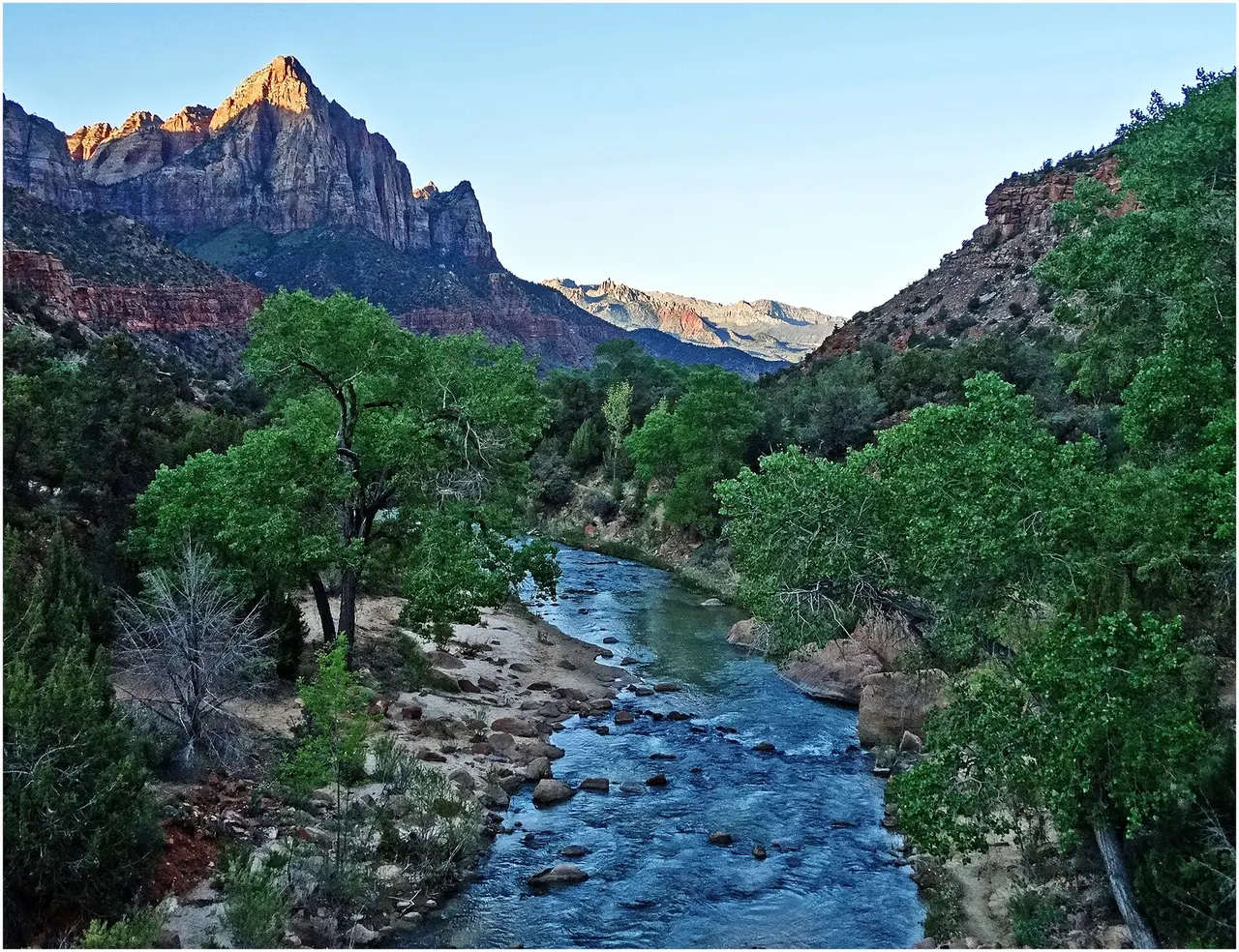
Zion is explored by free shuttle: in season, the canyon road is closed to private cars, and buses run every 5 to 10 minutes. The Narrows can be hiked upriver to Big Spring without a permit, but they close as soon as the flow exceeds 150 cubic feet per second or a flash flood warning is issued. Angels Landing, 8.7 km return with 454 m of climbing, requires a permit awarded by lottery. Plan two nights in Springdale, at the park entrance.

The Bryce plateau and its hoodoos

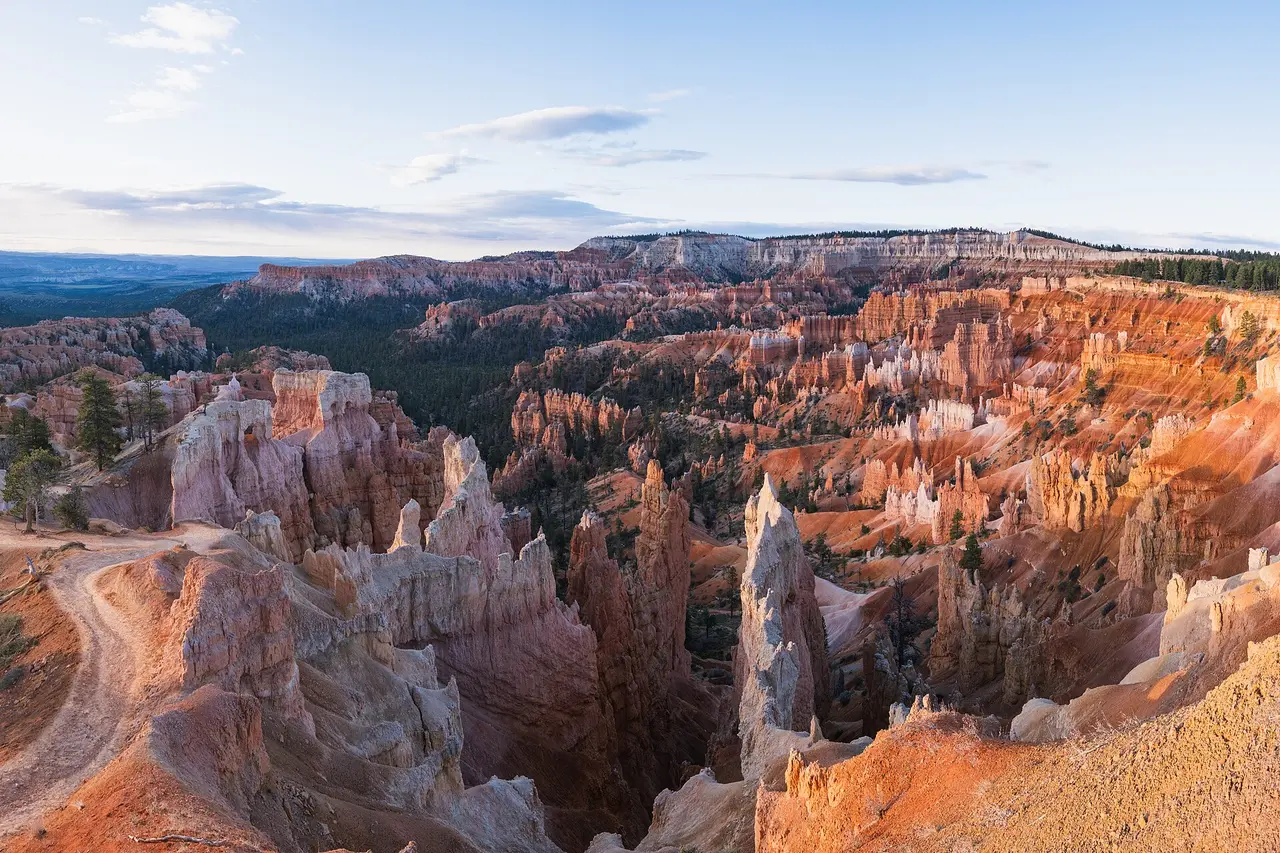
The rim of Bryce Canyon sits between 2,400 and 2,700 m, above amphitheaters of orange pinnacles up to about sixty metres tall. Altitude changes everything: it freezes almost every night from October to May, and July and August bring short but violent thunderstorms with plenty of lightning. Entrance stations take cards only. Between Bryce and Zion, the road via Mount Carmel takes just under two hours, so the two parks pair easily on one trip, and you can carry on to the Grand Canyon in Arizona.

Capitol Reef and Scenic Byway 12

Less crowded, Capitol Reef follows the Waterpocket Fold, a wrinkle of colourful cliffs. Its paved Scenic Drive runs 13 km, and the historic Fruita oasis keeps orchards where you can pick fruit in season, along with the Gifford House and its pies. The park is a certified Dark Sky Park: stay for the stars by sleeping in Torrey, fifteen minutes away. Towards Bryce, Scenic Byway 12 takes about three hours without stops, crossing the narrow Hogback ridge.

Salt Lake City, the Great Salt Lake and the Wasatch

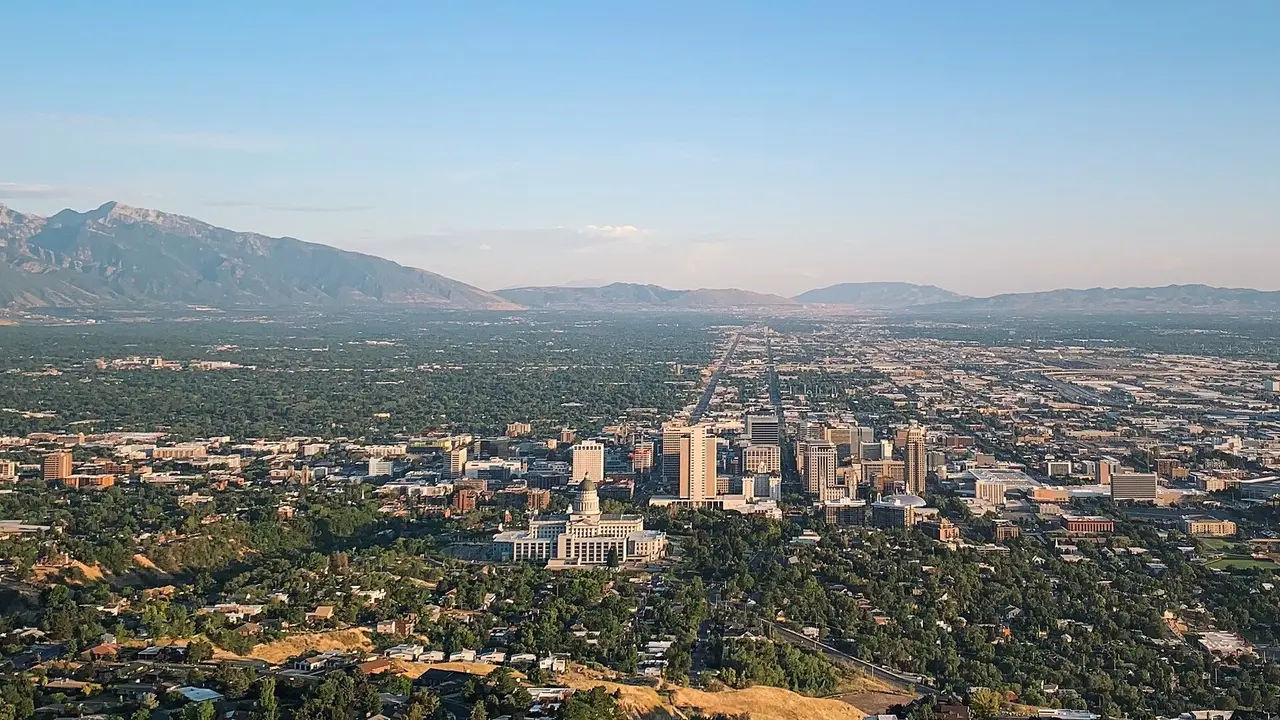
In the north, Salt Lake City is the state's air gateway, about 370 km from Arches and 480 km from Zion. One day covers Temple Square and Antelope Island, linked to the shore by a causeway and roamed by free-ranging bison. Park City and its ski resorts are 35 minutes from the airport. In winter, temperature inversions can trap fog and pollution in the valley for days, while the peaks stay in the sun.

Cities to visit in Utah

Featured destinations appear first.

How much it costs

Per person per day, excluding international travel.
Budget
79 €/ day
3 404 € for 2 people, 7 days, return flights included
Accommodation
11 €
Food
25 €
Local transport
27 €
Sights and activities
16 €
Comfort
253 €/ day
5 840 € for 2 people, 7 days, return flights included
Accommodation
96 €
Food
58 €
Local transport
40 €
Sights and activities
59 €
Premium
422 €/ day
8 206 € for 2 people, 7 days, return flights included
Accommodation
152 €
Food
103 €
Local transport
44 €
Sights and activities
123 €
Prices checked: Relevé du 1er novembre 2026, au taux BCE du 30 octobre 2026 (1 EUR = 1,1172 USD). Hébergement par personne et par nuit : backpacker en emplacement de camping de parc national (Fruita, Capitol Reef, 25 USD la nuit selon le NPS) partagé à deux, tente à prévoir ; comfort sur la moyenne des hôtels de Moab relevée par HotelsCombined (214 USD la nuit, données du 4 août 2026) en chambre double partagée ; premium sur le mois le plus cher de HotelsCombined (339 USD en avril) en chambre double partagée ; taxes de séjour en sus. Repas d'après Numbeo Salt Lake City (55 contributeurs, mise à jour du 31 octobre 2026 : 18 USD le repas bon marché, 10 USD le menu fast-food, 73,50 USD le dîner pour deux en milieu de gamme). Transport : voiture indispensable, location moyenne à l'aéroport de Salt Lake City selon Kayak (67 USD par jour, 38 USD en novembre, page non datée), partagée à deux, plus carburant (Numbeo, 1,17 USD le litre) sur une hypothèse de 230 km par jour et 8 à 12 L/100 km. Activités : pass America the Beautiful non-résident à 250 USD (NPS, page du 9 octobre 2026), qui évite la surcharge de 100 USD par adulte à Zion et Bryce, réparti sur 2 personnes et 7 jours ; comfort ajoute un rafting d'une demi-journée sur le Colorado tous les deux jours (environ 95 USD, prestataires de Moab sur Travelocity), premium une excursion guidée par jour (tour en Hummer à Moab, 119 USD, Spur Experiences) ; agrégateurs non datés à revérifier. Vol A/R Paris-Salt Lake City à 1 149 EUR par personne, moyenne Kayak sur douze mois relevée le 1er novembre 2026 (janvier le moins cher, juillet le plus cher). Hors haute saison des hôtels de Moab (avril-mai et septembre).

Entry, health and safety

For FR travellers

Entry requirements

No visa for a tourist stay

Programme d'exemption de visa (VWP) : autorisation électronique ESTA à demander en ligne avant le départ, au moins 72 heures avant selon le DHS, valable 2 ans, pour un séjour touristique ou d'affaires de 90 jours maximum. Passeport électronique ou biométrique exigé, le passeport d'urgence ne permet pas d'entrer sans visa ; aucune règle légale de 6 mois pour les Français, mais France Diplomatie recommande 6 mois de validité après le départ.

Stay allowed for up to 90 days.

Health

Advised: Vaccinations du calendrier français à jour (diphtérie, tétanos, poliomyélite, coqueluche, rougeole) ; selon la situation, tuberculose pour les enfants en séjour long et rage selon le type de voyage.

Soins d'excellente qualité mais très coûteux, sans convention de sécurité sociale avec la France : assurance couvrant hospitalisation et rapatriement indispensable. En Utah : chaleur souvent supérieure à 38 °C l'été à Arches selon le NPS, randonnées à faire tôt avec beaucoup d'eau ; orages de fin d'été et crues soudaines dans les canyons étroits, les Narrows de Zion fermant au-delà de 150 CFS de débit ; foudre fréquente à Bryce Canyon en juillet-août. Incendies possibles dans l'Ouest toute l'année. Au volant, taux d'alcool limite de 0,05 % en Utah (Utah Highway Safety Office).

Safety

Normal precautions

Emergency

911

Checked in novembre 2026 against the official source. Entry rules change: check the official source before you travel, it alone is authoritative.

Utah in pictures

Photo credits : Aneta Kaluzna, CC BY-SA 4.0, Wikimedia Commons ; Christian David, CC BY-SA 4.0, Wikimedia Commons ; Don Graham from Redlands, CA, USA - God bless it!, CC BY-SA 2.0, Wikimedia Commons ; Sakturner, CC BY-SA 4.0, Wikimedia Commons ; CanyonlandsNPS, Public domain, Wikimedia Commons ; Jean-Christophe BENOIST, CC BY 3.0, Wikimedia Commons ; J Brew from near Seattle, USA, CC BY-SA 2.0, Wikimedia Commons ; Emanuel Hahn hahnbo, CC0, Wikimedia Commons ; Stumuluri, CC BY-SA 4.0, Wikimedia Commons ; CGP Grey, CC BY 2.0, Wikimedia Commons ; Mx. Granger, CC0, Wikimedia Commons

Unmissable in Utah

Seven sites that are worth the trip on their own, from the Moab desert to the shores of the Great Salt Lake.

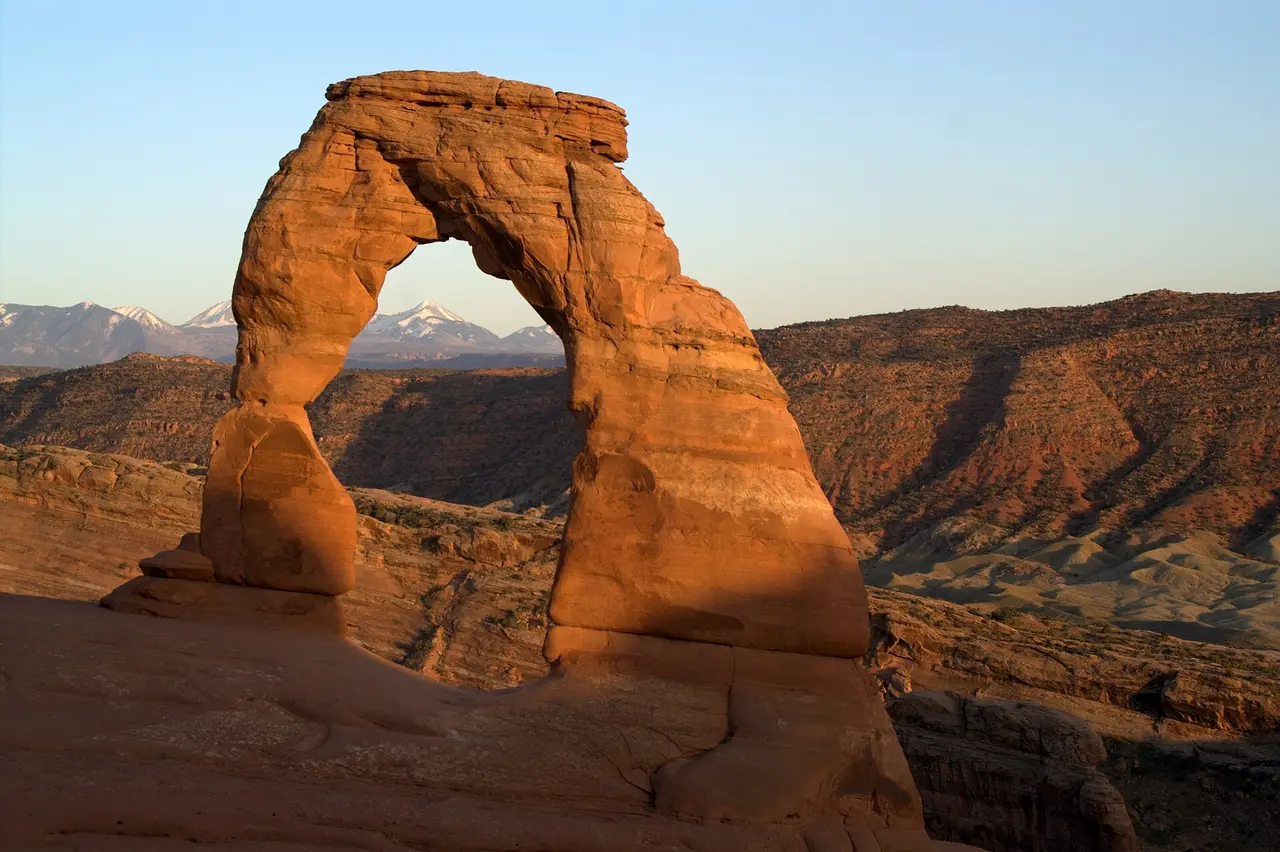
Delicate Arch

A lone sandstone arch on the edge of a rock bowl, reached on foot from Wolfe Ranch and best seen at sunset, when the sandstone glows.

Mesa Arch

On the Island in the Sky mesa, a low arch perched on the edge of the drop, its underside lit orange at sunrise.

Dead Horse Point

A state park overlook next to Canyonlands, above a bend of the Colorado deep between the cliffs, best kept for the late afternoon.

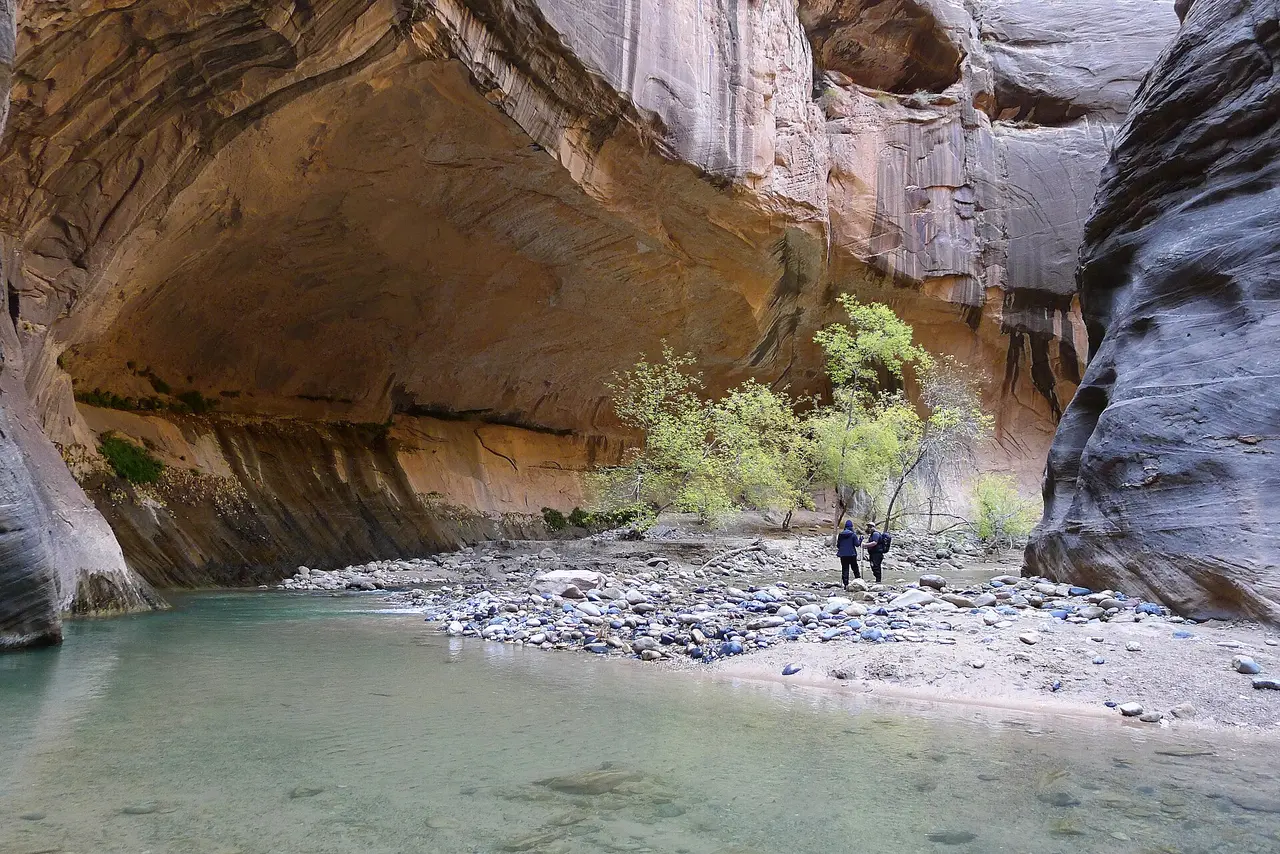
The Narrows

The hike up the bed of the Virgin River between towering sandstone walls, possible without a permit to Big Spring when the flow allows.

Angels Landing

A dizzying chain-assisted ridge above Zion Canyon, open only to holders of a lottery permit, best avoided if you suffer from vertigo.

Sunrise Point

A viewpoint above the Bryce amphitheater, where the rising sun lights the orange hoodoos one by one: get up early, it often freezes at dawn.

Antelope Island

An island in the Great Salt Lake reached by causeway, with free-roaming bison and sunsets over the salty water, a day trip from Salt Lake City.

Practical information for Utah

Zion and Bryce surcharge
100 USD per nonresident visitor aged 16 and over, on top of the entrance fee, unless you hold an annual pass.
America the Beautiful pass
250 USD for nonresidents; it covers a vehicle and its passengers in all five parks, surcharge included.
Entrance fees
From 20 USD per vehicle at Capitol Reef to 35 USD at Zion and Bryce, valid for 7 days.
Zion shuttle
Free; in season, the Zion Canyon road is closed to private cars.
Angels Landing permit
Lottery the day before or months ahead: 6 USD to apply, then 3 USD per person.
Drink-driving
Blood alcohol limit of 0.05%, the lowest in the United States.
Buying alcohol
Beer up to 5% in supermarkets; wine, spirits and stronger beer in state-run stores.
Flash floods
Storms mainly in late summer: narrow canyons close during National Weather Service warnings.
Car
Essential; choose unlimited mileage, as the five-park loop runs well over 1,000 km.

Frequently asked questions about Utah

Do you really have to pay 100 USD extra at Zion and Bryce Canyon?
Yes for nonresidents aged 16 and over, in each of the two parks, on top of the entrance fee. For two people, the 250 USD America the Beautiful pass works out cheaper as soon as you visit Zion and Bryce, and it also covers Arches, Canyonlands and Capitol Reef.
Can you hike the Zion Narrows without a permit?
Yes, starting from the bottom at the Temple of Sinawava up to Big Spring. The full 16-mile through-hike from Chamberlain's Ranch needs a permit. The park closes the Narrows above 150 cubic feet per second and during flash flood warnings, which are frequent in monsoon season.
Fly into Salt Lake City or Las Vegas to visit Utah's parks?
Salt Lake City is closer to Moab, about 370 km from Arches, while Zion is 275 km from Las Vegas against 480 km from Salt Lake City. For all five parks, a ticket into Salt Lake City and out of Las Vegas saves driving the same road back.
How long does it take from Capitol Reef to Bryce Canyon on Highway 12?
About three hours without stops according to the National Park Service. With the viewpoints, the Hogback ridge and a lunch break, this scenic road easily fills a whole day: better not to plan anything else that day.
Are Utah's parks worth visiting in winter?
Yes, with caveats. Bryce Canyon gets an average of 35 to 45 cm of snow a month from December to February, and it freezes almost every night from October to May. At Arches, a little snow or ice is enough to make trails and roads impassable.
Can you have a beer with dinner and then drive in Utah?
Be careful: Utah applies a 0.05% blood alcohol limit, lower than other American states, and drivers can be charged below that threshold if judged unable to drive safely. The simplest rule is not to drink before getting behind the wheel.

Plan your trip to Utah

Day-by-day itinerary, budget, bookings and packing in a single app.
Aperçu de l'application PlanTripNow