Arizona road trip: when to go, what to see and how to plan it

Arizona brings together the Grand Canyon, the red rocks of Sedona, the slot canyons of Page and the buttes of Monument Valley, plus a Sonoran Desert bristling with giant cacti and 2,000-metre high country covered in pines. It all happens by car, over long distances.

Why do an Arizona road trip?

Arizona packs several of the most photographed landscapes in the United States within a few hours' drive of each other: the Grand Canyon, Antelope Canyon, Horseshoe Bend, Monument Valley and Sedona. The state also holds a large part of the Navajo Nation, the Sonoran Desert and its saguaros, and a climate that runs from 45 °C in Phoenix in summer to snow on the Grand Canyon North Rim in winter.

What to see in Arizona

The Grand Canyon, South Rim and North Rim

The South Rim, the most visited, is open year-round and served by a free shuttle between viewpoints. The North Rim, 300 metres higher and wilder, is only reachable by car from mid-May to mid-October. Descending into the canyon is no small matter: the Bright Angel and South Kaibab trails drop more than 1,000 metres, and aiming for the river in a single day is discouraged. Allow at least one night on site for a sunrise and a sunset.
Sedona and the red rock country

Two hours south of the Grand Canyon, Sedona is ringed by towers and arches of red sandstone. The Cathedral Rock, Devil's Bridge and West Fork hikes are done early before the heat and full car parks. Jeep tours reach the less accessible formations, and the Chapel of the Holy Cross is set into the cliff. The mining village of Jerome, clinging to the mountainside, rounds out a day. Sedona stays expensive for lodging.

Page, Antelope Canyon and Lake Powell

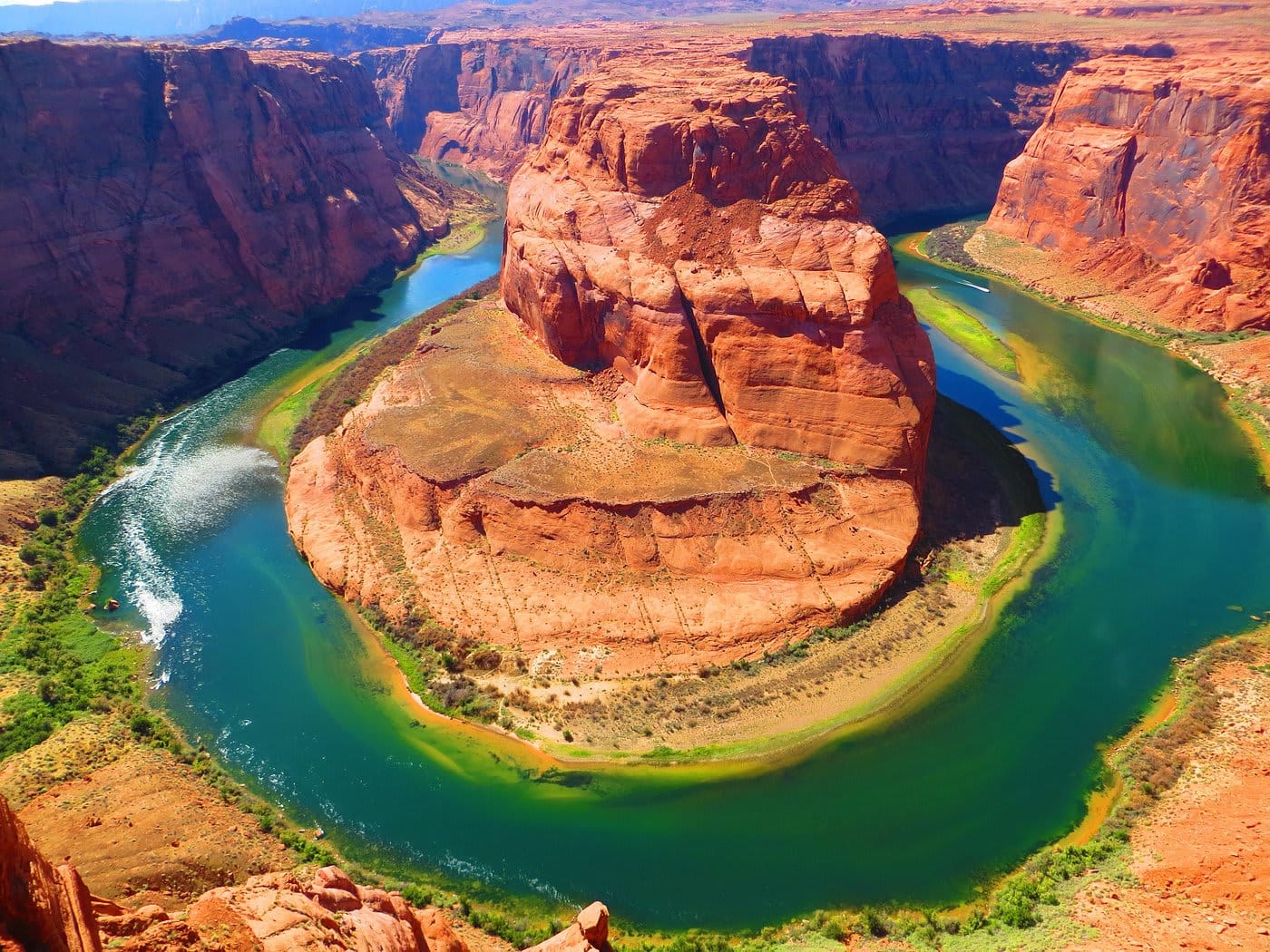
Around the small town of Page, the Antelope slot canyons, Upper and Lower, are visited only with a Navajo guide, booked several weeks ahead. Horseshoe Bend, a bend in the Colorado, is a 20-minute walk from a paid car park. Lake Powell, the Glen Canyon Dam reservoir, is toured by boat or houseboat from Antelope Point. The best canyon light is around midday.

The Sonoran Desert: Phoenix, Scottsdale and Tucson

To the south, the Sonoran Desert is the only place in the world where the saguaro grows, a candelabra cactus that can live 200 years. Phoenix lines up golf courses and resorts, with the Desert Botanical Garden and, in March, baseball spring training. Tucson, more modest, borders both sections of Saguaro National Park and the Arizona-Sonora Desert Museum. The whole south is best avoided from June to September, when temperatures exceed 40 °C.

The Wild West and Native lands

The east of the state keeps its Wild West sets: Tombstone and the OK Corral gunfight, Bisbee and its copper mines. Further north, on the Navajo Nation, Monument Valley unrolls its buttes along a 27-kilometre track, and Canyon de Chelly holds Anasazi cliff dwellings still farmed by Navajo families. Petrified Forest park and the Painted Desert close the loop toward New Mexico. It links easily with California to the west.

Flagstaff and the high country

At 2,100 metres, Flagstaff is a university town surrounded by the world's largest ponderosa pine forest, crossed by Route 66. It is the cool base for the Grand Canyon in summer, and the starting point for Sunset Crater and the Wupatki ruins. The Lowell Observatory, where Pluto was discovered in 1930, is visited in the evening. In winter, the Arizona Snowbowl resort opens on the San Francisco Peaks, the state's highest summits.

Cities to visit in Arizona

Featured destinations appear first.
Coming soon.

Arizona in pictures

Must-see sights in Arizona

Canyons, buttes, giant cacti and Wild West towns of Arizona.

The Grand Canyon South Rim

The most famous view in the United States, a 1,600-metre chasm cut by the Colorado, open year-round with a free shuttle.

Antelope Canyon

A sandstone slot canyon carved by flash floods, visited only with a Navajo guide, famed for its midday light beams.

Horseshoe Bend

A perfect bend of the Colorado ringed by 300-metre cliffs, a short walk from a car park near Page.

Cathedral Rock

Sedona's signature formation, a short but steep climb to a rock saddle, magical at sunset.

Monument Valley

The red sandstone buttes and mesas of the Navajo tribal park, backdrop of dozens of westerns, toured on a 27 km track.

Saguaro National Park

Two forests of candelabra cacti on either side of Tucson, where the saguaro can exceed 12 metres and 200 years.

Route 66 at Seligman

The best-preserved stretch of the mother road, with its 1950s motels, gas stations and diners.

The Lowell Observatory

In Flagstaff, the observatory where Pluto was spotted in 1930, open to the public for evening viewing sessions.

Canyon de Chelly

A canyon continuously inhabited for nearly 5,000 years, with the White House Ruin visible from the rim, on the Navajo Nation.

Similar regions

Other regions you might like as much as Arizona.

Similar destinations

Other countries you might like as much as Arizona.

Frequently asked questions about Arizona

Grand Canyon South Rim or North Rim?
The South Rim for a first trip: open year-round, more viewpoints, shuttle and services. The North Rim, higher, more forested and far quieter, is only reachable mid-May to mid-October and adds several hours of driving.
Sedona, the Grand Canyon and Page: how many days?
Five days minimum: two in Sedona, one at the Grand Canyon South Rim, two in Page for Antelope Canyon and Horseshoe Bend. In three days you skip Page. In seven you add Monument Valley or the south of the state.
How do you book Antelope Canyon?
Only with the licensed Navajo operators of Upper or Lower Antelope, on their site, often one to two months ahead in high season. Choose a midday slot for the light beams in summer, earlier or later the rest of the year.
Can you see the Grand Canyon and Monument Valley on the same trip?
Yes, they are about 3 hours apart by road via Page. A seven-day circuit lets you link Sedona, the Grand Canyon South Rim, Page and Monument Valley without rushing, sleeping a night near the buttes.
When should you avoid Phoenix and southern Arizona?
From June to September, when Phoenix and Tucson regularly top 40 °C and extreme-heat warnings are issued. In that period, favour the north, Flagstaff and the Grand Canyon, 15 to 20 °C cooler.
Do you need a 4x4 to visit Arizona?
No for the major sites, all reachable on paved roads with a normal car. A 4x4 or a guided tour helps for the Monument Valley track beyond the first overlook, some slot canyon approaches and the forest roads around Flagstaff.
Does Arizona change its clocks in summer?
No, Arizona stays on Mountain Standard Time all year with no daylight saving, except the Navajo Nation in the north-east, which does move its clocks. In summer, the state is therefore on the same time as California.

Plan your trip to Arizona

Day-by-day itinerary, budget, bookings and packing in a single app.
Aperçu de l'application PlanTripNow