Visit Dublin : things to do, when to go and budget
At a glance
- Visa
- None
- Tourist stay of up to 90 days
- 7-day budget
- €1,295
- Per person, comfort profile, excluding international flights.
- Recommended length
- 3 days
- For a first trip, without rushing.
Why visit Dublin?
Dublin packs most of Ireland's heritage into a compact centre: Trinity College's library, the castle, medieval cathedrals, free national museums and the landmarks of independence. Served by around ten direct flights a day from Paris, in under two hours, it is also the base for Glendalough and Newgrange.
When to visit Dublin
| Month | Temperatures | Rain | Crowds | Verdict |
|---|---|---|---|---|
| January | 2 to 8 °C | 13 d | Very quiet | Rooms are at their cheapest of the year, and the free museums easily fill short, grey days. |
| February | 2 to 9 °C | 10 d | Quiet | Cold and damp, but Six Nations rugby weekends at the Aviva Stadium push hotel prices up. |
| March | 3 to 10 °C | 11 d | Busy | Around 17 March, St Patrick's turns the city into a giant party: rooms booked months ahead, pubs packed. |
| April | 4 to 12 °C | 11 d | Moderate | The Georgian squares bloom and Easter brings crowds back, with flights among the priciest of the year. |
| May | 7 to 15 °C | 11 d | Moderate | The sunniest month: ideal for the Howth cliff walk before the summer groups arrive. |
| June | 9 to 18 °C | 10 d | Busy | Seventeen-hour days and Bloomsday on 16 June, but central hotels already charge summer rates. |
| July | 11 to 20 °C | 12 d | Packed | Peak crowds: queues at the Book of Kells and the Guinness Storehouse, so book online. |
| August | 11 to 19 °C | 12 d | Packed | The mildest month, a sea of just 15 °C at the Forty Foot, and rooms scarce and expensive until month's end. |
| September | 9 to 17 °C | 10 d | Busy | The sea still at 15 °C and crowds thinning, yet September remains the year's most expensive month for hotels. |
| October | 7 to 14 °C | 12 d | Moderate | Halloween, a festival born in Ireland, and the Dublin Marathon liven up the city as the rain returns. |
| November | 4 to 10 °C | 12 d | Quiet | The lull before the holidays: dark by 4:30 pm, but cosy pubs and prices back to reasonable. |
| December | 3 to 8 °C | 13 d | Moderate | Lit-up Grafton Street and Christmas markets draw long weekenders, while the weather stays grey and windy. |
Dublin's must-sees
Trinity's Long Room
Guinness Storehouse
Kilmainham Gaol
Chester Beatty Library
Phoenix Park
Ha'penny Bridge
What to discover in Dublin?
The old town, from the castle to Christ Church
Georgian squares and free national museums
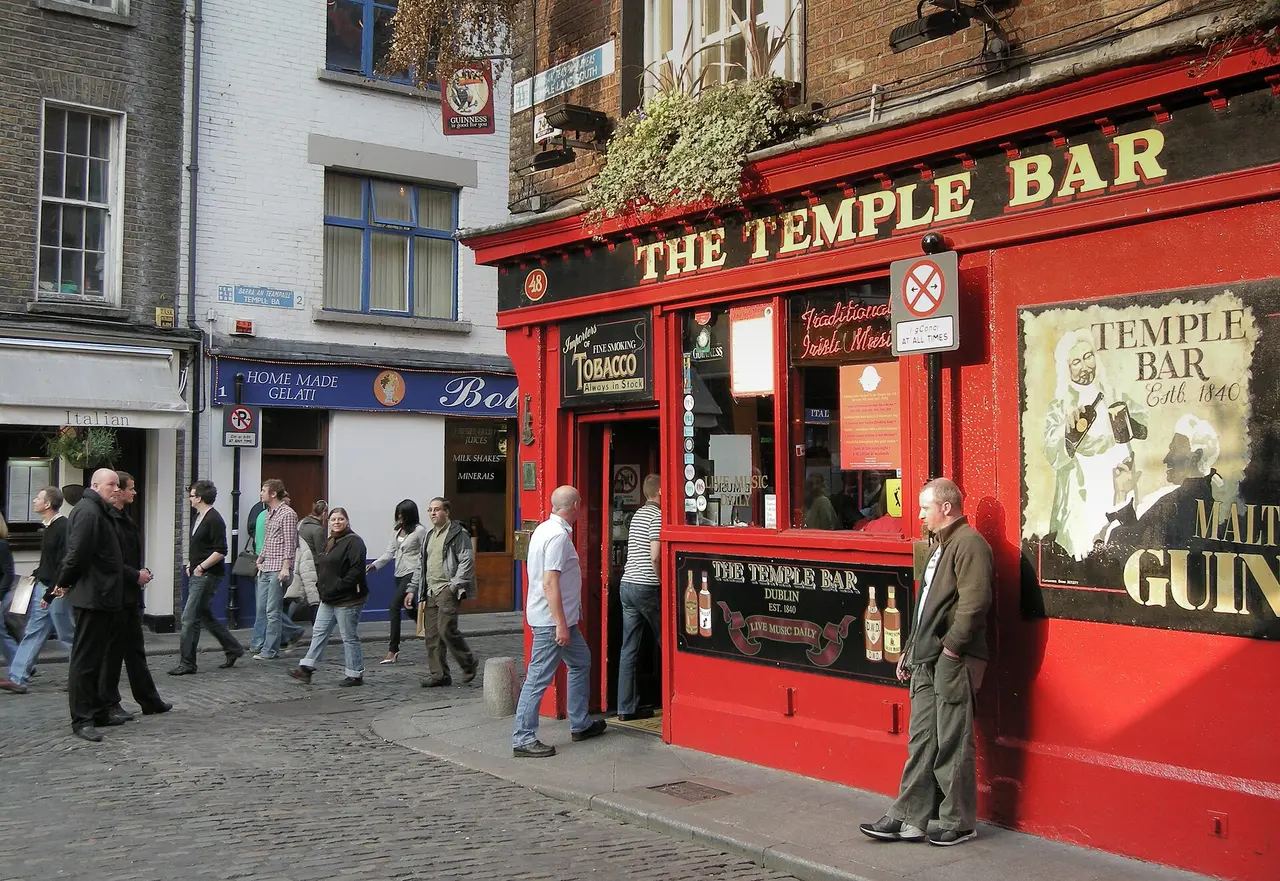
Pubs, pints and traditional music
Kilmainham, Glasnevin and the memory of 1916
Howth, Dalkey and the coast by DART
Glendalough and Newgrange as day trips
Sample itineraries
Dublin in 3 days: the medieval core, the Howth cliffs and Glasnevin
- Day 1: Dublin Castle, the Chester Beatty and Christ Church
- Day 2: the Howth peninsula
- Day 3: Glasnevin, O'Connell Street and EPIC
Best for: A balanced stay mixing Viking and medieval history, a day of fresh air on the Howth peninsula by DART, and the Dublin of independence north of the Liffey. It deliberately skips Trinity and the Guinness, often overcrowded.
How much it costs
- Accommodation
- 38 €
- Food
- 30 €
- Local transport
- 6 €
- Sights and activities
- 12 €
- Accommodation
- 85 €
- Food
- 60 €
- Local transport
- 10 €
- Sights and activities
- 30 €
- Accommodation
- 190 €
- Food
- 100 €
- Local transport
- 30 €
- Sights and activities
- 60 €
Getting there
- DUBDublin AirportDublinMain
- NOCIreland West Airport KnockCharlestownMain
- ORKCork International AirportCorkMain
- SNNShannon AirportShannonMain
- CFNDonegal AirportDonegalSecondary
- KIRKerry AirportFarranforeSecondary
Entry, health and safety
For FR travellersEntry requirements
No visa for a tourist stay
L'Irlande est membre de l'Union européenne mais pas de l'espace Schengen : les Français entrent à Dublin sans visa, avec une carte nationale d'identité ou un passeport valable pendant tout le séjour. Le passeport est recommandé, certaines compagnies refusant à l'embarquement les cartes d'identité à date dépassée. Pour une excursion en Irlande du Nord, passeport et autorisation électronique britannique (ETA) sont obligatoires.
Stay allowed for up to 90 days.
Health
Advised: Mise à jour des vaccinations habituelles, en particulier diphtérie, tétanos, poliomyélite, coqueluche et rougeole. Aucun vaccin exigé à l'entrée.
Carte européenne d'assurance maladie à demander au moins 15 jours avant le départ, et assurance couvrant hospitalisation et rapatriement. L'eau du robinet est normalement de bonne qualité. Vigilance normale : les vols visent surtout les pubs, les bus, les navettes de l'aéroport et les auberges de jeunesse ; prudence le soir sur la rive nord de la Liffey et à Temple Bar, où l'alcool coule à flots.
Safety
Normal precautions
Emergency
112
Practical information for Dublin
Around ten direct flights a day from Paris, about 1 h 50; return fares average €124 over a year (Kayak, October 2026).
Buses, Luas tram and DART with the Leap Card: €2 a ride, capped at €6 a day in zone 1 (TFI, 2026).
A simple meal around €21, a mid-range dinner for two around €90 (Numbeo, October 2026).
Cheapest in January, priciest in September and around St Patrick's Day: book early for those dates.
EU citizens need a valid ID card or passport, no visa; a passport and ETA are needed for Northern Ireland.
Type G three-pin plugs, as in the UK: bring an adapter.
Traffic drives on the left; a car is useless in town but handy for Glendalough.
Dublin in pictures
Frequently asked questions about Dublin
How many days do you need to visit Dublin?
What budget should you plan for a week in Dublin?
When should you go to Dublin to avoid rain and crowds?
Do French travellers need a passport for Dublin?
How do you get from Dublin Airport to the city centre?
Can you swim in Dublin?
Plan your trip to Dublin
