Skip to content

Visit Dubrovnik : what to do, when to go and budget

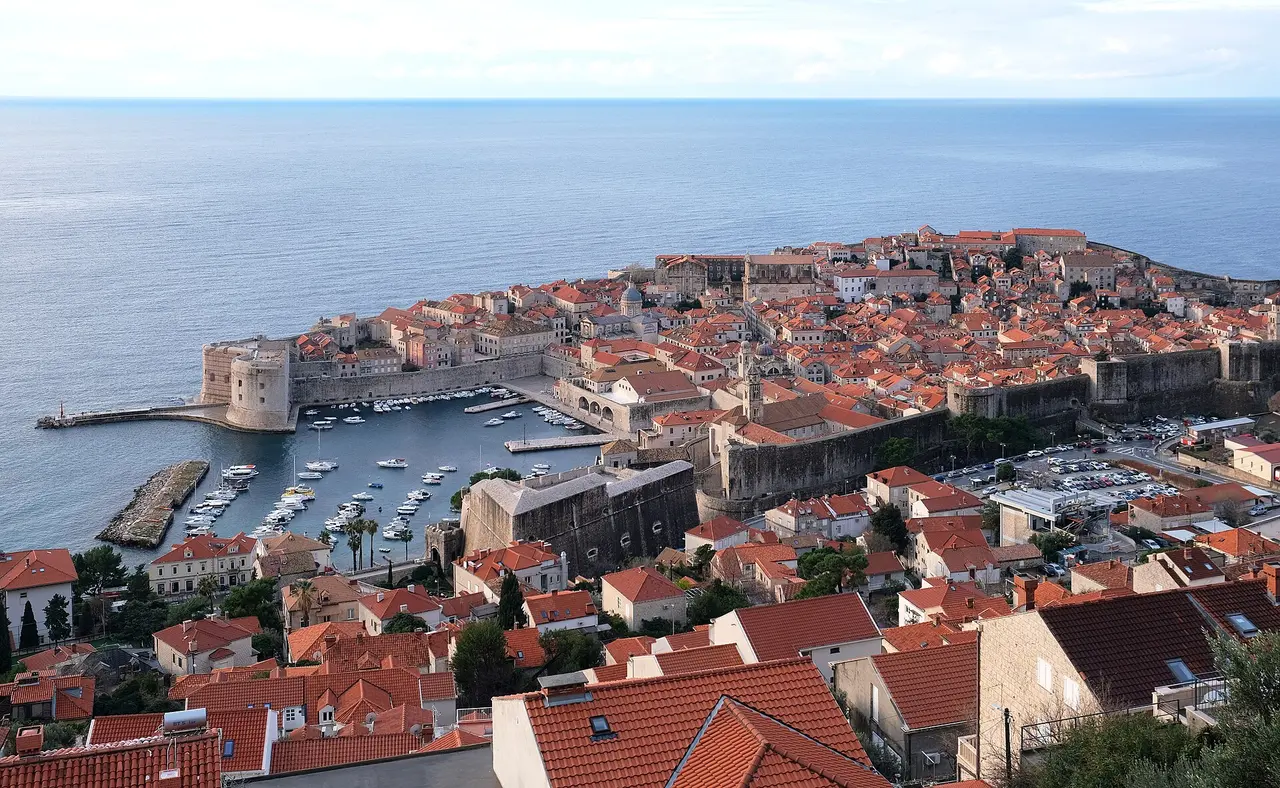
At the southern tip of the Croatian coast, Dubrovnik is a former merchant republic enclosed by nearly two kilometres of walls. People come for the white stone of the Stradun, islands a quarter of an hour away by boat and a 25 °C sea in August, while coping with summer crowds that pack the old town.

At a glance

Visa
None
Tourist stay of up to 90 days
7-day budget
€1,113
Per person, comfort profile, excluding international flights.
Recommended length
3 days
For a first trip, without rushing.

Why visit Dubrovnik?

Dubrovnik is a port city in southern Croatia, on the Adriatic, whose walled old town is a UNESCO World Heritage Site. It serves as a base for Lokrum island, the Elaphiti archipelago, Cavtat and the Pelješac peninsula, with an airport south-east of the city.

When to visit Dubrovnik

Temperatures, rainfall and crowds month by month, to pick your window.
When to visit Dubrovnik
MonthTemperaturesRainCrowdsVerdict
January7 to 13 °C9 dVery quietSouth wind and rain one day in three, but the Stradun belongs to locals and hotels slash their rates.
February7 to 13 °C9 dVery quietOn 3 February the Feast of Saint Blaise fills the old town with processions, at 13 °C with a 14 °C sea.
March9 to 15 °C8 dQuietWalls without queues at 15 °C, though some restaurants and island boats only reopen at Easter.
April12 to 18 °C8 dModerateBoats to Lokrum and the Elaphiti islands resume, 18 °C in the afternoon and still eight rainy days.
May16 to 23 °C6 dBusy23 °C and walls still walkable at noon; cruise calls start to crowd the Stradun.
June20 to 27 °C4 dPackedA 22 °C sea and long evenings, but the old town is already packed from 10 am to 4 pm.
July23 to 30 °C3 dPacked30 °C on white stone, the Summer Festival from 10 July and rooms at full price: book months ahead.
August23 to 30 °C3 dPackedThe hottest and dearest month with a 25 °C sea; walk the walls at 8 am, when they open.
September19 to 26 °C6 dBusySea still at 23 °C and 26 °C by day: the best month to mix swimming and sightseeing, avoiding cruise days.
October16 to 22 °C8 dModerate22 °C and a 20 °C sea for last swims, but rain returns and island boats run less often.
November12 to 18 °C10 dVery quietThe rainiest month along with December: many hotels close, those still open are cheap.
December8 to 14 °C10 dQuietAdvent market on the Stradun and 14 °C, but ten rainy days and a north wind that can bite.
Source: Normales 1991-2018 de Climates to Travel (climatestotravel.com/climate/croatia/dubrovnik), relevé octobre 2026 : températures minimales, maximales et moyennes, jours de pluie et température de la mer. Température de la mer recoupée avec weather2travel.com (écart de 1 °C au plus). Affluence et prix estimés d’après la saison des croisières, le festival d’été (10 juillet-25 août) et la fermeture hivernale d’une partie des hôtels.

Dubrovnik's must-sees

Nine places to understand the city and its coast.

Dubrovnik city walls

Nearly two kilometres of wall walk around the old town, with views over the roofs and the sea.

Fort Lovrijenac

A fortress on a rock opposite Pile Gate, included in the city walls ticket.

Stradun

The main street paved in polished limestone, between Pile Gate and the Clock Tower.

Rector's Palace

Seat of government of the former Republic of Ragusa, now a history museum.

Lokrum island

A wooded island a quarter of an hour by boat, with a botanical garden, peacocks and a small salt lake.

Mount Srđ

The summit above the city, reached by cable car or on foot, for the sunset view.

Šunj beach

A sandy beach on Lopud, in the car-free Elaphiti archipelago.

Walls of Ston

More than five kilometres of walls above salt pans that are still worked.

Trsteno Arboretum

A Renaissance garden of a Ragusan noble family, about twenty kilometres north.

What is there to see in Dubrovnik?

Walking the city walls

The walls ring the whole old town for nearly two kilometres, punctuated by towers including Minčeta, the highest point. An adult ticket costs about 40 € in 2026 and includes Fort Lovrijenac, set on its rock opposite Pile Gate. Allow two hours at an easy pace. In summer, go up at 8 am when they open: by 10 am the stone is hot and the cruise groups arrive. Carry water, as there are only two or three kiosks along the way, and keep your ticket, since it also gets you into Lovrijenac.

The Stradun and the old town palaces

The Stradun, the main street paved in polished limestone, runs from Pile Gate to the Clock Tower. Around it, the Rector's Palace tells the story of the Republic of Ragusa, which kept its independence for centuries through trade and diplomacy. The Franciscan monastery houses one of Europe's oldest pharmacies still in business, and the Dominican monastery a peaceful cloister. The stepped lanes to the north and south are far calmer than the main street. The best time here is early morning or after 7 pm, once the day tours leave.

Lokrum and Mount Srđ

Lokrum, a wooded island about 15 minutes by boat from the old harbour, is a day trip: botanical garden, free-roaming peacocks, the ruins of a monastery and a small salt lake nicknamed the Dead Sea, where you swim sheltered from the waves. You cannot stay overnight, and the last boat leaves in the late afternoon. On the other side, the cable car climbs to the top of Srđ for about 20 € return, with views over the roofs and islands. You can also hike up the zigzag path, best in the morning.

The Elaphiti islands

To the north-west, the Elaphiti archipelago lines up three inhabited, car-free islands: Koločep, Lopud and Šipan. Ferries leave from Gruž port, and day tours combine all three. Lopud has the best sandy beach in the area, Šunj, half an hour's walk across the island. Šipan, the largest, is more rural, with olive groves and a few fish restaurants. Outside April to October, sailings thin out and many places close, so check return times before you set off, and bring cash for the smaller island cafés.

Cavtat, Konavle and Trsteno

To the south, Cavtat is a quiet little port linked to Dubrovnik by boat or bus, with a wooded peninsula and the Račić family mausoleum, sculpted by Ivan Meštrović. Behind it, the Konavle valley mixes vineyards, stone villages and the Ljuta mills, where dinner is lamb cooked under the bell. To the north, the Trsteno arboretum, a Renaissance garden planted by a Ragusan noble family, takes an hour to visit. These trips show another side of the region, far from the crowds on the walls, ideally with a car.

Ston and the Pelješac peninsula

An hour's drive north, Ston is surrounded by walls more than five kilometres long, among the longest in Europe, built to protect its salt pans, which are still worked today. You walk the wall above the salt basins, then lunch on oysters in Mali Ston, in the bay where they are farmed. Further on, the Pelješac peninsula produces plavac mali, Croatia's most famous red. To explore the rest of the country, the Croatia page covers Split, Hvar and Istria.

Seasons, cruise ships and budget

From June to August the old town is packed by day, temperatures pass 29 °C and rooms reach their highest prices. May and September are the best compromise, with the sea at 18 °C then 23 °C. In winter it is 12 to 14 °C, rain falls one day in three and many hotels close from November to March. Allow about 77 € a day as a budget traveller and 159 € in comfort, based on our price checks. For a quieter stay, base yourself in Lapad or Gruž, linked to the centre by bus.

Sample itineraries

Three routes built around the time you actually have.
3daysRecommended

Dubrovnik in 3 days: old town, the Elaphiti islands and Ston oysters

  1. Day 1: the Stradun and the walls
  2. Day 2: Koločep, Lopud and Šipan
  3. Day 3: Ston and the Pelješac peninsula

Best for: The most complete stay for a first visit: one day inside the walls, one at sea among three car-free islands, one on the Pelješac peninsula. A car or a tour helps on the third day.

How much it costs

Per person per day, excluding international travel.
Budget
77 €/ day
1 438 € for 2 people, 7 days, return flights included
Accommodation
34 €
Food
26 €
Local transport
5 €
Sights and activities
12 €
Comfort
159 €/ day
2 586 € for 2 people, 7 days, return flights included
Accommodation
69 €
Food
52 €
Local transport
10 €
Sights and activities
28 €
Premium
354 €/ day
5 316 € for 2 people, 7 days, return flights included
Accommodation
149 €
Food
105 €
Local transport
35 €
Sights and activities
65 €
Prices checked: Relevé octobre 2026. Repas et transports : Numbeo Dubrovnik, mise à jour du 2 octobre 2026 (menu bon marché 17,50 €, dîner de milieu de gamme pour deux 70 €, cappuccino 3,70 €, bus 2,50 € le trajet, taxi 4 € de prise en charge puis 1,07 €/km). Hébergement : combien-coute.net, données du 5 octobre 2026 (moyenne par nuit : hôtel 3 étoiles 137 €, 4 étoiles 189 €, 5 étoiles 298 €) et lit en dortoir autour de 38 $ en moyenne (budgetyourtrip.com). Hébergement par nuit et par personne : lit en dortoir pour backpacker, chambre double partagée à deux pour comfort (3 étoiles) et premium (5 étoiles). Activités : billet des remparts à 40 € par adulte en 2026, téléphérique du Srđ à 20 € l'aller-retour, City Pass 1 jour à 55 € (dubrovnik-tickets.co, eurocityguide.com). Vol A/R Paris-Dubrovnik estimé à 180 € par personne hors juillet-août et hors vacances scolaires (PartirOu : moyenne de 140 à 180 € selon les relevés, vols directs Transavia, easyJet, Croatia Airlines et Air France d'environ 2 h). En juillet-août, l'hébergement peut coûter bien plus que ces moyennes annuelles.

Getting there

Airports serving Dubrovnik, from main hubs to secondary ones.
  • DBVDubrovnik Ruđer Bošković AirportDubrovnikMain
  • PUYPula AirportPulaMain
  • RJKRijeka AirportRijekaMain
  • SPUSplit Saint Jerome AirportSplitMain
  • ZADZadar AirportZadarMain
  • ZAGZagreb Franjo Tuđman International AirportVelika GoricaMain

Entry, health and safety

For FR travellers

Entry requirements

No visa for a tourist stay

La Croatie est membre de l'Union européenne et de l'espace Schengen depuis le 1er janvier 2023 : les Français entrent sans visa pour un séjour de moins de trois mois, avec un passeport ou une carte nationale d'identité valide pendant tout le séjour. Les contrôles d'identité aux frontières croates restent systématiques, avec de longues attentes possibles en haute saison.

Stay allowed for up to 90 days.

Health

Advised: Mise à jour des vaccinations universelles (diphtérie, tétanos, poliomyélite, coqueluche, rougeole) ; selon les conditions du séjour, hépatites A et B, fièvre typhoïde, encéphalite à tiques (zones forestières) et rage pour les jeunes enfants.

Transmission locale possible de la dengue et de la fièvre du Nil occidental : protégez-vous des moustiques. Demandez la carte européenne d'assurance maladie au moins 15 jours avant le départ. Les incendies de forêt sont un risque important l'été sur la côte. Depuis juin 2025, une zone de circulation restreinte entoure la vieille ville de Dubrovnik, avec des amendes élevées. Les cartes d'identité françaises délivrées entre 2004 et 2013 restent acceptées cinq ans après leur date d'expiration, mais le passeport est recommandé.

Safety

Normal precautions

Emergency

112

Checked in octobre 2026 against the official source. Entry rules change: check the official source before you travel, it alone is authoritative.

Practical information for Dubrovnik

Currency

The euro has been Croatia's currency since January 2023.

Typical prices

Cheap meal about 17.50 €, mid-range dinner for two around 70 €, cappuccino at 3.70 € (Numbeo, October 2026).

Bus and taxi

City bus at 2.50 € a ride; taxi with a 4 € flag fall then about 1.07 € per km (Numbeo, October 2026).

City walls

About 40 € for an adult ticket in 2026, Fort Lovrijenac included; open from 8 am in summer.

Driving

A restricted traffic zone has surrounded the old town since June 2025, with heavy fines: leave the car outside the centre.

Where to stay

Lapad, Gruž and Ploče are quieter and often cheaper than inside the walls.

Heat

About 30 °C in July and August on the white stone: sightsee early in the morning or in the evening.

Emergencies

European emergency number: 112.

Dubrovnik in pictures

Photo credits : kallerna, CC BY-SA 4.0, Wikimedia Commons ; László Szalai (Beyond silence), Public domain, Wikimedia Commons ; Bernard Gagnon, CC BY-SA 4.0, Wikimedia Commons ; Martin Falbisoner, CC BY-SA 4.0, Wikimedia Commons

Frequently asked questions about Dubrovnik

How many days do you need in Dubrovnik?
Two days cover the walls, the old town, Lokrum and Mount Srđ. With three days you can add the Elaphiti islands or Ston. Four days let you stay in Lapad and explore Cavtat, Konavle and Trsteno without rushing.
How can you avoid the crowds in Dubrovnik?
Walk the walls at 8 am when they open and keep the Stradun for the evening, after the day tours have left. Avoid July and August if you can, and check the cruise ship calendar to pick the quietest days.
When is the best time to swim in Dubrovnik?
From June to September the sea is above 21 °C, peaking around 25 °C in August according to our cross-checked data. September is the best pick: the sea is still at 23 °C and crowds fall clearly once schools go back.
Where can you swim in Dubrovnik?
Banje is the closest beach to the old town, with a view of the walls. The rocks below Buža bar and Lapad Bay are other options. For sand, take the boat to Šunj beach on the island of Lopud.
Do you need a car in Dubrovnik?
Not for the city, Lokrum or the Elaphiti islands, all reachable on foot, by bus or by boat. A car becomes useful for Ston, Pelješac, Konavle and Trsteno. Do not drive into the restricted traffic zone around the old town.
What budget should you plan for a week in Dubrovnik?
Based on our price checks, allow about 1,440 € for two budget travellers and 2,590 € in comfort, including flights from Paris. Dubrovnik is one of Croatia's most expensive cities, especially in July and August, when room rates soar.
Can you stay overnight on Lokrum?
No: Lokrum is a day trip only and offers no accommodation. Boats leave the old harbour roughly every half hour in season, and the last return is in the late afternoon, so check the time when you arrive.

Plan your trip to Dubrovnik

Build your day-by-day itinerary and manage budget, bookings and packing in PlanTripNow.
Aperçu de l'application PlanTripNow