Skip to content

Fez, the scholarly medina: lanes, artisans and imperial cities

There are no cars in the old town: donkeys carry hides, coppersmiths hammer away, 14th-century Koranic schools hide behind plain doors and, according to UNESCO, the oldest university still operating sits at its heart. Fez is best discovered slowly, on foot, ideally with a licensed guide on day one.

At a glance

Visa
None
Tourist stay of up to 90 days
7-day budget
€553
Per person, comfort profile, excluding international flights.
Recommended length
3 days
For a first trip, without rushing.

Fez or Marrakech: which to choose for a first trip?

Fez suits travellers who come for history and craftsmanship: a medieval medina that feels more authentic and less staged, but harder to navigate. Marrakech offers more gardens, more nightlife and direct access to the High Atlas. Three days are enough in Fez, including a trip to Volubilis.

When to visit Fès

Temperatures, rainfall and crowds month by month, to pick your window.
When to visit Fès
MonthTemperaturesRainCrowdsVerdict
January4 to 16 °C7 dVery quietAn almost empty medina and riads at their cheapest, but 4°C at night: check the room has heating.
February5 to 17 °C6 dQuietPleasant 17°C days for walking the souks, possible showers and cold evenings.
March7 to 20 °C7 dModerateThe Saïs plain turns green and Volubilis looks superb, though it still rains one week in four.
April8 to 22 °C6 dPackedThe ideal month at 22°C with the Ifrane cedars within reach, but riads fill up over Easter.
May11 to 27 °C5 dBusyGentle 26°C warmth and long evenings on the roof terraces, with plenty of groups around the tanneries.
June15 to 31 °C2 dBusyThe Sacred Music Festival in early June and already 31°C in the afternoon: sightsee in the morning.
July18 to 35 °C0 dModerateA 35°C furnace in the lanes, so tour the medina early and take a siesta at the riad.
August18 to 35 °C1 dModerateAs hot as July with diaspora families back home, so seek cooler air up in Ifrane.
September16 to 30 °C2 dModerateThe heat drops back to 30°C, with dry skies and a quieter medina once schools go back.
October13 to 26 °C5 dPackedLovely light and 26°C, with the autumn season filling the riads over the French half-term.
November8 to 20 °C6 dModerateThe wettest month, but 20°C in the afternoon and prices that come back down.
December5 to 17 °C6 dQuietQuiet until the holidays, then busier with higher prices over Christmas and New Year.
Source: Normales 1991-2020 de Fès d'après climatestotravel.com (minimales, maximales, moyennes, précipitations, jours de pluie), relevé octobre 2026. Station de l'aéroport Fès-Saïss à 580 m, la médina étant vers 420 m. Ville continentale du Saïs, sans température de la mer : étés très chauds et secs (35 °C de maximale en juillet-août), hivers doux le jour mais frais la nuit (4 °C de minimale en janvier), pluies concentrées d'octobre à avril. Affluence et prix estimés d'après le calendrier touristique (printemps et vacances de Pâques, automne, fêtes de fin d'année), le Festival de Fès des musiques sacrées du monde (4 au 7 juin en 2026 selon TelQuel) et les vacances scolaires françaises. Le ramadan se décale chaque année d'environ onze jours : certains restaurants de la médina ferment en journée.

Not to be missed in Fez

From the medina gates to Roman ruins, ten visits to understand twelve centuries of history.

Bab Bou Jeloud

The monumental gate with blue tiles on the outside and green on the medina side, the main way into Fès el-Bali for most visitors.

Bou Inania Madrasa

A 14th-century Marinid Koranic school with a marble courtyard, zellige, stucco and carved cedar, open to non-Muslim visitors.

Al-Attarine Madrasa

A small madrasa near the spice souk, renowned for its finely carved stucco and woodwork around a central basin.

Al Quaraouiyine Mosque

Founded in 859 by Fatima al-Fihri and home to a university over a thousand years old; the prayer hall is reserved for Muslims, the courtyard visible from the doors.

Chouara tanneries

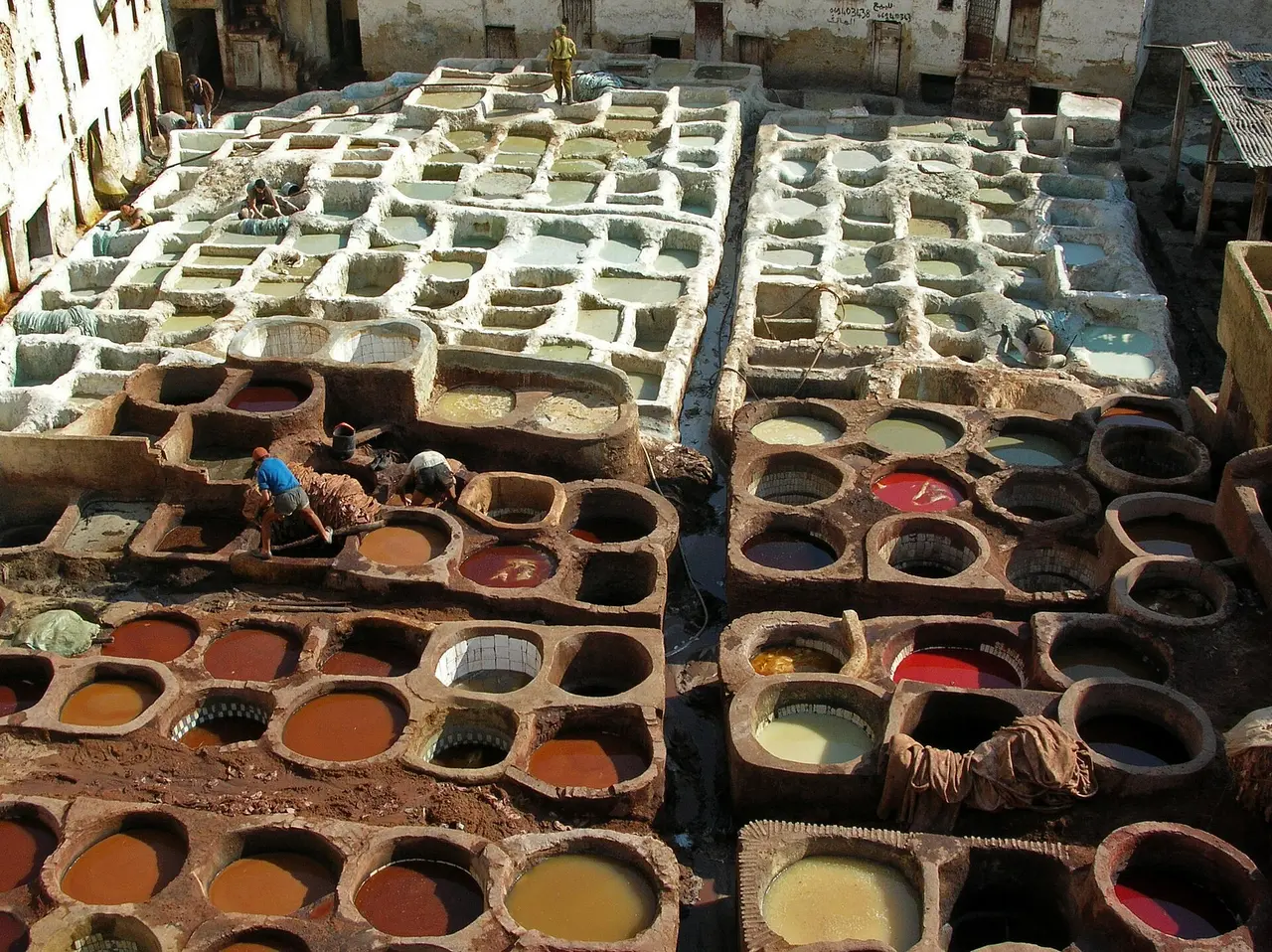
The honeycomb dye vats of the medina's largest tannery, best viewed from the terraces of the surrounding leather shops.

Place Seffarine

A small shady square where coppersmiths hammer metal at the foot of the Quaraouiyine library.

Nejjarine Museum

Wooden arts and crafts displayed in a restored former fondouk, with a terrace overlooking the medina rooftops.

Mellah and Ibn Danan synagogue

The former Jewish quarter of Fès el-Jdid, with its wooden balconies, restored synagogue and whitewashed cemetery.

Marinid tombs

Ruined royal necropolises on the northern hill, the most spectacular viewpoint over the medina at sunset.

Volubilis

A UNESCO-listed Roman city amid the fields, known for its mosaics, basilica and Arch of Caracalla, an easy day trip away.

What to see in Fez?

Getting lost in Fès el-Bali

Founded at the end of the 8th century by the Idrisid dynasty, the old town of Fès el-Bali has been a UNESCO World Heritage Site since 1981. It is one of the largest car-free urban areas in the world: goods travel by donkey or mule, and some lanes narrow to the width of a shoulder. Two main streets structure the maze, Talaa Kebira and Talaa Seghira, both running down from Bab Bou Jeloud to the religious heart. On day one, a licensed guide carrying an official badge and booked through your riad saves you from walking in circles and keeps self-appointed guides at the gates at bay.

A city of scholars

Fez owes its prestige to its schools. The Al Quaraouiyine mosque, founded in 859 by Fatima al-Fihri, houses a university that UNESCO regards as the oldest still operating; its prayer hall is reserved for Muslims, but the open doors offer a glimpse of the courtyard. In the 14th century the Marinid sultans added madrasas, student residences decorated from floor to ceiling. The Al-Attarine Madrasa charms with its delicate stucco, the Bou Inania Madrasa with its minaret and marble courtyard; it is one of the few religious buildings in the country open to non-Muslim visitors.

Crafts, from leather to zellige

More than a backdrop, the medina is still one vast workshop. At the Chouara tanneries, hides soak in honeycomb vats of lime and dye; you watch from the terraces of the surrounding leather shops, a sprig of mint under your nose, in the morning when work is in full swing. On Place Seffarine, coppersmiths hammer trays and cauldrons a few steps from the Quaraouiyine. The Nejjarine Museum displays wooden arts in a restored former fondouk, and the Aïn Nokbi potters' district, outside the walls, shows zellige tiles being cut by hand.

Fès el-Jdid, the Mellah and the hilltops

In the 13th century the Marinids built a second town to the west, Fès el-Jdid, around their palace. The brass doors of Dar el-Makhzen, still a royal residence, can be photographed from the square but not entered. Right next door, the Mellah, Morocco's first Jewish quarter, founded in the 15th century, keeps its houses with wooden balconies, the Ibn Danan synagogue and a vast whitewashed cemetery. The Jnan Sbil garden offers a shady break before heading up, late in the day, to the Marinid tombs or Borj Nord: the whole medina spreads out below at sunset.

Meknes, Volubilis and the Middle Atlas cedars

Fez is the best base in northern Morocco for day trips. Meknes, another imperial city famous for its Bab Mansour gate, is just 36 minutes away by train according to the ONCF timetable. Beyond it, the Roman mosaics of Volubilis and the holy town of Moulay Idriss Zerhoun fit into one day, ideally in April when the plain turns green and it is 22°C, rather than in July at 35°C. To the south, Ifrane and the Azrou cedar forest, home to Barbary macaques, offer cooler air. Allow about €25 a day as a backpacker and €79 in comfort, excluding flights.

Sample itineraries

Three routes built around the time you actually have.
3daysRecommended

Fez in 3 days: medina artisans, Meknes, Volubilis and Moulay Idriss

  1. Day 1: the artisans' medina with a licensed guide
  2. Day 2: Meknes by train, Volubilis and Moulay Idriss Zerhoun
  3. Day 3: the Aïn Nokbi potters, Fès el-Jdid and the Mellah

Best for: A stay that follows the crafts of Fez rather than a checklist of monuments: a day with a licensed guide among the medina's weavers, coppersmiths and woodworkers, a day outside the walls between the imperial city of Meknes, the Roman ruins of Volubilis and the holy town of Moulay Idriss, then the potters and zellige makers of the Aïn Nokbi district.

How much it costs

Per person per day, excluding international travel.
Budget
25 €/ day
670 € for 2 people, 7 days, return flights included
Accommodation
8 €
Food
10 €
Local transport
2 €
Sights and activities
5 €
Comfort
79 €/ day
1 566 € for 2 people, 7 days, return flights included
Accommodation
38 €
Food
20 €
Local transport
6 €
Sights and activities
15 €
Premium
203 €/ day
3 362 € for 2 people, 7 days, return flights included
Accommodation
93 €
Food
45 €
Local transport
25 €
Sights and activities
40 €
Prices checked: Relevé octobre 2026, hors vacances de Pâques, de la Toussaint et semaine de Noël. Taux Wise consulté le 12 octobre 2026 : 1 € = 10,94 dirhams (MAD). Repas et transports d'après Numbeo Fès (mise à jour du 2 octobre 2026, seulement 129 relevés de 10 contributeurs sur 12 mois, à prendre comme ordre de grandeur : repas bon marché 30 MAD, dîner pour deux en restaurant moyen 300 MAD, ticket de bus 4 MAD, prise en charge du petit taxi 6 MAD puis 7 MAD le km). Dortoirs : médiane 7,49 € et moyenne 8,34 € des prix d'appel « à partir de » de 17 auberges listées sur Hostelworld Fès, octobre 2026. Hôtels : combien-coute.net (données hotels.com et Booking mises à jour le 28 septembre 2026), 75 € la nuit en 3 étoiles et 185 € en 5 étoiles ; momondo affiche des moyennes plus basses (42 € et 149 €, page non datée). Activités lissées sur une semaine, sources non officielles : médersa Al-Attarine 10 à 20 MAD selon les guides (Cityzeum, juin 2026), Volubilis 70 MAD l'adulte selon Barceló et Encounters Travel (pages non datées, tarif officiel 2026 non trouvé), visites guidées de la médina de 18 à 49 € par personne sur les plateformes de réservation en 2026, aucune grille officielle des guides agréés publiée en ligne. Train Fès-Meknès non chiffré faute de tarif ONCF 2026 consultable. Vol A/R Paris-Fès par personne : 160 € en backpacker (médiane KAYAK du mois le moins cher, 162 € en février, sur 12 mois glissants, page non datée), 230 € en comfort (prix moyen PartirOu, statistiques du 11 octobre 2026), 260 € en premium (moyenne annuelle KAYAK de 257 €) ; vols directs Ryanair, Transavia et Royal Air Maroc, plus chers en juillet-août (médiane KAYAK 405 € en août). Hébergement par nuit et par personne : lit en dortoir pour backpacker, chambre double en 3 étoiles ou riad équivalent partagée à deux pour comfort, 5 étoiles ou riad de luxe partagé à deux pour premium. Transports premium : chauffeur privé pour l'excursion Meknès-Volubilis-Moulay Idriss. weekTwoPax = deux vols + sept jours à deux.

Getting there

Airports serving Fès, from main hubs to secondary ones.
  • AGAAl Massira AirportAgadirMain
  • BEMBeni Mellal AirportOulad YaichMain
  • CMNMohammed V International AirportCasablancaMain
  • FEZFes Saïss International AirportSaïssMain
  • NDRNador Al Aaroui International AirportAl AarouiMain
  • OUDOujda Angads AirportAhl AngadMain

Entry, health and safety

For FR travellers

Entry requirements

No visa for a tourist stay

Pas de visa pour un séjour touristique de 90 jours maximum au Maroc. Il faut un passeport en cours de validité couvrant toute la durée du séjour : un passeport expiré ou une carte d'identité seule ne suffit pas. Les non-résidents doivent présenter un billet de retour et des justificatifs de moyens de subsistance. Vérifiez à l'aéroport de Fès-Saïss que le passeport a bien été tamponné par la police des frontières. Au-delà de 90 jours, une prolongation limitée à trois mois se demande au service marocain de l'immigration.

Stay allowed for up to 90 days.

Health

Advised: Aucun vaccin obligatoire. Être à jour du calendrier vaccinal français, notamment diphtérie, tétanos, poliomyélite, coqueluche et rougeole. Selon la durée et les conditions du séjour : hépatite A, fièvre typhoïde, hépatite B, tuberculose pour les enfants de moins de 15 ans en séjours fréquents ou prolongés, rage (jeunes enfants, séjour en milieu rural) et mpox en cas d'exposition à risque.

Ne boire que de l'eau ou des boissons conditionnées, ou de l'eau rendue potable ; laver ou peler fruits et légumes, éviter les crudités. Fièvre typhoïde transmise par l'eau et les aliments. Leishmaniose transmise par les phlébotomes, surtout la nuit : répulsif et moustiquaire. Rage presque toujours mortelle une fois déclarée, chiens et chats errants nombreux : consulter immédiatement après une morsure ou griffure. Vérifier que l'assurance couvre hospitalisation et rapatriement. Sécurité : Fès, Meknès, Volubilis et le Moyen Atlas ne font l'objet d'aucune consigne particulière de France Diplomatie, en vigilance normale. Le pays reste exposé à la menace terroriste : vigilance dans les lieux publics et éviter les lieux isolés. Prudence particulière dans le Rif, au nord, où il est recommandé de ne pas emprunter les routes secondaires de nuit. Seule la frontière avec la Mauritanie est formellement déconseillée, loin de Fès. Consulat général de France à Fès.

Safety

Normal precautions

Emergency

19

Checked in octobre 2026 against the official source. Entry rules change: check the official source before you travel, it alone is authoritative.

Practical information for Fez

Airport

Fès-Saïss, direct flights from Paris with Ryanair, Transavia and Royal Air Maroc

Train

ONCF station in the new town; Meknes in 36 minutes, services to Rabat, Casablanca and Marrakech

Currency

Moroccan dirham; €1 = 10.94 MAD on 12 October 2026 (Wise)

Getting around

On foot in the medina; red petits taxis to the Bab Bou Jeloud or Bab Rcif gates

Guides

Licensed guides with an official badge, booked through your riad or a tourist office

Season

April-May and October; 35°C in July-August, cool nights in winter

Emergencies

Police 19

Fès in pictures

Photo credits : Bernard Gagnon, CC BY-SA 3.0, Wikimedia Commons ; This Photo was taken by Timothy A. Gonsalves . Feel free to use my photos, but please mention me as the author, CC BY-SA 4.0, Wikimedia Commons ; Petar Milošević, CC BY-SA 4.0, Wikimedia Commons ; Robert Prazeres, CC BY-SA 4.0, Wikimedia Commons

Frequently asked questions about Fez

Do you need a guide to visit the Fez medina?
It is not compulsory but very useful on the first day: the Fès el-Bali maze confuses even mapping apps. Choose a licensed guide with an official badge, booked through your riad, and agree in advance on the duration, the price and not being taken from shop to shop.
Can you go inside the Al Quaraouiyine mosque?
No, its prayer hall is reserved for Muslims, like most mosques in Morocco. You can, however, glimpse the courtyard and its fountains through the open doors, and visit the Bou Inania and Al-Attarine madrasas, which are open to non-Muslims, to discover Marinid religious architecture.
When is the best time to see the Chouara tanneries?
In the morning, when the tanners are working in the vats and the light brings out the colours. You watch from the terraces of the surrounding leather shops: access is free in principle, but a purchase or a tip is expected. A sprig of mint, often handed out at the entrance, softens the smell.
How many days should you spend in Fez?
Two days cover Fès el-Bali and Fès el-Jdid. Three days let you add Meknes, Volubilis and Moulay Idriss, or spend a day with the artisans. Four days leave time to head up to Ifrane and the Azrou cedar forest, in the heart of the Middle Atlas.
How do you get from Fez to Volubilis?
The easiest option is a car with a driver for the day, combining Volubilis and Moulay Idriss. By public transport, take the train to Meknes, 36 minutes according to the ONCF timetable, then a grand taxi. Leave early in summer: the Roman site has almost no shade.
Is Fez a safe destination?
Fez is not subject to any specific advice from France Diplomatie, which places the major tourist cities under normal vigilance. Morocco remains exposed to the terrorist threat, so stay alert in public places. In the medina, keep your bag closed in crowds and use licensed guides.

Plan your trip to Fès

Build your day-by-day itinerary and manage budget, bookings and packing in PlanTripNow.
Aperçu de l'application PlanTripNow