Skip to content

Visiting Milan : things to do, when to go and budget

Behind its business city image, Milan hides one of Europe's largest Gothic cathedrals, Leonardo da Vinci's Last Supper, medieval canals and some of Italy's boldest urban design. Two to four days are enough, with the lakes and Bergamo an hour away by train.

At a glance

Visa
None
Tourist stay of up to 90 days
7-day budget
€1,078
Per person, comfort profile, excluding international flights.
Recommended length
2 days
For a first trip, without rushing.

Why visit Milan?

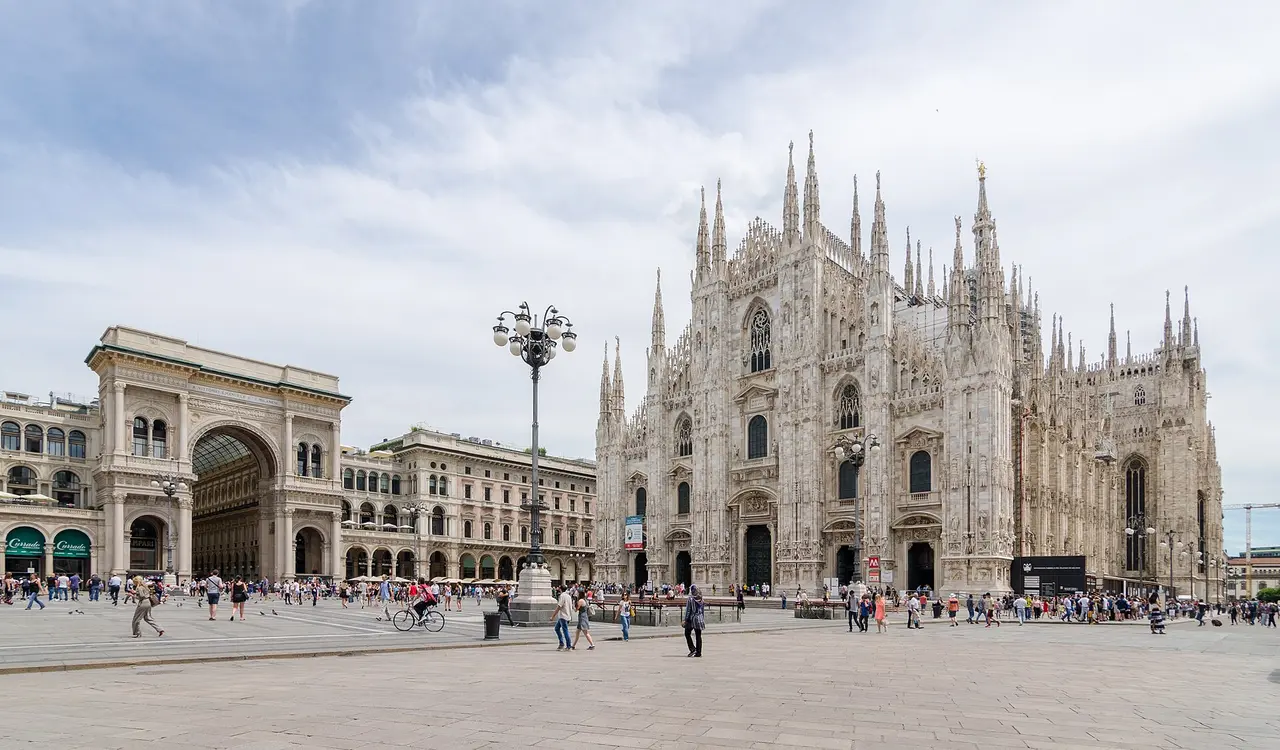
Milan, capital of Lombardy and Italy's second city, brings together the Duomo, Leonardo da Vinci's UNESCO-listed Last Supper and La Scala in a centre you can cover on foot. It is also a base for Lake Como and Bergamo, about an hour away by train.

When to visit Milan

Temperatures, rainfall and crowds month by month, to pick your window.
When to visit Milan
MonthTemperaturesRainCrowdsVerdict
January0 to 7 °C6 dQuietFog and frost at dawn, but the January sales fill the shops of the Fashion Quadrilateral.
February1 to 10 °C6 dModerateLate February Fashion Week sends hotel rates soaring: book early or avoid those dates.
March5 to 16 °C7 dModerateNavigli terraces reopen with 15 °C afternoons, a good balance of price and mild weather.
April8 to 19 °C8 dBusySalone del Mobile week turns the whole city into a design show, and rooms cost a fortune.
May13 to 24 °C8 dBusyThe ideal month to walk from Brera to the Castello, before the muggy summer heat.
June17 to 28 °C7 dBusyLong aperitivo evenings at 28 °C with some thunderstorms; men's Fashion Week pushes prices up.
July19 to 31 °C5 dModerate31 °C and heavy plain humidity: sightseeing in the morning, the lakes in the afternoon.
August19 to 30 °C6 dVery quietThe Milanese leave around 15 August: hotels are cheap, but many restaurants close.
September15 to 26 °C5 dBusyThe driest, mildest month, except during Fashion Week when everything is fully booked.
October10 to 19 °C7 dModerateExhibition season at Palazzo Reale and golden light on the Duomo, with an umbrella close at hand.
November5 to 12 °C9 dQuietThe wettest month: museums, the Last Supper and the EICMA show rather than strolling.
December1 to 8 °C6 dModerateLa Scala's season opens on 7 December alongside Christmas markets: dry cold, festive mood guaranteed.
Source: Normales 1991-2020 de la station de Milan-Linate (Wikipedia, d'après l'Aeronautica Militare) recoupées avec climatestotravel.com (normales 1991-2020), moyenne des deux sources par mois arrondie au dixième, relevé octobre 2026. Jours de pluie : moyenne des deux sources. Affluence et prix estimés d'après le calendrier des salons et semaines de la mode (Milano Fashion Week, Salone del Mobile, EICMA) et la fermeture estivale autour du 15 août.

Milan's must-sees

Nine places that justify the trip on their own.

The Duomo

A white marble Gothic cathedral begun in 1386: a visit to the rooftop terraces, among the spires and statues, gives the best view over the city.

The Last Supper

Leonardo da Vinci's fresco in the refectory of Santa Maria delle Grazie is seen in small groups for fifteen minutes, by mandatory booking, often sold out.

Galleria Vittorio Emanuele II

A 19th-century covered arcade under a glass dome, between the Duomo and La Scala, lined with historic cafés and luxury boutiques.

La Scala opera house

The temple of opera, opened in 1778; its museum gives access to the boxes when no rehearsal is under way, an alternative to a show ticket.

Castello Sforzesco

The red brick fortress of the Dukes of Milan houses several museums, including the Rondanini Pietà, Michelangelo's last and unfinished sculpture.

Pinacoteca di Brera

A major collection of Italian painting with Mantegna's Lamentation of Christ, Raphael's Marriage of the Virgin and Hayez's The Kiss.

Fondazione Prada

A former distillery turned by Rem Koolhaas into a contemporary art centre, with an exhibition tower and a facade clad in gold leaf.

Bosco Verticale

Two residential towers by Stefano Boeri planted with hundreds of trees on their balconies, now the emblem of the new Porta Nuova district.

Monumental Cemetery

An open-air museum of Liberty and modern funerary sculpture, free to enter and far less crowded than the city's major sights.

What to discover in Milan?

The historic centre, from the Duomo to La Scala

Everything starts at Piazza del Duomo, the heart of Italy's second city. Within 500 metres on foot you take in the cathedral, the Galleria Vittorio Emanuele II and Piazza della Scala. Go up to the Duomo rooftops at opening time: the queue grows quickly after 10 am, and the lift ticket costs about €15. This is the most expensive area to sleep in; a room five minutes away by metro, towards Porta Romana or Città Studi, often costs noticeably less. Allow a full half-day for this district alone.

Brera and the Castello, the artists' Milan

North of the centre, Brera lines up cobbled lanes, galleries and ochre facades, with the Pinacoteca set in a 17th-century palace. Allow two hours for its rooms, closed on Mondays like most of the city's museums. Ten minutes' walk away, the Castello Sforzesco opens onto Sempione Park, the centre's great green lung, with the Arch of Peace at its far end. In the evening, the tables on Via Fiori Chiari spill onto the street at higher prices than elsewhere: for dinner, aim for the neighbouring streets instead.

The Navigli and the Darsena

To the south-west, the Naviglio Grande and Naviglio Pavese canals recall that Milan was once linked by water to the Ticino and Lake Maggiore. The Darsena, the redeveloped old port, is the starting point. This is aperitivo territory: from 6.30 pm, a cocktail served with a few bites usually costs €10 to €15. On the last Sunday of the month, an antiques market fills both banks of the Naviglio Grande for nearly two kilometres. Come on a weekday if you want calm, as the quays are packed on Saturday nights.

Porta Nuova, Isola and CityLife: the vertical city

Around Porta Garibaldi station, Porta Nuova shows 21st-century Milan: the UniCredit tower, Italy's tallest skyscraper, Piazza Gae Aulenti and the two Bosco Verticale towers covered in trees. Just behind, Isola keeps its working-class courtyards, workshops and bars. Further west, CityLife gathers three towers by Zaha Hadid, Arata Isozaki and Daniel Libeskind around a park. Half a day is enough for both areas, linked directly by metro line M5 between Garibaldi and Tre Torri.

Porta Venezia, the Liberty district

East of the centre, Porta Venezia holds the finest Liberty facades, the Italian take on Art Nouveau, such as Palazzo Castiglioni on Corso Venezia. The Indro Montanelli gardens and Villa Necchi Campiglio, a 1930s collectors' house open to the public, take two to three hours to visit. The district is also one of the liveliest at night, around Via Lecco and Via Lazzaretto, with Ethiopian, Eritrean and vegetarian restaurants that are more affordable than in the centre.

The lakes and Bergamo as day trips

Milan is the natural gateway to Lombardy. By regional train from Milano Centrale, Varenna, on the east shore of Lake Como, takes about an hour, and Bergamo around fifty minutes. Lake Maggiore is barely further. For anyone wanting several days there, the great Italian lakes deserve a stay of their own. On a day trip, leave before 9 am and check the time of the last boat, which runs earlier out of season.

Sample itineraries

Three routes built around the time you actually have.
2daysRecommended

Milan in 2 days: the Duomo, Leonardo's Last Supper and the Navigli

  1. Day 1: the Duomo, the Galleria and La Scala
  2. Day 2: the Last Supper and the Navigli district

Best for: A weekend to see the three must-sees on foot and by metro, without leaving the city. It requires booking the Last Supper several weeks ahead and skips Brera, the museums and the lakes.

How much it costs

Per person per day, excluding international travel.
Budget
79 €/ day
1 386 € for 2 people, 7 days, return flights included
Accommodation
38 €
Food
25 €
Local transport
8 €
Sights and activities
8 €
Comfort
154 €/ day
2 436 € for 2 people, 7 days, return flights included
Accommodation
67 €
Food
55 €
Local transport
12 €
Sights and activities
20 €
Premium
345 €/ day
5 110 € for 2 people, 7 days, return flights included
Accommodation
135 €
Food
110 €
Local transport
40 €
Sights and activities
60 €
Prices checked: Relevé octobre 2026. Repas et transports : Numbeo Milan, mise à jour du 6 octobre 2026 (repas bon marché 20 €, dîner de milieu de gamme pour deux 80 €, ticket ATM 2,20 €, taxi 7 € de prise en charge puis 2 €/km) ; pass ATM 24 h 7,60 €, Malpensa Express 13 € l'aller, entrées (Duomo 5 € l'intérieur, 14 à 15 € avec les terrasses, Cène 15 € + 2 € de réservation, Pinacothèque de Brera 15 €) et hébergement (dortoir 32 à 45 €, hôtel 3 étoiles 90 à 155 €, 4 étoiles 120 à 200 €, 5 étoiles 250 € et plus la nuit) d'après le guide de prix Radical Storage mis à jour en juillet 2026. Taxe de séjour 2026 de la commune de Milan incluse dans l'hébergement : 3 € par nuit en auberge, 7,40 € en 3 étoiles, 10 € en 4 étoiles et 12 € en 5 étoiles depuis avril 2026 (Holidu, GreenMe). Hébergement par nuit et par personne : lit en dortoir pour backpacker, chambre double partagée à deux pour comfort et premium. Vol A/R Paris-Milan estimé à 140 € par personne hors vacances scolaires (Kayak : moyenne de 142 € sur les trois derniers mois, de 76 à 155 € en septembre, vol d'environ 1 h 30). Prix hors Fashion Week et Salone del Mobile, pendant lesquels les chambres coûtent jusqu'à quatre fois plus.

Getting there

Airports serving Milan, from main hubs to secondary ones.
  • BDSBrindisi AirportBrindisiMain
  • BGYIl Caravaggio International AirportOrio al SerioMain
  • BLQBologna Guglielmo Marconi AirportBolognaMain
  • BRIBari Karol Wojtyła International AirportBariMain
  • CAGCagliari Elmas AirportCagliariMain
  • CIACiampino–G. B. Pastine International AirportRomeMain

Entry, health and safety

For FR travellers

Entry requirements

No visa for a tourist stay

Aucun visa : pour un séjour de trois mois maximum en Italie, les Français présentent une carte nationale d'identité ou un passeport en cours de validité, à l'exclusion de tout autre document. Les cartes d'identité délivrées entre 2004 et 2013 restent reconnues cinq ans après leur date d'expiration, mais le passeport valide est conseillé.

Stay allowed for up to 90 days.

Health

Advised: Mise à jour des vaccinations du calendrier français : diphtérie, tétanos, poliomyélite, coqueluche et rougeole.

Risques signalés : chikungunya, dengue et virus du Nil occidental transmis par les moustiques, tiques lors des activités en plein air, épisodes de canicule en été. Toute l'Italie, dont Milan, est en vigilance normale ; vols à la tire fréquents dans les transports, les aéroports et les sites touristiques des grandes villes.

Safety

Normal precautions

Emergency

112

Checked in octobre 2026 against the official source. Entry rules change: check the official source before you travel, it alone is authoritative.

Practical information for Milan

Tourist tax

From €3 a night in hostels to €10 in 4-star and €12 in 5-star hotels, per person, paid at your accommodation

ATM ticket

€2.20 for 90 minutes on metro, tram and bus; 24-hour pass €7.60

Museum closures

Mondays for the Last Supper, the Pinacoteca di Brera and the Castello Sforzesco museums

Duomo dress code

Shoulders and knees covered, checked at the entrance

Area C

Congestion charge for driving into the centre on working days, 7.30 am to 7.30 pm

Tap water

Safe to drink, and free at the green cast-iron fountains known as vedovelle

Power sockets

Types F and L, 230 V

Airports

Linate 7 km from the centre, linked by metro line M4; Malpensa about 50 km away, by Malpensa Express (€13)

Language

Italian; English is common in hotels and museums

Currency

Euro, contactless payment accepted almost everywhere

Milan in pictures

Photo credits : Steffen Schmitz, CC BY-SA 4.0, Wikimedia Commons ; High Contrast, CC BY 3.0 de, Wikimedia Commons ; Meri Valenti (TCI), CC BY 4.0, Wikimedia Commons ; Chabe01, CC BY-SA 4.0, Wikimedia Commons ; Daniel Case, CC BY-SA 3.0, Wikimedia Commons

Frequently asked questions about Milan

How do you get a ticket for Leonardo's Last Supper?
Only by booking on the official Cenacolo Vinciano website, which releases tickets in batches several weeks ahead. A ticket costs about €15 plus a €2 booking fee, for a fifteen-minute visit. Without a booking, try the guided tours resold by agencies, which cost more.
Do you need to book the Duomo rooftops in Milan?
It is not compulsory but advisable from April to October. The online lift ticket skips the longest queue, at about €15. Access by the stairs is cheaper. Come at opening time or late afternoon for the light on the spires.
Malpensa, Linate or Bergamo: which airport for Milan?
Linate is the most convenient, 7 km from the centre and linked by metro line M4. Malpensa, about 50 km away, handles most long-haul flights and is reached by Malpensa Express. Bergamo Orio al Serio serves low-cost airlines, about an hour away by shuttle bus.
Which dates should you avoid in Milan because of trade fairs?
Fashion Week in February and late September and the Salone del Mobile in April send prices soaring: during the design fair, a room can cost up to four times more. Check the calendar before booking. August is the opposite, quiet and cheap.
How does the Milanese aperitivo work?
Late in the day, around 6.30 pm, bars serve a cocktail with bites or a buffet, usually for €10 to €15. The Navigli, Brera and Porta Venezia are the busiest districts for this tradition, which was born in Milan.
Can you do Milan and Lake Como in one weekend?
Yes, as long as you give each a day. The regional train links Milano Centrale to Varenna in about an hour, then the boat serves Bellagio. One day in Milan is enough for the Duomo and the Last Supper, if booked in advance.
Can you drive into central Milan?
The centre is covered by Area C, a charging zone active on working days from 7.30 am to 7.30 pm and enforced by cameras. Parking is scarce and expensive. For a city stay, the metro and trams are more than enough; keep the car for the lakes.

Plan your trip to Milan

Build your day-by-day itinerary and manage budget, bookings and packing in PlanTripNow.
Aperçu de l'application PlanTripNow