Skip to content

Nairobi , the capital where lions can see the skyscrapers

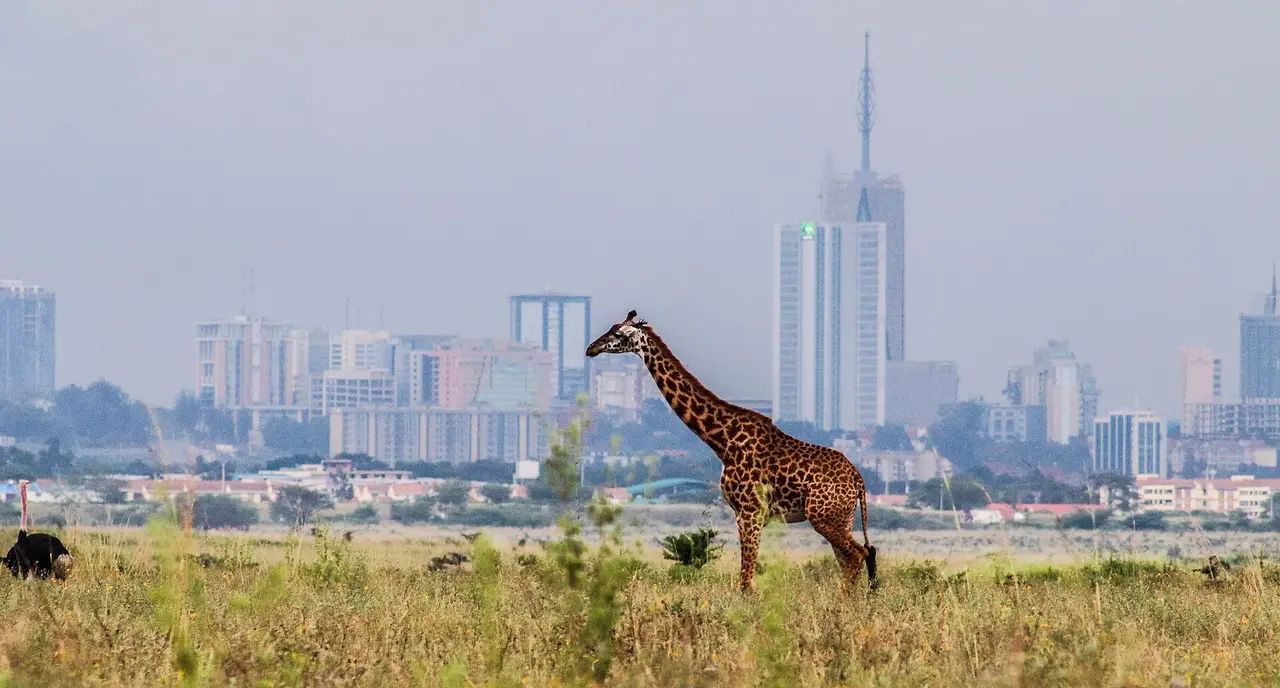
Few capitals let you spot black rhinos a few kilometres from their office towers. Nairobi combines a national park on its edge, a nursery for orphaned elephants, giraffes you can feed and a highland climate that stays mild all year, before you fly off to the Masai Mara savannah.

At a glance

Visa
Required
Tourist stay of up to 90 days
7-day budget
€707
Per person, comfort profile, excluding international flights.
Recommended length
3 days
For a first trip, without rushing.

Should you spend more than one night in Nairobi before a safari?

Yes, at least two days. Many travellers only pass through, yet the city already offers a half-day safari, the Sheldrick nursery and the Giraffe Centre. It is also the natural gateway to East Africa, with direct flights from Paris in about 8 hours 30 minutes according to KAYAK.

When to visit Nairobi

Temperatures, rainfall and crowds month by month, to pick your window.
When to visit Nairobi
MonthTemperaturesRainCrowdsVerdict
January14 to 27 °C4 dBusyThe short dry season and the sunniest skies of the year: an excellent month to pair Nairobi with a safari.
February14 to 27 °C4 dModerateThe driest month before the rains: short grass in the national park, easy game spotting and quieter lodges.
March15 to 28 °C7 dModerateThe warmest month, 28 °C in the afternoon; the first showers arrive in the second half.
April15 to 26 °C11 dVery quietThe heart of the long rains: muddy park tracks, but low-season rates and very green landscapes.
May15 to 25 °C9 dVery quietRain is still frequent and skies often low; the museums and Karen remain an option for a cheap city stay.
June13 to 24 °C4 dModerateDry weather returns with cool 13 °C mornings: a jumper for dawn game drives, prices not yet at their peak.
July12 to 24 °C2 dPackedHardly any rain but grey skies and 12 °C at dawn; the Masai Mara migration sends prices soaring.
August13 to 24 °C2 dPackedPeak season: book Sheldrick, the lodges and your flight months ahead.
September13 to 26 °C2 dBusyStill dry, the sun is back and the families have gone home: one of the best weather-to-crowd ratios.
October14 to 27 °C6 dModerateFine 27 °C days; the short rains set in late in the month, often as afternoon showers.
November15 to 25 °C14 dQuietThe wettest month, rain every other day: leave slack in your plans for park outings.
December15 to 26 °C7 dBusyThe rains ease off but the holidays fill hotels and flights: December is the priciest month from Paris.
Source: Normales 1991-2020 de la station de l'aéroport international Jomo Kenyatta, à 1 615 m d'altitude (tableau climatique de l'article Wikipédia en anglais « Nairobi », consulté le 12 octobre 2026) : maximales, minimales et moyennes quotidiennes, jours de précipitations de 1 mm ou plus. Ville d'altitude sans littoral : pas de température de la mer. Deux saisons des pluies, les longues pluies de mars à mai (pic en avril, 130 mm) et les courtes pluies d'octobre à décembre (pic en novembre, 131 mm), contre 11 mm seulement en juillet ; juillet et août sont les mois les plus frais et les plus nuageux (124 heures de soleil). Affluence et prix estimés d'après le calendrier des safaris kényans (saison sèche de juin à octobre avec la migration des gnous au Masai Mara de juillet à septembre, seconde saison sèche de janvier-février, basse saison des lodges pendant les longues pluies) et les vacances scolaires françaises et de fin d'année.

What brings people to Nairobi

Wild animals a stone's throw from the offices, a little colonial history and plenty of greenery.

Sheldrick Wildlife Trust nursery

For one hour a day, orphaned baby elephants drink from bottles and roll in the mud in front of visitors, while the keepers tell each one's story.

The national park's black rhinos

This endangered species is protected inside the park's fenced area, where it is often seen in the thickets early in the morning.

Giraffe Centre

A conservation centre for Rothschild giraffes where you come face to face with them from a wooden platform.

Karen Blixen Museum

The Danish writer's house, its period furniture and the view of the Ngong Hills described in Out of Africa.

Kazuri workshop

A cooperative where women hand-shape and paint ceramic beads that are sold around the world.

Nairobi Safari Walk

A wooden boardwalk at the national park entrance for seeing Kenyan wildlife on foot, handy with children or as a first glimpse.

Understanding Nairobi before you land

A highland city with a springlike climate

Nairobi grew in 1899 out of a depot on the railway linking Mombasa to Uganda, near a stream the Maasai called Enkare Nairobi, cool water. The city now spreads out above 1,600 m, and that changes everything: the yearly average is around 20 °C, afternoons rarely top 28 °C and July mornings drop to 12 °C. Pack a fleece for dawn game drives. Two rainy seasons shape the year, the long rains of April and May and the short rains of November.

The national park, a safari by the ring road

Created in 1946 as Kenya's first national park, Nairobi National Park begins where the southern suburbs end. Giraffes, zebras, buffaloes and black rhinos graze with the downtown towers behind them, and lions show up in the early hours. Entry costs 80 USD per non-resident adult under the Kenya Wildlife Service fee schedule in force since October 2025, payable online via eCitizen. You need a vehicle: a driver-guide or a shared tour. Go at opening time, while the animals are still moving, and never stay in the park after dark.

Baby elephants and giraffes, two visits to book

The Sheldrick Wildlife Trust nursery takes in orphaned baby elephants before returning them to the wild. The public can visit for one hour a day, from 11am to noon, by email booking only, never through ticketing platforms. The minimum donation is 20 USD per adult in cash, and the national park entry fee comes on top. A few minutes away, the Giraffe Centre protects Rothschild giraffes, which you feed from a raised platform for 1,500 shillings, by card or M-Pesa only. Combine both in the same morning.

Karen, in the footsteps of Out of Africa

The green, residential suburb of Karen is named after Karen Blixen, who farmed coffee here from 1917 to 1931 at the foot of the Ngong Hills. Her house is now a museum devoted to her life and to her memoir, adapted for the cinema as Out of Africa. Allow 17 USD for a non-African adult since the fee rise of 7 May 2026. Close by, the Kazuri workshop employs women who shape and hand-paint beads and ceramics; the workshop tour ends in the shop.

The National Museum and Karura Forest, the cultural side

The National Museum on Museum Hill brings together hominid fossils found in Kenya, ethnographic collections and a contemporary art gallery; tickets cost 18 USD for a non-African adult, or 25 USD with the neighbouring Snake Park. To the north, Karura Forest offers a rare breather: trails under the trees, a waterfall, caves and cycling tracks. The environmental activist Wangari Maathai, winner of the 2004 Nobel Peace Prize, fought to save it from developers. Walk there in daytime, on the maintained paths.

Heading out on safari: Masai Mara, Amboseli and beyond

Nairobi is the starting point for most Kenyan safaris. Small planes take off from Wilson Airport for the Masai Mara airstrips, where the wildebeest migration peaks from July to September. Amboseli, with an entry fee of 90 USD per non-resident adult, is famous for its elephants framed by Kilimanjaro, a peak that rises across the border in Tanzania. France Diplomatie recommends flying or taking the train for long distances and strongly advises against driving at night outside towns. The north and the Somali border are advised against: no classic safari goes there.

Sample itineraries

Three routes built around the time you actually have.
3daysRecommended

Nairobi in 3 days: the National Museum, Karen and Karura Forest

  1. Day 1: the National Museum, the Snake Park and an evening in Westlands
  2. Day 2: the Sheldrick nursery, the Giraffe Centre and the Karen Blixen Museum
  3. Day 3: Karura Forest, then the Safari Walk and the KWS orphanage

Best for: Three days to see the city itself, not just its animals: the history of Kenya and of human origins at the National Museum, a day in Karen between baby elephants and giraffes, then a morning on foot in Karura Forest before the KWS animal orphanage. All transfers are by taxi or ride-hailing app, never on foot after dark.

How much it costs

Per person per day, excluding international travel.
Budget
50 €/ day
1 760 € for 2 people, 7 days, return flights included
Accommodation
10 €
Food
14 €
Local transport
9 €
Sights and activities
17 €
Comfort
101 €/ day
2 946 € for 2 people, 7 days, return flights included
Accommodation
33 €
Food
25 €
Local transport
15 €
Sights and activities
28 €
Premium
230 €/ day
5 102 € for 2 people, 7 days, return flights included
Accommodation
75 €
Food
55 €
Local transport
40 €
Sights and activities
60 €
Prices checked: Relevé du 12 octobre 2026, hors juillet-août et fêtes de fin d'année. Taux Wise (cours moyen du marché, consulté le 12 octobre 2026) : 1 € = 145,5 shillings kényans (KES) et 1 USD = 0,8919 €. Repas et transports d'après Numbeo Nairobi (mise à jour du 2 octobre 2026, 1 013 relevés de 87 contributeurs sur 12 mois, source non officielle) : repas bon marché 800 KES, dîner pour deux en restaurant moyen 4 500 KES, cappuccino 343 KES, bière locale 300 KES, taxi 200 KES de prise en charge puis 200 KES le km. France Diplomatie (fiche du 25 septembre 2026) déconseille les matatus et les taxis-motos : tous les profils se déplacent en taxi ou VTC, le premium avec chauffeur privé (estimation par extrapolation). Hébergement d'après momondo (page Nairobi consultée le 12 octobre 2026, prix des 7 derniers jours ou non datés) : hôtels économiques autour de 14 à 19 € la nuit, 4 étoiles de Westlands et Upper Hill entre 53 et 79 € (Best Western Plus Meridian, ibis Styles Westlands, Park Place), Radisson Blu Upper Hill 140 € et 151 € en moyenne pour un hôtel de luxe ; par personne, chambre partagée à deux. Activités lissées sur la semaine, tarifs officiels : parc national de Nairobi 80 USD par adulte non résident et forfait parc, orphelinat et Safari Walk 105 USD (barème KWS du Legal Notice 160 de 2025, en vigueur depuis le 1er octobre 2025, rapporté par HapaKenya le 30 septembre 2025, source antérieure à 2026) ; nurserie Sheldrick 20 USD de don minimum par adulte, plus le droit d'entrée KWS du parc obligatoire (site officiel du Sheldrick Wildlife Trust, consulté le 12 octobre 2026) ; Giraffe Centre 1 500 KES par adulte non résident (site officiel, tarif non daté) ; Musée national 18 USD et musée Karen Blixen 17 USD par adulte non africain (barème des Musées nationaux du Kenya en vigueur depuis le 7 mai 2026). Game drive partagé du profil comfort, véhicule privé et visites guidées du profil premium estimés par extrapolation, sans grille officielle. Vol A/R Paris-Nairobi par personne d'après KAYAK (page consultée le 12 octobre 2026, statistiques sur 12 mois glissants, sans date de mise à jour affichée) : 530 € en backpacker (prix le plus bas relevé sur 5 jours, avec escale), 766 € en comfort (moyenne sur 12 mois), 941 € en premium (haut de la fourchette habituelle de 650 à 941 €) ; vols directs Air France et Kenya Airways en environ 8 h 30, 1 183 € en moyenne en décembre. Frais d'ETA (30 USD) et safaris de plusieurs jours au Masai Mara ou à Amboseli non compris. weekTwoPax = deux vols + sept jours à deux.

Getting there

Airports serving Nairobi, from main hubs to secondary ones.
  • EDLEldoret International AirportEldoretMain
  • KISKisumu International AirportKisumuMain
  • MBAMoi International AirportMombasaMain
  • NBOJomo Kenyatta International AirportNairobiMain
  • ASVAmboseli AirportOl TukaiSecondary
  • KTLKitale AirportKitaleSecondary

Entry, health and safety

For FR travellers

Entry requirements

Visa required

Autorisation électronique de voyage (eTA) obligatoire, à obtenir avant l'embarquement uniquement sur le site officiel etakenya.go.ke (France Diplomatie, fiche mise à jour le 25 septembre 2026). Tarif à partir de 30 USD en traitement normal, environ trois jours ouvrés, avec un supplément de 100 USD pour un traitement immédiat ; le site officiel conseille de déposer la demande au moins deux semaines avant le départ et rappelle qu'on ne peut voyager qu'une fois l'autorisation approuvée (tarifs et délais relevés le 12 octobre 2026). Séjour touristique jusqu'à trois mois, prolongeable de trois mois auprès du service de l'immigration pour 50 USD. Passeport valable au moins six mois avec au moins une page vierge. Le travail, même bénévole, sans permis est sanctionné et les contrôles sont fréquents.

Stay allowed for up to 90 days.

Passport valid for 6 months beyond your return date.

Health

Required: Fièvre jaune exigée uniquement pour les voyageurs venant d'un pays où la maladie est endémique ou y ayant transité plus de 12 heures.

Advised: Être à jour du calendrier vaccinal français (diphtérie, tétanos, poliomyélite, coqueluche, rougeole). Fièvre jaune fortement recommandée (maladie endémique au centre et à l'ouest du pays), dans un centre agréé au moins 10 jours avant le départ, avec carnet de vaccination international. Selon la durée et les conditions du séjour : hépatites A et B, fièvre typhoïde, méningite ACWY (surtout en saison sèche), rage, et pour les voyageurs exposés chikungunya, dengue et mpox ; tuberculose pour les enfants de moins de 15 ans.

Paludisme : risque faible à Nairobi mais nettement plus élevé au bord du lac Victoria et sur la côte ; protection contre les moustiques et traitement préventif à discuter avec un médecin avant le départ, surtout en cas de safari ou de séjour hors de la capitale. Dengue : pas de traitement curatif, éviter les anti-inflammatoires. Choléra : épidémie active dans plusieurs comtés dont Nairobi ; ne boire que de l'eau en bouteille capsulée ou rendue potable. Sécurité (France Diplomatie, zonage du 25 septembre 2026) : Nairobi est en vigilance renforcée, mais les quartiers d'Eastleigh, Pangani, Kibera et Mathare sont déconseillés sauf raison impérative et le parc Uhuru est signalé comme dangereux. Éviter de marcher, surtout après la tombée de la nuit, et préférer le taxi ; vitres fermées et portières verrouillées en voiture, méfiance envers les faux accidents ; pas de bijoux ni d'objets de valeur ; ne pas résister en cas d'agression. Éviter matatus et taxis-motos (boda-boda), préférer l'avion ou le train pour les longues distances, ne jamais conduire de nuit hors agglomération. Dans les parcs, respecter les consignes des gardes et ne pas circuler de nuit. Zones formellement déconseillées : bande de 100 km le long de la frontière somalienne (dont Garissa, Dadaab, Mandera), partie continentale du comté de Lamu, frontières avec le Soudan du Sud et l'Éthiopie ; régions isolées de Turkana, West Pokot, Marsabit et Isiolo et côte au nord de Malindi déconseillées sauf raison impérative. Rassemblements politiques à éviter en vue des élections du 10 août 2027. Ambassade de France à Nairobi : +254 20 760 55 55. Urgences selon France Diplomatie : police et secours 999 ou 112, Croix-Rouge kényane (ambulances) 1199.

Safety

Increased caution

Emergency

999

Checked in octobre 2026 against the official source. Entry rules change: check the official source before you travel, it alone is authoritative.

Nairobi practical information

Entering Kenya

eTA required via etakenya.go.ke, from 30 USD, about three working days to process; apply two weeks before departure

Passport

Valid for six months after arrival, with at least one blank page

Currency

Kenyan shilling (KES), 145.5 shillings to 1 euro according to Wise on 12 October 2026; M-Pesa and cards accepted almost everywhere

Cashless payments

The Giraffe Centre and many museums only take card or M-Pesa; the Sheldrick nursery, by contrast, requires cash

Airports

Jomo Kenyatta for international flights, direct from Paris with Air France and Kenya Airways; Wilson for light aircraft to the reserves

Getting around

Taxis or ride-hailing apps recommended; France Diplomatie advises against matatus and boda-boda motorbike taxis

Areas to avoid

Eastleigh, Pangani, Kibera and Mathare advised against unless essential; Uhuru Park flagged as dangerous

KWS entry fees

Nairobi National Park 80 USD, park, orphanage and Safari Walk package 105 USD, Amboseli 90 USD per non-resident adult

Health

Yellow fever vaccine strongly recommended; low malaria risk in the city but discuss preventive treatment for safaris

Daily budget

About 50 € per person on a tight budget, 101 € mid-range, 230 € top-end, excluding flights and multi-day safaris

Emergencies

Police and rescue 999 or 112, Kenya Red Cross 1199 according to France Diplomatie; French embassy +254 20 760 55 55

Nairobi in pictures

Photo credits : Alexmbogo, CC BY-SA 4.0, Wikimedia Commons ; GioRan, CC BY-SA 4.0, Wikimedia Commons ; Alexander Leisser, CC BY-SA 4.0, Wikimedia Commons ; Michelle Juma, CC BY-SA 4.0, Wikimedia Commons ; U.S. Department of State from United States, Public domain, Wikimedia Commons

Nairobi FAQ

Is Nairobi dangerous for tourists?
France Diplomatie places Nairobi under heightened vigilance. The Eastleigh, Pangani, Kibera and Mathare districts are advised against unless essential and Uhuru Park is flagged as dangerous. Avoid walking after dark, travel by taxi with the windows closed and do not carry valuables.
Do I need a visa for Nairobi?
French citizens must obtain an electronic travel authorisation, the eTA, from the official etakenya.go.ke website before boarding. It costs from 30 USD and takes about three working days to process. Tourist stays can last up to three months.
How do I book the Sheldrick nursery visit?
Only by email to the Trust's Nairobi office, at least two working days ahead and within the next three months. The visit runs from 11am to noon. Bring 20 USD in cash per adult, plus the national park entry fee paid on eCitizen.
Can you go on safari without leaving Nairobi?
Yes. Nairobi National Park can be explored on a half-day game drive, with good chances of seeing black rhinos, giraffes, buffaloes and lions. Entry costs 80 USD per non-resident adult and you need a vehicle with a driver-guide, as walking is not allowed outside designated areas.
Do I need malaria tablets in Nairobi?
The risk is low in the capital according to France Diplomatie, but much higher on the coast and around Lake Victoria. If your trip includes a safari or other regions, see a doctor before departure about preventive treatment, and protect yourself from mosquitoes in any case.
When is the best time to visit Nairobi?
January to February and June to October are the driest periods. July and August coincide with the Masai Mara migration but also with the highest prices. April, May and November are the wettest months, with lower rates and sometimes muddy tracks.
How do I get from Nairobi to the Masai Mara?
The easiest way is a scheduled light-aircraft flight from Wilson Airport to the reserve's airstrips, where your camp picks you up. France Diplomatie recommends flying for long distances and strongly advises against driving at night outside towns.
How much does a week in Nairobi cost for two?
Including flights from Paris checked on KAYAK in October 2026, allow about 1,760 € for two on a tight budget, 2,950 € mid-range and 5,100 € top-end. These figures include neither the eTA nor a multi-day safari in a reserve.
Which area should I stay in?
Westlands has most of the hotels, restaurants and secure malls, handy for going out by taxi in the evening. Karen, quieter and greener, is close to Sheldrick, the Giraffe Centre and the Karen Blixen Museum. Upper Hill and Kilimani offer mid-priced business hotels.

Plan your trip to Nairobi

Build your day-by-day itinerary and manage budget, bookings and packing in PlanTripNow.
Aperçu de l'application PlanTripNow