Skip to content

Visiting Salzburg : Baroque old town, Mozart and the Alps

A fortress on its rock, Baroque domes, the house where Mozart was born and mountains visible from every bridge: Salzburg fits in the palm of your hand. Two days are enough for the city, two more for the lakes, the salt mines and the ice caves.

Why visit Salzburg?

Salzburg has a Baroque historic centre listed by UNESCO since 1996, dominated by the Hohensalzburg Fortress. Mozart was born here in 1756 and its summer festival ranks among the most prestigious in Europe. The city is also the gateway to the Salzkammergut lakes and the Alps, less than an hour's drive away.

Salzburg's must-sees

A fortress, Mozart sites and Baroque gardens, all within twenty minutes' walk of one another.

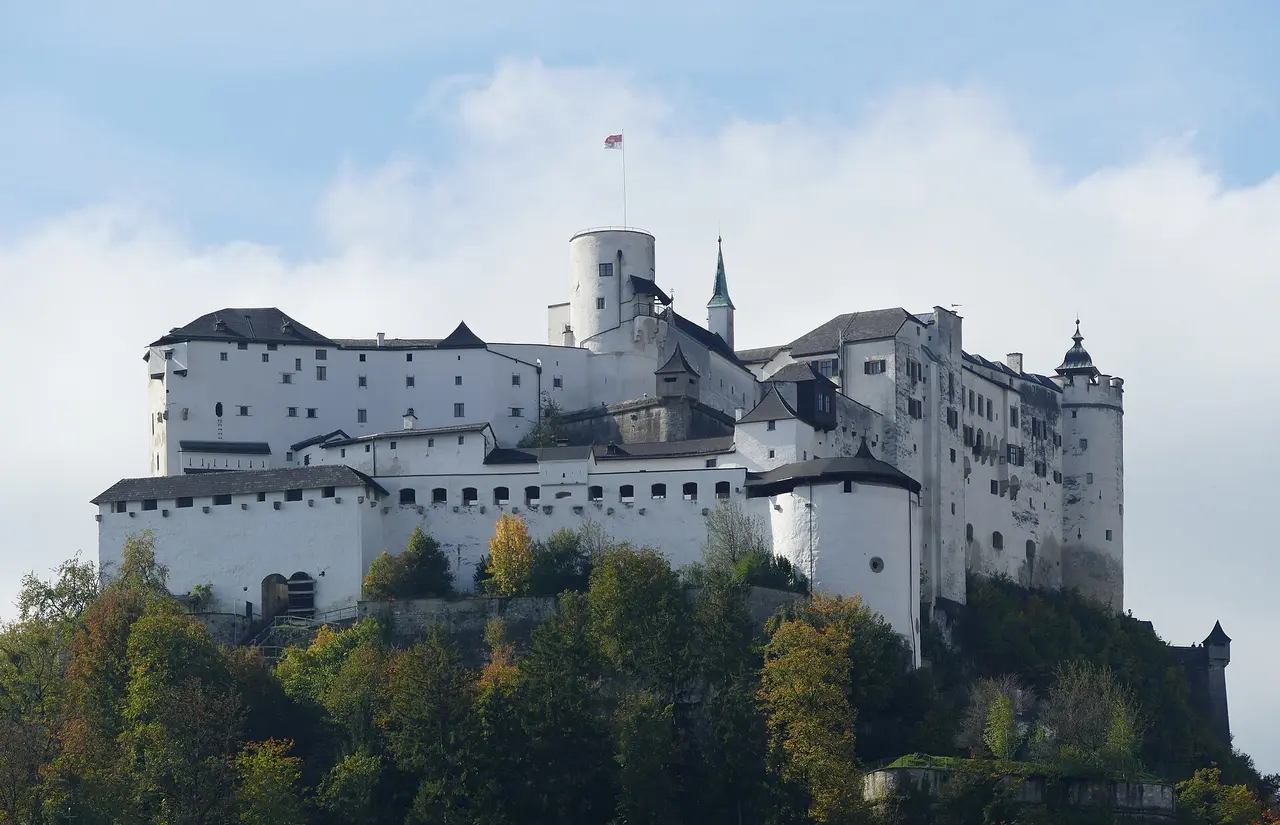
Hohensalzburg Fortress

A medieval fortress among the largest in central Europe, reached by funicular. State rooms of the prince-archbishops, museums and views over the city and the Alps.

Mozart's Birthplace

At number 9 Getreidegasse, the apartment where the composer was born in 1756 displays his childhood instruments, family portraits and original letters.

Salzburg Cathedral

A large Baroque cathedral rebuilt in the 17th century, where Mozart was baptised. Its pale marble facade closes the square where Jedermann is staged during the festival.

Mirabell Gardens

Free Baroque gardens on the right bank, with flowerbeds, the Pegasus fountain and Baroque statues. The view of the fortress from here is the most photographed in town.

St Peter's Abbey

A Benedictine monastery founded in the late 7th century, with a cemetery of ornate iron grilles set against the rock and catacombs carved into the Mönchsberg.

Hellbrunn Palace

A Mannerist summer residence with playful trick fountains, artificial grottoes and water-powered automata. Its park also holds the glass gazebo made famous by The Sound of Music.

Residenz

The palace of the prince-archbishops, with fresco-painted state rooms where Mozart played as a child. The DomQuartier ticket combines it with the cathedral and the St Peter's museum.

Augustiner Bräu Mülln

A huge monastic beer hall where you fill your stoneware mug straight from the barrel. Shaded garden under chestnut trees, popular with locals in the early evening.

What to see in Salzburg, area by area?

The Altstadt, left bank of the Salzach

Squeezed between the river and the Mönchsberg, the old town strings together Baroque squares and churches built by the prince-archbishops: the cathedral, the Residenz, Kapitelplatz and St Peter's Abbey with its cemetery. Getreidegasse, a narrow street with wrought-iron shop signs, passes Mozart's birthplace. Everything can be covered on foot in a day, but crowds are dense from 10 am to 5 pm in summer: visit early in the morning or in the evening. This centre sums up the Baroque architecture of Austria in less than a square kilometre.

The Mönchsberg and Kapuzinerberg hills

Two hills frame the city and offer the best viewpoints. On the left bank, the Mönchsberg is reached by a lift cut into the rock from Gstättengasse, or by stairs; a wooded path leads to the fortress in about thirty minutes. On the right bank, the wilder Kapuzinerberg is climbed by a stairway from Linzer Gasse up to the Capuchin monastery. Allow one to two hours for each, and aim for late afternoon for the light on the domes.

The Neustadt, right bank

Less visited, the right bank holds the station, most hotels and a more local neighbourhood life. The Mirabell Gardens, free and open all year, spread flowerbeds, statues and the Pegasus fountain, with the fortress as a backdrop. On Makartplatz, the house where Mozart lived with his family complements the one on Getreidegasse. Linzer Gasse, a shopping street, and the Salzach embankments are linked to the Altstadt by several footbridges, less than ten minutes on foot.

The festival and the music season

The Salzburg Festival runs for about six weeks each year, from late July to late August, with operas, concerts and theatre, including the performance of Jedermann on Cathedral Square. Tickets are bought several months ahead and hotels then charge their highest rates. The rest of the year, the Mozarteum and concerts at the fortress or Mirabell Palace keep the tradition alive. In late January, Mozart Week celebrates the composer's birthday, a quieter alternative to the summer festival.

Hellbrunn, Hallein and the south of the city

About 5 km south, Hellbrunn Palace, built in the early 17th century, is famous for its trick fountains, designed to soak guests by surprise; they run from April to early November. Bus 25 gets there in about twenty minutes. A little further, the Untersberg is climbed by cable car for a panorama over the Bavarian Alps. In Hallein, about twenty minutes away by train, the Dürrnberg salt mine is visited in miner's overalls, with wooden slides and a crossing of an underground lake.

Lakes, caves and gateways to the Alps

The Salzkammergut starts less than an hour away by bus: St Gilgen and the Wolfgangsee take about fifty minutes, and Hallstatt makes a long day trip. To the south, Werfen, about forty minutes by train, combines Hohenwerfen Castle and the Eisriesenwelt, an ice cave open from May to October, to be visited in a warm jacket: it stays close to 0 °C. Munich is about an hour and a half away by train, Vienna under three hours. To the west, Innsbruck and the Tyrol are just under two hours away.

Getting there

Airports serving Salzburg, from main hubs to secondary ones.
  • GRZGraz AirportFeldkirchen bei GrazMain
  • INNInnsbruck AirportInnsbruckMain
  • KLUKlagenfurt AirportKlagenfurt am WörtherseeMain
  • LNZLinz-Hörsching AirportLinzMain
  • SZGSalzburg AirportSalzburgMain
  • VIEVienna International AirportViennaMain

Practical information for Salzburg

Airport

W. A. Mozart Airport is about 4 km from the centre, linked by trolleybuses 2 and 10 in around twenty minutes.

Salzburg Card

Valid for 24, 48 or 72 hours, it includes city transport, the fortress funicular and entry to most museums and sights.

Rain

Salzburg is known for its fine, persistent rain, the Schnürlregen, especially in summer. Pack an umbrella even on a sunny day.

Driving

The Altstadt is largely pedestrian and central car parks are expensive. Use a park-and-ride on the outskirts and finish by trolleybus.

Motorway vignette

Mandatory on Austrian motorways, as a digital or sticker version. Watch out when arriving from Germany, as the motorway runs straight into the toll network.

Festival

From late July to late August: book tickets and accommodation several months ahead, or stay in nearby villages linked by train.

Local specialities

Salzburger Nockerl, a sweet soufflé shaped like three peaks, and marzipan Mozart balls, whose original recipe is sold at Fürst.

Currency

Euro. Cards are widely accepted, but keep some cash for beer halls and small market stalls.

Salzburg in pictures

Photo credits : Andreas Stiasny, CC BY-SA 4.0, Wikimedia Commons ; Eweht, CC BY-SA 4.0, Wikimedia Commons ; Richard Symonds, CC BY-SA 4.0, Wikimedia Commons ; Uoaei1, CC BY-SA 4.0, Wikimedia Commons

Frequently asked questions about Salzburg

Funicular or walk up to Hohensalzburg Fortress?
The funicular climbs in about a minute from Festungsgasse and the ticket usually includes the visit. On foot, allow around twenty minutes of steep climbing on the same route, or half an hour via the Mönchsberg starting from the lift. Walking down by the paths is the most enjoyable option.
Mozart's Birthplace or Mozart's Residence: which to visit?
The birthplace on Getreidegasse is the most moving, with the composer's childhood violin and clavichord. The house on Makartplatz, where the family moved in 1773, is more spacious and traces his work. A combined ticket covers both, ten minutes' walk apart.
Can you follow The Sound of Music locations in Salzburg?
Yes. The Mirabell Gardens, the Hellbrunn gazebo, Nonnberg Abbey and Leopoldskron Palace all appear in the 1965 film. Bus tours link them with Mondsee, where the wedding scene was shot. Austrians often know little about this film, which is very popular abroad.
How do you get tickets for the Salzburg Festival?
The programme is published the previous autumn and ticket orders open shortly after, well before general sales in spring. Seats often remain available for less publicised concerts. For Jedermann or the major operas, it is best to apply as soon as sales open.
Hallein or Berchtesgaden for a salt mine visit?
Both offer a similar tour with slides and an underground lake. Hallein, on the Austrian side, is around twenty minutes by train and then bus. Berchtesgaden, in Bavaria, is about forty minutes by bus and pairs well with Lake Königssee. Choose depending on the rest of your day.
Where to see Salzburg in its Christmas setting?
The Advent market fills the Cathedral and Residenz squares from late November to around 1 January. Snow is not guaranteed in town, but the surrounding hills are often white. Do not miss Oberndorf, about twenty kilometres away, where Silent Night was first performed in 1818.
Salzburg or Innsbruck for a single Alpine stop?
Salzburg appeals more for music, Baroque architecture and the Salzkammergut lakes. Innsbruck, surrounded by peaks reached by cable car from the centre, suits hiking and skiing better. With two hours by train between them, many travellers combine both cities.

Plan your trip to Salzburg

Build your day-by-day itinerary and manage budget, bookings and packing in PlanTripNow.
Aperçu de l'application PlanTripNow