Skip to content

Visiting Tunis : the medina, Carthage and the northern suburbs by TGM

A capital with two faces: in the morning, covered souks climbing towards the Zitouna Mosque; in the afternoon, an old suburban train skirting the lake to the baths of Carthage, the blue doors of Sidi Bou Said and the terraces of La Marsa. Three days are enough to grasp the essentials.

At a glance

Visa
None
Tourist stay of up to 90 days
7-day budget
€483
Per person, comfort profile, excluding international flights.
Recommended length
3 days
For a first trip, without rushing.

Why spend a few days in Tunis?

Within about twenty kilometres, Tunis gathers two UNESCO World Heritage Sites, the medina and Carthage, and one of the world's richest collections of Roman mosaics at the Bardo Museum. It is also the most convenient gateway to northern Tunisia, with direct flights from Paris and a seaside suburb served by the TGM train.

When to visit Tunis

Temperatures, rainfall and crowds month by month, to pick your window.
When to visit Tunis
MonthTemperaturesRainCrowdsVerdict
January8 to 16 °C8 dVery quietThe Bardo and the Antonine Baths without queues, but eight rainy days: pack a raincoat.
February8 to 17 °C8 dVery quietChangeable skies and 17°C in the afternoon, ideal for browsing the covered souks on a small budget.
March10 to 19 °C6 dQuietThe bougainvillea in Sidi Bou Said starts to bloom, while the sea stays cold at 15°C.
April12 to 22 °C6 dBusy22°C and soft light over Carthage, but more people and higher prices over the Easter holidays.
May15 to 27 °C4 dBusyThe best month for walking from the medina to the Punic ruins, with La Marsa's terraces already lively.
June19 to 31 °C2 dModerateSwimming is possible at Gammarth with the sea at 21°C, 31°C in town: sightsee early in the morning.
July22 to 34 °C1 dPacked34°C, packed La Marsa beaches and the Carthage Festival at night: book early.
August23 to 35 °C2 dPackedThe hottest month, sea at 26°C, diaspora and locals crowding the northern coast, prices at their peak.
September21 to 31 °C5 dModerateThe sea is still 25°C after the summer rush, though the first storms can be heavy late in the month.
October17 to 27 °C6 dModerate27°C in the afternoon and a last swim at La Goulette, with a visitor peak over the French autumn half-term.
November13 to 22 °C7 dQuietRegular showers but 21°C, Gammarth hotels at gentle prices and quiet archaeological sites.
December9 to 18 °C8 dQuietThe wettest month, quiet until the year-end holidays, when hotels fill up.
Source: Normales 1961-2020 de la station Tunis-Carthage (Institut national de la météorologie, reprises par Wikipédia, consultation octobre 2026) : minimales, maximales et jours de pluie de 1 mm ou plus ; moyenne mensuelle calculée comme la moyenne de la minimale et de la maximale. Température de la mer dans le golfe de Tunis d'après climatestotravel.com, relevé octobre 2026. Station en bord de lac à 7 m d'altitude, représentative de la médina, de Carthage, de Sidi Bou Saïd et de La Marsa. Affluence et prix estimés d'après le calendrier touristique (printemps, été balnéaire de La Marsa et Gammarth, retour de la diaspora en juillet-août, Festival international de Carthage l'été, vacances scolaires françaises). Le ramadan se décale chaque année d'environ onze jours : la médina s'anime alors le soir et certains cafés ferment en journée.

Tunis must-sees

From Roman mosaics to Moorish cafés, the places that justify the trip on their own.

Great Zitouna Mosque

The religious and intellectual heart of the medina since the Middle Ages, with its colonnaded courtyard; the prayer hall is reserved for Muslims.

Bardo National Museum

A former beylical palace housing one of the world's most important collections of Roman mosaics, including the famous portrait of Virgil.

Souk el Attarine

The perfume makers' souk at the foot of the Zitouna, where jasmine, amber and orange blossom essences are sold in tiny stalls.

Souk ech Chaouachia

One of the last chechia workshops, where red felted wool caps are still made by hand using skills passed down for centuries.

Dar Ben Abdallah

An 18th-century merchant's house with marble and tiled patios, turned into the Tunis museum of popular arts and traditions.

Tourbet el Bey

The mausoleum of the Husseinite rulers, with green domes and rooms covered in tiles and Italian marble, on the edge of the kasbah.

St Vincent de Paul Cathedral

The large neo-Romanesque church of the European city, facing the French embassy, completed in the late 19th century, a landmark of colonial Tunis.

Antonine Baths

The largest Roman baths in Africa, set on the seafront at Carthage, with surviving columns, underground rooms and monumental foundations.

Byrsa Hill

The cradle of Punic Carthage, with its ancient housing quarter, its museum and the widest view over the ports and the gulf.

Café des Délices

Sidi Bou Said's tiered terraces hanging above the gulf, where you sip mint tea with pine nuts facing the sea.

Ennejma Ezzahra

Baron d'Erlanger's neo-Moorish palace in Sidi Bou Said, now the centre for Arab and Mediterranean music, with concerts and instrument collections.

What to discover in Tunis, district by district?

The medina, from Bab el Bhar to the souks

You enter through Bab el Bhar, the old Porte de France, then Rue Jamaa Ezzitouna climbs towards the Great Mosque through the covered souks: perfume sellers in Souk el Attarine, tailors, makers of red chechias. A World Heritage Site since 1979, the medina is still a working district where people live and trade. Allow at least half a day, ideally in the morning when shops open and the lanes are still cool. Anyone who enjoyed the souks of Marrakech will find narrower alleys here and calmer bargaining.

Palaces and mansions of the kasbah

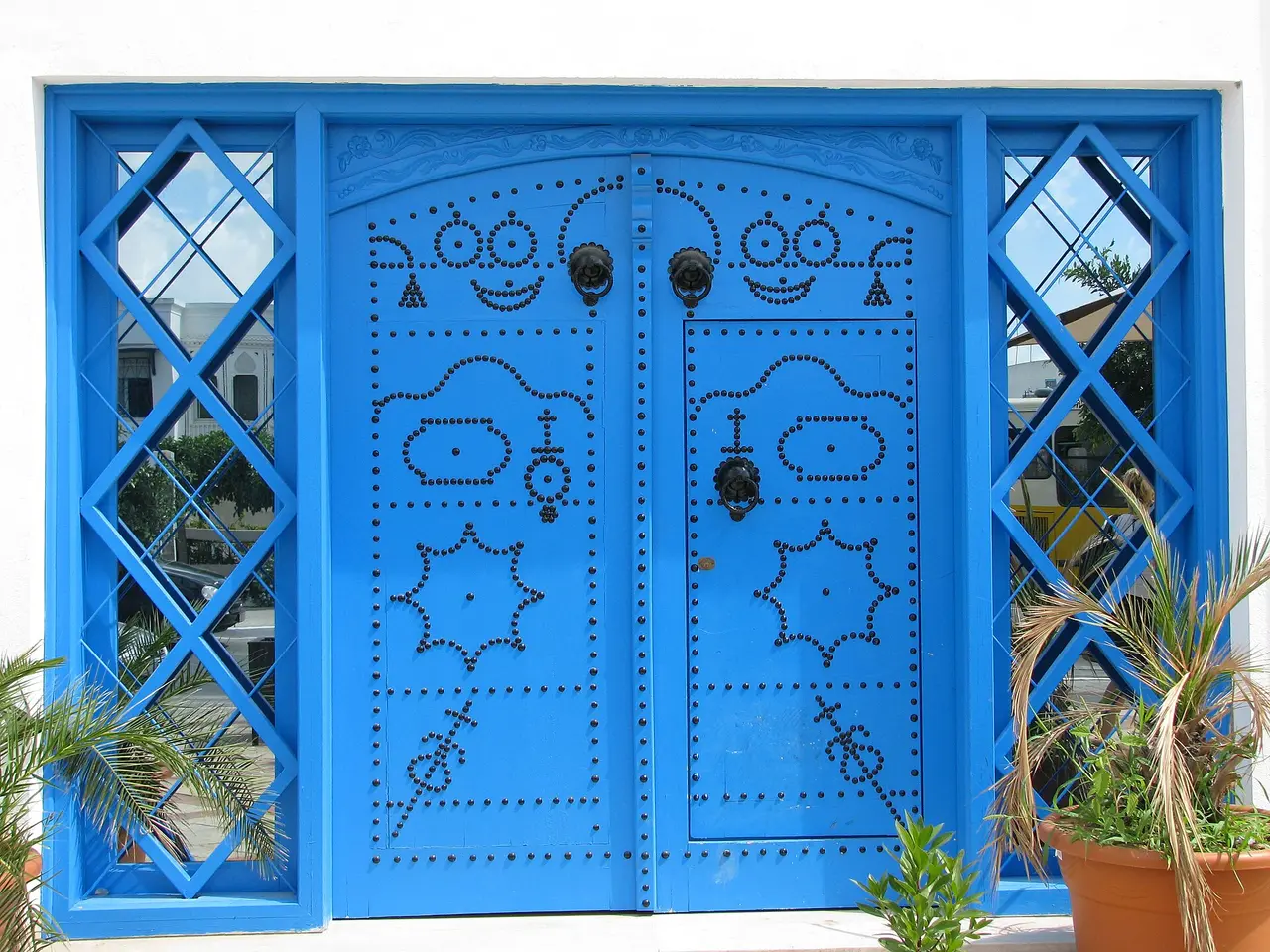
The western part of the medina, towards Place de la Kasbah, is more residential and much quieter. It hides the grand houses of the Tunis bourgeoisie: Dar Ben Abdallah and its museum of popular arts and traditions, Dar Lasram, and the beylical mausoleum of Tourbet el Bey, crowned with green domes. The studded doors and dead-end alleys suit a two to three hour wander, ideally with a guide who can open doors that stay shut to passers-by.

The European city around Avenue Habib Bourguiba

Built from the late 19th century between the medina and the lake, the new town lines up Art Nouveau and Art Deco buildings, the Cathedral of St Vincent de Paul and the municipal theatre. Avenue Habib Bourguiba, shaded by ficus trees, comes alive mainly in the late afternoon and evening, café terraces included. It is also where political gatherings take place: France Diplomatie advises staying away from any demonstration and following police instructions. One hour on foot is enough, pushing on to the central market for its fish and spice stalls.

The Bardo and Belvedere Park

West of the centre, the Bardo National Museum fills a former beylical palace with thousands of square metres of Roman mosaics, including the portrait of Virgil flanked by two muses. Since 1 April 2026, entry costs 30 dinars, or 45 dinars with Carthage on the combined ticket reported by the Tunisian press; prices are due to rise again in January 2027. Allow three hours. North of the centre, Belvedere Park, the city's largest green space, makes a shady afternoon break.

Carthage, a scattered ancient city

Carthage is not a single site but a residential suburb where the remains are spread out between villas: Byrsa Hill and its museum, the seafront Antonine Baths, the Punic ports, the Tophet of Salammbo, the Roman theatre. The TGM serves them through several stops, so it pays to walk from one station to the next. Entry to the sites costs 20 dinars since April 2026. A full day is comfortable, a morning is enough if you stick to Byrsa and the baths. Roads near the presidential palace may be closed to traffic.

Sidi Bou Said, a village above the gulf

The white and blue village overlooking the gulf is the most photographed in the country, and its lanes fill with tour groups from late morning. Arrive before 10am to walk calmly up to the Café des Délices, or stay for sunset, when the coaches leave. The Ennejma Ezzahra palace, built by Baron d'Erlanger, houses the centre for Arab and Mediterranean music. Two to three hours are enough, easy to combine with Carthage on the same day.

La Marsa and Gammarth, the beach side

At the end of the TGM line, La Marsa is the suburb where locals stroll along the seafront, have coffee at the Saf-Saf and go out for dinner. Gammarth extends the coast northwards with its hotels and beaches. The sea is above 20°C from June to October and reaches 26°C in August, but July and August are the busiest and most expensive months. For a stay mixing sightseeing and swimming, staying here rather than in the city centre makes sense.

La Goulette, the old fishing port

Between Lake Tunis and the sea, La Goulette was long a cosmopolitan port where Tunisians, Sicilians, Maltese and Tunis Jews lived side by side. The Karraka fort recalls its defensive past, and the grilled fish restaurants on Avenue Franklin Roosevelt make it the best evening stop on the TGM line. It is also the ferry port for Europe, another way to reach the Maghreb by sea. One evening is enough.

Sample itineraries

Three routes built around the time you actually have.
3daysRecommended

Tunis in 3 days: medina palaces, La Goulette and the La Marsa seafront

  1. Day 1: medina mansions and the European city
  2. Day 2: ancient Carthage and fish in La Goulette
  3. Day 3: Sidi Bou Said, La Marsa and Gammarth

Best for: A stay that takes in Tunis life rather than rushing from site to site: the palaces and mansions of the medina and the colonial city, a day by the sea between Carthage and the port of La Goulette, then Sidi Bou Said and the upmarket suburbs of La Marsa and Gammarth, where locals come to swim and dine.

How much it costs

Per person per day, excluding international travel.
Budget
32 €/ day
798 € for 2 people, 7 days, return flights included
Accommodation
16 €
Food
10 €
Local transport
2 €
Sights and activities
4 €
Comfort
69 €/ day
1 478 € for 2 people, 7 days, return flights included
Accommodation
37 €
Food
18 €
Local transport
6 €
Sights and activities
8 €
Premium
198 €/ day
3 560 € for 2 people, 7 days, return flights included
Accommodation
98 €
Food
45 €
Local transport
25 €
Sights and activities
30 €
Prices checked: Relevé octobre 2026, hors juillet-août, vacances de Pâques et fêtes de fin d'année. Taux Wise consulté le 12 octobre 2026 : 1 € = 3,367 dinars (TND), cohérent avec le cours moyen BCT de 3,38 à 3,40 TND relevé en août 2026. Repas et transports d'après Numbeo Tunis (mise à jour du 11 octobre 2026, 841 relevés de 75 contributeurs sur 12 mois) : repas bon marché 13,5 TND, dîner pour deux en restaurant moyen 65 TND, ticket de transport en commun (métro léger, TGM) 1 TND, taxi 0,93 TND de prise en charge puis 0,95 TND le km. Dortoirs : prix d'appel de 14,69 à 18,36 € sur les 4 auberges proposant des lits en dortoir sur Hostelworld Tunis (octobre 2026), offre très réduite. Hôtels : combien-coute.net (données hotels.com et Booking, mise à jour du 5 octobre 2026), 73 € la nuit en 3 étoiles et 196 € en 5 étoiles. Activités lissées sur la semaine : nouvelle grille des musées et sites en vigueur au 1er avril 2026 (arrêté publié au JORT, repris par Webdo et Business News) : musée du Bardo 30 TND, Carthage 20 TND, billet combiné Bardo et Carthage 45 TND selon la presse tunisienne, hausse prévue en janvier 2027. Premium : restauration gastronomique à La Marsa ou Gammarth, chauffeur privé et guide privé estimés par extrapolation, sans grille officielle publiée. Vol A/R Paris-Tunis par personne d'après KAYAK (page consultée le 12 octobre 2026, statistiques sur 12 mois glissants, sans date de mise à jour affichée) : 175 € en backpacker (bas de la fourchette habituelle de 175 à 394 €, médiane de janvier 152 €), 256 € en comfort (moyenne sur 12 mois), 394 € en premium (haut de la fourchette habituelle, vol direct à horaires choisis) ; vols directs Transavia, Tunisair, Air France et Nouvelair, nettement plus chers en juillet (420 €) et août (449 €). Hébergement par nuit et par personne : lit en dortoir pour backpacker, chambre double en 3 étoiles ou maison d'hôtes partagée à deux pour comfort, 5 étoiles partagé à deux pour premium. weekTwoPax = deux vols + sept jours à deux.

Getting there

Airports serving Tunis, from main hubs to secondary ones.
  • DJEDjerba Zarzis International AirportMellitaMain
  • TUNTunis Carthage International AirportTunisMain
  • EBMEl Borma AirportEl BormaSecondary
  • GAEGabès Matmata International AirportGabèsSecondary
  • GAFGafsa Ksar International AirportGafsaSecondary
  • MIRMonastir Habib Bourguiba International AirportMonastirSecondary

Entry, health and safety

For FR travellers

Entry requirements

No visa for a tourist stay

Pas de visa pour un séjour d'une durée inférieure ou égale à trois mois en Tunisie. Depuis le 1er janvier 2025, tous les visiteurs doivent présenter un passeport valable au moins trois mois à la date d'entrée ; France Diplomatie recommande fortement de voyager avec un passeport plutôt qu'avec la seule carte d'identité. Au-delà de trois mois, visa et carte de séjour se demandent au ministère de l'Intérieur, et un dépassement donne généralement lieu à une amende à la sortie. Les binationaux franco-tunisiens doivent entrer et sortir avec leur passeport tunisien.

Stay allowed for up to 90 days.

Passport valid for 3 months beyond your return date.

Health

Advised: Aucun vaccin obligatoire. Être à jour du calendrier vaccinal français, notamment diphtérie, tétanos, poliomyélite, coqueluche et rougeole (hausse des cas signalée en 2026). Selon la durée et les conditions du séjour : hépatite A, fièvre typhoïde, rage, hépatite B pour les séjours fréquents ou prolongés, mpox en cas d'exposition à risque.

Boire de l'eau capsulée ou traitée et se laver les mains souvent (fièvre typhoïde). Fièvre du Nil occidental transmise par les moustiques, sans vaccin : répulsif le soir. Recrudescence de la rage liée aux chiens errants autour des grandes villes : éviter tout contact avec les animaux et consulter immédiatement après une morsure, même vacciné. Sécurité : Tunis, Carthage, Sidi Bou Saïd, La Marsa et La Goulette sont en vigilance renforcée, comme le reste du territoire hors zones rouges et orange. Manifestations souvent spontanées dans le centre de Tunis et autour du palais présidentiel de Carthage, avec parfois interdictions de circuler ou couvre-feu : s'en tenir éloigné et suivre les consignes des forces de l'ordre. Rester à distance des lieux où stationnent les forces de sécurité, principales cibles des dernières attaques terroristes. Délinquance de rue relativement maîtrisée : surveiller sacs et objets de valeur, surtout le soir. Éviter les déplacements de nuit hors des grands axes. Zones formellement déconseillées, loin de Tunis : extrême Sud près des frontières libyenne et algérienne, monts Chambi, Semmama, Mghila, Selloum et Orbata. Déconseillées sauf raison impérative : sud et est de la ligne Bir Rijm Maatoug, Borj Bourguiba, Ben Guerdane, zones rurales entre Kasserine, Sbeitla, Sidi Bouzid et Gafsa hors grands axes, bande de 5 km le long de la frontière algérienne dans les gouvernorats de Jendouba et du Kef. Ambassade de France, 2 place de l'Indépendance à Tunis : +216 31 315 000. Numéros locaux selon le gouvernement du Canada (travel.gc.ca, mise à jour du 26 mai 2026) : police 197 ou 193, assistance médicale 190, pompiers 198.

Safety

Increased caution

Emergency

197

Checked in octobre 2026 against the official source. Entry rules change: check the official source before you travel, it alone is authoritative.

Practical information for Tunis

Currency

Tunisian dinar (TND), about 3.4 dinars to the euro in October 2026

Taking dinars out

The dinar cannot be exported: change money as you go and keep exchange receipts to convert back before leaving

TGM

Suburban train from Tunis Marine station to La Marsa via La Goulette, Carthage and Sidi Bou Said; buy tickets at the station counter

Bardo and Carthage combined ticket

45 dinars according to the Tunisian press in 2026, against 30 dinars for the Bardo alone and 20 dinars for Carthage

Yellow taxis

Meters are compulsory: ask for it to be switched on, otherwise agree the fare before getting in

Drinking water

Stick to sealed or treated water, as France Diplomatie advises

Dress in the medina

Shoulders and knees covered near the Zitouna and the mausoleums; relaxed dress in La Marsa and Gammarth

Airport

Tunis-Carthage, northeast of the centre, linked by taxi to the medina and the northern suburbs

Ramadan

The medina comes alive after the fast is broken and many cafés close during the day; dates shift by about 11 days each year

Tunis in pictures

Photo credits : User:SvenZ, CC BY-SA 2.5, Wikimedia Commons ; Silar, CC BY-SA 4.0, Wikimedia Commons ; Sinda BF, CC BY-SA 4.0, Wikimedia Commons ; IssamBarhoumi, CC BY-SA 4.0, Wikimedia Commons ; Dacoslett, CC0, Wikimedia Commons ; Sharon Hahn Darlin, CC BY 2.0, Wikimedia Commons

Frequently asked questions about Tunis

Can non-Muslims enter the Zitouna Mosque?
The prayer hall is reserved for Muslims. Visitors can usually glimpse the colonnaded courtyard from the entrance in the morning, except on Fridays, wearing clothes that cover shoulders and knees. Hours change during Ramadan, so check locally the day before.
Is the Bardo and Carthage combined ticket worth it?
Under the prices in force since 1 April 2026, the Bardo costs 30 dinars and Carthage 20 dinars. The combined ticket, reported at 45 dinars, saves you 5 dinars if you plan to visit both, which a three-day stay easily justifies.
Should you stay in the medina, the city centre or La Marsa?
The medina has a few charming guesthouses but empties at night. The city centre is handy for sightseeing and the TGM. La Marsa and Gammarth better suit a stay mixing beach time, seaside dinners and visits to Carthage and Sidi Bou Said.
How do you get from the Tunis medina to Sidi Bou Said?
The easiest way is the TGM from Tunis Marine station, at the end of Avenue Habib Bourguiba, to Sidi Bou Said station, then a walk up to the village. A metered yellow taxi is an inexpensive alternative, especially for getting back at night.
Can Carthage be visited in half a day?
Yes, if you limit yourself to Byrsa Hill and the Antonine Baths. To add the Punic ports, the Tophet and the Roman villas quarter, allow a full day, as the sites are far apart and linked on foot or by TGM.
Where can you swim near Tunis?
The closest beaches are at La Goulette, La Marsa and Gammarth, reached by TGM or taxi. The sea is above 20°C from June to October. In July and August they are very busy with locals and diaspora families.
Is it safe to walk along Avenue Habib Bourguiba?
Tunis is under heightened vigilance according to France Diplomatie. The avenue is busy and lively, but it often hosts demonstrations: keep away from gatherings, respect any traffic bans and watch your bags and valuables, especially in the evening.
What to bring back from the Tunis souks?
A felted wool chechia from Souk ech Chaouachia, jasmine or orange blossom essence from Souk el Attarine, Nabeul ceramics or a small blue and white wire birdcage, the emblematic object of Sidi Bou Said.
Can you visit Dougga from Tunis in a day?
Yes, the Roman site of Dougga, northwest of Tunis, can be visited in a day by car with a driver or on an organised tour. It lies in the heightened-vigilance zone, like the capital. France Diplomatie advises against driving at night off the main roads.
When is the Carthage International Festival held?
The festival takes place in summer, in July and August, in the Roman theatre of Carthage, with evening concerts of Arab and international music. It is the most expensive time of year in Tunis, so book accommodation and tickets several weeks ahead.

Plan your trip to Tunis

Build your day-by-day itinerary and manage budget, bookings and packing in PlanTripNow.
Aperçu de l'application PlanTripNow