Skip to content

Visiting Uluru and Kata Tjuta: when to go and what to do

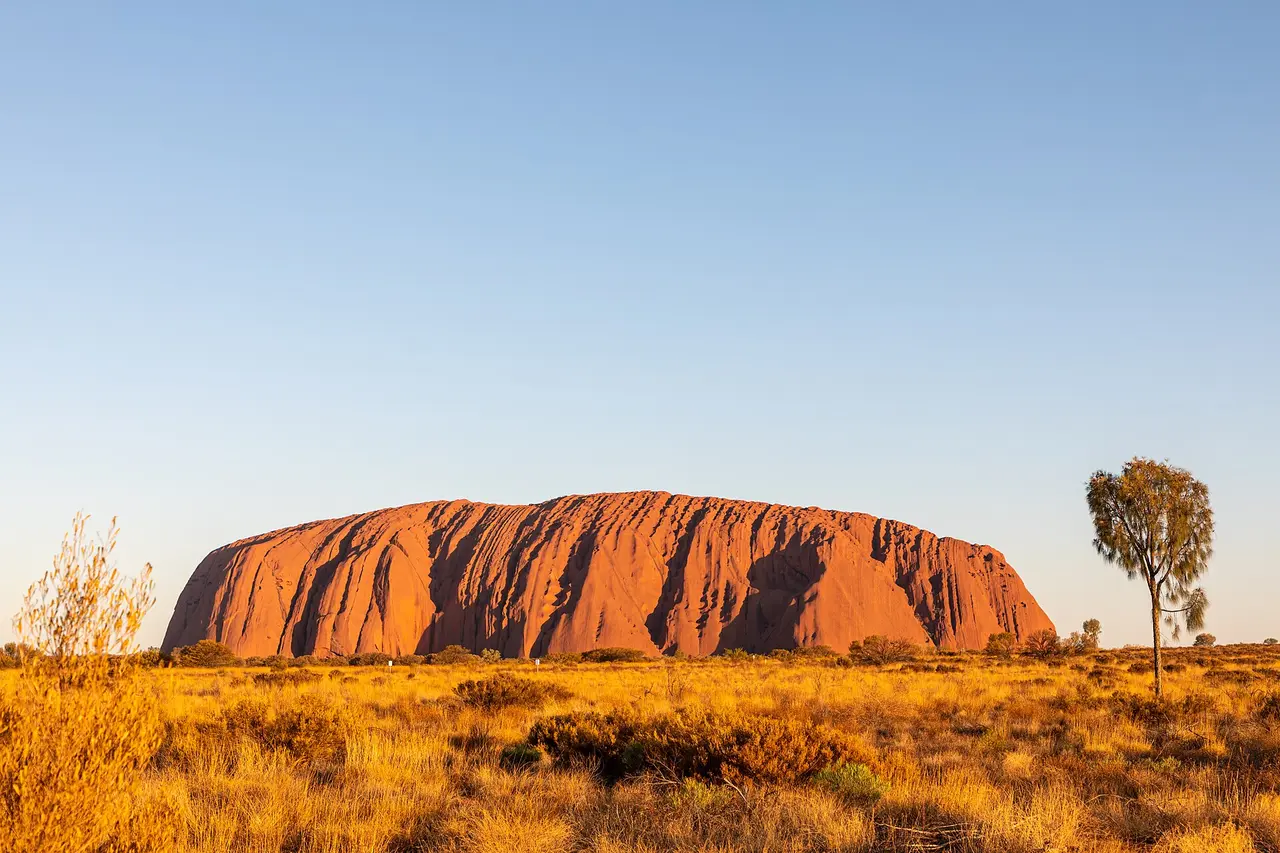
A block of red sandstone rising 348 metres above the plain, thirty-six domes on the horizon and an exceptionally clear night sky: Uluru is lived to the rhythm of the sun. Allow two to three days to walk, learn about Anangu culture and watch the rock change colour.

Why visit Uluru?

Uluru and Kata Tjuta make up Uluru-Kata Tjuta National Park, UNESCO-listed for both its landscapes and its Anangu cultural value. Climbing the rock has been banned since October 2019, so visits now focus on the base walks, the gorges of Kata Tjuta and the cultural centre. The best time is May to September, when days stay bearable.

Uluru and Kata Tjuta must-sees

Natural and cultural sites spread across a park of around 1,300 km², reached by car or on a guided tour.

Mutitjulu Waterhole

A shaded pool at the foot of the southern face, with Anangu rock art, reached by the short Kuniya walk that is accessible to everyone.

Valley of the Winds

Kata Tjuta's most spectacular walk, winding between the domes to Karingana Lookout, which opens onto a view across the whole valley below.

Walpa Gorge

A short walk between two of Kata Tjuta's tallest domes, up to a narrow cleft where the wind funnels through and rare plants grow.

Cultural Centre

A building shaped like ancestral snakes where the Anangu present Tjukurpa, their art and the visiting rules. The place to stop before any walk.

Field of Light

Bruce Munro's installation of thousands of solar-powered glowing stems, explored after dark with the silhouette of Uluru on the horizon.

Talinguru Nyakunytjaku

A sunrise viewing area with boardwalks, the only one that offers a simultaneous view of Uluru and the domes of Kata Tjuta at first light.

Kings Canyon

A sheer-walled canyon in Watarrka National Park, with the Garden of Eden, a permanent pool fringed by ancient cycads, halfway along the Rim Walk.

What to do at Uluru and around the rock?

Walking around the rock

The base walk circles Uluru for 10.6 km on a flat trail that takes about 3.5 hours. It combines the Mala walk, where a ranger guides visitors for free, and the Kuniya walk to Mutitjulu Waterhole, one of the few permanent water sources in the area. Set off at sunrise: from 11 am, several trails close whenever more than 36 °C is forecast. Hire bikes, available near the rock, cut the loop to around an hour. It is the defining experience of central Australia.

The domes of Kata Tjuta

About fifty kilometres from Yulara, Kata Tjuta gathers 36 conglomerate domes, the tallest of which, Mount Olga, stands roughly 200 metres higher than Uluru. Two walks share the visit. Walpa Gorge, 2.6 km return, takes an hour. The Valley of the Winds, a 7.4 km loop, needs three to four hours and climbs between the domes to the Karu and Karingana lookouts. As at Uluru, it closes after 11 am in extreme heat. Give it a full half day, ideally the morning.

Anangu culture and Tjukurpa

For the Anangu, the park's traditional owners, Uluru carries the stories of Tjukurpa, the law that governs the world and how people behave. Start at the cultural centre, a few minutes from the rock: allow an hour for its exhibitions and art space. Since 26 October 2019 the climb has been permanently closed at the Anangu's request. Several parts of the rock face are signposted as sacred: photography is forbidden there, and the rule extends to social media. UNESCO listing dates from 1987, extended to the cultural landscape in 1994.

Dawn, dusk and starry nights

Watch sunrise from Talinguru Nyakunytjaku, the only viewing area that shows both Uluru and Kata Tjuta; arrive 45 minutes early to find a spot. In the evening, the sunset car park faces the western side, which turns from orange to deep red in about twenty minutes. After dark, Field of Light, created in 2016 by Bruce Munro, spreads its glowing stems across the desert. Far from any big city, the sky shows a very sharp Milky Way, especially between May and September.

Yulara, the only place to stay

There are no hotels inside the park: everyone sleeps at Yulara, a village built for tourism about twenty kilometres from Uluru, with options from campground to upmarket hotel. A free shuttle links the lodgings, the supermarket and the small shopping centre. Ayers Rock Airport receives direct flights from several major cities, including Melbourne, and lies a few minutes from the village. Capacity is limited, so book months ahead for the Australian school holidays in June-July and September-October, the busiest periods.

Kings Canyon and the road to Alice Springs

Uluru is often combined with Kings Canyon, in Watarrka National Park, about 300 km from Yulara. Its Rim Walk, 6 km and three to four hours, follows the edge of red sandstone cliffs; it closes from 9 am when the heat exceeds 36 °C. Alice Springs, about 450 km away, is five hours by sealed road. A four- to five-day loop links all three sites. Distances are long and fuel stops sparse: fill up at every chance and avoid driving at dawn and dusk, when kangaroos cross.

Getting there

Airports serving Uluru, from main hubs to secondary ones.
  • ABXAlbury AirportEast AlburySecondary
  • ALHAlbany AirportAlbanySecondary
  • ARMArmidale AirportArmidaleSecondary
  • ARYArarat AirportAraratSecondary
  • ASPAlice Springs AirportAlice SpringsSecondary
  • AYQAyers Rock Connellan AirportYularaSecondary

Practical information for Uluru

Park pass

Compulsory, valid for three consecutive days, bought online or at the entry station. Keep it with you: it is checked on every entry.

Opening hours

The park opens before sunrise and closes after sunset; exact times change every month.

Heat closures

The main trails close from 11 am when more than 36 °C is forecast. Walk early in the morning.

Water to carry

Take at least one litre per hour of walking; drinking water taps are available at the trailheads.

Bush flies

Abundant in warm weather: a fly net worn over your hat makes a real difference. Sold in Yulara.

Photos and drones

Photographing signposted sacred sites is forbidden; drones cannot fly without park permission.

Winter nights

From June to August nights can drop below freezing while days stay mild: bring a fleece for sunrise.

Mobile coverage

Fine in Yulara, very patchy or absent on desert roads. Download offline maps.

Ayers Rock Airport

A few minutes from Yulara, linked to the hotels by a free shuttle timed with flights.

Power sockets

Type I, 230 V, as across the country: European devices need an adapter.

Uluru in pictures

Photo credits : Dietmar Rabich, CC BY-SA 4.0, Wikimedia Commons ; John Coppi, CSIRO, CC BY 3.0, Wikimedia Commons ; Toby Hudson, CC BY-SA 3.0, Wikimedia Commons

Frequently asked questions about Uluru

Can you still climb Uluru?
No. The climb has been permanently banned since 26 October 2019, in line with the wishes of the Anangu, the site's traditional owners. The climbing chain has been removed. Today the rock is explored through the 10.6 km base walk and the ranger-guided trails.
How many days do you need for Uluru and Kata Tjuta?
Two full days cover the base walk, the Valley of the Winds, one sunrise and one sunset. As the park pass is valid for three days, a third day leaves time for the cultural centre and Field of Light without rushing in the heat.
Can you do Uluru as a day trip from Alice Springs?
It is possible on an organised tour but not recommended: Alice Springs is about 450 km away, meaning ten hours of driving for a few hours on site. Better to spend at least one night in Yulara, or take a direct flight to Ayers Rock Airport.
Where can you see sunrise over Uluru and Kata Tjuta at the same time?
At Talinguru Nyakunytjaku, a viewing area with boardwalks and platforms east of the rock. It is the only official spot offering both silhouettes at once. Arrive about 45 minutes before sunrise to enjoy the first glow of the day.
Why must some parts of Uluru not be photographed?
These sections of the rock are linked to ceremonies and stories that Anangu law reserves for certain people. Signs mark them along the trails. The rule covers photos, videos and sharing them online, including for personal use.
Do you need to book Field of Light in advance?
Yes, especially during Australian school holidays. Tickets are booked through Ayers Rock Resort, for a dusk or dawn session, with or without dinner. Transfers from the Yulara accommodation are generally included in the ticket.
Can you visit Uluru in the Australian summer?
Yes, but from December to February temperatures often exceed 40 °C and trails close from 11 am. Do your walks at sunrise, spend the hottest hours indoors and return to the rock for sunset. Summer storms can also send waterfalls cascading down the rock face.
Do you need to rent a car in Yulara?
Not necessarily: shuttles and guided tours link Yulara with Uluru and Kata Tjuta. A rental car, available at the airport, does give you the freedom to arrive before the groups and stay for sunset. It becomes essential to reach Kings Canyon.
Is Kata Tjuta worth it if you are short on time?
Yes. Many travellers even prefer it to Uluru for walking, because you hike between the domes rather than around their base. With only one morning, choose the Valley of the Winds; with just an hour, Walpa Gorge gives a good taste.

Plan your trip to Uluru

Build your day-by-day itinerary and manage budget, bookings and packing in PlanTripNow.
Aperçu de l'application PlanTripNow