Skip to content

Visiting Vienna : imperial palaces, museums and coffee houses

From Habsburg palaces to coffee houses where you linger for hours, from the opera to wine taverns in the hills, Vienna unfolds at the pace of its trams. Four days cover Schönbrunn, the Belvedere and the old town, a fifth adds the Wachau valley.

Why visit Vienna?

Vienna, the capital of Austria, has a UNESCO-listed historic centre, Schönbrunn Palace and some of the richest art collections in Europe, from Bruegel to Klimt. It is the home of the waltz and classical music, with standing places at the opera sold very cheaply. Its dense public transport network makes a car almost unnecessary.

Vienna's must-sees

Imperial palaces, painting masterpieces and music venues, all linked by metro and tram.

Schönbrunn Palace

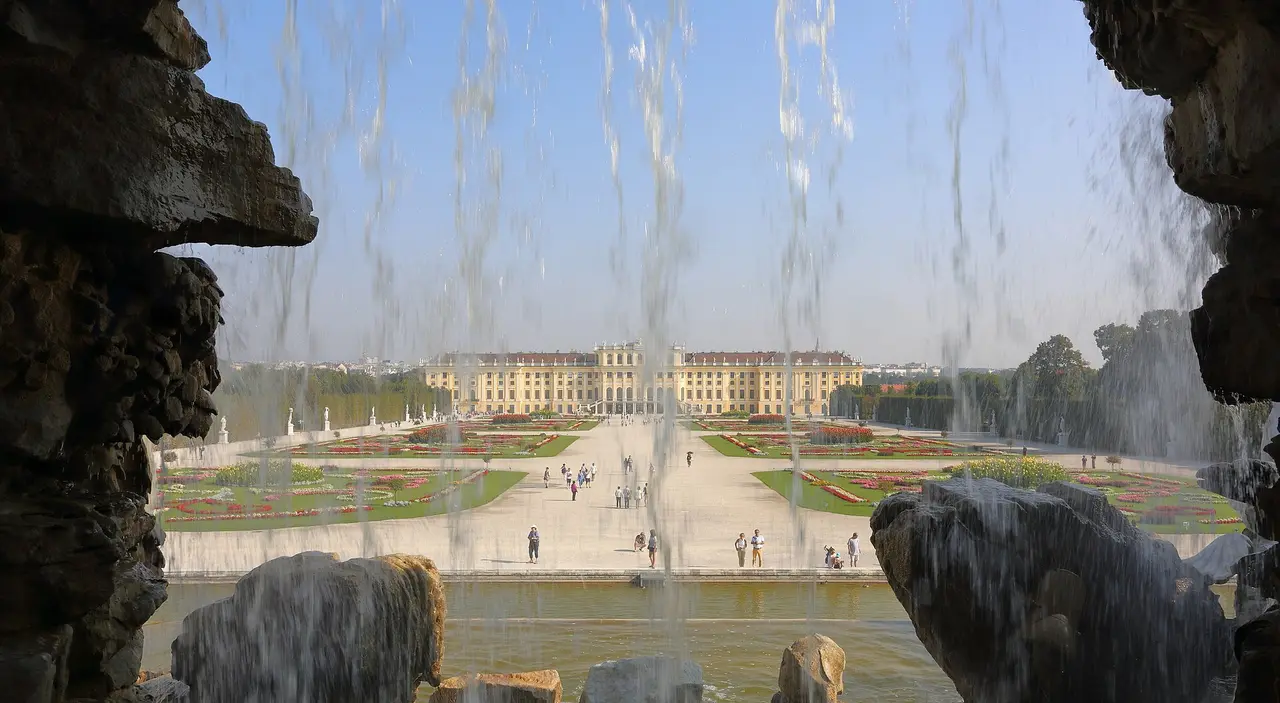
The Habsburgs' former summer residence with over a thousand rooms, around forty of them open to visitors. French gardens, the Gloriette and a historic zoo, all World Heritage listed.

St Stephen's Cathedral

Vienna's symbol with its Gothic spire and glazed tile roof. Climb the south tower by the stairs or go down into the catacombs with a guide.

Belvedere Palace

Two Baroque palaces of Prince Eugene separated by terraced gardens. The Upper Belvedere displays Klimt's The Kiss and many paintings by Schiele.

Hofburg

The imperial winter palace, home to Emperor Franz Joseph's apartments, the Sisi Museum, the imperial treasury and the Spanish Riding School with its Lipizzaner horses.

Kunsthistorisches Museum

The art history museum of the imperial collections, famous for its Bruegel room, its Velázquez paintings and its café set beneath the dome of the grand staircase.

State Opera

One of the world's great opera houses, on the Ring. Guided tours by day, very cheap standing places to attend performances in the evening.

Albertina

A Habsburg palace turned museum, with a vast graphic arts collection and a permanent exhibition from Monet to Picasso. Fine terrace facing the opera.

Prater Giant Ferris Wheel

Built in 1897, it still turns at the entrance to the Prater. Its wooden cabins offer a view over the city and the Danube in about twenty minutes.

Hundertwasser House

A colourful apartment block with wavy lines and tree-planted roofs in the 3rd district. It can only be seen from outside, the nearby Kunst Haus is open.

Central Cemetery

A vast cemetery where Beethoven, Schubert, Brahms and the Strauss family rest. Reached by tram 71, it can also be toured by an internal bus.

Karlskirche

A Baroque church with a green dome and twisted columns on Karlsplatz. A panoramic lift sometimes lets visitors get close to the dome frescoes.

What to see in Vienna, district by district?

The Innere Stadt, heart of the 1st district

Enclosed by the Ring, the old town gathers St Stephen's Cathedral, the Hofburg, the State Opera and a maze of lanes hiding Baroque passages and courtyards. The pedestrian Graben and Kärntner Strasse link the main sights in about fifteen minutes on foot. Allow two days to visit the imperial apartments, the treasury and the national library without rushing. This is also where pickpockets are most active, especially on the metro and trams: keep your documents in a closed pocket, as in any large city in Austria.

The Ringstrasse and its landmarks

Laid out from 1857 in place of the old ramparts, this circular boulevard of about 5 km lines up the City Hall, Parliament, the Burgtheater, the university and the twin museums of Maria-Theresien-Platz. Trams 1 and 2 cover most of it and offer a panoramic tour for the price of a single ticket. On foot, plan half a day with a stop at the Volksgarten, whose rose garden blooms from May to October. In winter, the Rathausplatz Christmas market sets up in front of City Hall from mid-November to late December.

The MuseumsQuartier and Neubau

Housed in the former imperial stables, the MuseumsQuartier brings together the Leopold Museum, devoted to Schiele and Viennese art around 1900, the mumok for modern art and several exhibition spaces. Its courtyards, furnished with large colourful benches, serve as the Viennese terrace on sunny days. Just behind, the 7th district, Neubau, is the area of designers, vintage shops and specialty cafés, around Neubaugasse and Spittelberg. Allow a day to combine a museum and a stroll, and choose a weekday, which is quieter.

Wieden, the Naschmarkt and the Secession

South of the Ring, the Naschmarkt stretches for about 1.5 km of fruit and spice stalls and small restaurants, open Monday to Saturday. On Saturday mornings, a flea market is added at the Kettenbrückengasse end. At the market's entrance, the golden-domed Secession building houses Klimt's Beethoven Frieze, and the Baroque Karlskirche dominates the neighbouring square. The more residential Wieden district offers accommodation that is often cheaper than the centre, five minutes by metro from the opera. Come at lunchtime to eat, as the market is closed on Sundays.

Schönbrunn and Hietzing

In the 13th district, twenty minutes by metro on line U4, the Habsburgs' former summer residence is listed as a World Heritage Site together with its park. The apartments are visited on timed tickets: book online in summer, when morning slots go quickly. The free park climbs up to the Gloriette, which looks out over the city. Add Schönbrunn Zoo, founded in 1752 and often cited as the oldest still operating, and the village-like Hietzing district. A full day is not too much.

Leopoldstadt, the Prater and the Danube

Across the Danube Canal, the 2nd district was long Vienna's Jewish quarter and is rediscovering a life of cafés and markets around the Karmelitermarkt. The Prater, a former imperial hunting ground, stretches for several kilometres: the 1897 Giant Ferris Wheel and the amusement park occupy only one end, the rest is a huge wooded avenue loved by cyclists. Further on, the Donauinsel, an artificial island of around 21 km, serves as the Viennese beach in July and August. Metro U1 reaches the area in a few minutes from Stephansplatz.

Coffee houses, opera and Viennese evenings

Viennese coffee house culture is listed as national intangible heritage by the Austrian UNESCO commission: you order a Melange, read the paper and nobody hurries you. At the State Opera, standing places are sold very cheaply on the day or online for most performances from September to June. The ball season peaks in January and February. On the edge of the city, in the hills of Grinzing and Nussdorf, the Heurigen serve new wine from Vienna's own vineyards, thirty minutes by tram from the centre.

Day trips from Vienna

The UNESCO-listed Wachau valley is about an hour away by train: Melk Abbey, terraced vineyards and a Danube cruise to Krems fill a day, ideally from April to October. Bratislava is only an hour away by train or fast boat, which lets you add a second capital to the trip. Salzburg is under three hours away on the Railjet. To continue into the Alps, the Tyrolean capital is just over four hours away by train on the same line.
Getting there

Airports serving Vienna, from main hubs to secondary ones.
  • GRZGraz AirportFeldkirchen bei GrazMain
  • INNInnsbruck AirportInnsbruckMain
  • KLUKlagenfurt AirportKlagenfurt am WörtherseeMain
  • LNZLinz-Hörsching AirportLinzMain
  • SZGSalzburg AirportSalzburgMain
  • VIEVienna International AirportViennaMain

Practical information for Vienna

Airport

Vienna-Schwechat, about 18 km south-east. The CAT reaches Wien Mitte in 16 minutes, the cheaper S7 S-Bahn in about twenty minutes.

Transport tickets

24, 48 or 72-hour passes valid on Wiener Linien metro, trams and buses. Validate the ticket before your first ride: inspections are frequent.

Tap water

Excellent: it flows from Alpine springs through two large aqueducts. Public fountains let you refill your bottle for free in summer.

Sundays

Most shops close on Sundays, except in major stations and at the airport. Museums and cafés stay open.

Tipping

Round up the bill by around 10% in restaurants and cafés, telling the waiter the total directly when you pay.

City tax

A municipal tax is added to the room rate, calculated as a percentage of the price. It is usually paid at the hotel.

Power sockets

Types C and F, 230 V: continental European plugs work without an adapter, UK and North American plugs need one.

Opera and concerts

The main season runs from September to June. In July and August the State Opera closes: the open-air film festival on Rathausplatz takes over.

Weather

Continental: hot summers with peaks above 30 °C, cold and dry winters. April, May and September are the most pleasant months.

Payment

Cards are accepted almost everywhere, but some traditional cafés, Heurigen and sausage stands still prefer cash.

Vienna in pictures

Photo credits : Martin Falbisoner, CC BY-SA 4.0, Wikimedia Commons ; Uoaei1, CC BY-SA 4.0, Wikimedia Commons ; Diego Delso, CC BY-SA 4.0, Wikimedia Commons ; Dietmar Rabich, CC BY-SA 4.0, Wikimedia Commons ; P e z i, CC BY-SA 3.0 at, Wikimedia Commons

Frequently asked questions about Vienna

Schönbrunn or the Belvedere: which to choose if time is short?
For Habsburg history and a large park, choose Schönbrunn, which takes half a day. For painting, the Upper Belvedere and Klimt's The Kiss take two hours. With a single free day, do Schönbrunn in the morning and the Belvedere in the afternoon, linked by line U4 and then the tram.
How do you get a standing place at the Vienna State Opera?
Standing places are sold for most performances, partly online in advance and partly at the box office on the day. They are personal and very cheap. Arrive early for the most popular evenings, and be ready to stand for the whole length of the performance.
Is the Vienna City Card worth it?
It combines unlimited transport with discounts at many museums and attractions. It pays off if you visit at least two or three paid sights a day. For a trip focused on walking and a few museums, a simple 72-hour Wiener Linien pass is often enough.
Can you see the Lipizzaner horses without attending the show?
Yes. On some mornings the Spanish Riding School offers training sessions with music, cheaper than the gala performance, as well as guided tours of the stables. Check the online calendar: there are neither shows nor training sessions in some weeks, especially in summer.
Which historic Viennese café to choose for a Sachertorte?
The Hotel Sacher café serves the original recipe, while Demel, the former court confectioner, offers its own version. Both are very busy: come at opening time or late in the afternoon. Café Central and Café Sperl offer an equally historic setting with less waiting.
Do you need to book the Schönbrunn apartments tour?
Yes, especially from April to October and during school holidays: tickets are timed and morning slots fill up quickly. The Grand Tour includes more rooms than the Imperial Tour for only slightly more time. Access to the park remains free without booking.
Can you do Bratislava as a day trip from Vienna?
Yes, easily: regional trains from Vienna's main station take about an hour, and fast boats link the two capitals along the Danube from April to October. Bratislava's compact historic centre can be seen in half a day, castle included.
Where to taste Vienna's own wine in a Heuriger?
Vienna is one of the few capitals producing wine within its limits. Heurigen cluster in Grinzing, Nussdorf, Stammersdorf and on the slopes of the Kahlenberg. A pine branch hung at the entrance signals that they are open. Tram D reaches Nussdorf in about thirty minutes from the Ring.
Is Vienna worth visiting in winter?
Yes, if you like museums, coffee houses and Christmas markets, which run from mid-November to late December. January and February are cold but bring the ball season and lower hotel rates. Days are short: schedule outdoor sightseeing between 10 am and 4 pm.

Plan your trip to Vienna

Build your day-by-day itinerary and manage budget, bookings and packing in PlanTripNow.
Aperçu de l'application PlanTripNow
