Skip to content

Visit Warsaw : what to do in 2 to 4 days

Razed in 1944 and rebuilt as it was, Warsaw surprises with its contrasts: an old town of colourful facades, the Royal Route down to the Łazienki gardens, museums that tell the 20th century with real force and a right bank, Praga, in full swing. Three days cover the essentials, four to reach Wilanów.

Why visit Warsaw?

Warsaw is the capital of Poland and one of the cities most scarred by the Second World War: its old town, destroyed then rebuilt, has been on the UNESCO list since 1980. People come for some of Europe's most accomplished history museums, Chopin's music, royal parks and prices that remain moderate for an EU capital.

Warsaw's must-sees

Royal palaces, history museums and music venues, nearly all linked by tram or the Royal Route.

Royal Castle

Seat of the Polish kings rebuilt in the 1970s, with state apartments and two Rembrandt paintings. Free one day a week for the permanent exhibition.

Old Town Market Square

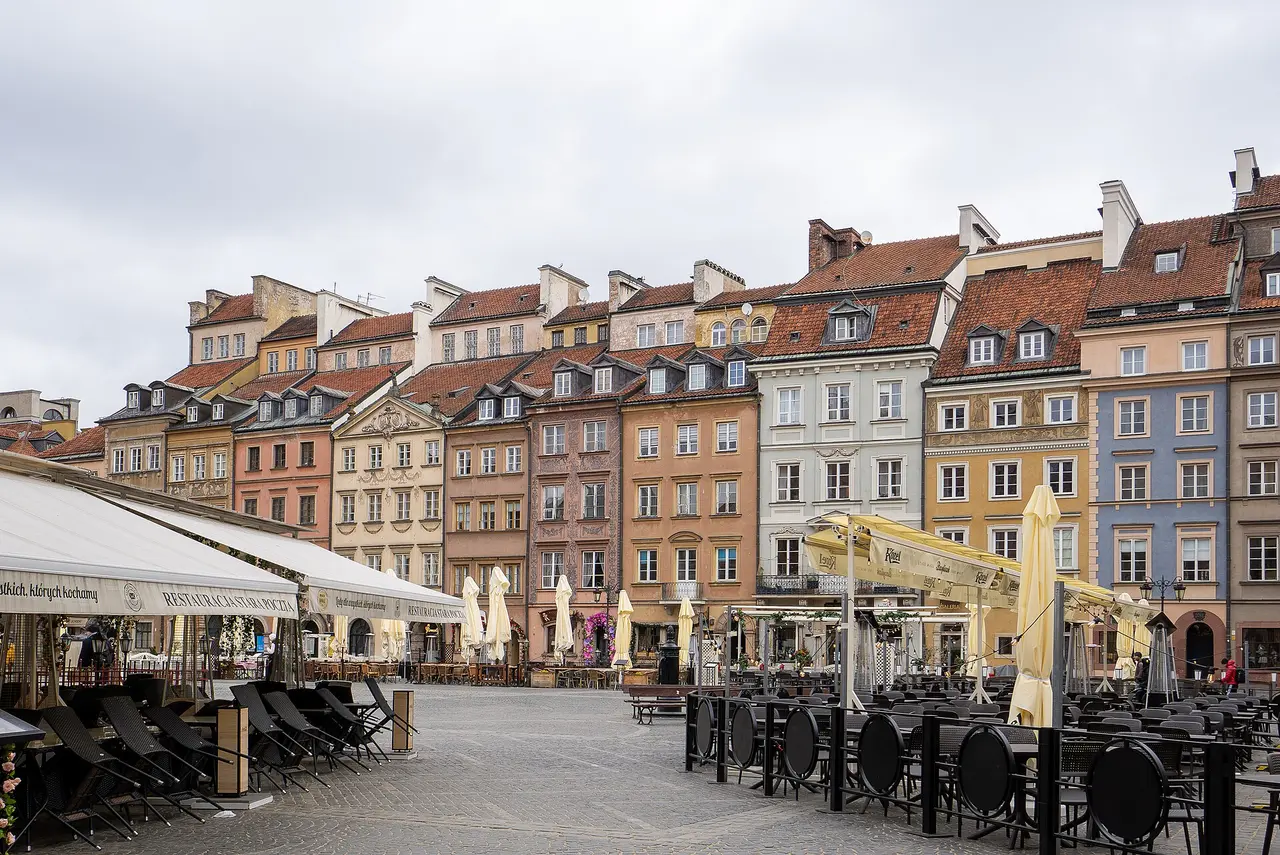
The heart of the old town with painted facades, watched over by the Mermaid statue, symbol of Warsaw. Lively terraces and carriages from May to September.

Palace of Culture

A 1955 Stalinist skyscraper standing 237 metres with its spire. Panoramic terrace on the 30th floor, theatres, a cinema and museums inside.

Warsaw Uprising Museum

Housed in a former tram power station in Wola, it tells the story of the August 1944 revolt through objects, testimonies and the 3D film City of Ruins.

POLIN Museum

The Museum of the History of Polish Jews, opened in 2013 in Muranów, awarded for its design. The core exhibition spans a thousand years, allow three hours.

Łazienki gardens

A 76-hectare royal park with the Palace on the Isle, free-roaming peacocks and the Chopin monument, scene of free Sunday recitals in summer.

Wilanów Palace

The baroque residence of King John III Sobieski, late 17th century, spared by the war. French and English gardens on the edge of a lake.

Chopin Museum

In the Ostrogski Palace, a multimedia museum devoted to the composer: manuscripts, his last piano, listening booths. Entry limited by time slot.

Neon Museum

A collection of communist-era illuminated signs saved from demolition, displayed in an old Praga factory. A quick and very photogenic visit.

What to see in Warsaw, district by district?

Stare Miasto and Nowe Miasto, the rebuilt heart

Destroyed by the German army after the 1944 uprising, the old town was rebuilt between 1945 and the early 1960s using surveys, photos and Bellotto's vedute. The result, UNESCO-listed, can be walked in two hours: Castle Square, cobbled lanes, ramparts and the Barbican. To the north, the quieter New Town holds Marie Curie's birthplace, now a museum. In the evening, the Market Square terraces stay lively until late from May to September.

The Royal Route, from Krakowskie Przedmieście to Wilanów

Around ten kilometres long, the Royal Route links Castle Square to Wilanów Palace via Krakowskie Przedmieście then Nowy Świat. The first stretch passes the university, the Presidential Palace and Holy Cross Church, where Chopin's heart rests inside a pillar. Nowy Świat is lined with cafes and pastry shops, before Ujazdowskie Avenue runs towards the Łazienki gardens. Allow a morning on foot to the park, then bus 116 or 180 to reach Wilanów in the south.

Śródmieście, the downtown of towers

Around Warszawa Centralna station, the modern centre is dominated by the Palace of Culture and Science, a gift from the USSR completed in 1955, surrounded by recent skyscrapers including the Varso Tower. It is also the city's rail hub: direct trains to Berlin, in Germany, in about six hours, and a night train to Prague, in the Czech Republic. Warsaw thus fits into a Central European capitals tour, much like Bratislava. Chmielna and Nowogrodzka streets are packed with bars and restaurants.

Muranów and Wola, the memory of the war

West of the centre, Muranów was built on the ruins of the ghetto, the largest in occupied Europe, where up to 400,000 people lived. The POLIN Museum traces a thousand years of Jewish history in Poland there, facing the Ghetto Heroes Monument. Further south, in the former industrial district of Wola, the Uprising Museum brings back the 63 days of the August 1944 revolt. Each visit takes at least three hours: do not do both on the same day.

Praga, the right bank

Across the Vistula, Praga was far less damaged in 1944 and keeps pre-war tenements with inner courtyards, some decorated with small shrines. Long neglected, the district now draws studios, bars and music venues, especially around Ząbkowska Street and the former Koneser vodka distillery, home to the Polish Vodka Museum. The Neon Museum occupies an old factory. Metro line M2 links the centre to Praga in under ten minutes; half a day is enough.

The Vistula riverbanks

The boulevards laid out on the left bank, between the Śląsko-Dąbrowski bridge and the Copernicus Science Centre, form the city's summer promenade: floating bars, cycle paths and concerts from June to September. The Copernicus Science Centre, a family favourite, needs half a day and a booking at weekends. Opposite, the right bank has stayed wild, with sandy beaches used by locals in summer. The free rooftop gardens of the University Library offer an open view of the river.

Getting there

Airports serving Warsaw, from main hubs to secondary ones.
  • GDNGdańsk Lech Wałęsa AirportGdańskMain
  • KRKKraków John Paul II International AirportBaliceMain
  • KTWKatowice Wojciech Korfanty International AirportKatowiceMain
  • LCJŁódź Władysław Reymont AirportŁódźMain
  • LUZLublin AirportLublinMain
  • POZPoznań-Ławica AirportPoznańMain

Warsaw travel tips

Airports

Chopin (WAW) 10 km south, linked to the centre by S2 and S3 trains or bus 175 in 20 to 30 minutes. Modlin, 40 km out, mostly handles low-cost flights.

Currency

The złoty (PLN), not the euro. Bank cards are accepted almost everywhere, even for small amounts. Avoid exchange offices in tourist areas.

Sunday shopping

Most shops and supermarkets have been closed on most Sundays since 2018. Restaurants, cafes and small grocery stores stay open.

Free museum days

Major museums offer free entry to their permanent exhibition one day a week, which varies by venue. Check the day before planning.

ZTM tickets

One ticket covers trams, buses, metro and SKM trains within the city. 20-minute, 75-minute or 24-hour tickets, contactless payment at on-board machines.

Drinking in public

Drinking alcohol in the street, parks or on the riverbanks outside terraces is banned and fined, including along the Vistula.

Tipping

Around 10 % at restaurants for good service. Note: saying "thank you" when handing back the bill often means the waiter can keep the change.

Winter

From December to February, temperatures often drop below zero and days are short. May to September remains the most pleasant period.

Warsaw in pictures

Photo credits : Igor123121, CC BY 4.0, Wikimedia Commons ; A.Savin, CC BY-SA 3.0, Wikimedia Commons ; Rhododendrites, CC BY-SA 4.0, Wikimedia Commons ; Scotch Mist, CC BY-SA 4.0, Wikimedia Commons ; Oleslawlama, CC BY-SA 4.0, Wikimedia Commons

Frequently asked questions about Warsaw

Is Warsaw's Old Town authentic given that it was rebuilt?
It was rebuilt after 1945 using plans, photos and Bellotto's paintings, reusing original fragments. UNESCO listed it in 1980 precisely as an outstanding example of near-total reconstruction. An exhibition at the Royal Castle traces this huge project.
Where can you hear Chopin for free in Warsaw?
From mid-May to the end of September, pianists play Chopin every Sunday at the foot of his monument in the Łazienki gardens, at noon and 4 pm. Entry is free; arrive a little early to find a spot on the grass.
How long should you allow for the Warsaw Uprising Museum?
Allow at least three hours. The route is dense, over several levels, with many testimonies and the 3D film about the ruined city. Arrive at opening time: in the afternoon, school groups and queues make the visit harder going.
Can you go up the Palace of Culture and Science?
Yes, a panoramic terrace on the 30th floor, 114 metres up, is open with a paid ticket. The view takes in the whole city and the Vistula. Many locals say it is the best view in Warsaw, since it is the only one where you cannot see the palace.
Warsaw or Kraków: which to choose for a first trip to Poland?
Kraków has a medieval centre spared by the war, Warsaw stronger history museums and genuine capital-city life. The two are linked by express train in about 2 hours 30: ideally, combine three days in each.
What is a bar mleczny and where can you find one in Warsaw?
It is a canteen inherited from the communist era, serving pierogi, soups and daily dishes for a few złoty. Several survive in the centre, notably on Nowy Świat and around Krakowskie Przedmieście. You order at the counter and clear your own tray.
How do you get from Chopin Airport to central Warsaw?
S2 and S3 trains link the airport to Warszawa Centralna and Śródmieście in about 20 minutes, with an ordinary ZTM ticket. Bus 175 serves the Royal Route. Official taxis and ride-hailing usually cost under 60 złoty to the centre.
Why are so many shops closed on Sundays in Warsaw?
A law in force since 2018 bans trading on most Sundays, with a few exceptions during the year. Supermarkets and shopping malls close, but restaurants, cafes, museums and small neighbourhood grocers stay open. Do your shopping on Saturday.

Plan your trip to Warsaw

Build your day-by-day itinerary and manage budget, bookings and packing in PlanTripNow.
Aperçu de l'application PlanTripNow