Skip to content

Visiting Zanzibar : Stone Town, beaches and spices

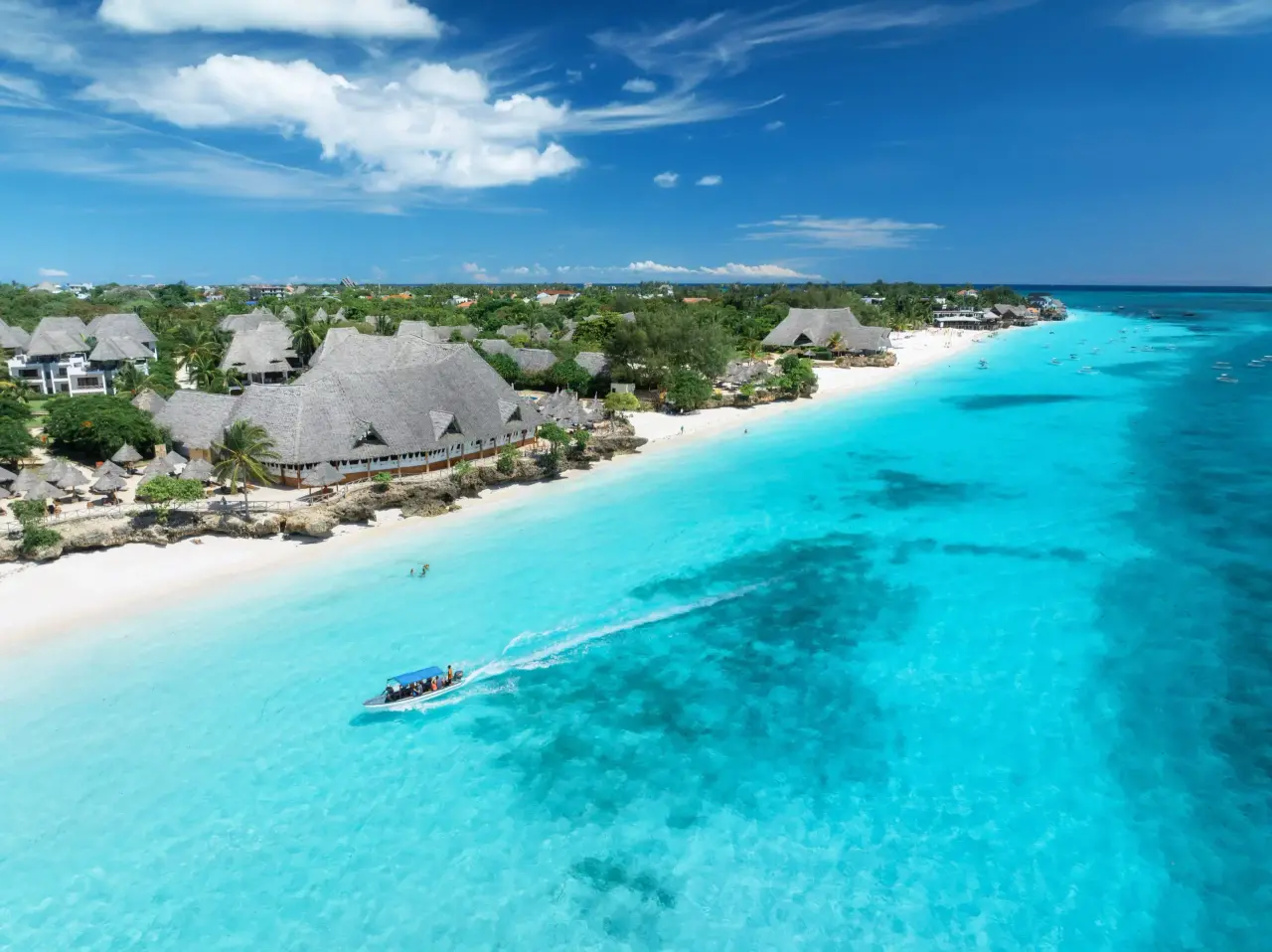
Forty kilometres off the Tanzanian coast, Zanzibar brings together a UNESCO-listed Swahili old town, clove and cinnamon plantations, white-sand beaches with a shifting tide and one of the finest reefs in the Indian Ocean. People often come after a safari, for three to seven days of unwinding.

At a glance

Visa
Required
Tourist stay of up to 90 days
7-day budget
€1,120
Per person, comfort profile, excluding international flights.

Why visit Zanzibar?

Zanzibar is a semi-autonomous archipelago of Tanzania, in the Indian Ocean. Its main island, Unguja, holds Stone Town, a former trading post for ivory, slaves and spices, listed by UNESCO. The rest of the island lines up lagoon beaches, an endemic forest and protected reefs. It is the natural beach extension of a safari in northern Tanzania.

When to visit Zanzibar

Temperatures, rainfall and crowds month by month, to pick your window.
When to visit Zanzibar
MonthTemperaturesRainCrowdsVerdict
January24 to 33 °C7 dBusyHot and humid at 33C, a few short showers; festive-season rates hold for the first fortnight before easing.
February24 to 33 °C6 dModerateA drier window between the two rainy seasons, sea at 29C: a good month for diving and Mnemba, heavy heat in Stone Town.
March24 to 33 °C12 dQuietThe long rains build in the second half of the month; crowds drop, prices too, the air stays stifling.
April24 to 31 °C18 dVery quietPeak of the long rains: daily downpours, maximum humidity, many small hotels close. A true low season.
May23 to 30 °C15 dVery quietThe rains ease late in the month, the island green and empty, rates at their lowest of the year.
June21 to 29 °C5 dModerateThe start of the cool dry season, the kusi trade wind bringing relief; one of the best months, before the July crowds.
July20 to 28 °C4 dPackedDry, sunny and breezy, 28C: peak season with European holidaymakers, Nungwi and Paje beaches full, hotels at their priciest.
August20 to 28 °C4 dPackedThe same ideal weather as July, a southerly wind perfect for kitesurfing at Paje, but you must book well ahead.
September20 to 29 °C4 dBusyStill dry and bright, crowds thin after the European school year restarts, a very good weather-price balance in late September.
October22 to 30 °C6 dModerateThe heat returns, the sea warming to 26C, a few showers signalling the short rains; still a fine window.
November23 to 31 °C10 dQuietShort rains, often late in the day, broken by sunshine; a quiet island and gentle rates before the Christmas rush.
December24 to 32 °C9 dPackedThe short rains fade as Christmas nears; from the 20th the island is fully booked and festive prices soar.
Source: Climat equatorial insulaire de l'ocean Indien, deux saisons des pluies : longues pluies de mi-mars a mai, courtes pluies en novembre-decembre. Moyennes recoupees entre Climates to Travel et Meteo Tanzanie (station de Zanzibar), releve septembre 2026. Temperature de la mer sur la cote ouest, autour de Stone Town.

Zanzibar's must-sees

Nine landmarks that sum up the island, from the old town to the reefs, all doable in a day.

Stone Town

A UNESCO-listed Swahili old town, carved doors, the Sultan's Palace, old Persian baths and a maze of trading lanes.

Former slave market

The site of East Africa's last major slave market, with its preserved holding cells, a memorial and a museum beneath the Anglican cathedral.

Forodhani gardens

A seafront park turned each evening into a street market: skewers, Zanzibari egg bread, cane juice, facing the sunset.

Jozani forest

The island's only national park, a refuge for the endemic Zanzibar red colobus monkey, with a mangrove boardwalk.

Spice plantations

Guided tours north of Stone Town: clove, nutmeg, cinnamon, vanilla and ylang-ylang, with a tropical fruit tasting.

Nungwi

A northern beach swimmable at any hour, a dhow yard, a community turtle aquarium and the island's liveliest nightlife.

Mnemba atoll

A private reef off Matemwe, the island's best snorkelling, with frequent green turtles and rays in the early morning.

Prison Island

An islet 30 minutes by boat from Stone Town, a colony of century-old giant Aldabra tortoises and a snorkelling reef.

Paje

A shallow lagoon swept by the trade wind, Zanzibar's kitesurfing capital, with schools and beach bars along the sand.

What to see in Zanzibar, area by area?

Stone Town, the old town

This old town of coral stone is explored on foot, ideally with a guide so you do not go in circles in a maze of unmarked lanes. You see the carved wooden doors studded with brass, the former slave market and its Anglican cathedral built on the site of the whipping post, the House of Wonders and the Darajani market. Allow half a day for the visit, an evening at the Forodhani gardens for the food stalls, and a night on site beats a day trip: the town changes at sunset.

The north coast: Nungwi and Kendwa

At the northern tip, Nungwi and Kendwa are the only beaches where the lagoon does not empty completely at low tide, so you can swim all day, which explains the density of hotels and the evening buzz. Nungwi keeps a traditional dhow-building yard and a community turtle aquarium. It is the island's most lively and built-up area; allow 1h15 from Stone Town on a decent unpaved road.

The east coast: Paje, Jambiani and Matemwe

The windward coast, from south-east to north-east, has the whitest sand and the most turquoise lagoon, but a tide that uncovers the reef flat for hundreds of metres twice a day. Paje is the kitesurfing capital, with reliable wind June to September and December to February; Jambiani stays a fishing village; Matemwe faces Mnemba atoll. The women-run seaweed farms are visited at low tide. Check tide times before booking.

The interior: Jozani and the spice plantations

In the centre of the island, the Jozani-Chwaka Bay National Park protects the Zanzibar red colobus, an endemic monkey you approach within a few metres, and a mangrove crossed on a boardwalk. North of Stone Town, several plantations offer a guided tour of clove, nutmeg, cinnamon, pepper and ylang-ylang, with a fruit tasting; it is the best way to understand why the island was called the spice island. Each visit takes half a day.

The islands and the reefs

Off Stone Town, Prison Island, or Changuu, holds a colony of century-old giant Aldabra tortoises and a reef you can snorkel, 30 minutes by boat. Off Matemwe, the private Mnemba atoll is the best diving and snorkelling spot on the island, with turtles and rays almost guaranteed early in the morning. Further south, the Chumbe reserve, by booking and in small numbers, protects one of the few intact coral reefs in the region.

How much it costs

Per person per day, excluding international travel.
Budget
55 €/ day
1 970 € for 2 people, 7 days, return flights included
Accommodation
28 €
Food
14 €
Local transport
3 €
Sights and activities
10 €
Comfort
160 €/ day
3 600 € for 2 people, 7 days, return flights included
Accommodation
90 €
Food
30 €
Local transport
10 €
Sights and activities
30 €
Premium
500 €/ day
8 900 € for 2 people, 7 days, return flights included
Accommodation
320 €
Food
80 €
Local transport
30 €
Sights and activities
70 €
Prices checked: Relevé septembre 2026. Coûts sur place convertis du dollar (environ 1,08 USD pour 1 EUR), recoupés entre Duma Explorer, The Tanzania Guide et Olympus Adventure (guides budget Zanzibar 2026). Vol A/R Paris-Zanzibar avec une escale, hors haute saison, estimé à 600 EUR/pers (backpacker), 680 (confort), 950 (premium) ; compter 50 à 100 % de plus en juillet-août et pour les fêtes. Frais obligatoires en sus, une seule fois : visa 50 USD à l'arrivée, assurance voyage tanzanienne obligatoire environ 44 USD depuis octobre 2024. Taxe d'infrastructure de 2 à 5 USD par nuit incluse ici dans l'hébergement. Chambre double partagée a deux pour confort et premium, chambre simple de guesthouse pour backpacker. Prix HORS juillet-août et fêtes de fin d'année, et hors longues pluies d'avril-mai ou beaucoup d'hotels ferment.

Getting there

Airports serving Zanzibar, from main hubs to secondary ones.
  • DARJulius Nyerere International AirportDar es SalaamMain
  • JROKilimanjaro International AirportArushaMain
  • MWZMwanza International AirportMwanzaMain
  • ZNZAbeid Amani Karume International AirportZanzibarMain
  • ARKArusha AirportArushaSecondary
  • DODDodoma AirportDodomaSecondary

Entry, health and safety

For FR travellers

Entry requirements

Visa required

Visa touristique obligatoire, 50 EUR ou 50 USD, valable 90 jours : e-visa a demander en ligne avant le départ, ou visa à l'arrivée à l'aéroport de Zanzibar. Passeport valide plus de 6 mois après l'arrivée. Assurance voyage tanzanienne obligatoire propre à Zanzibar, environ 44 USD par personne, valable 90 jours, exigée même si l'on possède déjà une assurance ; a prendre en ligne de préférence.

Stay allowed for up to 90 days.

Passport valid for 6 months beyond your return date.

Health

Required: Fièvre jaune obligatoire pour les voyageurs en provenance d'un pays d'endémie ou ayant transite plus de 12 heures par un tel pays.

Advised: Mise a jour du calendrier vaccinal français. Selon la durée et les conditions : hépatites A et B, fièvre typhoïde, rage, méningite ACWY.

Paludisme présent à Zanzibar toute l'année : traitement préventif et protection anti-moustiques indispensables. Dengue en augmentation, chikungunya possible. Choléra dans les zones urbaines insalubres, ne boire que de l'eau encapsulee. Tenue couverte attendue hors plages et hotels sur cette île majoritairement musulmane. Vols avec effraction signalés dans les hébergements et plusieurs agressions de touristes, dont des viols ; vigilance accrue pour les femmes seules à Stone Town, Nungwi, Paje et Jambiani, taxis officiels a plaque blanche uniquement.

Safety

Increased caution

Emergency

112

Checked in septembre 2026 against the official source. Entry rules change: check the official source before you travel, it alone is authoritative.

Practical information for Zanzibar

Visa and insurance

Tourist visa 50 USD on arrival or as an e-visa; Zanzibar health insurance mandatory, about 44 USD per person, even if you are already insured.

Health

Malaria present year-round: preventive treatment and repellent essential. Drink only bottled water.

Tides

On the east coast, the lagoon retreats for hundreds of metres twice a day; check tide times before choosing lodging and activities.

Dress

A mostly Muslim island: shoulders and knees covered in Stone Town and villages; swimwear only on beaches and at hotels.

Ramadan

Many non-hotel restaurants close during the day and life slows; movable dates, around mid-February to mid-March in 2026.

Money

Tanzanian shilling and dollars accepted, dollar notes from 2009 onward required; few ATMs outside Stone Town and Nungwi, carry cash.

Taxis

Only official white-plate taxis; agree the price before getting in, fake taxis reported at the airport and in Stone Town.

Safety

Break-ins at lodgings and assaults reported in Stone Town, Nungwi, Paje and Jambiani; do not walk alone on the beach at night.

Electricity

UK type G sockets, 220 V; power cuts are common, good hotels have a generator.

Zanzibar in pictures

Photo credits : Moongateclimber, CC BY-SA 4.0, Wikimedia Commons ; Nina R from Africa, CC BY 2.0, Wikimedia Commons ; Olivier Lejade from France, CC BY-SA 2.0, Wikimedia Commons ; Moongateclimber, Public domain, Wikimedia Commons

Frequently asked questions about Zanzibar

How many days do you need for Zanzibar?
One night in Stone Town and three to four nights on a beach are enough for a first visit, often after a safari. Allow a week to combine the north and east coasts, or to add a Mnemba trip and a day in Jozani forest.
Which coast of Zanzibar, north or east?
The north, Nungwi and Kendwa, for swimming at any hour and a lively feel. The east, from Paje to Matemwe, for the whitest sand, kitesurfing and quieter villages, but with a tide that empties the lagoon twice a day. Many do a night on each coast.
Is Zanzibar a safe destination?
Tanzania and Zanzibar are under reinforced vigilance. Theft and break-ins target lodgings, and assaults on tourists, including rapes, have been reported in beach areas. Solo women should take extra care, avoid the beach at night and use only official taxis.
Can you combine a safari and Zanzibar?
Yes, it is the most common itinerary: daily direct flights from Arusha, Kilimanjaro and the Serengeti to Zanzibar in 1h15 to 2h. Keep taking your malaria prophylaxis, as the island is also a transmission zone.
Do you need malaria prophylaxis for Zanzibar?
Malaria is present on the island year-round, even though cases have dropped sharply. Preventive treatment is recommended, to discuss with a doctor before departure, on top of protection against mosquitoes at dusk and at night.
When can you see dolphins and turtles in Zanzibar?
Dolphins are seen year-round off Kizimkazi, to the south, early in the morning; choose an operator that keeps its distance. Green turtles are met snorkelling at Mnemba and seen at the Nungwi conservation centre, where nests hatch mainly between March and June.
What should you bring back from Zanzibar?
Spices bought at a plantation or the Darajani market, clove, cinnamon, pepper and curry blends, ylang-ylang soap and oil, and kanga cloths printed with Swahili proverbs. Check customs rules for animal-derived products.
When is the kitesurfing season at Paje?
Two seasons of reliable wind: the kusi monsoon from June to September, the steadiest and coolest, and the kaskazi monsoon from December to February, warmer and lighter. Schools mostly operate at high tide; off-season the wind drops.

Plan your trip to Zanzibar

Build your day-by-day itinerary and manage budget, bookings and packing in PlanTripNow.
Aperçu de l'application PlanTripNow